THE current system for training and qualifying aspiring lawyers must be made fairer and better suited to the evolving demands of the profession, legal educators say.
They are calling for a rethink of how future lawyers are assessed and prepared for practice, as they await the results of a task force’s review of a possible replacement for the Certificate in Legal Practice (CLP), the current legal qualifying examination.
Deputy Minister in the Prime Minister’s Department (Law and Institutional Reforms) M. Kulasegaran told the Dewan Rakyat on July 30 last year that the Legal Profession Qualifying Board (LPQB) had formed a task force to design the curriculum, training methods, pedagogy and standards for the Common Bar Course (CBC), which would replace the CLP.
He added that the study would begin on Aug 1, 2025, and was expected to be completed within eight months, Bernama reported.
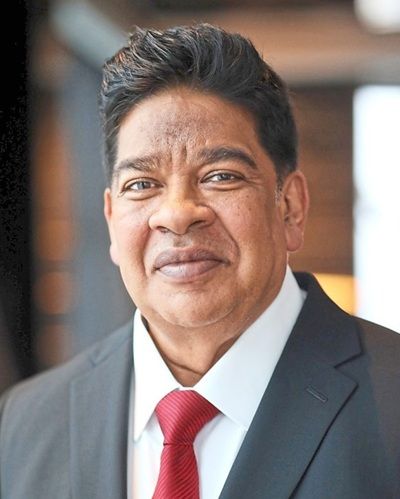
BAC Education Group co-founder and chief future officer Raja Singham S. Sukumara Singham said rather than making examinations easier, reforms should focus on making the system fairer and more flexible for candidates.
One proposal is to allow students to accumulate passes across multiple examination sittings instead of requiring them to repeat subjects they have already passed.
He also suggested introducing two examination sittings annually, giving candidates greater flexibility in completing the qualification.
Blended model
While examination reforms may offer immediate relief, some educators believe deeper structural changes are needed.
BAC Continuing Professional Education Department head Andrew Kalish noted that Malaysia’s legal education landscape comprises multiple pathways, institutions and student backgrounds, making a one-size-fits-all assessment model increasingly difficult to justify.
“Because a single high-stakes written examination like the CLP cannot fairly capture the full range of what makes a good lawyer, a thoughtfully designed hybrid could be a possible solution,” he said.
Rather than relying solely on written examinations, Andrew proposed a blended assessment model that combines standardised competency testing with continuous skills development.
This could include standardised Objective Structured Professional Assessment (OSPA) stations to ensure all candidates meet a common national benchmark, alongside portfolio-based assessments that evaluate practical competencies over time.
An OSPA is a practical, skills-based assessment in which candidates complete simulated legal tasks – such as interviewing clients, drafting documents or presenting arguments – at a series of standardised assessment stations.
“A 30:70 weighting of continuous assessment to final performance evaluation, as the task force has signalled, is a balanced and defensible starting point,” he said.
Realities of practice
Andrew argued that such assessment methods are necessary because many graduates leave university having mastered legal argumentation on paper, yet remain underprepared for the client-facing realities of legal practice.
“What they have rarely been asked to do is sit across from a solution-seeking client, listen carefully, identify the legal issues embedded in a messy human situation, and communicate a clear path forward with both accuracy and empathy,” he said.
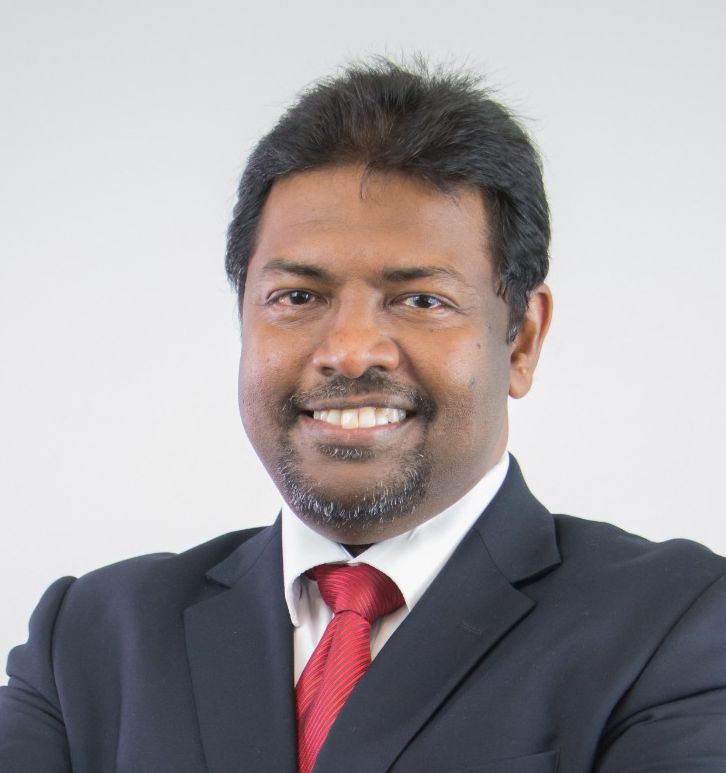
Chiming in, Raja Singham observed that students often become so focused on passing examinations that practical learning takes a back seat.
“We run a lot of things like masterclasses and drafting classes, but students often say, ‘That’s the practical side, I’ll wait until after I pass the examination and learn it when I start practising’,” he said.
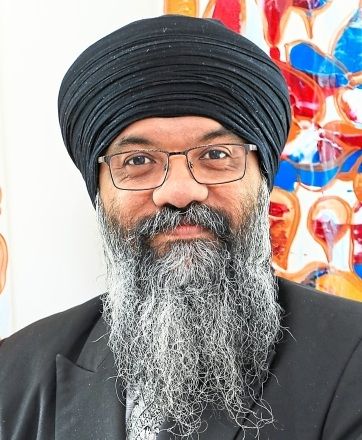
Taylor’s University law associate professor Dr Harmahinder Singh said this leaves lecturers and universities with little choice but to align their teaching methods with the demands of the examination.
“While lecturers and universities may want to inject creativity into curricula and learning, the demands of the CLP examinations result in lecturers predominantly preparing students for examination-type assessments that prioritise doctrinal knowledge over practical skills,” said Harmahinder, who is also the former head of the varsity’s School of Law and Governance.
Inside the CLP experience

The CLP is the hardest exam I have ever taken. I am very proud and happy to have passed this challenging exam. While I appreciate the legal knowledge I gained from preparing for it, I wish the exam structure had better transparency. The only syllabus available is an over 700-page document, which is overwhelming for students to study. There is also no marking scheme for students to understand the exam’s objectives. The exam papers also do not adequately prepare students for the legal field, as there is little practical application in areas like advocacy, negotiation and drafting. -Ho Jia Wen, 27

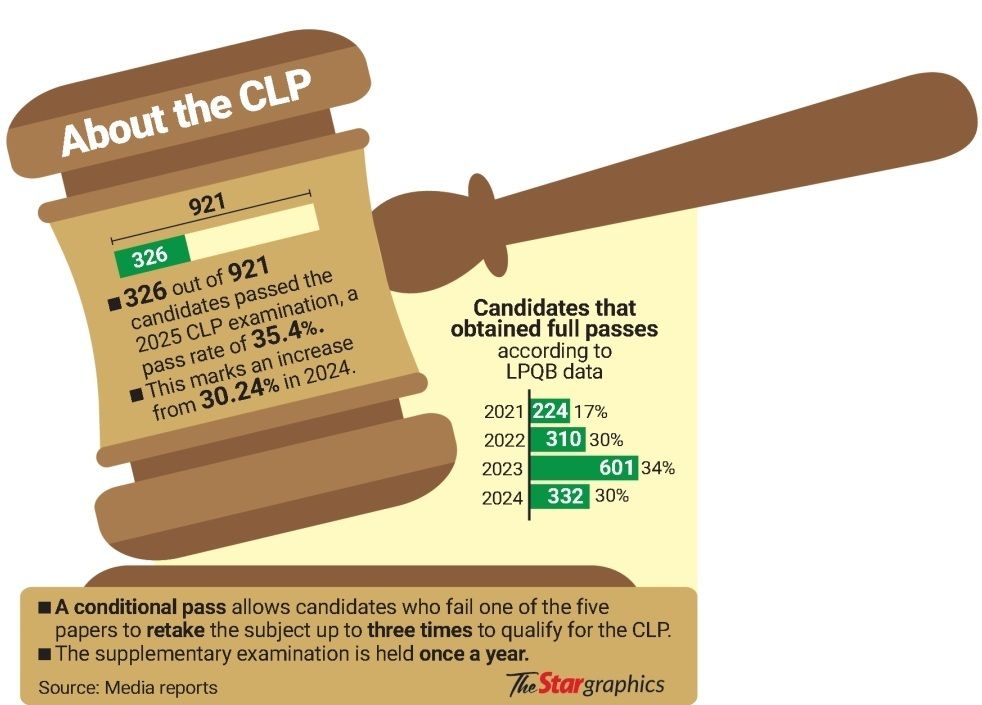
The pass rate of the CLP exam itself reflects how demanding it is. In terms of relevance, it does play an important role in maintaining a certain standard before someone enters legal practice. However, it is quite heavily focused on theory and written exams. In practice, being a lawyer involves much more than just knowing the law. Skills like drafting, handling clients, and problem-solving in real-life situations are equally important. So while the exam is a useful benchmark, there’s room for improvement in making it more reflective of actual legal practice. -Song Boon Yang, 25

On my second attempt at the CLP exam, I have come to understand it as more than a test of knowledge; it is a measure of one’s ability to think critically and argue like a lawyer. Many candidates, myself included, initially approached the exam by trying to recall vast amounts of information rather than truly understanding the law. However, my second attempt shifted my perspective. I learnt to focus on legal principles and their application, instead of getting overwhelmed by excessive facts or lengthy case names. Despite its challenges, I believe the experience is worthwhile.-Sarah Shameeta Raj, 26