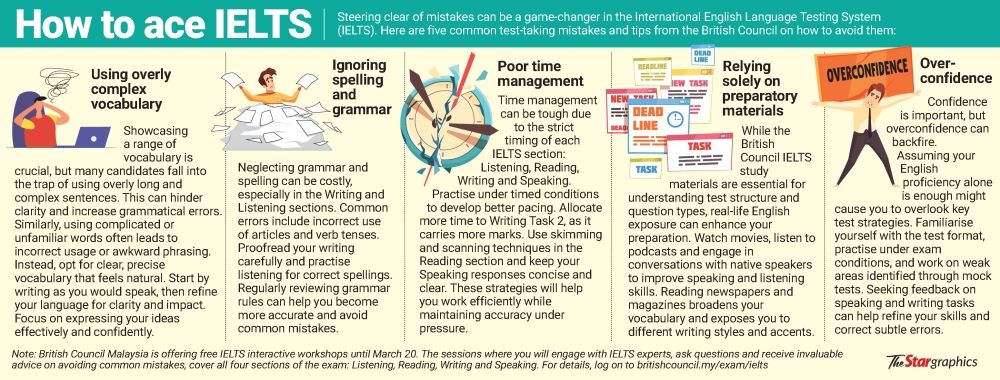
Steering clear of mistakes can be a game-changer in the International English Language Testing System (IELTS). Here are five common test-taking mistakes and tips from the British Council on to avoid them:
> Using overly complex vocabulary
Showcasing a range of vocabulary is crucial, but many candidates fall into the trap of using overly long and complex sentences. This can hinder clarity and increase grammatical errors. Similarly, using complicated or unfamiliar words often leads to incorrect usage or awkward phrasing. Instead, opt for clear, precise vocabulary that feels natural. Start by writing as you would speak, then refine your language for clarity and impact. Focus on expressing your ideas effectively and confidently.
> Ignoring spelling and grammar
Neglecting grammar and spelling can be costly, especially in the writing and listening sections. Common errors include incorrect use of articles and verb tenses. Proofread your writing carefully and practise listening for correct spellings. Regularly reviewing grammar rules can help you become more accurate and avoid common mistakes.
> Poor time management
Time management can be tough due to the strict timing of each IELTS section: Listening, Reading, Writing and Speaking. Practise under timed conditions to develop better pacing. Allocate more time to Writing Task 2, as it carries more marks. Use skimming and scanning techniques in the Reading section and keep your Speaking responses concise and clear.
These strategies will help you work efficiently while maintaining accuracy under pressure.
> Relying solely on preparatory materials
While British Council IELTS study materials are essential for understanding test structure and question types, real-life English exposure can enhance your preparation. Watch movies, listen to podcasts and engage in conversations with native speakers to improve speaking and listening skills. Reading newspapers and magazines broadens your vocabulary and exposes you to different writing styles and accents.
> Overconfidence
Confidence is important, but overconfidence can backfire. Assuming your English proficiency alone is enough might cause you to overlook key test strategies. Familiarise yourself with the test format, practise under exam conditions, and work on weak areas identified through mock tests. Seeking feedback on speaking and writing tasks can help refine your skills and correct subtle errors.
Note: British Council Malaysia is offering free IELTS interactive workshops until March 20. The sessions where you will engage with IELTS experts, ask questions and receive invaluable advice on avoiding common mistakes, cover all four sections of the exam: Listening, Reading, Writing, and Speaking. For details, log on to britishcouncil.my/exam/ielts