COVID and the need for strong leadership


WHEN I first visited Paris, I made sure that I found time to get to the Louvre. I especially wanted to see two things – the obelisk of Hammurabi’s Code (humanity’s first written law) and the Mona Lisa.

Finding the location of the Mona Lisa was not difficult – it was the most crowded room in the museum. Truth be told, I was a little disappointed when I saw it – it was so much smaller than I had expected.

While the Mona Lisa is now worth USD850mil (RM3.5bil), you can buy a copy of it from the souvenir shop at the Louvre for a couple of Euros. So what – or who – makes the original Mona Lisa so much more valuable that an identical copy?

We, humans, do.

The Mona Lisa is worth that much, because someone is willing to pay that much for it – if it were up for sale. At the end of each value exchange process, there is a human being.

Only humans can create, exchange and value, and we value originals over copies – a lot.

What was the value of the first fax machine?

It had zero value because there was no machine for it to make contact with. But once the second fax machine arrived, both machines became much more valuable.

Networks create value and just like fax machines, people who are well-connected are in positions to create, exchange and receive more value.

At the start of the Covid-19 crisis, we saw reports about people fighting over toilet paper rolls in supermarkets.

They appeared to value these rolls over their safety and the safety of others.

During times of change and crisis, both value and the network of exchanging value are dramatically changed.

When the world went into a lockdown, we were all forced to re-examine and reinvent our jobs, the value we are delivering and how are we delivering it.

Shopping, and even learning, went online and those who were unable to provide their products and services digitally were forced out of the market.

It is in times of change and disruption that leadership is needed the most.

We need it to remain hopeful and to see a way out of the crisis rather than fight over toilet paper.

To help communities remain resilient, successful and relevant in challenging times, leaders need to dig deeper to show who they really are.

We all need to be originals and not copies of others. This way we can be sure that we are able to create and add value at individual, organisational and societal levels.

So how can schools and educational institutions get our youth ready for a changing world they can add value to?

One way is to use “Positive Education” which is an approach that focuses on building character alongside academic development.

This way the leadership potential, self-awareness and sense of purpose of our youths are systematically nurtured.

The global pandemic has stressed our systems, networks and economies.

While we are confident that recovery will come in due course, it is evident that this recovery will require a new breed of graduates and leaders.

We need to develop graduates who have holistic skills that go beyond their academic capabilities.

I suggest using the acronym COVID to outline the traits needed for success during the recovery post-pandemic period:

Communication: What is your story? How and to whom are you telling it? What language are you using?

Opportunity: Always search for opportunities to add value and to discover new ways of delivering this value.

Vision: How do you see the recovery happening?

Impact: Do we go back to our old ways or by doing things in a new way?

Development: Always learn. Develop yourself and help develop others. How do you learn better? What books do you read?

John W. Gardner said: “Leaders have a significant role in creating the state of mind that is the society. They can serve as symbols of the moral unity of the society. They can express the values that hold the society together. Most important, they can conceive and articulate goals that lift people out of their petty preoccupations, carry them above the conflicts that tear a society apart, and unite them in the pursuit of objectives worthy of their best efforts.”

Strong leadership is the real challenge of the post-pandemic recovery period.

Are our institutions capable of developing leaders who have the vision, passion and resolve to lead the world into a sustainable recovery? With “Positive Education” I have no doubt that we can meet this challenge.

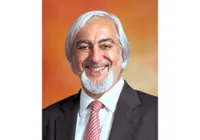
An engineer by training and educator at heart, Heriot-Watt University Malaysia Provost and chief executive officer Prof Mushtak Al-Atabi is a storyteller who uses education to inspire youths to tell empowering stories about themselves and the world. The views expressed here are the writer’s own.

Get 20% OFF The Star Digital Access

Monthly Plan

RM 13.90/month

RM 11.12/month

Billed as RM 11.12 for the 1st month, RM 13.90 thereafter.

Best Value

Annual Plan

RM 12.33/month

RM 9.87/month

Billed as RM 118.40 for the 1st year, RM 148 thereafter.

Follow us on our official WhatsApp channel for breaking news alerts and key updates!

Next In Education

Squashing stress with mental skills
Kulai lass to represent M’sia in China challenge
Winning beyond pageant glory
AI-powered deception
‘Learning when not to trust’
Digital detour
Grab-bing the chance to make a change
Hands-on training key to cyber defence
BBGS legacy lives on
Creative skills for TVET

Others Also Read