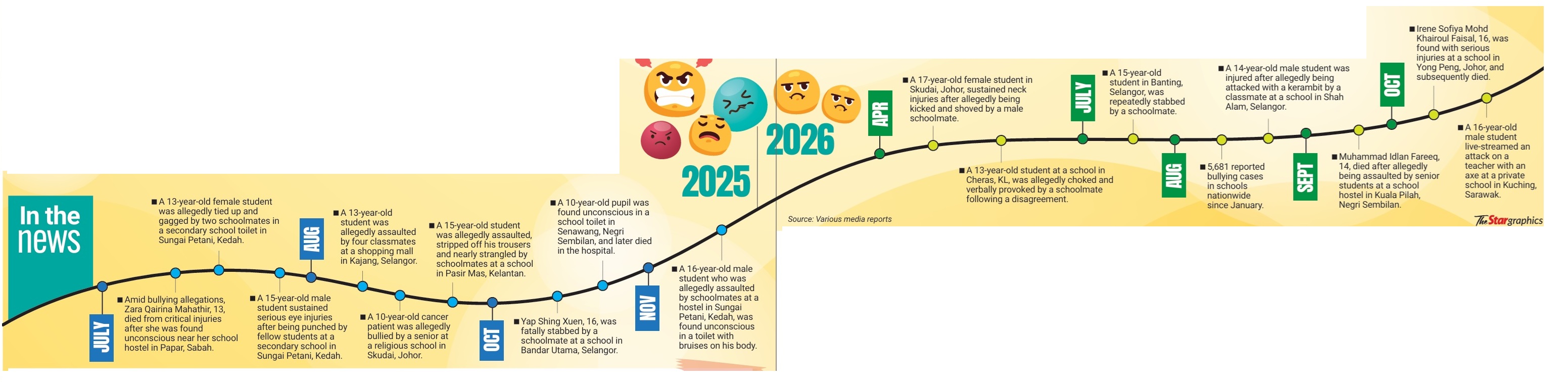
IN the wake of recent incidents of school violence (see infographic), the importance of prevention and early intervention has come into focus.
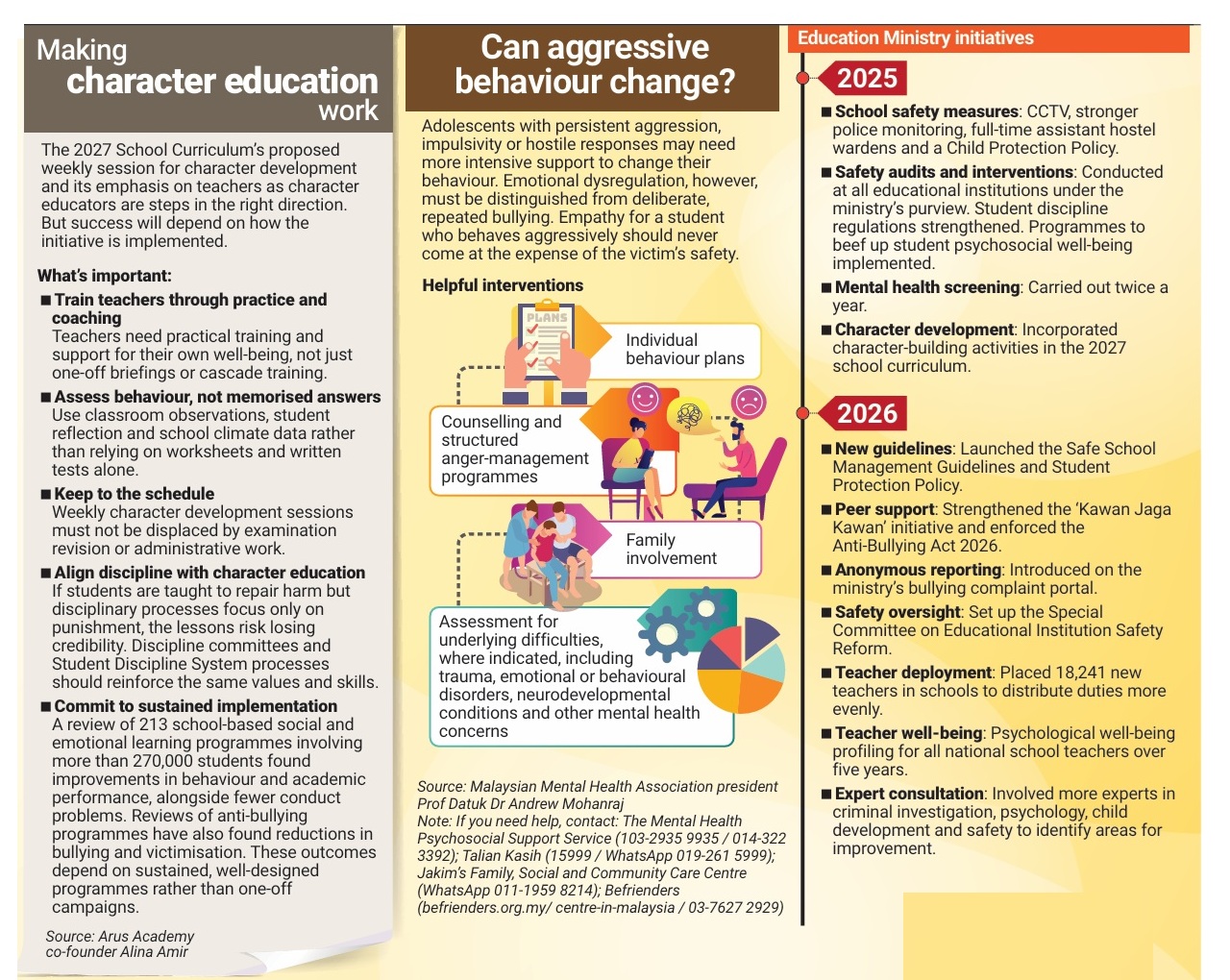
Measures implemented for safer schools, experts say, should include equipping students with the skills to manage their emotions, understand others’ perspectives and make responsible decisions, particularly when faced with conflict.
Malaysian Mental Health Association president Prof Datuk Dr Andrew Mohanraj Chandrasekaran said young people who experience humiliation, rejection or provocation may react impulsively before considering the consequences of their actions.
Adolescence, he told StarEdu, is a particularly important period for developing these skills because the brain systems involved in emotional reactivity, reward and sensitivity to peer approval are still maturing.

“This highlights the importance of helping them develop the skills to manage difficult emotions and social situations,” he noted.
Emotional intelligence (EI), he explained, goes beyond being kind or controlling one’s temper.
“It is the ability to recognise and understand emotions, regulate emotional responses, appreciate other people’s perspectives and make responsible decisions, particularly when one feels angry, rejected, embarrassed or threatened,” he said.
Respond, not react
Developing these skills involves helping students recognise what they are feeling, understand what triggers their reactions and consider how their actions may affect others.
While anger is a normal human emotion, Prof Andrew said students can learn to respond to it without resorting to aggression.
“Students need to learn to pause before acting, slow their breathing, walk away temporarily and let intense emotions settle,” he said.
Equally important is knowing when a situation requires help from others.
“Reporting persistent bullying, seeking help from a trusted adult, supporting a distressed classmate and refusing to join a group attack are signs of strength, not weakness,” he said.
Such skills, however, should not be taught through advice alone.
Students need opportunities to practise them in realistic situations and learn how to apply them in their daily interactions.
EI in the curriculum
Melaka Action Group for Parents in Education (Magpie) and Arus Academy said EI and social-emotional learning could be incorporated into existing subjects in the curriculum, including Islamic and Moral Studies.
Arus develops education initiatives aimed at improving learning experiences.
“Teaching a unit on respect the way we teach an academic topic does not produce respectful behaviour, in the same way that reading about football does not teach you to play,” Arus co-founder Alina Amir, a Teach For Malaysia alumna, said.

Students need to practise these skills and see adults model them, she said, explaining how each subject offers a natural entry point.
“In Bahasa Melayu, students can analyse what a character in a Literature Component story is feeling and why, then rewrite a turning point.
“Islamic and Moral Studies already teach values such as love and care, etiquette and kindness, and these become real when students work through dilemmas they actually face,” she said, sharing that Health Education teaches students to recognise how stress and anger show up in the body and what to do about it.
Social-emotional learning becomes more effective when students are encouraged to apply these skills beyond the classroom, said Alina.
“When conflict happens in class, the teacher should say: ‘Let’s pause. What are you feeling? What are your choices?’
“That is when the lesson becomes a skill,” she said, adding that research had shown promising results from social-emotional learning programmes delivered by teachers in various schools.
“If these skills are only the counsellor’s job, they become a referral. If they are every teacher’s responsibility, they become the culture,” Alina stressed.

Magpie chairman Mak Chee Kin said the 2027 school curriculum should place greater emphasis on students’ overall development, alongside academic performance.
“We must avoid creating another module that students simply memorise. Teachers also need proper training and support to make these values part of everyday school life,” he said.
Supporting teachers
National Union of the Teaching Profession (NUTP) secretary-general Fouzi Singon said the issue is not simply about whether teachers care enough, but whether the education system allows them to respond effectively.
“Heavy teacher workloads, increasingly complex teacher-student relationships, limitations in counselling and psychological support, and concerns about possible legal action can affect how teachers respond to sensitive cases.

“This is why NUTP views bullying and school violence as a systemic issue, not merely a matter of individual teacher attitudes,” he said.
Teachers, he added, must be given the time, authority, training and professional support to educate, monitor and intervene at the earliest stage.
At the same time, teachers must be protected when they act responsibly and in accordance with established standards of procedures, he stressed.
Action and accountability
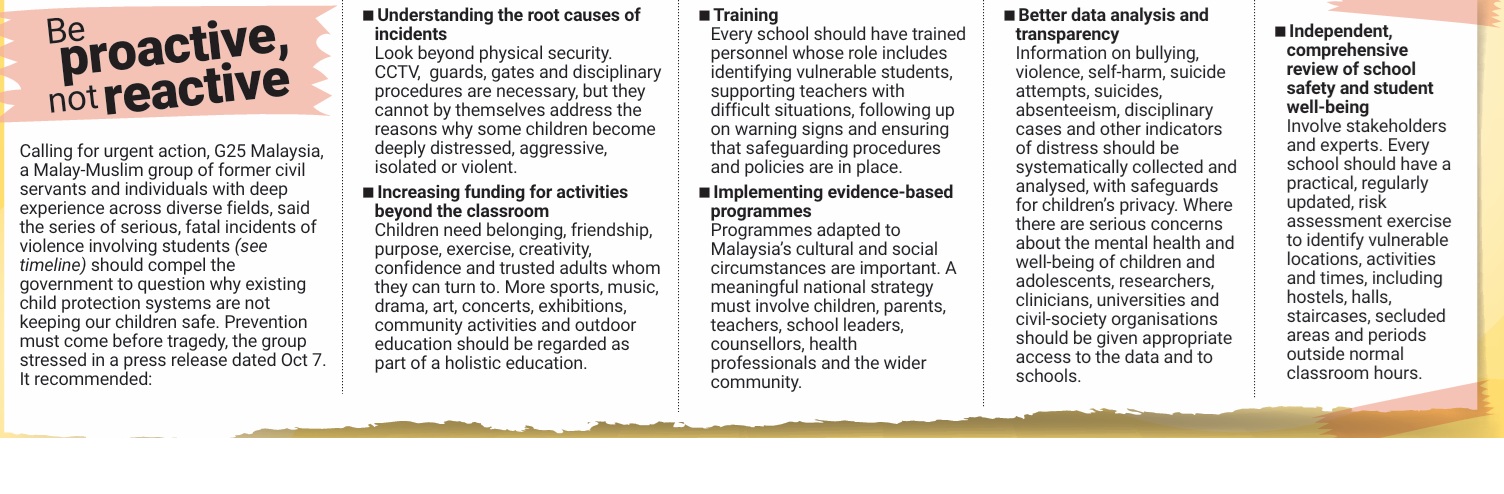
Developing student EI, said Prof Andrew, must form part of a broader, whole-school approach to safety and student well-being.
He emphasised that incorporating EI in lessons is not a substitute for investing in school safety measures and taking appropriate action against harmful behaviour.
“Serious threats, physical assaults and persistent bullying require appropriate intervention, safeguarding and accountability.
“No matter how good their EI, students should never be expected to manage dangerous situations by themselves,” he said, calling for the establishment of clear anti-bullying policies, confidential reporting mechanisms, consistent consequences for harmful behaviour, accessible counselling services and timely intervention when students are distressed or display concerning behaviour.