MALAYSIA’S traditional shadow puppet theatre, wayang kulit, stands at a crossroads.
Once the vibrant heart of village gatherings, the centuries-old art form now battles changing public tastes and a shrinking pool of master puppeteers.
For cultural experts, its survival hinges on whether society continues to view it as a living treasure rather than a fading relic.
Mohd Aswawi Isa, senior lecturer at Universiti Malaysia Kelantan’s (UMK) Faculty of Creative Technology and Heritage, believes its preservation requires a fundamental shift in public mindset.
“Wayang kulit is not merely entertainment. The performance brings together music, carving, language, storytelling and the culture of the Malay community.
“All these elements make wayang kulit a cultural repository that needs to be preserved and strengthened in line with contemporary needs,” he told Bernama.
Wayang kulit performances once served as a means of bringing communities together.
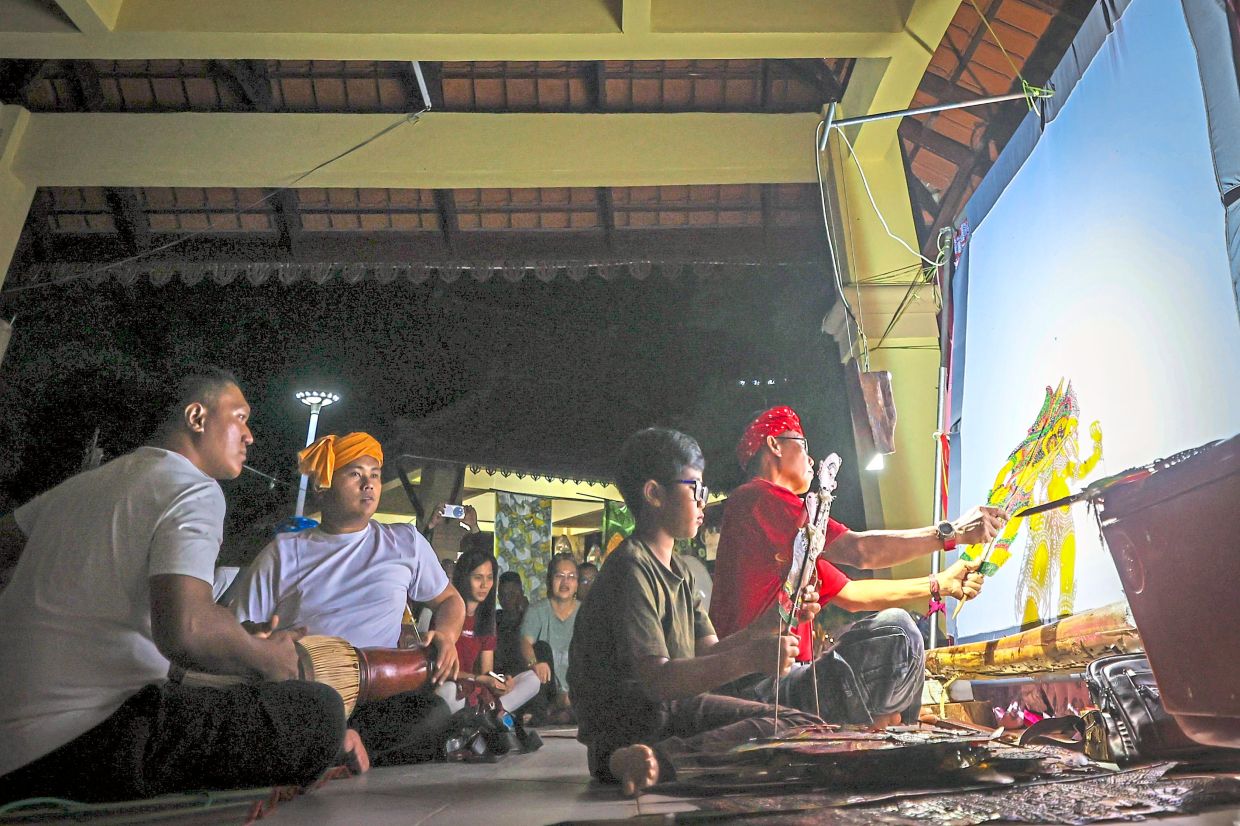
Villagers gathered to set up physical performance spaces − usually makeshift stages − and prepared communal meals for events lasting several consecutive nights.
However, Mohd Aswawi said, that spirit of togetherness has gradually eroded as society became increasingly detached from traditional culture.
Changing perceptions
The primary hurdle facing wayang kulit extended far beyond a simple shortage of young performers, said Mohd Aswawi, with negative public perception posing a far more formidable barrier to long-term survival.
He said some individuals viewed wayang kulit as an obsolete relic with no viable future or commercial potential.
These perceptions, he said, have discouraged younger practitioners and led many seasoned performers to abandon the trade entirely.
The academician said cultural scholars emphasised that performances remained permissible when stripped of spiritual influences.
The challenge, he said, laid in re-educating the public while nurturing practitioners capable of carrying the tradition forward.
The other issue is finding master puppeteers, or dalang, who possess the skill to adapt classical tales to modern social themes.
The art form faces an equally acute shortage of traditional musicians and master instrument craftsmen.
“If this situation continues, it is not impossible that one day wayang kulit will exist only as digital recordings on platforms such as YouTube,” Mohd Aswawi opined.
Kelantan Culture and Arts Department (JKKN) director Rohaniza Abdullah views the current trajectory of the art form with grave concern.
She highlighted severe constraints, including restricted performance permits, a declining interest among youth and a shrinking roster of active troupes.
Rohaniza believes the solution requires constant public exposure: staging regular performances in public spaces will prevent the tradition from slipping into complete obscurity.
More opportunities
Pija Titir Mas Wayang Kulit Association chairman Mohammad Hafiza Che Ya, widely known as Pak Chu, shares these concerns.
He highlighted regulatory obstacles alongside the shortage of new apprentices.
While general public interest remained surprisingly strong, opportunities to stage village performances have dropped precipitously over recent decades, he said.
“In terms of audiences and those interested in it, there are still many.
“The challenge now is obtaining performance permits from the relevant authorities. It is definitely more difficult than before,” he said.
Mohammad Hafiza said wayang kulit performances were now conducted without elements of ritual worship once associated with the art.
He said performances must also be adapted to contemporary developments without sacrificing their original identity.
“If there is a campaign or a particular programme, we incorporate the message into the dialogue and performance.
“We follow current issues, but present them in the form of wayang kulit,” he elaborated.
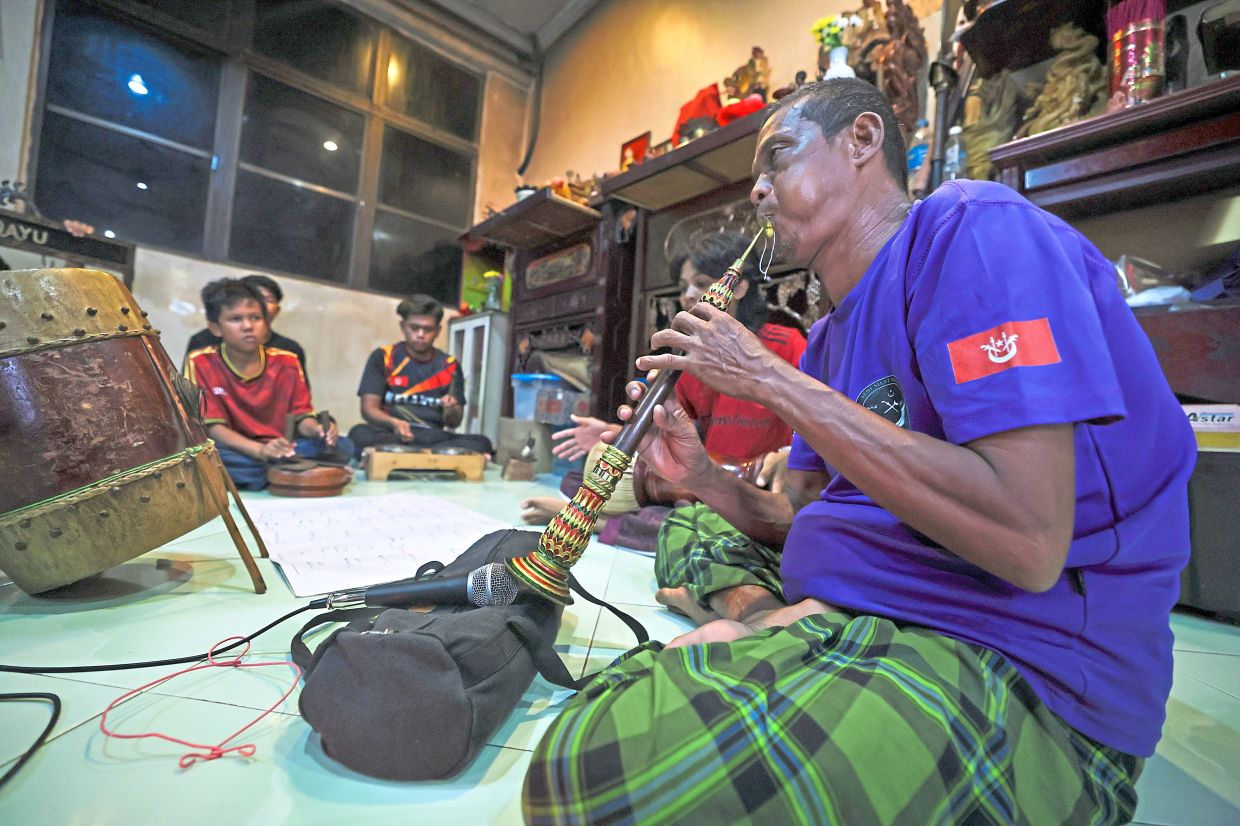
Only three senior dalang remain active around Kota Baru, supported by just three apprentices currently in training.
Mohammad Hafiza fears that without sustained structural intervention, the art form faces complete marginalisation within a decade.
Technology as catalyst
To bridge the gap between tradition and modern audience expectations, UMK has introduced technological innovations into the craft.
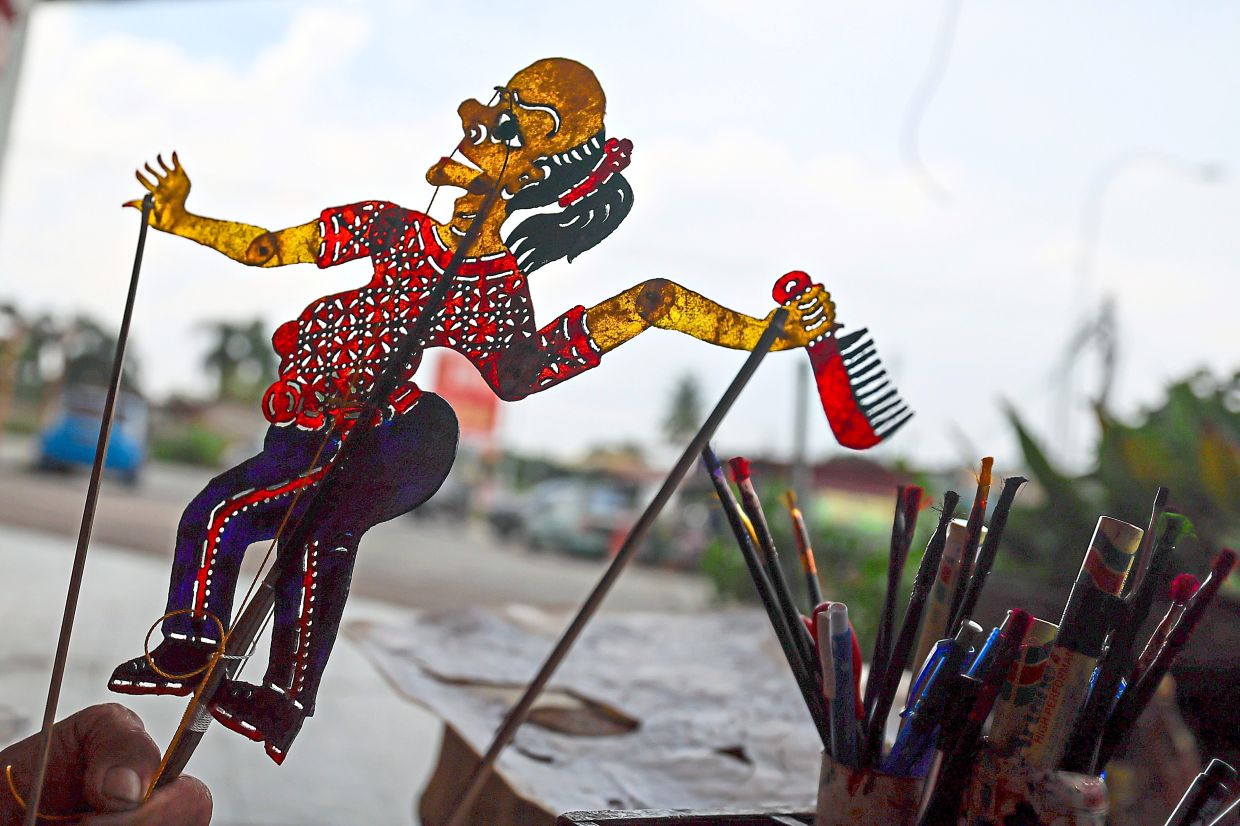
The university adopted computer numerical control (CNC) laser cutters to accelerate the intricate puppet-carving process without sacrificing detail.
“Previously, it could take three to four months to complete a set of puppets.
“With the technology, the process can be reduced to about a week without altering the original design,” Mohd Aswawi said.
UMK is also leveraging artificial intelligence to archive complex musical rhythms and translate Kelantanese dialect dialogue into standard Malay and foreign languages.
This digital translation initiative allows audiences from outside Kelantan to understand the subtle humor and complex narratives embedded within each play.
The university complements these technical efforts with formal academic courses and community partnerships aimed at training cultural entrepreneurs.
Evolving identity
He said reaching younger demographics required adapting content to modern media consumption habits without corrupting the essence of the performance art.
Social media platforms like TikTok, YouTube and Instagram have become essential distribution channels for reaching tech-savvy audiences.
However, experts stress that technological innovation must never compromise core artistic integrity.
“We can introduce innovations, but the main characters, performance structure and identity of wayang kulit must be preserved.
“If everything is changed to the point that its identity is lost, society will no longer recognise the original form of wayang kulit itself,” Mohd Aswawi cautioned.
Rohaniza reinforced this stance, advocating creative presentation methods that respect fundamental traditions.
“Innovations can be introduced in line with changing times, but traditional elements must be retained so that people can still recognise the true identity of wayang kulit,” she said.
Conservation efforts
JKKN approaches preservation through a three-pronged framework focused on conservation, development and promotion.

“These efforts preserve physical puppet designs and performance techniques for future academic reference.
“An apprenticeship programme launched in 2009 pairs master puppeteers with selected youths for intensive mentorship.”
This initiative, she said, had successfully produced a small pipeline of young dalang, musicians and puppet artisans.
JKKN collaborates directly with universities on academic research while assisting registered cultural troupes in applying for financial grants.
Rohaniza pointed to Sri Cindayu Wayang Kulit Association as a model for grassroots preservation.
Founded by 58-year-old Peranakan Chinese practitioner Kang Boon Ann, known as Che Ann, the troupe based in Kok Lanas operates as a family unit.
His wife and two children actively participate in staging performances.
Kang has dedicated over 30 years to hand-carving leather puppets and performing as dalang, proving that family dedication can sustain heritage across generations.
Soul of Kelantan
Despite mounting economic and administrative challenges, wayang kulit retains an extraordinary ability to captivate audiences.
Civil servant Nik Mohd Azlan Nik Ahmad, 30, describes watching the shadow plays as a deeply moving experience.
“Although I am a local who grew up with this art, my admiration for wayang kulit has never faded.
“The ability of the dalang to single-handedly bring multiple characters to life demonstrates the immense aesthetic value of our heritage.
“This is not merely entertainment from the past, but the identity and soul of the people of Kelantan that must continue to be preserved,” he said.
Foreign visitors share similar sentiments when encountering the art form for the first time.
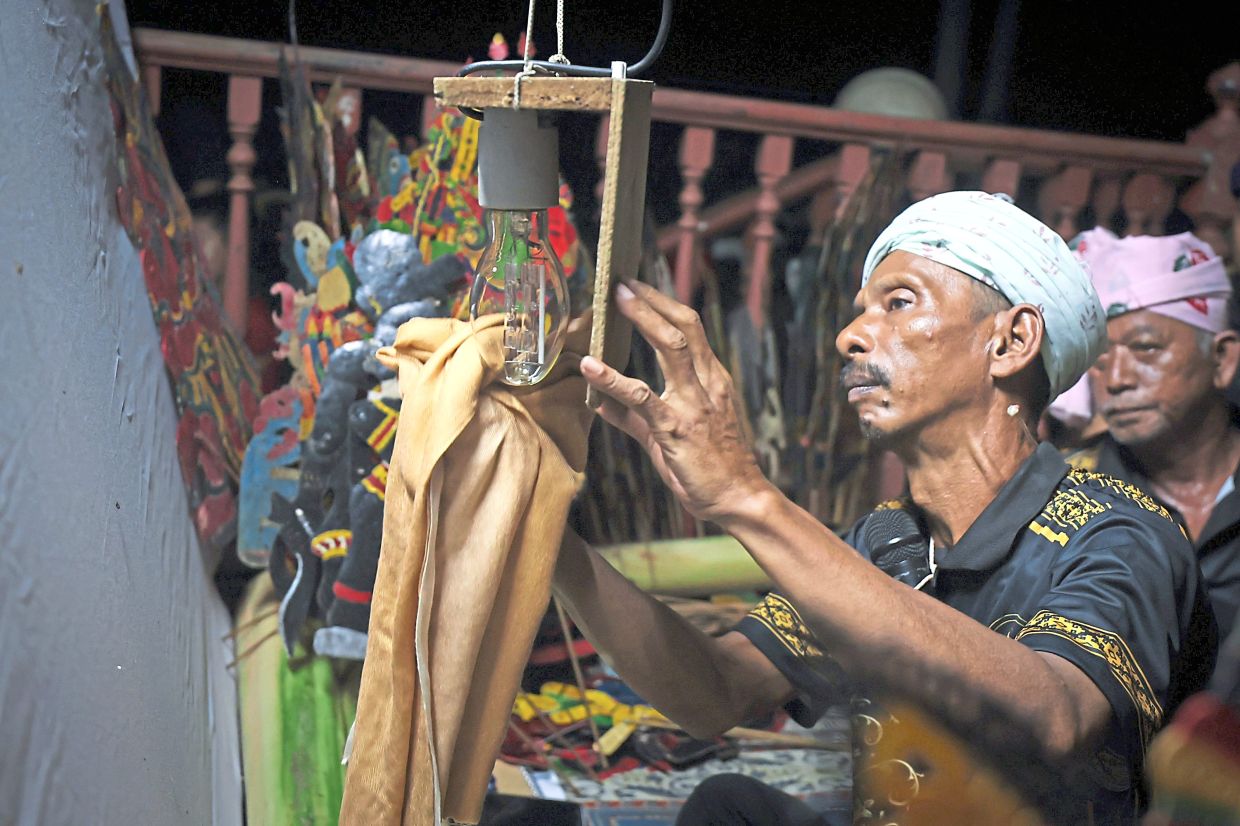
Australian tourist Chloe Grace, 45, recounted her first experience watching a live performance in Kelantan.
“I was truly amazed.
“It is extraordinary how intricately carved pieces of leather can create such a vivid story through nothing more than the interplay of light and shadow.
“The traditional music seemed to transport me to another world.
“This is one of the most unique cultural experiences I have ever had,” she said.
The strong reception from both local residents and international visitors highlights the potential of wayang kulit as a cultural tourism asset.
As long as master puppeteers teach, craftsmen carve, families carry the torch and audiences gather before the illuminated screen, Kelantan’s shadow play remains a living art rather than a piece relegated to a museum.