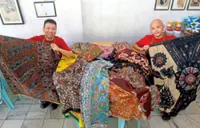
WHILE modern, machine-printed batik has become common, one kopitiam in Ipoh, Perak, is making an effort to promote handcrafted batik and showcase local heritage.
At Meng Foong Kopitiam in Bercham, owner Jason Chai Wai Foong, 45, has dedicated a corner of his eatery to feature handcrafted batik, antique brass stamps and Peranakan heirlooms – crafts and treasures that he believes are slowly disappearing.
“The restaurant was previously run by my mother.
“After she passed away in 2019, I took over with the help of my cousin, Ken Loo Kok Meng, who is also the co-owner and chef.
“We moved to our current premises two months ago,” said the former sonographer.
Chai said his batik fabrics had accumulated since his great-grandmother’s time.
“When my mother passed away, I did not know what to do with all the sarongs,” he said.
“After consulting a friend who specialises in textile collections, I began learning about the history, craftsmanship and cultural significance behind each piece.”
Chai’s collection includes more than 100 pieces of handcrafted batik from Indonesia, and local sources in Terengganu and Chemor (Perak).
The collection showcases a wide variety of patterns, ranging from vibrant floral-inspired designs, majestic elephants and birds, to coastal patterns influenced by maritime designs.
Also on display are three antique brass batik print stamps, each over 100 years old.
Weighing between 794g and 1.2kg, the stamps feature intricate motifs, including leaf vines and traditional Javanese-inspired patterns.
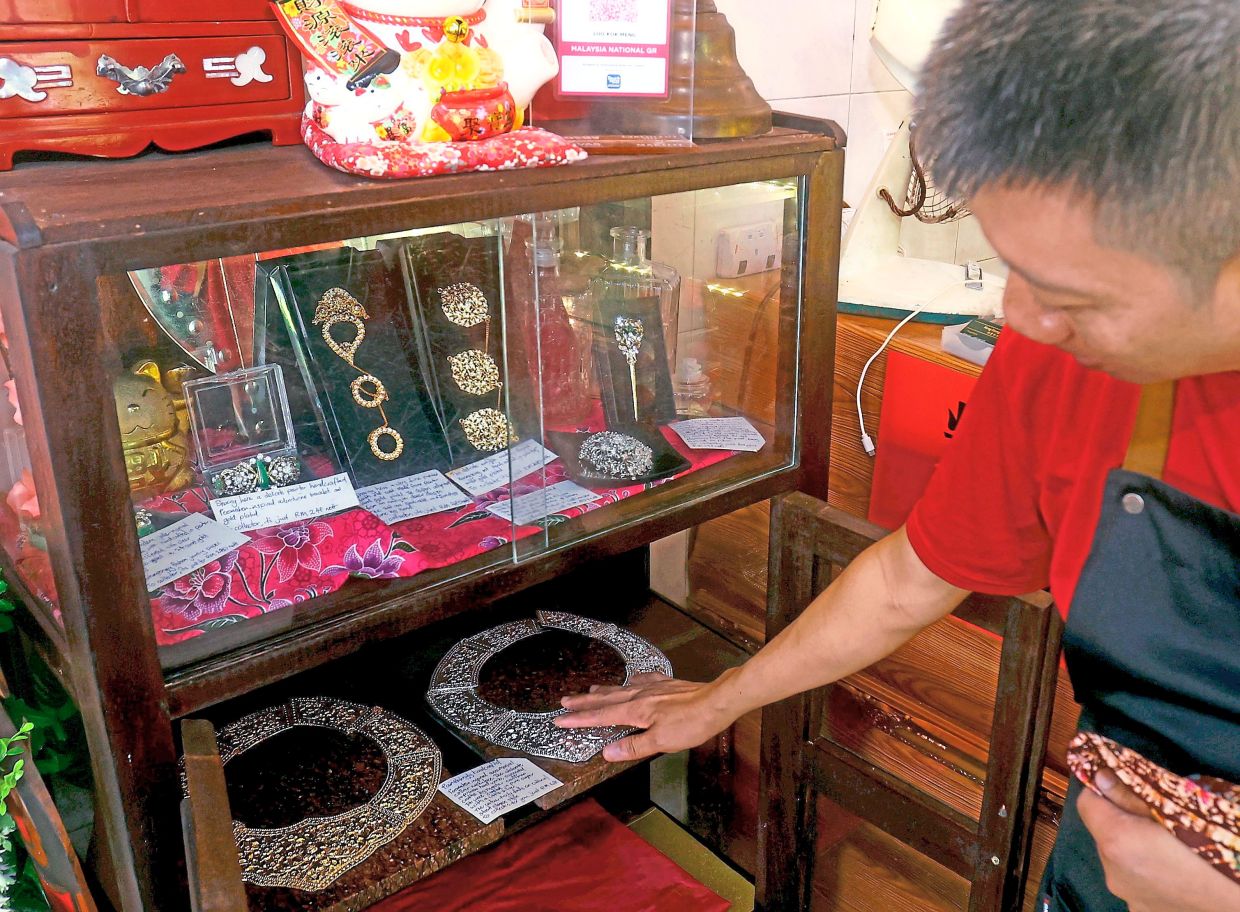
Chai also displays Peranakan items collected by his family, including cucuk sanggul (chignon hairpins), brooches, bracelets, necklaces and silver belts.
As a descendant of the Baba Nyonya community, Chai hoped the display would encourage greater appreciation of Peranakan culture.
“There are three major Peranakan families in Ipoh, namely the Chew, Lau and Chan families.
“Their practices are different from those in Melaka and Penang as they tend to be more traditional,” he said.
He added that only a handful of master craftsmen producing handcrafted batik using traditional techniques remained.
“Many of the masters who possess this knowledge are getting older. There are very few left.”
Chai often connects those interested with local craft masters who offer hands-on workshops.
“People come in for food and once they see the collection, they start asking questions.
“They are delighted to learn about the history behind these pieces,” he said.
He added that some visitors, who were antique collectors, had expressed interest in buying the batik.
Since setting up the display two months ago, Chai has sold 18 batik pieces, with prices ranging from RM800 to RM3,000.
“I hope to serve as a guide, helping visitors understand the history, craftsmanship and cultural value of these items.”