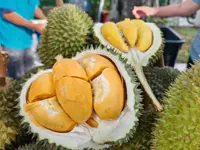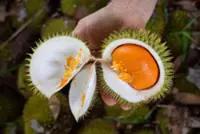
FEW things polarise opinions quite like Malaysia’s King of Fruits.
To enthusiasts, the durian’s complex flavours, rich mouthfeel and intense aromas make every bite an unforgettable experience.
For others, especially Western travellers, those same qualities have long made the fruit revolting.
Eating it has often been described as an ordeal or a test of courage.
That reputation was put to the test in Penang when a group of holidaymakers staying at a Batu Feringghi resort ventured to a roadside stall to taste the thorny fruit for themselves.

The hesitation was evident as Red Prawn durian was cracked open.
Tentative sniffs and nervous laughter followed as Musang King and Black Thorn were opened and all three types of durian served.
Moments later, uncertainty gave way to surprise and delight.
After the first bite, they praised the fruit’s creamy texture and sweetness, suggesting that durian’s notorious reputation is often driven more by preconceptions than first-hand experience.
Creamy, fascinating taste
For Guillermo Leon Calderon, 67, a willingness to take that first bite is all it takes to overturn an enduring food myth.

Yet despite the warnings, they chose to approach the experience with an open mind.
Having tried exotic fare including iguana, frog legs and alligator on their travels, they believe no food should be judged before it is given a chance.
“My father always taught me to try something before forming an opinion,” Camacho said.
Calderon added: “Durian’s reputation is impossible to ignore, but it wasn’t as bad as people often make it out to be.
“It was sweet and not overpowering.”
The pair liked Musang King the most.
“It’s rather unique. I would advice people back home that if they ever come to Penang or Malaysia, don’t let the stories put you off.
“Give it a try,” Calderon said.

It was, however, his first time sampling different varieties side by side.
“We do get durian in England but choices are limited and expensive.
“Here, you have endless types to choose from.
“It’s certainly a delicacy worth travelling for,” said the London native, who is in property sales.
Drawing a comparison with Britain’s rich cheese-making tradition, Gilbert said Penang’s durian deserved appreciation too.
“Once you get past the stigma surrounding the smell, it is actually creamy, fragrant and incredibly enjoyable,” he added.
His friend David Lingard, 42, admitted he was not immediately won over when he first encountered the fruit some years ago.
“The texture was surreal. It wasn’t what I expected from a fruit,” said the civil servant whose palate has evolved over time.
“Some are creamier, some are sweeter. I personally prefer the sweeter ones.
“My family back home are surprised how one fruit can have such a wide spectrum of flavours,” said Lingard.
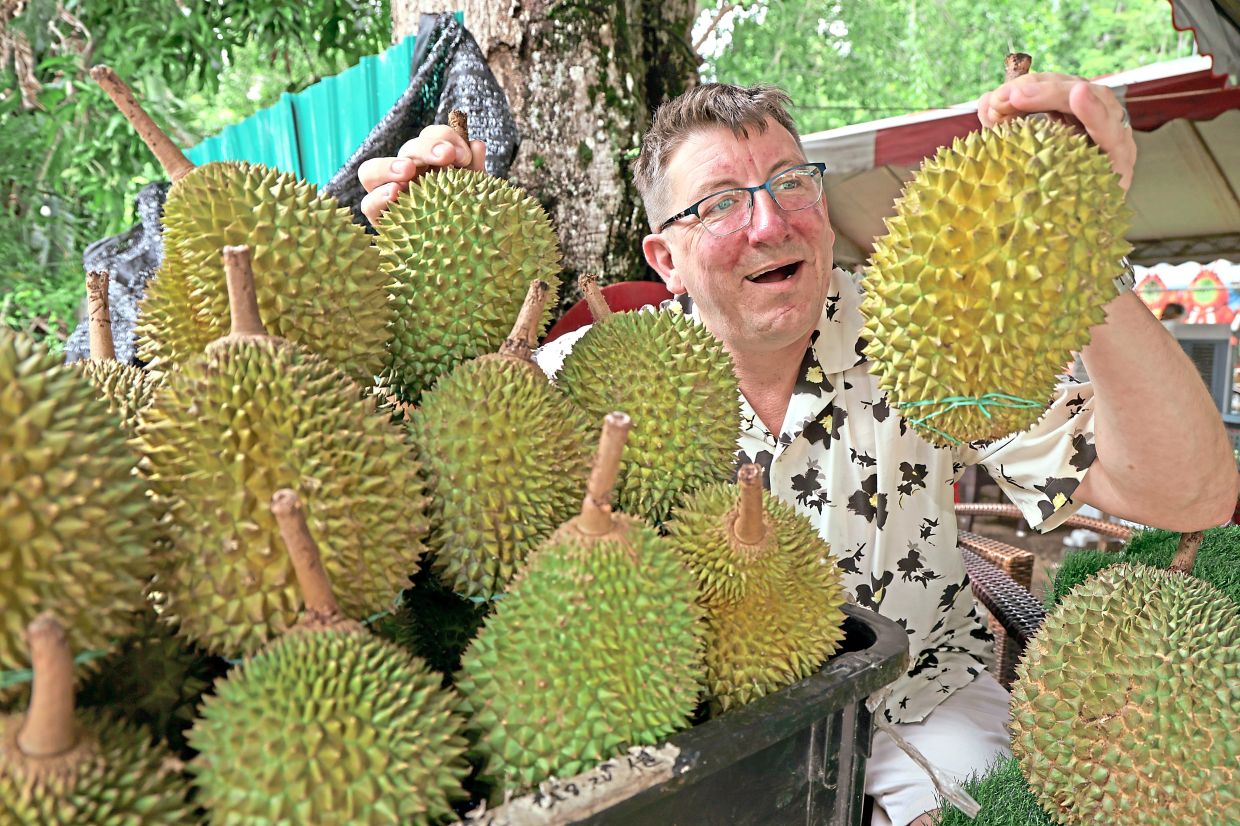
Matthew Coslett, 45, from Devon, England, was amazed at how different the fresh fruit tasted compared to durian-flavoured products.
The science writer and communications specialist said items like durian coffee or durian candy had nothing on the real fruit.
“The first bite was a little strange, being slightly bitter, but the aftertaste was fantastic.
“It reminded me of thick British custard or cream filling,” he said.
While his Japanese wife Megumi found the aroma too overpowering, Coslett said the fruit was not as intimidating as its reputation suggested.
“We were warned about the smell and knew you could get fined for bringing durian into buildings, but it is not that bad,” he said.
Durian tourism gains ground

Malaysian Association of Hotels (MAH) Penang chapter chairman Datuk Tony Goh said there were opportunities to further grow demand across the Asean region and beyond.
He said there was potential to develop more engaging durian tourism experiences that go past eating the fruit.
“Currently, we have many durian farm tours or agro-tourism programmes.
“We could also have dedicated events promoting Penang’s prized durian cultivars or
durian-related products,” he said.
Goh said this could further enhance Penang’s appeal, as the durian harvest season coincided with several of the state’s major heritage celebrations.
He said Penang’s durian, especially renowned varieties such as Black Thorn, further reinforced the state’s reputation as one of Malaysia’s premier food destinations.
“Durian is one of Penang’s most important tourism products and you get to enjoy it right at the source here,” Goh added.

In the same way travellers flock to Australia and New Zealand for winery experiences, or France for its cheeses, many were now visiting Penang for a taste of its durian, he said.
Suleiman said farm tours could introduce visitors to lesser-known features of durian cultivation, as well as aspects of heritage and traditions.
“Such unique experiences can give travellers lasting memories. It’s something you cannot find or replicate elsewhere.
“Penang durian go beyond indulgence or mere sightseeing.
“It’s about experiencing how locals celebrate and take pride in their food,” said Suleiman.
He said there had been an increasing number of guests from the US, United Kingdom, Australia, New Zealand, Russia and Japan who were keen to try the fruit.
Their interest opened up an opportunity to introduce other local fruits such as mangosteen, rambutan and cempedak, as well as fresh coconut water, further promoting Malaysian produce.
Having accompanied guests on tasting sessions, Suleiman said each could return to their home countries as an ambassador for what Penang has to offer.
“Once they taste it, many realise why locals affectionately call it the King of Fruits,” he added.
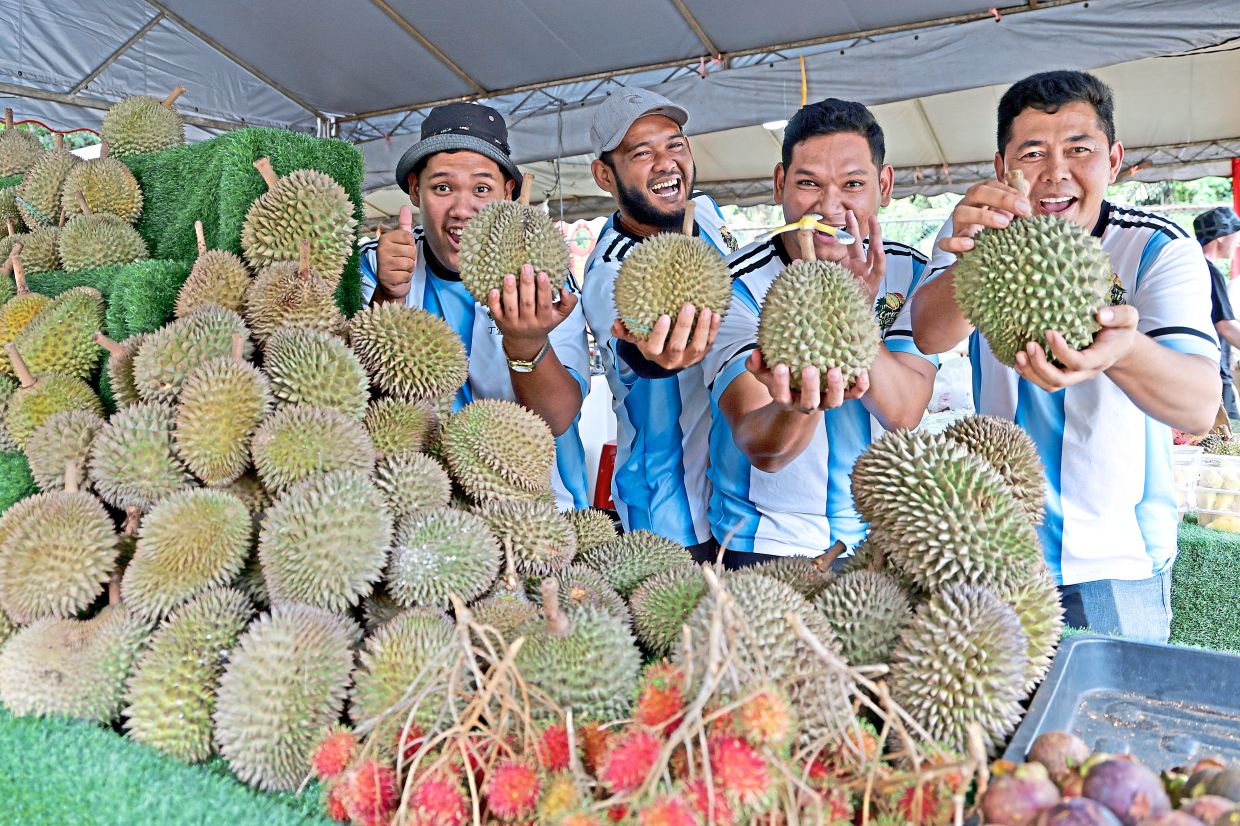
Balik Pulau durian seller Zulkhairi Saidin said the growing appreciation for durian was good for farmers and vendors.
“While our clientele are mostly Chinese nationals, we have had customers from countries that are not traditionally durian fans.
“Even expatriates living in Penang have become regulars once they’ve tasted it. There was one customer who came daily for a period to try a different type each time,” he said.