
The timeless allure of traditionally woven Malay fabrics took centre stage at an exhibition space in Ampang, Selangor, as a personal collection aimed to bring new life to forgotten cultural patterns.
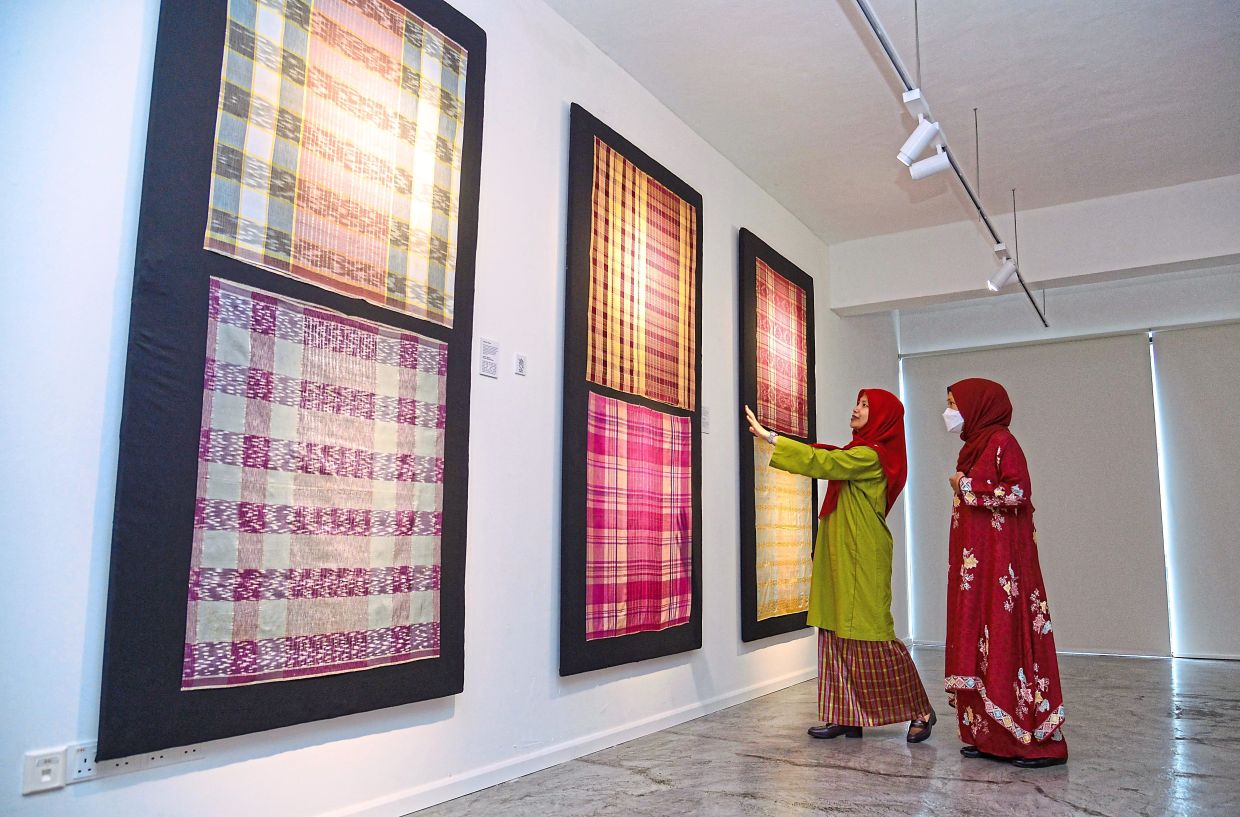
Titled RAGI: Visual Rhythms of Malay Tenun, the exhibition at HARTA Space showcased 40 rare textile pieces, some dating back hundreds of years, curated by Malay arts and culture researcher Khairulanwar Rahmat.
The opening ceremony was officiated by Tengku Puteri Raja Tengku Puteri Afzan Aminah Hafidzatullah, the daughter of the Sultan of Pahang.
Also present were Islamic Fashion Festival founder Datuk Seri Raja Rezza Shah Raja Aman Shah and HARTA director Mirsham Meer.
Khairulanwar said the exhibition served to reintroduce ragi – the foundational chequered patterns and layout of threads that underpin traditional tenun (Malay textiles).
“There are two meanings to ‘ragi’ — One is the process of dyeing through the arrangement of threads and the other is the chequered patterns that underpin many traditional textiles.
“These include layered ragi, overlapping ragi and single ragi.
“This exhibition aims to reintroduce ragi patterns so that our weaving industry can draw inspiration from them,” he told Bernama.
“Most people are familiar with songket, batik, limar and telepuk, but this time I am highlighting a lesser-known element, ragi patterns.”
The collection featured various types of weaving such as tenun Bugis and karat keruping.
Khairulanwar, who has collected over 800 pieces of textiles since 2012, said his interest began when he noticed that many old textiles were being neglected and no longer valued.
“Each of these pieces is handmade, carrying patterns, stories and meaning.
“Every colour has a narrative; yellow and white were once reserved for royalty while the red dye was derived from kesumba seeds.
“Certain lines also indicated who could wear them,” he said.
He expressed concern that Malaysians were gradually losing their identity as modern fashion leaned towards commercial brands.
“These designs are a national treasure. Today’s generation, particularly designers, must learn and carry them forward so that we retain our identity.”
To ensure the longevity of the collection and protect from insect damage, Khairulanwar rolls each textile in acid-free paper.
“I never fold them as it can cause damage and deterioration,” he said, adding that damaged textiles require a conservation process that can take several months.
He said preservation was vital to ensure it can be passed down to future generations.