
New generation owners balance tradition with modernity to tempt cafe-goers
AS food culture evolves, the Malaysian kopitiam is finding new ways to stay relevant without losing its core values.
For many second- and third-generation proprietors, the aim is to keep the family heritage alive while adapting to modern tastes.
Guan’s Kopitiam co-founder Pua Jia Ler, 30, believes tradition and modernity can coexist.
The family-run business pairs old recipes with contemporary presentation inside a modern interior to attract customers.
“We preserve family recipes, such as our nasi lemak sambal inherited from my grandmother, but present them in a modern style,” he told Bernama.
Guan’s Kopitiam achieved a milestone last year when it obtained halal certification from the Islamic Development Department (Jakim) for an outlet in Shah Alam, Selangor.
“We want people from all backgrounds to enjoy the traditional food we serve,” he said.
“That is why we applied for the halal certification, so that customers can feel more confident and comfortable dining with their family and friends here,” he added.
Started in Kota Kinabalu, Sabah, in 2019, it is named after Jia Ler’s father, Kim Guan.
Apart from traditional dishes, the restaurant’s Robusta and Arabica coffee blend has also become one of its signature attractions.
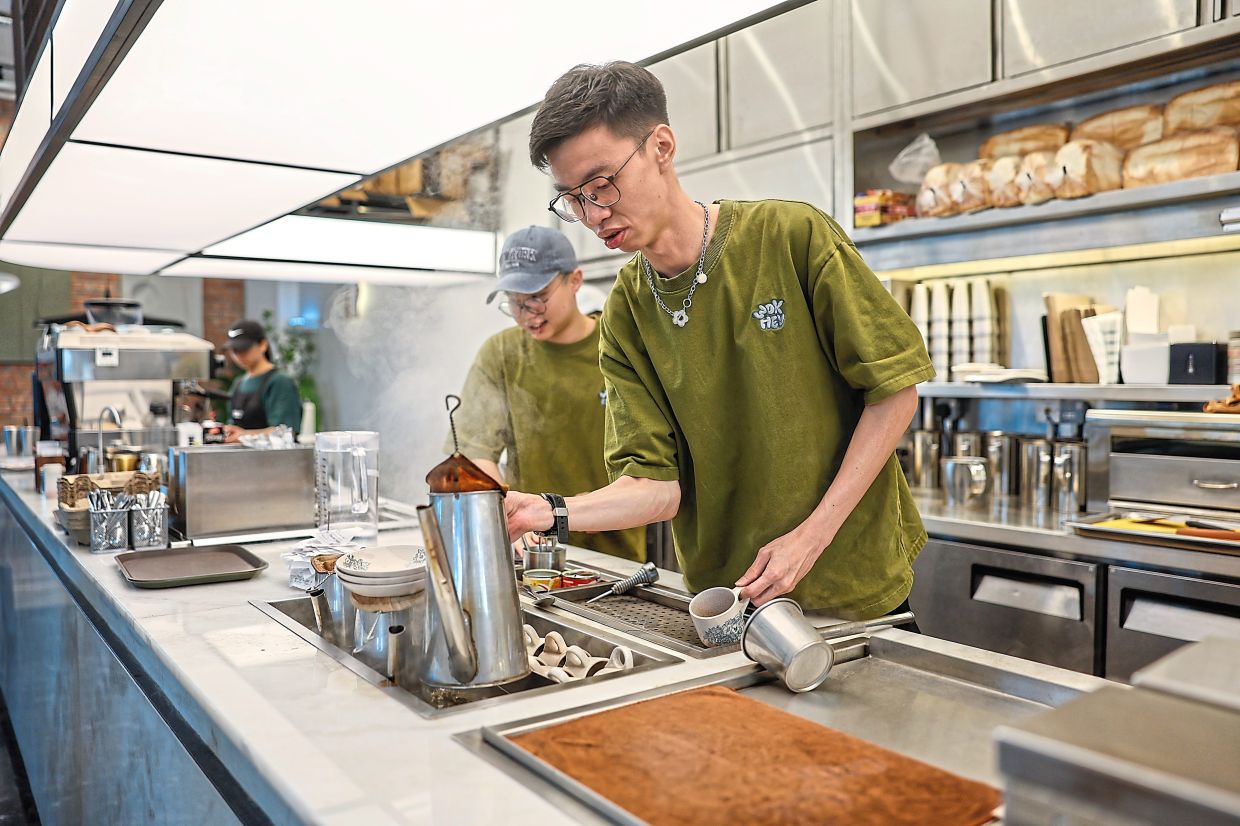
On further expansion, Jia Ler said they preferred controlled growth over franchising in order to ensure standards remained consistent.
“We want to grow steadily without compromising food quality.
“In the food-and-beverage industry, sincerity is very important, and that is what we want to preserve.”
A similar ethos is embraced by Chong Kok Kopitiam manager Lim E Siang, 25, who left his accounting career in 2024 to join the family’s 86-year-old business with his younger brother, E Shen, 21.
The business was founded in 1940 by his great-grandfather Foo Wah Ling.
It was passed down to his grandparents Foo Hee Hoe and Yu Siok Kuk, who later handed it down to his uncle Foo Cher Ming, aunt Foo Mee May and mother Foo Mei Lee.
“Traditional kopitiam concepts are becoming rarer, but customers still come because they want authentic flavours,” he said at the restaurant in Jalan Stesen, Klang.
One of its signatures is its homemade kaya using duck eggs which give it a richer texture and flavour compared to the chicken egg version.
“We still prepare our kaya the traditional way and usually make a fresh batch every two days,” said E Siang.
“Besides using duck eggs, we also add a little ginger to reduce the eggy smell.
“That has been part of our identity for generations,” he said.
He added that the kopitiam also offered Pulau Ketam nasi lemak and traditional Malay and Nyonya kuih.