
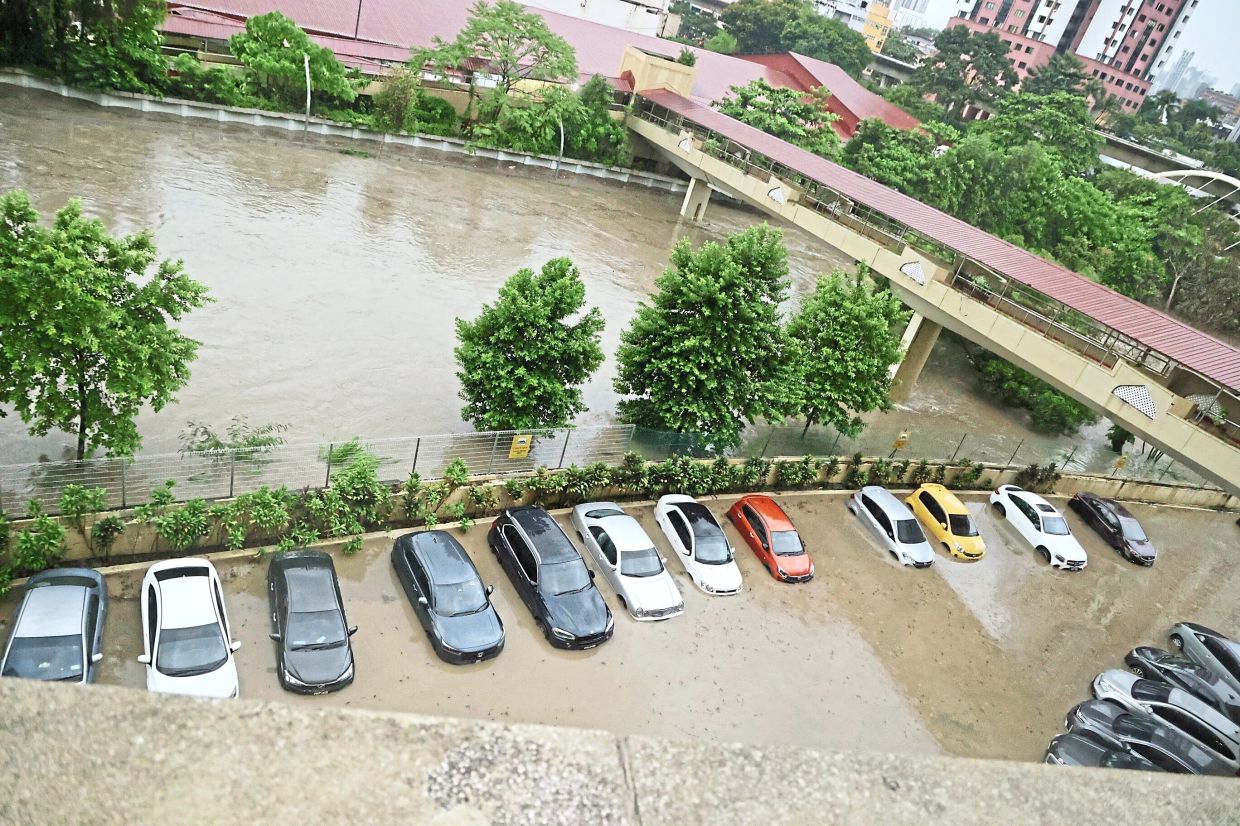
ABANDONED construction sites and neglected buildings across Kuala Lumpur may be contributing to a major urban problem whenever heavy rain hits the city – flash floods.
The experts’ warning comes as the capital city continues to grapple with increasingly intense thunderstorms and recurring flash floods, raising concerns over the condition of long-abandoned construction projects scattered across the city.
Engineer’s perspective
Institution of Engineers Malaysia (IEM) immediate past president Prof Jeffrey Chiang Choong Luin said one of the clearest warning signs that a neglected site was in poor condition, was a sudden surge of water runoff from the area during thunderstorms.
He said that while the public might only notice stagnant water, overgrown vegetation or rusting structures from the outside, the real problems were often hidden within the site itself.
“Drains clogged with debris, collapsed internal drainage systems, damaged water channels and poor maintenance can prevent rainwater from being properly contained or discharged.
“As a result, rainwater flows out from the abandoned site into neighbouring roads and houses, especially during downpours.
“The runoff does not just stay within the site. It eventually ends up on public roads, drains and residential areas,” he added.
Prof Chiang said incomplete structures, unstable ground conditions and poor drainage systems were among the biggest concerns associated with abandoned projects.
“Sites with incomplete piling or foundation works, coupled with poor drainage maintenance, can become dangerous over time, particularly during prolonged heavy rain.
“If excess water is not properly managed, it can weaken surrounding soil and slopes, potentially leading to ground instability or even landslips,” he said.
“Potholes are commonly seen near entry and exit points of abandoned sites, while temporary road diversions are sometimes never properly restored.”
Prof Chiang said abandoned sites could also pose electrical hazards when wiring systems were not properly disconnected or terminated.
Another major concern, he said, was the lack of proper fences, barriers and warning signage to keep trespassers away from dangerous structures.
“In some cases, loose debris, zinc sheets or building materials can also become dislodged during thunderstorms and strong winds, posing risks to people and nearby properties,” he added.
Identifying abandoned site
Dr Wong Chee Fui, assistant professor and professional engineer with the Civil Engineering Department at Universiti Tunku Abdul Rahman (UTAR), said it was not always easy to determine if a construction site was abandoned.
Most construction sites are fenced up or covered with hoarding, making it difficult for outsiders to know whether work has stopped temporarily or permanently.
“Construction work may be put on hold for various reasons, but that does not automatically mean the project has been abandoned,” said Wong.
He said that under Malaysian housing law, a project was considered abandoned if construction work has stopped for more than six months without valid reason.
“By the time people realise a site has been abandoned, it may already be too late.
“The contractor or person in charge may no longer be contactable, especially if the site has been left idle for a long time or if the unfinished structure is only visible from outside,” he added.
Across Kuala Lumpur, abandoned and stalled projects can still be found in areas such as Jalan Kelang Lama, Segambut, Brickfields and parts of the city centre, with some left idle for years.
Beyond flooding, these neglected sites are also becoming breeding grounds for mosquitoes and illegal dumping spots, particularly in densely populated neighbourhoods where residents live close to derelict structures.

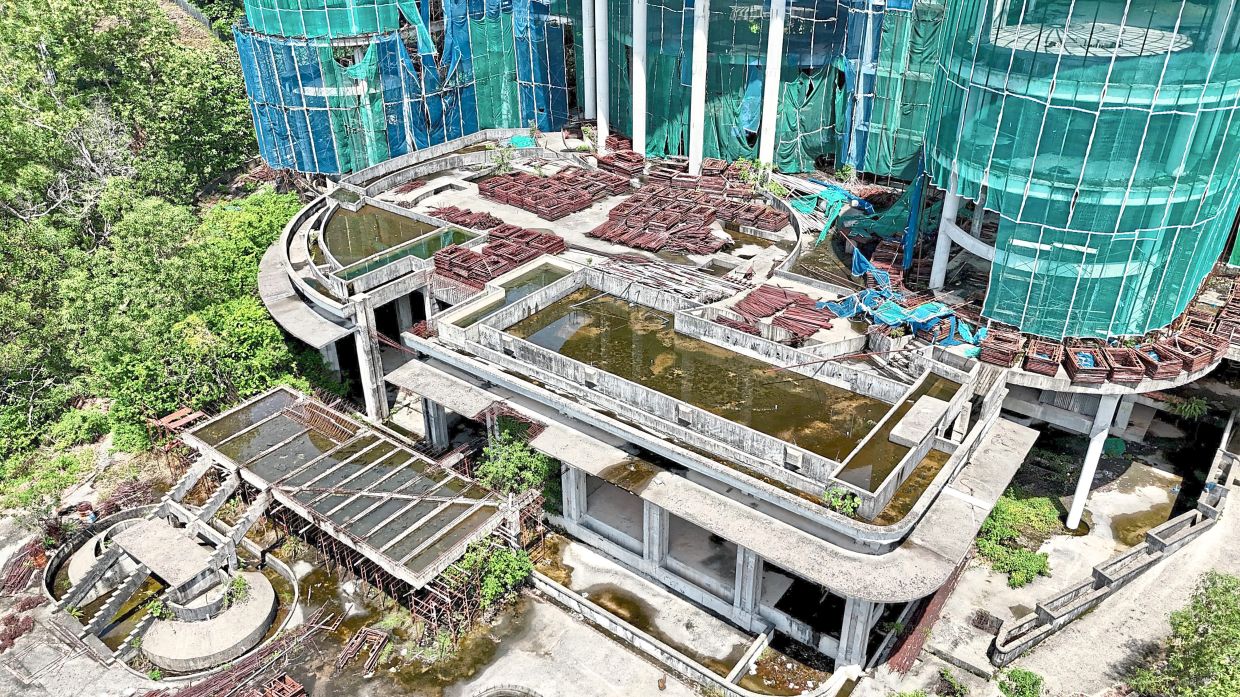
One infamous stalled project is the Plaza Rakyat development in Pudu, which has been abandoned for some 30 years.
Plaza Rakyat was launched in 1994 as a skyscraper mixed development on a prime site along Jalan Pudu, but stalled at 30% completion when its developer ran into financial trouble during the 1997/98 Asian financial crisis.
The project was later terminated in 2010, with the company placed under receivership.
Kuala Lumpur City Hall (DBKL), as the landowner, took over the site in 2014 after settling a RM150mil loan and then carried out drainage works.
The Plaza Rakyat project has since seen multiple revival plans, but none have materialised.
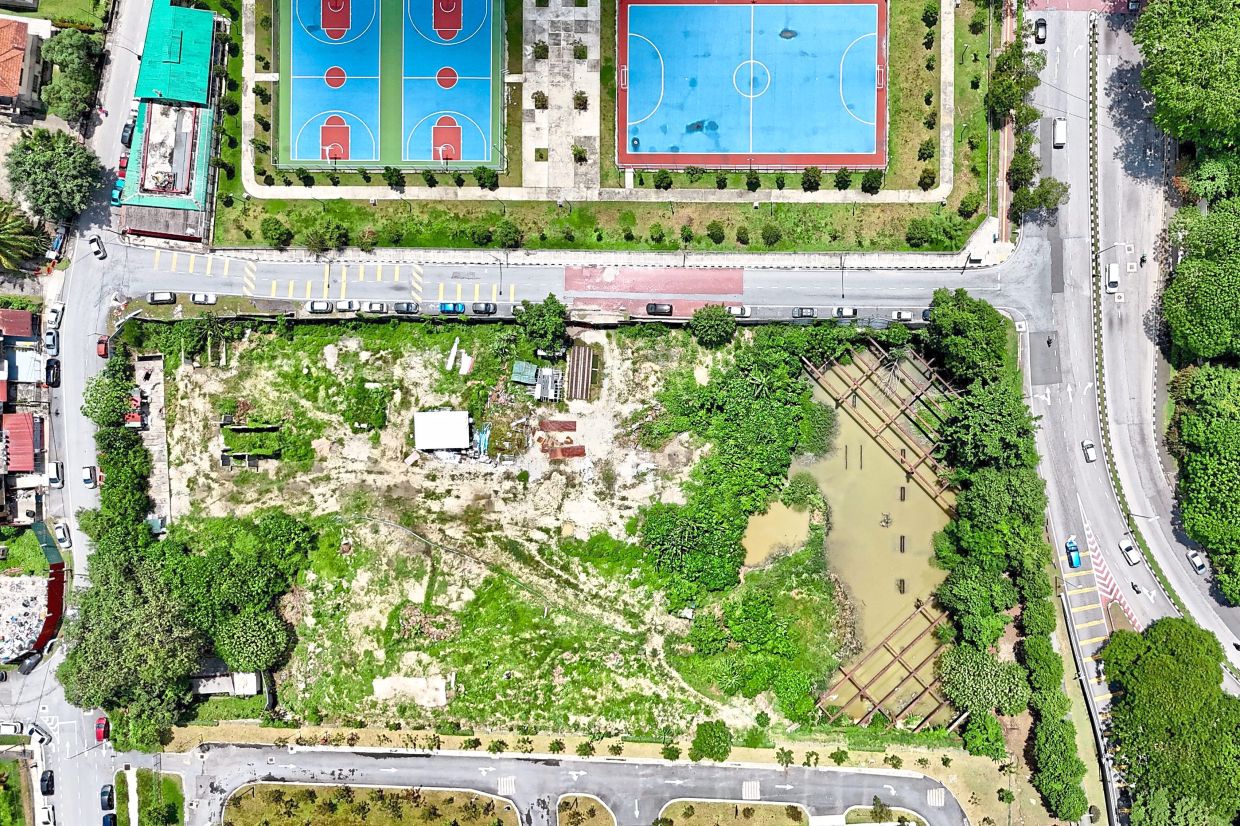
In Brickfields, an abandoned site sits beside residential apartments and a DBKL football field, while another neglected project is located in the heart of the city, surrounded by commercial buildings.
Some abandoned basement carparks have also become reservoirs of stagnant water after years of neglect, creating ideal conditions for breeding Aedes mosquitoes and posing safety risks to nearby communities.
Call for accountability
Prof Chiang and Wong said developers remained primarily responsible for the condition and safety of abandoned sites, while local authorities played an important enforcement role.
Although laws and safety regulations have evolved over the years, they said Kuala Lumpur still needed a more coordinated and long-term approach in dealing with abandoned projects.
Prof Chiang said Malaysia had sufficient laws and regulations governing abandoned construction projects, but enforcement and continuous monitoring remained the biggest challenges.
He cited existing regulations under the Housing Development (Control and Licensing) Act 1966, along with guidelines governing public and private projects.
“The bigger challenge is ensuring consistent enforcement once projects become dormant for prolonged periods,” he noted.
Neglected sites, he said, could also place additional pressure on local authorities, which might eventually have to step in to manage drainage, public safety and mosquito control issues.
Among the possible solutions besides reviving abandoned projects, were converting them into public housing or repurposing certain structures into heritage sites, he said.
Prof Chiang said enforcement and monitoring must be carried out consistently, while developers and financial institutions should also play their part in addressing liabilities linked to abandoned projects.
“The ultimate objective should always be to revive the project at a later stage whenever possible,” he added.
Public asked to stay alert
Prof Chiang said the public should remain alert to visible warning signs around abandoned sites, including cracks, leaning structures, exposed steel bars, stagnant water, fallen trees and unusual water flow from the area.
“These signs should be reported to the local authority immediately and people should avoid trespassing into such sites,” he said.
According to Wong, responsibility for a construction site formally shifts to the contractor once the site possession date takes effect.
The date marks the official start of construction works, when the developer or landowner hands over control of the land to the contractor, he explained.
“From that point onwards, the contractor assumes legal and physical responsibility for the site,” he said.
According to Wong, contractors are responsible for securing the perimeter, putting up hoardings and ensuring public safety in compliance with requirement stated in the Occupational Safety and Health Act.
The contractor’s all risks (CAR) insurance and workmen’s compensation policies must also be active once possession is taken, as the contractor becomes liable for accidents, fires or damage occurring on the site.
“The site is only handed back to the developer after the Certificate of Practical Completion (CPC) is issued,” said Wong.
Dedicated task force
Prof Chiang suggested the formation of a dedicated task force comprising local authorities and professional bodies to address neglected construction site issues.
“This task force would engage stakeholders, bringing together professional engineering bodies, developers, contractors and regulatory agencies to coordinate efforts.
“Conduct studies to analyse the root causes of project abandonment and identify practical solutions, while producing policy recommendations,” he said.
Prof Chiang also suggested preparing a white paper with strategies, regulations and preventive measures to manage and rehabilitate neglected sites.
“IEM will be among the first professional bodies willing to participate in such a task force or study group to help develop long-term solutions and recommendations,” he said, adding that the recommendation underscored IEM’s commitment to ensuring that construction projects achieve their objectives.
“These sites should not be ignored until a tragedy happens,” he stressed.