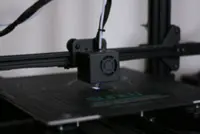
JOHOR government will equip its Sekolah Rintis Bangsa Johor (SRBJ) or Bangsa Johor Pilot Schools initiative with advanced facilities such as 3D printers, source electronics platform, robotics and autonomous systems to further enhance teaching and learning.
State education and information committee chairman Dr Muhammad Naqib Md Ghazali said the facilities would provide students with more interactive, hands-on learning experiences while encouraging them to explore, solve problems and develop innovative ideas.
“Through the usage of facilities including Arduino, an open-source electronics platform, we hope to foster a culture of creative and critical thinking among students, while equipping them with skills relevant to future studies and the workforce,” he said after visiting SMK Seri Kota Puteri 2 and SK Seri Kota Puteri 4 in Masai, Pasir Gudang.
He added that the initiative would be complemented by efforts to strengthen students’ proficiency in English, Science and Mathematics through the Dual Language Programme (DLP) at four participating schools.
“The programme would help build students’ confidence in using English as a language of knowledge, as well as improve their preparedness for higher education and an increasingly competitive job market.”
Dr Muhammad Naqib said the four schools – SK Tasek Utara, SK Seri Kota Puteri 4, SMK Tasek Utara and SMK Seri Kota Puteri 2 – had already recorded encouraging progress after just a year of implementation.
He said both secondary schools achieved a 100% certificate eligibility rate for the 2025 Sijil Pelajaran Malaysia (SPM) examination, while 100% of students from the pilot schools continued their studies at tertiary level, involving 400 SPM candidates.
He added that the schools performed well at national and international innovation competitions, with SMK Seri Kota Puteri 2 winning the gold medal at Safeathon 2026.
The school’s “Craytion” project – eco-friendly crayons made from used cooking oil and natural dyes to support sensory therapy for children with autism – also won the Best Idea Innovation Award at the Japan Youth Summit 2026, which involved delegates from 12 countries.
“SRBJ has also collaborated with Harvard University through its Programme for Scientifically Inspired Leadership, which will see 100 students benefitting from training focused on leadership, critical thinking, problem-solving and innovation.
“We are committed to expanding the SRBJ initiative to all Johor districts over the next five years, with the aim of placing the schools among the 20 best daily schools in Malaysia by 2031,” he added.
The initiative aims to transform the state’s education landscape using a science, technology, engineering and mathematics (STEM) and digital approach to produce knowledgeable, skilled and competitive students.