Fashion has been flirting with 3D printing for more than a decade, with plenty of intriguing experiments along the way.
The question now is whether a technology long associated with novelty can finally find a scalable place in the business of making clothes and accessories.
And does this form of craftsmanship sit at odds with traditional artisanal practices, or could the two evolve alongside each other?
“The 3D printing of fashion requires design, ingenuity, creativity and craftsmanship, as well as long periods of experimentation and testing,” notes Suryani Senja Alias, director of the Merdeka Textile Museum in Kuala Lumpur.
“Such a technique is complementary to traditional heritage, like a new tool for artisans and designers to play and explore with.”
Her view is that the technology will not replace established ways of making, but instead offer another means of bringing ideas to life.
“Designers can express creativity differently when technology comes into play,” Suryani says.
She highlights “seamless dresses, abstract patterns, sculptural forms and new materials” as some of the possibilities that 3D printing could bring to fashion.
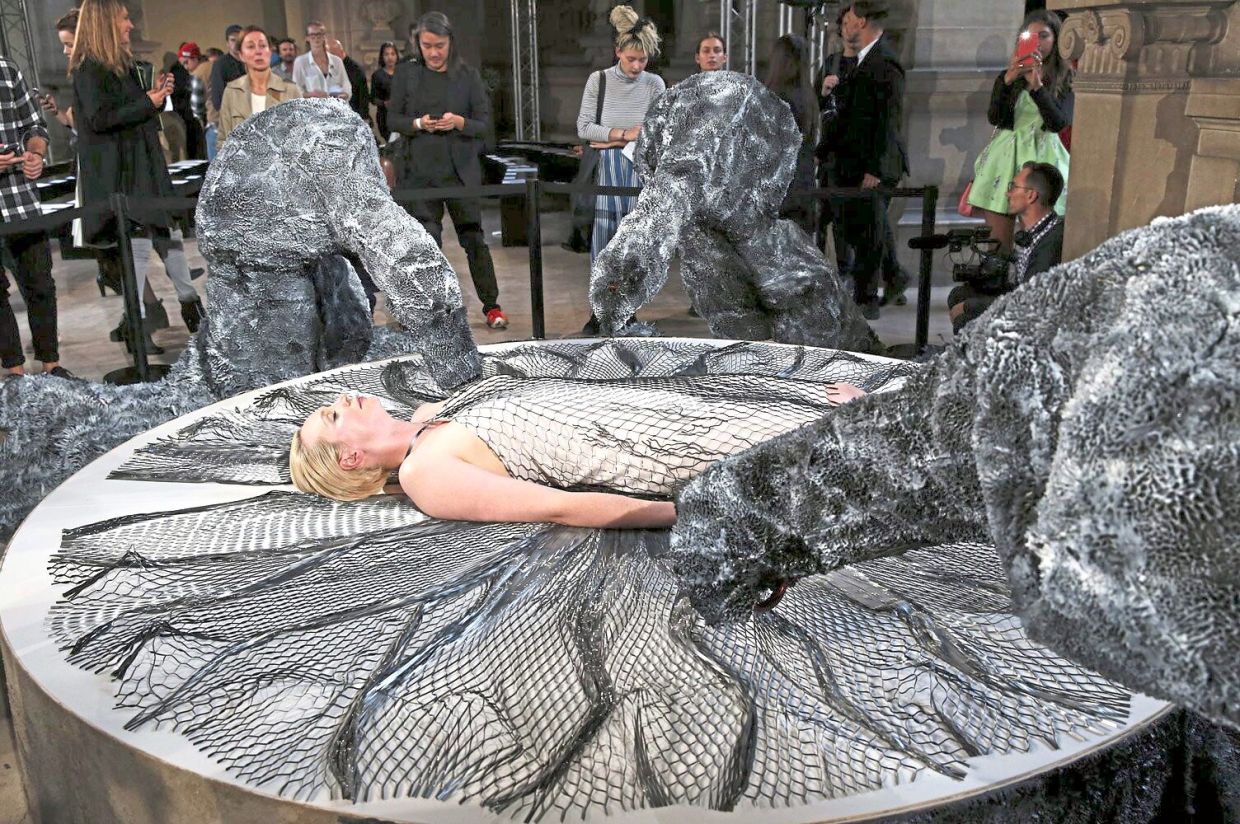
The Merdeka Textile Museum is currently showcasing two 3D-printed fashion creations by veteran Malaysian designer Melinda Looi (a dress pictured on the cover, and a pair of heels). Both date back to 2015.
“The significance of the exhibit is to create conversations on how creativity with technology can continue to develop our traditional idea of and approach to textiles,” Suryani shares.
She says the message is that fashion can expand its possibilities through technology.
In the context of 3D-printed “fabric”, it can also be thought of as a regenerative material that can be reused or produced from other materials. That points to one possible direction for the future of fashion creation.
“Textiles can be printed and crafted through technology from other materials to express creativity without limitations,” Suryani adds, suggesting that innovation need not come at the expense of craftsmanship.
Read more: Why what we wear is changing, and fashion brands are racing to keep up
It goes beyond the value of human touch
In fashion, hand-crafted pieces are prized above all else. Take haute couture, for example, which is widely regarded as the pinnacle of luxury fashion.
In France, even the term “haute couture” (French for “high dressmaking”) is regulated by law.
Only fashion houses that meet strict criteria governing their production methods and atelier practices, including the requirement that garments be made by hand, can use the designation.
Haute couture designs can command prices ranging from tens of thousands to hundreds of thousands of dollars. It is a reminder of just how closely luxury fashion is tied to the value of human skill and craftsmanship.
So, does this make 3D-printed dresses the antithesis of haute couture and, by extension, somehow less valuable?
Looi says no. Instead, she believes 3D printing could prompt a rethinking of what is valued in fashion and spark a wider conversation.
“When something becomes reproducible, we have to ask ourselves what exactly we are paying for,” Looi argues.
“Is it the physical object, the craftsmanship, the idea, the experience, the designer’s name, or rather, the story and intention behind it?”
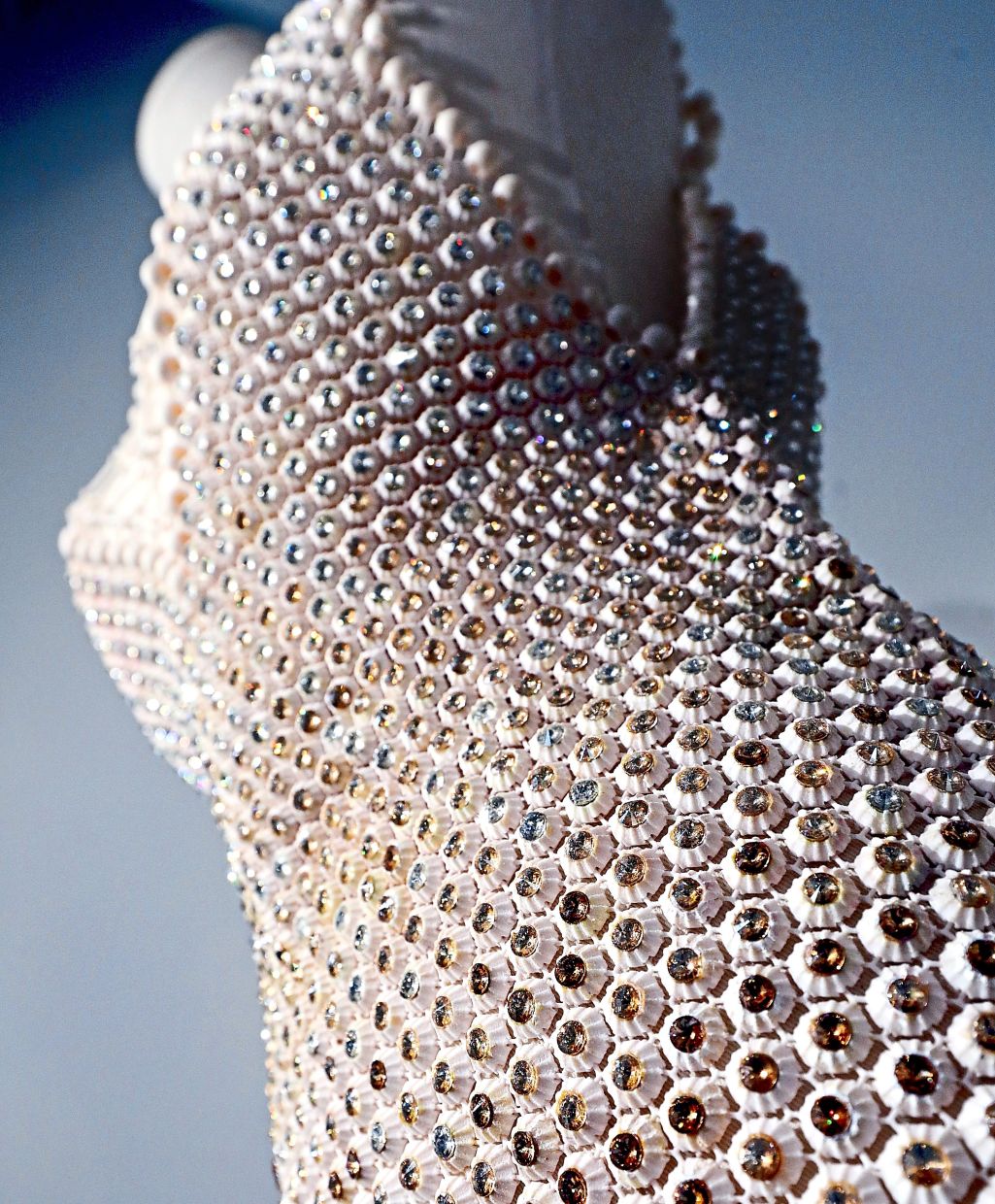
She sees 3D printing as a technology that could help address some of the challenges designers face today, particularly the availability of skilled labour and the development of new materials and techniques.
“It also gives us the ability to explore structures and silhouettes that may be extremely difficult to achieve through traditional methods,” she says.
“I don’t see the technology as replacing craftsmanship. Rather, it can extend our capabilities as designers, allowing us to turn what was once considered impossible into something possible, while still leaving the creative vision and intention in the hands of the designer.”
When the discussion turns to whether 3D printing could eventually make her obsolete, Looi admits that some traditional design roles in the industry will probably become fully automated in the future.
Much like scribes were displaced by the printing press, there is a possibility that designers could eventually be cut out of the process as consumers use AI to generate digital garment files for printing at home.
Yet she chooses to look at it from a different point of view.
“The technology may democratise production, but it doesn’t necessarily democratise vision,” Looi explains.
While 3D printing can make production more accessible, it does not necessarily give everyone the creative expertise, design knowledge or aesthetic judgement needed to create something distinctive.
To her, what 3D printing adds to a designer’s vocabulary is the ability to begin the design process directly in three-dimensional form, rather than translating a two-dimensional pattern into a three-dimensional garment.
Complex technology that is continuously advancing
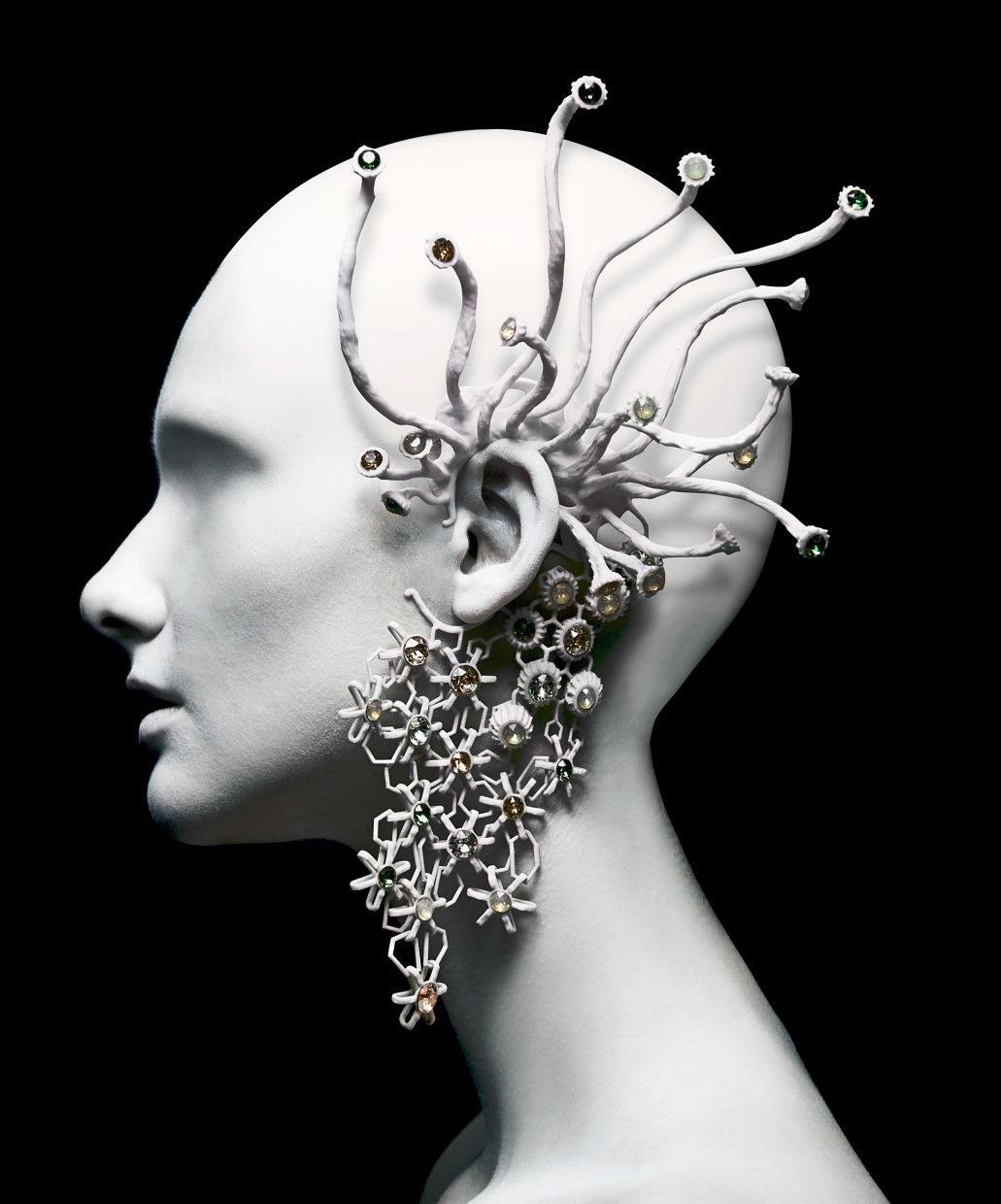
In 2013, Looi became the first designer in Asia to create 3D-printed fashion pieces, returning to the technology two years later with more.
She worked with Materialise, a Belgium-based 3D-printing specialist known in the global fashion industry for its collaborations with Iris Van Herpen.
Van Herpen made history in 2010 by presenting the first 3D-printed dress on a runway.
The Dutch designer then became a guest member of the Parisian Chambre Syndicale De La Haute Couture in 2011, the body responsible for accrediting haute couture houses in France.
Her inclusion is significant because it shows that 3D printing can exist within, rather than outside, the world of luxury fashion.
Of course, the technology has evolved considerably since then.
“In the early years, many 3D-printed fashion projects were very experimental,” says LG Chong, solution consultant at Materialise Malaysia.
Citing Looi’s collections, he adds that each piece took considerable time to design, create and convert into a 3D file before being printed at Materialise’s headquarters in Belgium.
The process, he recalls, involved designers, 3D modellers and engineers.
“Today, the workflow is much more mature,” Chong shares.
“The software can help check and repair files, prepare complex designs for printing, optimise structures, generate supports where needed and reduce the risk of print failures.”
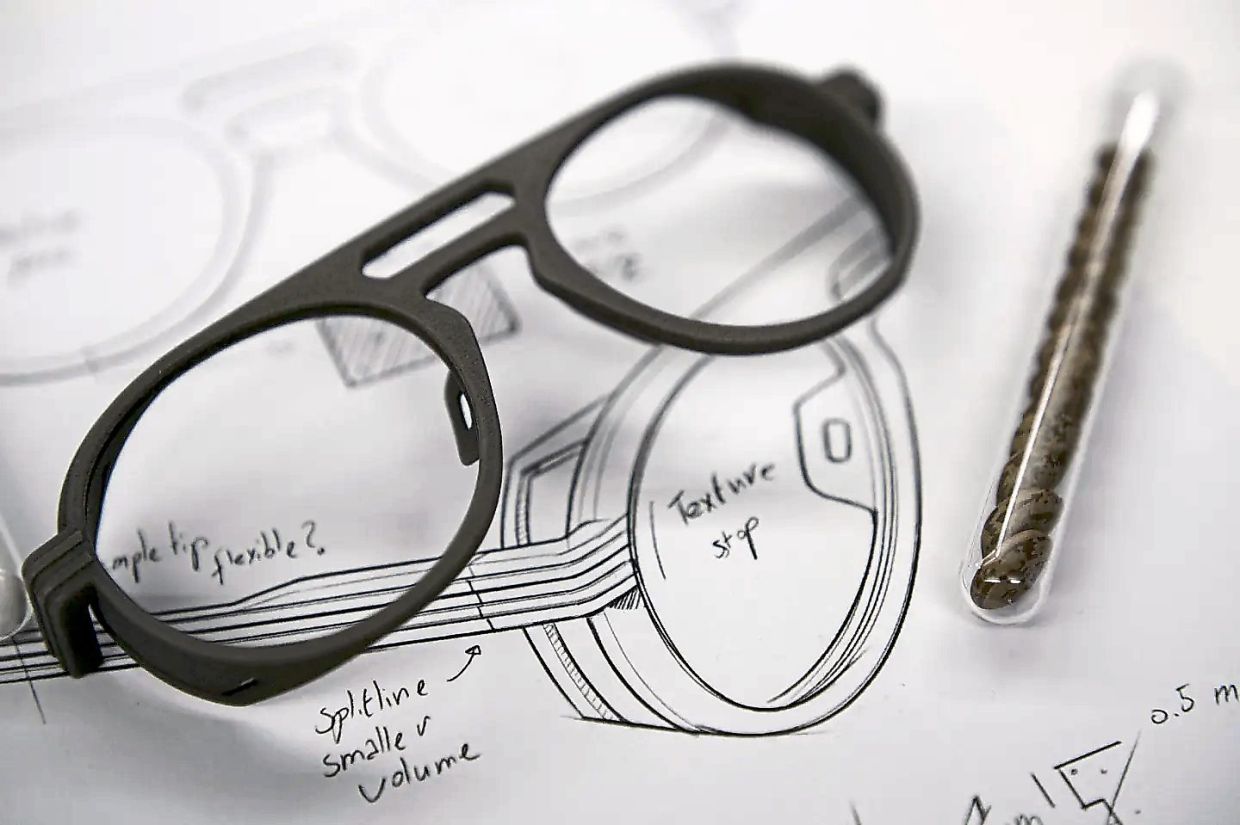
He says that materials and printing technologies have improved, giving designers more options in terms of detail, strength, flexibility and finishing.
The technology is also becoming increasingly relevant to other fashion product categories, including eyewear and jewellery.
While it may sound simple, much like printing a document, the reality is considerably more complex.
Chong puts it this way – the process starts with a design idea, just as it does in traditional fashion, but the difference is that the idea is then “translated into a digital 3D model”.
That model requires considerably more preparation before it can be printed.
“We need to check whether the file is printable, whether the structure is strong enough, whether the wall thickness is suitable, and whether the piece will fit or move the way the designer wants,” Chong says.
“Once the file is ready, it is (digitally) sliced into many thin layers, and the printer builds the object layer by layer.”
The process does not end there.
According to Chong, the piece still needs finishing, which may include removing excess powder, cleaning, curing, polishing, dyeing, coating and assembly, or combining the printed part with fabric or other materials.
As for the time taken, Chong says it depends on the size, material, technology and complexity of the piece.
A small accessory may take hours to print, while a complex couture piece may take much longer. In many cases, the design, file preparation, testing, finishing and assembly can take more time than the actual printing.
Regarding environmental concerns, it has to be said that 3D printing largely relies on plastics or other synthetic materials.
However, Chong points to one potential advantage – it is an additive process, meaning the material is built up rather than cut away.
“Material is added only where needed. This can help reduce waste compared to some conventional processes that create offcuts,” he explains.
Read more: Fashion recasts the runway as age barriers fall, and Malaysia keeps pace
Coming to terms with commercial viability
Whether 3D printing can survive in the fashion industry as more than just a buzzy novelty ultimately depends on whether it can make commercial sense – whether through lower costs, greater flexibility or the ability to bring new designs to market more quickly.
Over the years, several notable fashion names, beyond Van Herpen, have incorporated 3D-printed creations into their collections.
Balenciaga used 3D scans of models’ bodies to achieve the desired “tailoring” for its Autumn/Winter 2018 collection.
The scans were 3D printed, moulded and cast in lightweight foam, before tweeds and velvets were bonded to the foam to create the finished jackets.
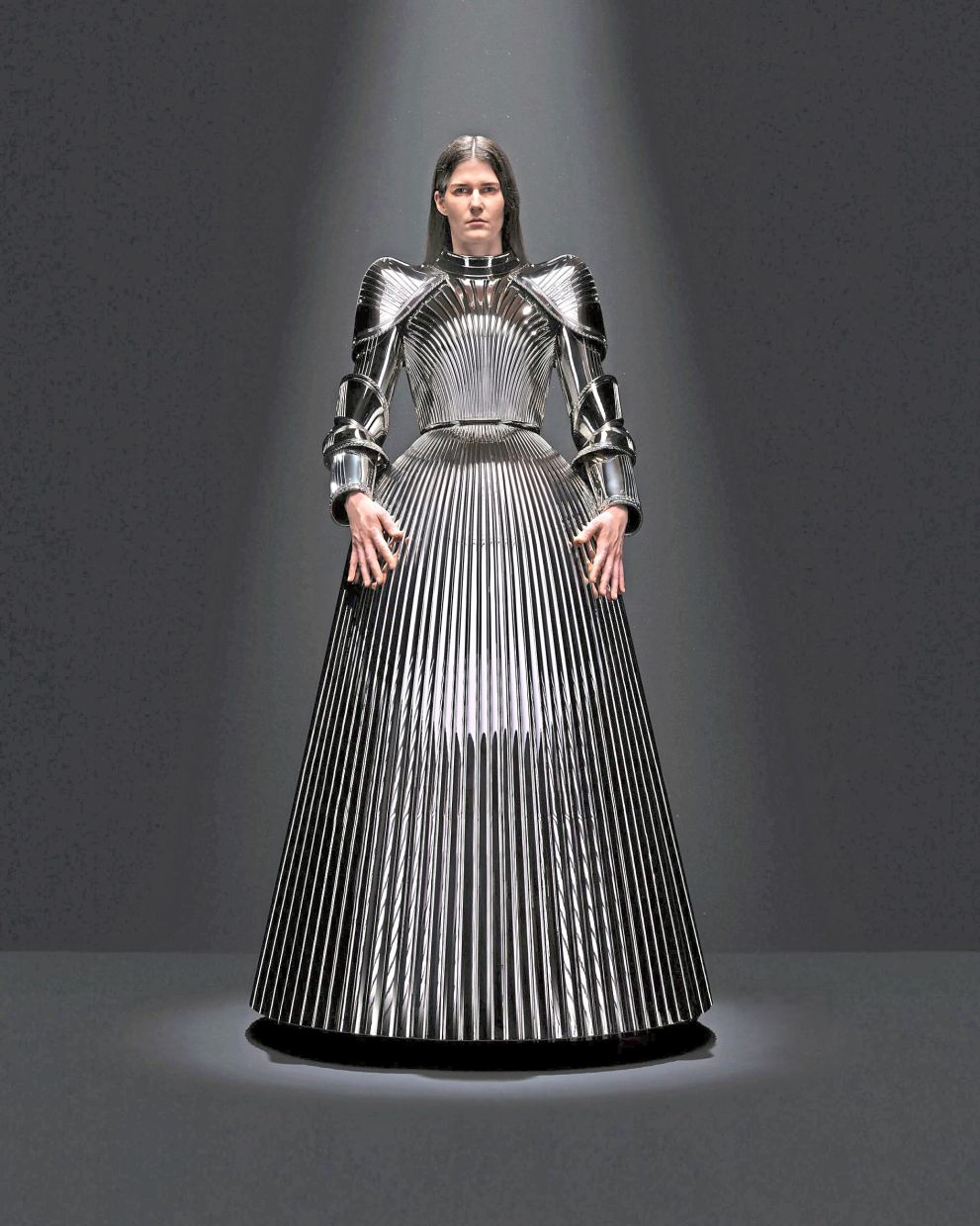
In 2023, an armour dress printed from galvanised resin and polished in chrome closed the Balenciaga couture show.
Boucheron debuted cuffs crafted from 3D-printed sand last year.
The jewellery house first used 3D modelling to establish the oversized dimensions of the pieces and the precise edges that characterise its signature Quatre pattern, known as “clou de paris”.
Each black sand component was then shaped using 3D printing and mounted onto a yellow gold structural bangle.
These, however, remain sporadic examples when viewed against the massive number of collections and designs fashion brands continuously produce each year.
That raises the question of whether 3D printing in fashion is destined to remain little more than a tool for spectacle – a way to generate buzz rather than a technology capable of becoming a commercially viable part of the industry.
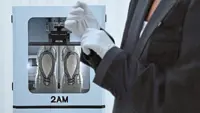
Wong Kim Yoong, 2AM Malaysia’s head of brand and strategy, says the benefit of using 3D printing is flexibility rather than cost-effectiveness.
The footwear brand, which originated in China, recently opened its first standalone boutique in Malaysia, with 3D-printed sneakers forming a core part of its product line.
“We can develop different silhouettes, experiment with new geometries and produce smaller quantities without approaching every new design as if we are starting from zero,” Wong says of the technology.
“Over time, this becomes even more valuable because every successful product adds to our library of proven digital designs, geometries, lattice structures, material combinations and production parameters.”
To Wong, this is what commercial viability can ultimately mean – not necessarily producing designs more cheaply, but being able to bring new ideas to market more quickly.
He also says that material from rejected products and development samples can be broken down and reused for other prints.
Wong is frank about the appeal of 3D-printed products though.
“For many consumers, the first reaction is, ‘I’ve never seen a shoe like this before.’ But curiosity alone doesn’t create a sustainable brand,” he says.
“The consumer still wants a shoe that looks good, feels comfortable and fits naturally into their lifestyle. The technology is what gets people interested, but the product has to stand on its own.”
It is worth noting that 2AM is not the first footwear brand to offer 3D-printed sneakers. Adidas, Nike, Under Armour, New Balance and Reebok have all explored the technology.
On the ease of production, Wong points to how 3D printing is well suited to a more decentralised model of manufacturing because much of the design and development process is digital.
He says a digital 3D file can be sent anywhere in the world with the appropriate printing capabilities, potentially enabling more distributed production.
Unlike conventional manufacturing, which may require specialised machinery, tooling and production setups for different products, 3D printing can potentially produce different designs using the same basic printing infrastructure.
Wong also questions why it has to be a choice between one or the other.
“In the future, there is no reason why the norm can’t be a fashion product made using conventional manufacturing and 3D-printed materials, as a combination of both,” he says.
“I definitely see 3D printing complementing conventional manufacturing rather than simply replacing it.”
Perhaps that is where the technology’s place in fashion will ultimately be found – not as a wholesale replacement for existing methods, but as another option in the designer’s toolkit.
Its lasting relevance may depend less on how futuristic it looks than on whether designers can find meaningful reasons to use it.