
At the dawn of the 20th century, pocket watches were the norm, at the time, pocket watches reigned supreme, while wristwatches were considered less precise and more vulnerable to external damage
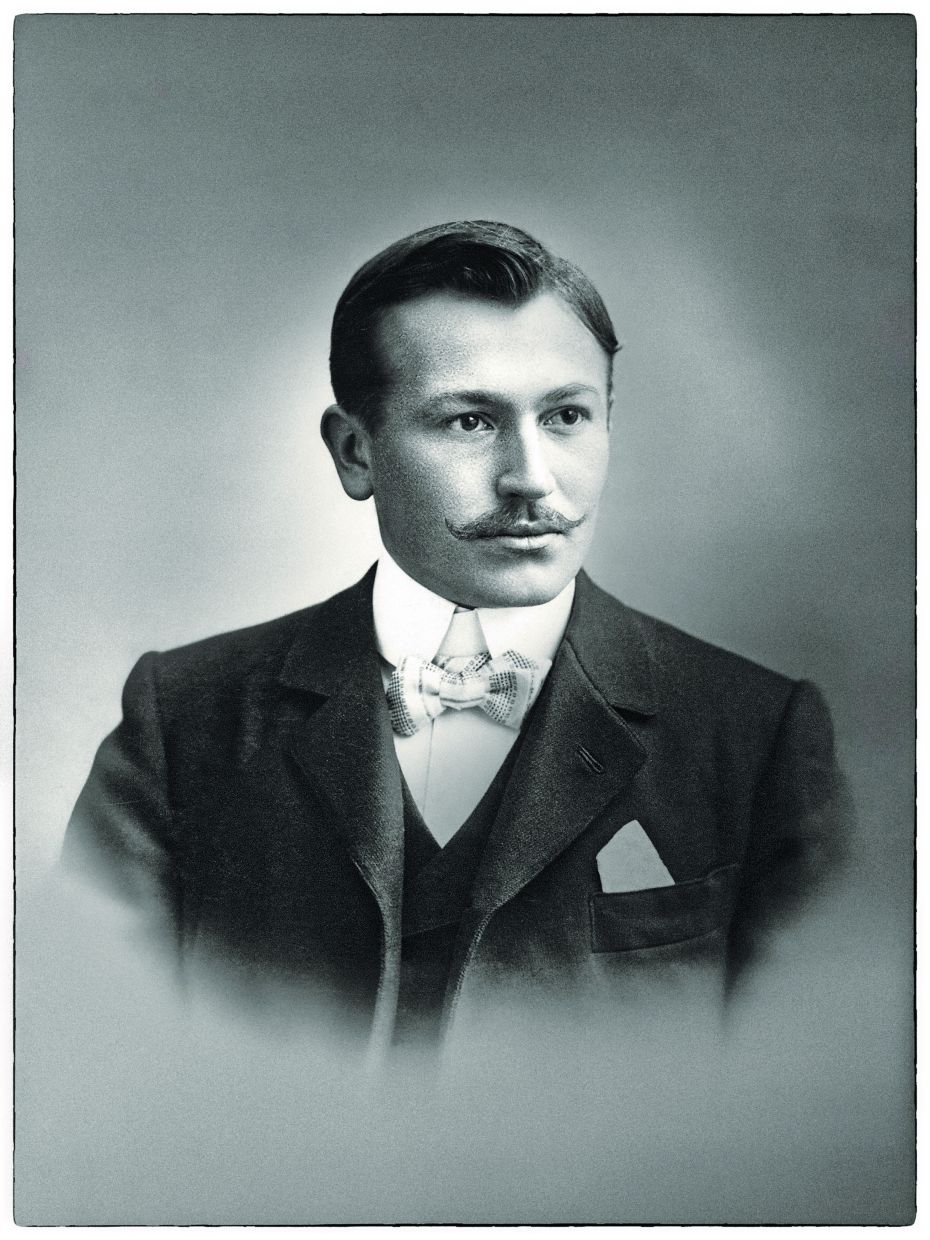
Rolex founder Hans Wilsdorf, believed otherwise. He saw the wristwatch as ideally suited to the modern lifestyles which were emerging at the time, and as a symbol of that transformation.
Railways were shrinking distances, aviation was in its infancy, and the world had agreed on 24 time zones. A person living at that pace, he reasoned, needed a timepiece that could keep up.
In 1910, a Rolex wristwatch earned a chronometric precision certificate in Bienne, Switzerland, and four years later, a Rolex wristwatch received a Class A certificate from the Kew Observatory in Great Britain, then the world’s highest authority on watch accuracy.
The distinction had until then been reserved largely for marine chronometers, after 45 days of exacting tests.
Rolex also chose to have its watches assessed by independent, neutral authorities at a time when few others did.
By 1951, when official certification became mandatory for the “chronometer” designation, Rolex watches made up the majority of all chronometers certified since 1927. Precision had become the brand’s own requirement, and Wilsdorf could turn to the next obstacle.
Sealing the movement
Wilsdorf’s constant refrain to his technical team was that a watch case must be made so tight that dust, perspiration, water, heat and cold could never reach the movement.
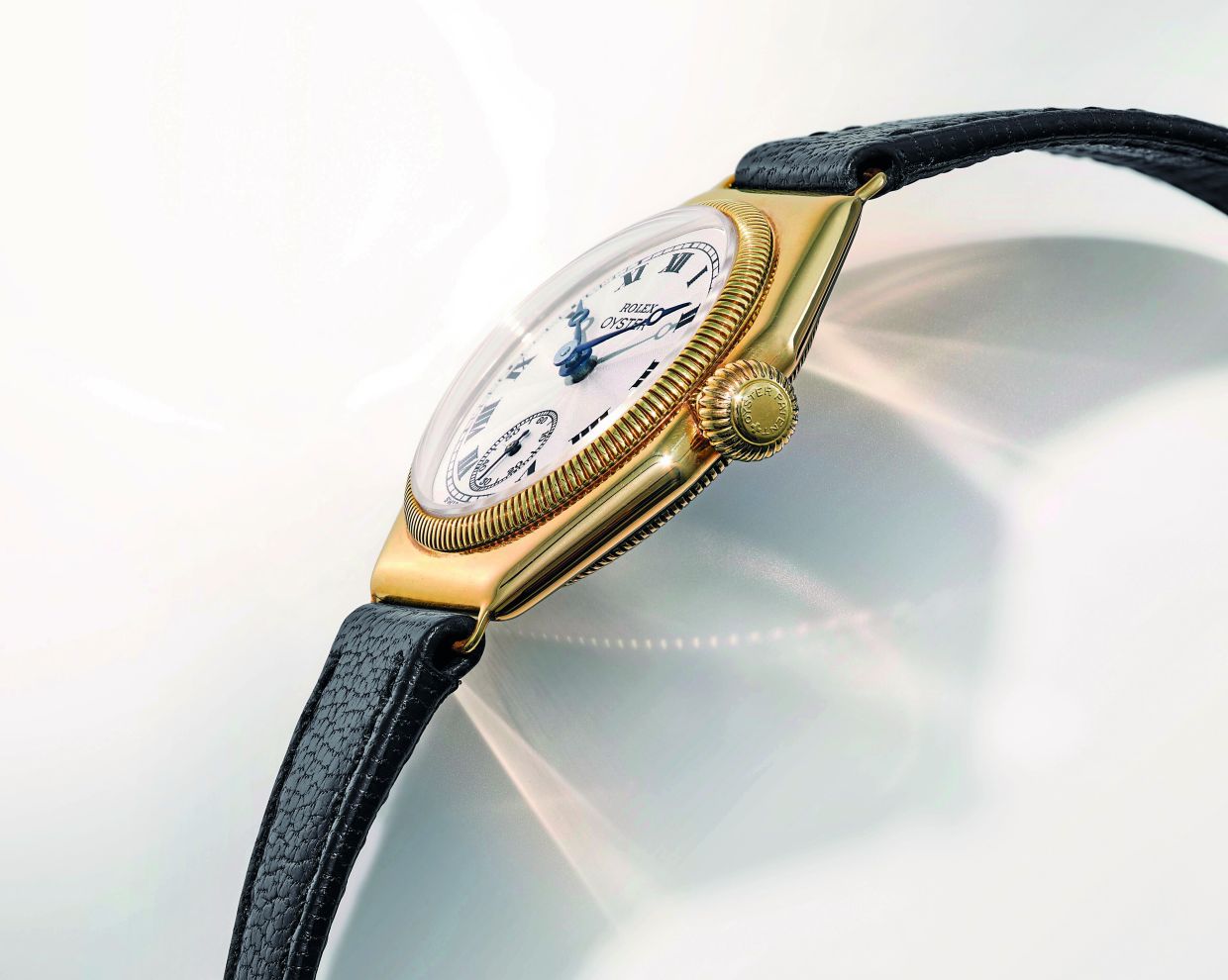
This breakthrough arrived in 1926 with the Oyster.
Its secret lay in a system that screwed the bezel, the case back and the winding crown down against the middle case.
The result was a case that was both waterproof and dustproof, and as easy to live with as any other watch. The case would lend its name to a wristwatch and then later to a collection. Five years later, the invention of the Perpetual rotor completed the picture. This self-winding system, introduced in 1931, captured the movement of the wearer’s wrist and turned it into energy for the mainspring, so the watch no longer needed to be wound by hand.
Precise, waterproof and now able to run autonomously, the Oyster became “Perpetual”, granting each wearer complete freedom of movement.
The wonder watch
A claim of waterproofness, however, was only a claim until someone put it to the test. Wilsdorf’s philosophy was “proof by trial”, the conviction that true excellence has to be demonstrated in real-world conditions.
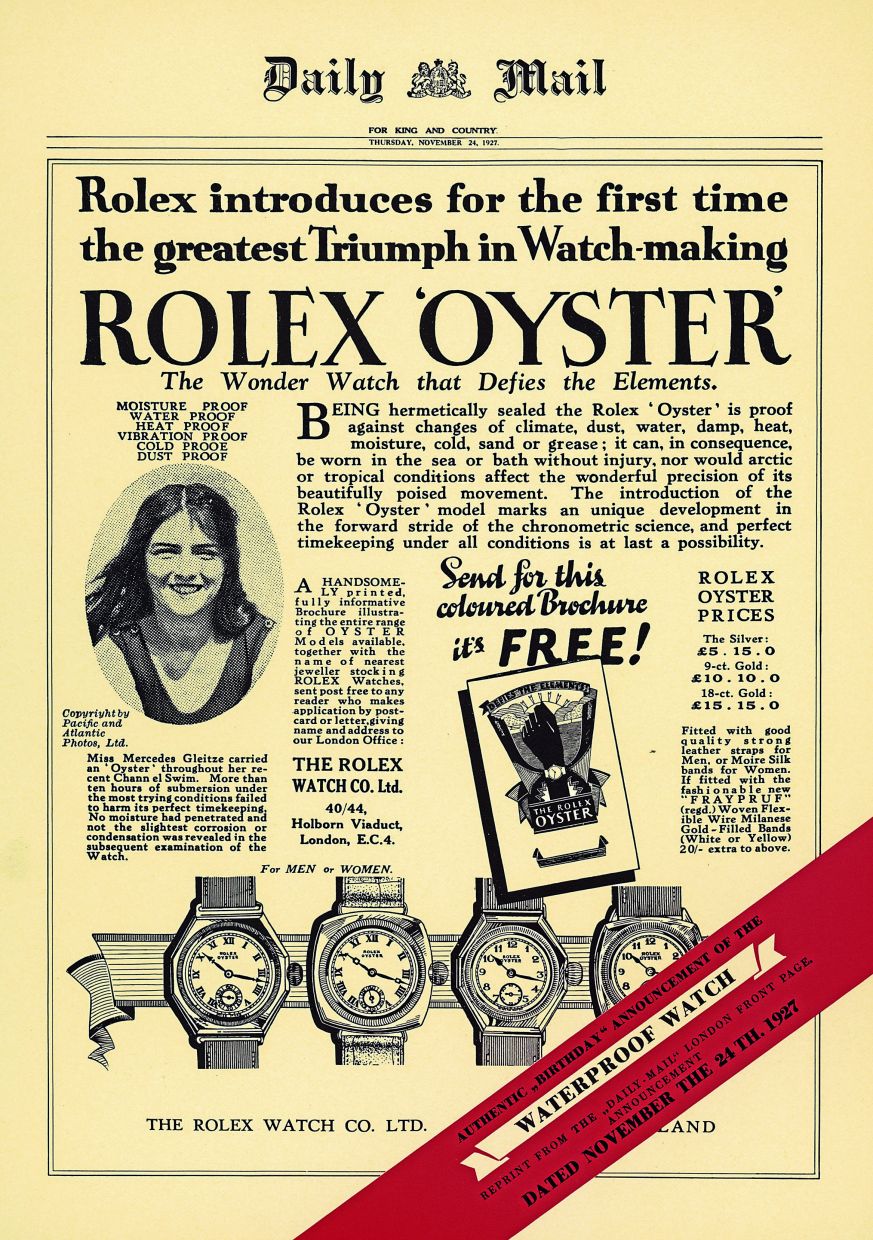
In October 1927, a young Englishwoman named Mercedes Gleitze attempted to swim the English Channel while wearing an Oyster.
She spent more than 10 hours in the bitterly cold water. When she emerged, the watch was in perfect working order, and a journalist who covered the swim reported that it had kept good time throughout.
Wilsdorf grasped the significance at once, taking out a full-page advertisement on the front page of the Daily Mail, declaring the Oyster “the wonder watch that defies the elements”.
The moment did more than sell a watch. It marked the birth of the Testimonee concept, the long association between Rolex and exceptional individuals whose achievements bear witness to the excellence of Rolex watches, Mercedes Gleitze being the first of many.
A living laboratory
Over the following decades, the Oyster went wherever people dared to go.
In 1933, Oyster watches accompanied the Houston Expedition on the first-ever flight over Mount Everest.
In 1953, Sir Edmund Hillary and Tenzing Norgay reached the summit itself, on an expedition whose leader, Sir John Hunt, reported that the Oyster watches had performed splendidly. The following year, an Italian expedition equipped with Oyster Perpetual Explorer watches climbed K2, the world’s second highest peak.
On land and in the air, the Oyster went fast. In 1935, Sir Malcolm Campbell wore one while driving Bluebird across the Bonneville Salt Flats to become the first man to exceed 300 mph (483km/h).
In 1967, William J. Knight reached a speed of Mach 6.72 in an X-15 rocket plane, a record that still stands, with an Oyster Perpetual GMT-Master on his wrist.
As airliners began crossing time zones in the 1950s, Rolex created the GMT-Master to display two time zones at once. It became the official watch of Pan American World Airways, and the crew of the first non-stop Pan Am flight from New York to Moscow in 1959 used it as a navigation aid.
Beneath the surface, the story was just as compelling. From 1953, the Oyster Perpetual Submariner, waterproof to 100 metres, helped open the world of underwater exploration. In 1960, an experimental Rolex, the Deep Sea Special, was attached to the outside of the bathyscaphe Trieste as it descended into the Mariana Trench, to a record depth of 10,916 metres. It returned to the surface in perfect working order.
Each of these ventures fed back into the workshop. The Oyster Perpetual Cosmograph Daytona, launched in 1963, became a universal reference among chronographs and a symbol of Rolex’s ties to motor sport. The Oyster Perpetual Yacht-Master, launched in 1992, brought the heritage of sailing into the family. From one idea came a whole constellation, each watch specialised for a need and each now a benchmark in its field.
The Oyster’s centenary
To mark the Oyster’s hundredth year, Rolex chose the Oyster Perpetual, the quintessential Rolex watch and the purest expression of the original idea.
The Oyster Perpetual 41 is offered in a yellow Rolesor, pairing a yellow-gold bezel and winding crown with an Oystersteel middle case and bracelet. The touches of gold recall the case elements of some of the earliest Oyster watches.
The centenary is acknowledged in a few discreet details, with the winding crown featuring the number 100 in relief, and on the dial the words “100 years” replace “Swiss Made” at six o’clock. The dial itself is slate, and the name Rolex and the small pad-printed squares around the minute track appear in the brand’s emblematic shade of green.
The Superlative Chronometer certification, symbolised by the green seal, has been strengthened in 2026 by adding three new criteria in addition to the original tests for precision, waterproofness, self-winding and power reserve.
The expanded criteria including resistance to magnetism and reliability are assessed during design and manufacture, alongside durability, an overarching criterion present in every other.
Rolex has also gone beyond measuring time to defining it. Working with the Swiss Centre for Electronics and Microtechnology in Neuchatel, the brand developed the Rolex Rubidium Atomic Optical Clock, whose drift is less than one second per million years.
The first unit, installed in Geneva, already contributes to the realisation of Coordinated Universal Time, a first for an optical atomic clock.
A century of innovation
For all its technical achievement, the story of the Oyster has always been about people and the pursuit of excellence.
This spirit informs the brand’s support for athletes across a range of sports, its partnerships with leading cultural institutions and renowned artists through the Perpetual Arts Initiative, and its work through the Perpetual Planet Initiative. Today, explorers, scientists and conservationists supported by the initiative build on the legacy of the early explorers, working to deepen our understanding of the world and find ways to protect it.
Wilsdorf himself, reflecting on the Oyster’s story, wondered whether it had an ending at all. His answer was that there was no end in sight yet.
With further chapters of the centenary still to come, that seems about right.