
In an industry long defined by youth, age diversity is emerging as one of modelling’s most compelling narratives.
Older faces are increasingly finding favour on the runway, a shift highlighted by The New York Times in April.
Referring to the Autumn/Winter 2026 ready-to-wear and Spring/Summer 2026 couture shows, the publication noted that fashion appears to be taking a meaningful step forward when it comes to age representation.
This growing embrace of older faces is certainly no accident.
“I feel age is actually an advantage,” says Anna Wintour in the May issue of Vogue.
Wintour, the fashion magazine’s chief content officer and global editorial director, appeared on the cover alongside Oscar-winning actress Meryl Streep. Both women are 76.
The development marks a striking reversal for the modelling profession, where “ageing out” has long been viewed as an occupational inevitability, and one that extends beyond celebrity-driven visibility alone.
For decades, the prevailing belief was that no matter how successful or photogenic a model might be, opportunities would begin to dwindle once they reached their mid-20s.
Former model Steve Yap, 56, says that the perception was very much a reality during his runway years. He laughs when asked whether age discrimination existed in the industry at the time.
“In those days, once you reached 30, nobody wanted you,” he says matter-of-factly.

Yap entered professional modelling at 24 and left just two years later. Even so, he is still widely regarded as one of Malaysia’s pioneering menswear models.
He is cautious about drawing conclusions on the changing scene though.
“I’ve been out of touch with the industry for too long,” admits Yap, who later transitioned into acting and built an on-screen career.
That said, he continued to make occasional runway appearances in the years that followed, though likely more as a celebrity than solely a model.
Read more: Talking the walk: Fashion model Ridzman Zidaine on repping Malaysia globally
Lines of beauty
Indeed, the runways of Paris, Milan and New York have seen an influx of older models taking centre stage recently.
In February, Christy Turlington closed the Michael Kors show at 57, with the greying roots of her hair left unhidden.
Meanwhile, Cindy Crawford, 60, delighted audiences with a surprise appearance at Gucci.
She emerged to a wave of applause, underscoring the enduring appeal of models whose influence extends far beyond their peak runway years.
You could argue that Turlington and Crawford belong to a rarefied tier of legendary supermodels, and are therefore exceptions to the usual age curve.
However, numerous other mature models have also been spotted on the runways.
Fifty-year-old Stephanie Cavalli walked for Chanel in January, while 61-year-old Kristen McMenamy drew attention at the Tom Ford and Miu Miu shows in March.
The season also featured Mariacarla Boscono (Gucci and Alaia) and Guinevere Van Seenus (Calvin Klein), aged 45 and 50 respectively, further highlighting a broader age range in casting.
Eleen Yong, who runs her own modelling agency and training academy in Malaysia, says there is a genuine shift happening.
“Consumers today are more diverse and more aware. They want to see representation that reflects real life, not only idealised imagery,” she notes.
“Shoppers from the mature segment hold strong purchasing power, which makes age inclusivity not only socially relevant but also commercially meaningful.”
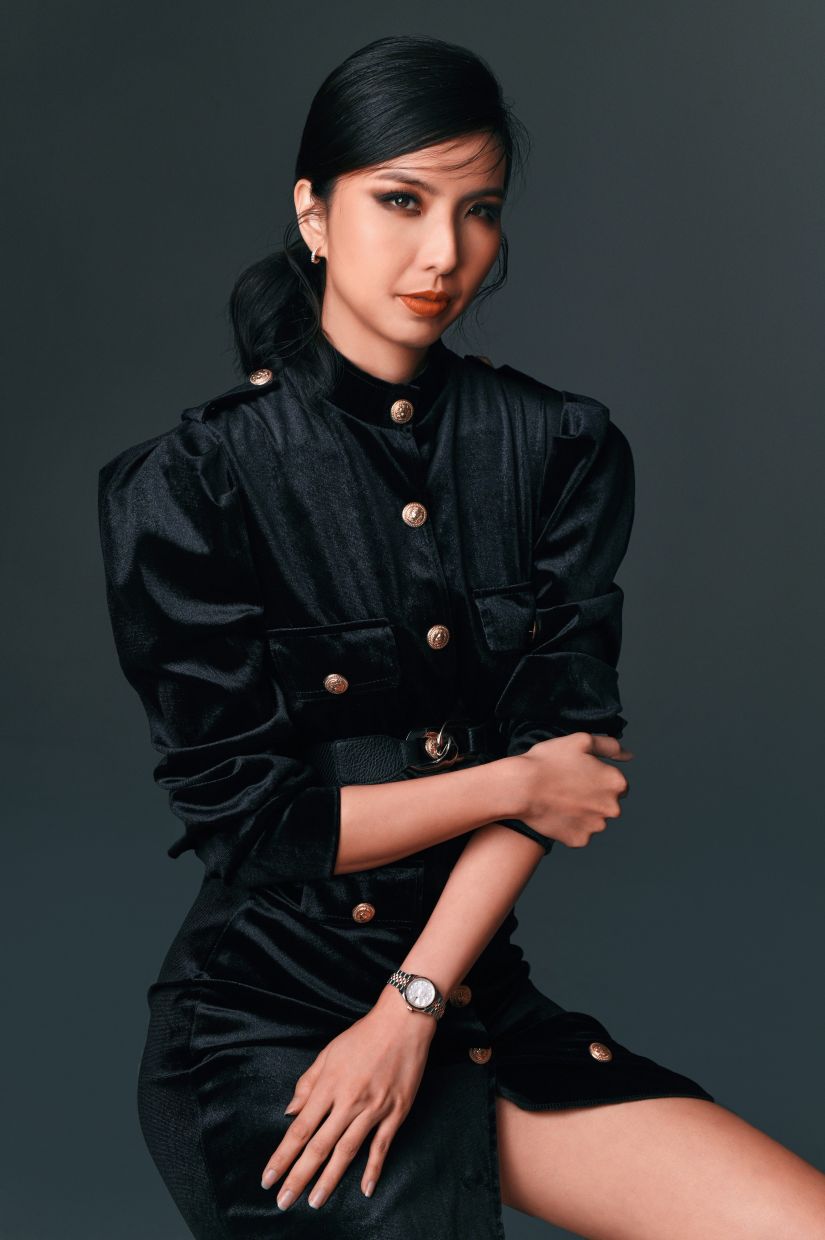
Yong, 40, is an experienced model herself and also served as the national director for the Miss Universe Malaysia Organisation in 2024.
“About 10 years ago, I already began training mature women, including pageant mothers and women who wanted to rediscover themselves through modelling,” she says.
“While they were not necessarily featured in international fashion weeks, they were regularly invited to local designer shows, brand events and commercial presentations.”
Yong adds that more clients are now specifically requesting mature models.
“In Malaysia, this movement has actually been developing for quite some time, although it may be less visible compared to major fashion capitals,” she says, referring to international markets where age diversity on the runway has suddenly garnered attention.
Read more: The world's a runway: Malaysian fashion models who made it big globally
Aspiration, not expiration
The idea that modelling as a career comes with an expiry date is definitely a worry.
“When I first entered the modelling industry, I also believed in such a timeline – that modelling had a very short career span, and most models would phase out by their late 20s,” Yong points out.
For her, it “genuinely felt like a race against time”. She always wondered whether the industry would truly change.
She recalls that, during her early days, most agencies accepted only models in their early 20s.
Today, however, more casting calls are open to people across a much wider age range.
Yong says seeing models aged 30 to 70 being considered for jobs would have been “unimaginable in the past”.
“This represents a significant shift, not only in opportunity, but in mindset. Modelling is no longer defined purely by youth, but by presence, confidence and expression,” Yong puts it.
Yet concerns about being “too old” in the modelling industry persist, even among younger talent.
Lee Kar Hao, 22, says age does come up in conversations among his friends.
“It’s not uncommon to hear models jokingly ask questions like, ‘How many more years can I do this?’ or ‘What will happen when I reach a certain age?’,” he relates.
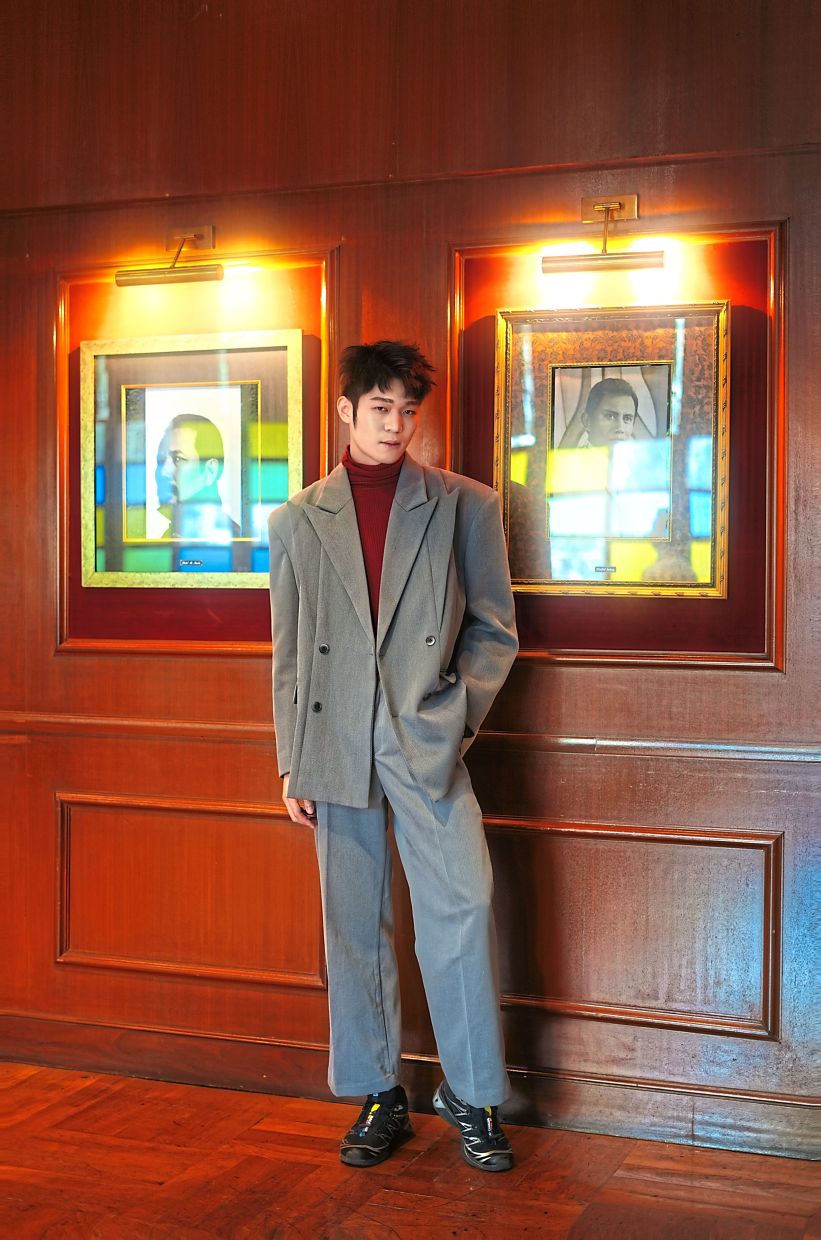
Lee has been modelling for only about a year. He has walked at Kuala Lumpur Fashion Week as well as fashion presentations for international brands.
While he does not feel particularly anxious about being pushed out of the industry at this stage of his career, it remains one of the many challenges associated with the profession.
“I do sometimes wonder whether opportunities may become more limited as I get older,” he says.
The fact is, the job itself already involves a range of difficulties.
“The modelling industry is highly competitive, and age is only one of many factors,” Lee says.
“New faces are constantly entering the industry, and even models at the peak of their careers need to maintain their image, professionalism and relevance in order to stay competitive.”
As more brands embrace authenticity and representation, the industry’s definition of who belongs on the runway appears broader than ever.
While the pressures of modelling have not disappeared – and likely never will, age is increasingly becoming less of a barrier to visibility, opportunity and longevity.