
Culture continues to be a challenging issue for fashion.
Despite the many controversies that have plagued the industry over decades – often followed by swift apologies and promises to do better, missteps still occur.
French fashion brand Lemaire sparked a furore in April when it released a campaign featuring a model sensually playing with an object resembling braided hair.
The image was accompanied by still-life shots of it placed beside a pair of scissors, and in another, draped over a separate button-down shirt.
Social media users in China criticised the move for evoking the Qing dynasty’s queue hairstyle and the historical trauma associated with forced hair-cutting.
Lemaire then removed all the associated visuals in response and released an apology on China’s social media platform, Xiaohongshu.
Last month, Canadian activewear label Lululemon also had to apologise after mistakenly featuring a Japanese drum on the Great Wall of China for a promotional event.
Even Hollywood actress Zendaya found herself at the centre of an ethics debate after wearing earrings made from gold discs originating from ancient Iran at the London premiere of The Odyssey.
Her choice led to questions over whether historical items should be appropriated for fashion’s sake.
According to Barron London, which shared an image of Zendaya wearing the earrings on Instagram, the pieces date back to the first millennium BC.
The gallery, which specialises in rare jewels and gemstones, described the earrings on its website as a pair of gold medallion plaques believed to have been excavated in the 1940s and later mounted with diamonds by London-based jeweller Glenn Spiro.
In a statement to The Guardian, the gallery said it acquired the earrings in 2025 from Spiro, whose Materials Of The Old World collection featured ancient artefacts transformed into jewellery.
Neither Zendaya nor her stylist, Law Roach, have commented on the matter.
Read more: Can fashion borrow from history? Zendaya's red carpet earrings ignite debate
It begins with curiosity and respect
Fashion has long aspired to be more than just clothing and accessories, and today its influence stretches deep into entertainment and art.
Whether this ambition risks pushing it too far is the question that remains.
“Audiences are looking beyond aesthetics. They want to understand the inspiration, craftsmanship and meaning behind a collection,” comments Andrew Tan, the organiser of Kuala Lumpur Fashion Week.

He however cautions that designers engaging with culture should begin with curiosity and respect.
“It means taking the time to understand the history, traditions and communities that inspire them, rather than simply borrowing visual elements,” Tan says.
“When cultural influences are approached with sincerity, proper acknowledgement and meaningful collaboration where appropriate, fashion becomes a platform that celebrates heritage while creating something relevant for today.”
This year’s edition of Kuala Lumpur Fashion Week celebrates Malaysian identity, with the event taking place this week in conjunction with Visit Malaysia 2026.
The problem of cultural appropriation often arises with brands borrowing from cultures other than their own.
In this, Tan argues that fashion has always evolved through dialogue between cultures.
He says that creativity does not exist in isolation.
His view is that it will only become a problem when elements are taken out of context or used without acknowledging their meaning or where they come from.
“Designers should never feel limited to only their own heritage, especially here in Malaysia with our strong sense of multiculturalism,” Tan shares.
“When done well, cross-cultural exchange enriches fashion and encourages greater understanding between people and it is something we continue to see and celebrate on our runways.”
Regarding what makes a design “Malaysian”, Tan says that it cannot just be defined by traditional motifs or textiles, despite it remaining an important part of our creative heritage.
“Some designers express that through products of craftsmanship such as batik, songket or handwoven textiles, while others do so through contemporary tailoring, modern silhouettes or innovative materials,” he points out.
“Both are equally valid expressions of Malaysian creativity.”
A road paved with good intentions
Brands often draw on cultural traditions with the intention of showing appreciation.
However, such efforts are sometimes met with scepticism, particularly when commercial interests are involved.
The line between celebrating a culture and capitalising on it can be difficult to define, raising questions about authenticity, context and who ultimately benefits from the use of cultural elements.
Prada found itself at the centre of a scandal last year when it unveiled an open-toe braided footwear that closely resembled India’s traditional Kolhapuri sandals.
Following criticism, the Italian fashion house announced plans to produce 2,000 pairs in the states of Maharashtra and Karnataka, where the design originated.
Adidas faced a similar backlash two months after that, upon releasing shoes that resemble huaraches traditionally made by indigenous artisans in Mexico.
Designer Willy Chavarria later apologised, acknowledging that he should have engaged the community during the project with the German sportswear brand.
It has to be pointed out that in both Prada and Adidas cases, the brands did not acknowledge the cultures the designs come from.
Perhaps this is what makes a difference.
When US streetwear brand New Era launched a collection celebrating Malaysia last month, it explicitly described the range as being inspired by the energy of the country’s street culture.
The designs spotlight the people, flavours and moments that define everyday Malaysian life – specifically revolving around mamak dining.
When contacted, the company released a statement saying that the concept extends far beyond food, describing a mamak eatery as a place where people come together to “pull up a chair, no matter who you are”.
“With Visit Malaysia 2026, we saw a great opportunity this year to showcase and celebrate local culture,” it reads.
“As Malaysia welcomes more visitors from around the world, we wanted to highlight something that is uniquely Malaysian and instantly relatable to both tourists and locals.”
One of the T-shirt designs features roti tisu, a towering mamak dish often dubbed a “monster” that has become a viral sensation and tourist attraction in Malaysia.
Read more: Could fashion's upcoming John Galliano exhibition become its next big scandal?
It should be inclusive, not exclusive
The aim of culturally-linked fashion collections is to create relatability and foster a sense of community through designs that reflect shared identities and experiences.
For this reason, such collections should be as inclusive as possible, inviting participation while respecting the communities whose identities and experiences they represent.
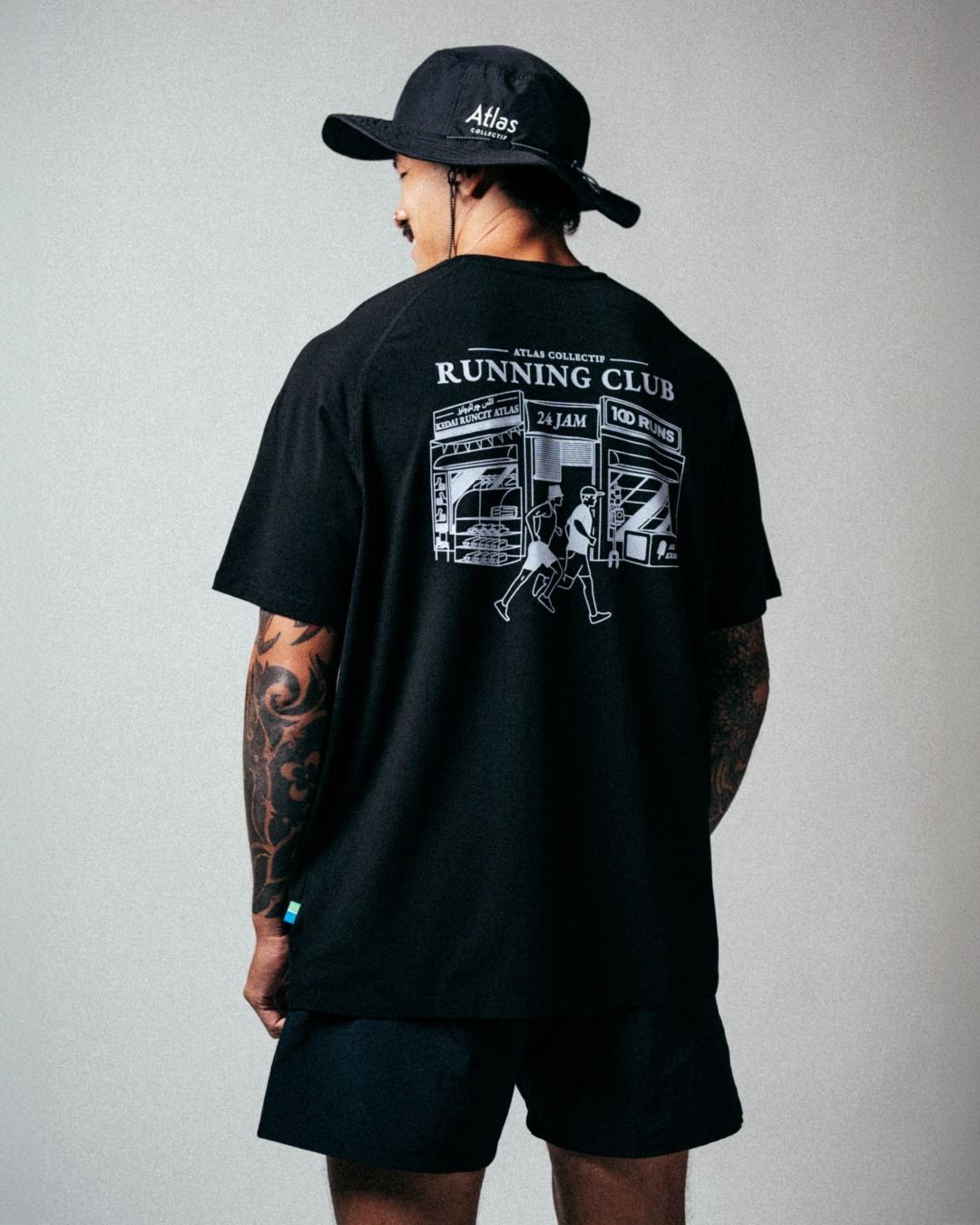
Atlas Collectif has embraced this approach by incorporating distinctly Malaysian references into its designs, including graphics featuring the neighbourhood kedai runcit (provision store).
Rather than treating these lifestyle cues as exclusive markers of identity, the local activewear brand presents them as familiar touchpoints that anyone can connect with.
Beyond its designs, the brand has also cultivated a sense of community through activities such as group running sessions.
Co-founder Benjamin Hagen, who is based in Dubai and is half-German, reiterates that fashion should never be exclusionary.
“You work with local talents and you work with the people who understand the culture,” he points out.
“That is the exact thing that will show what you do comes from the heart, and not just a promotional strategy.”
Atlas Collectif has since built close-knit communities in cities around the world, including Berlin, London, Dubai and Singapore, united by lifestyle pursuits and a shared interest in style.
It recently opened its first physical store in the heart of Kuala Lumpur, described as “the first chapter in a series of city-specific spaces planned internationally”.
Hagen believes fashion is ultimately a universal language.
However, he acknowledges that people from different countries have their own distinct approaches to dressing.
“This is what makes it so beautiful. Every place I’ve been to or lived in, I get to experience a vibrant and interesting way of how people approach fashion,” he says.
“It’s about understanding the culture, respecting it and finding ways to connect with people through it.”
The right way forward in highlighting communities
For the longest time, fashion was presented as a singular point of view – the vision of one designer, the work of an individual, the creative expression of a single mind.
Today, however, the industry is moving towards a more collaborative approach, where identity, culture and community play a greater role in shaping what fashion represents.
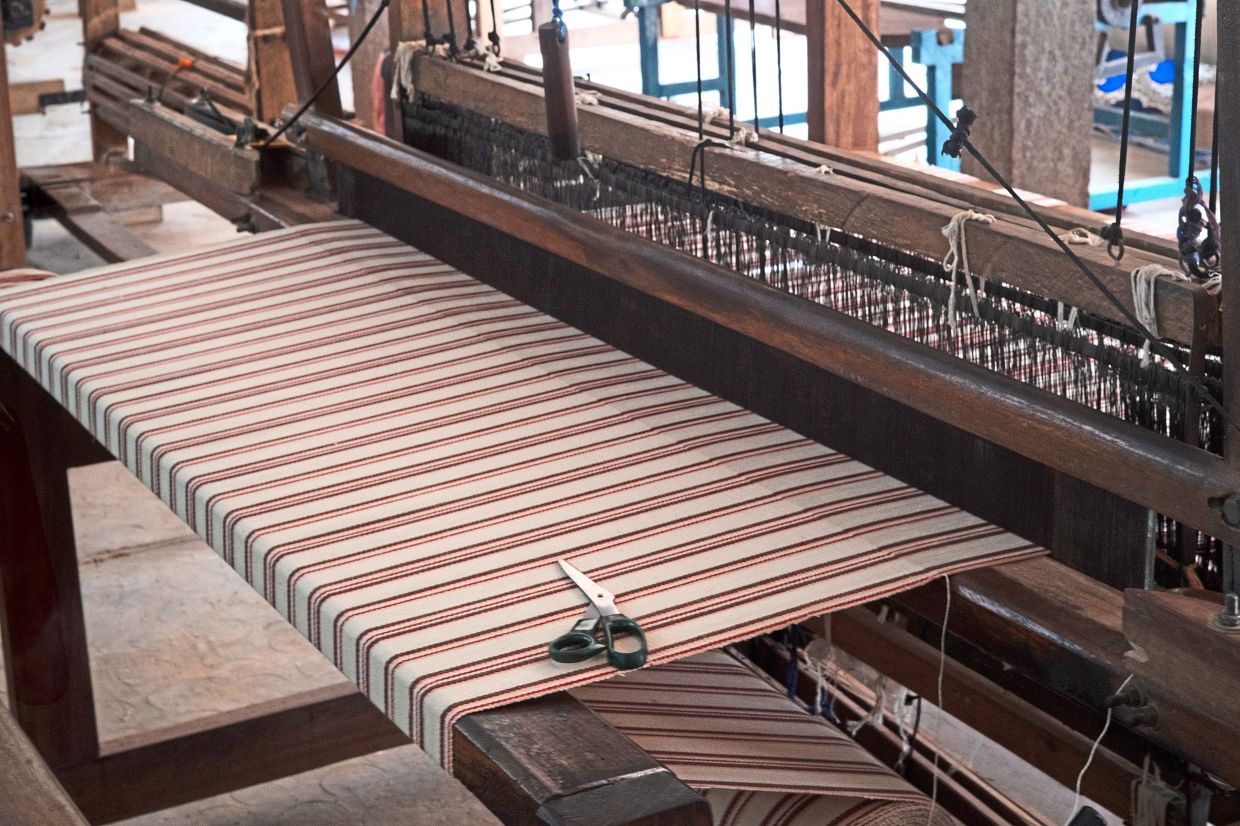
When Pedro collaborated with the Ethical Fashion Initiative, a programme of the International Trade Centre – a joint agency of the United Nations and the World Trade Organisation, it highlighted hand-loomed cotton textiles crafted by artisans in Burkina Faso.
The bag design brought traditional weaving techniques into a modern accessories context while placing emphasis on the human craftsmanship and heritage behind the creative process.
As a Singaporean leather goods brand operating as a sister brand to Charles & Keith under the same parent company, Pedro hopes to continue the project as part of a wider series, including collaborations closer to home.
“South-East Asia has an extraordinarily rich craft heritage, and it is a part of the world we know well, so a regional collaboration is very much something we hope to do,” a company spokesperson notes via email.
“A Malaysian collaboration would be a wonderful thing to work on. We do not approach these by geography so much as by the craft itself and the people who hold it, which is what makes the possibilities so open.”
What sets Pedro’s collection apart from other projects that have courted controversy is its focus on supporting the communities and artisans behind the textiles themselves.
The collaboration stems from CABES (Capacity Development For Biodiversity And Ecosystem Services Experts), a social enterprise dedicated to supporting and protecting traditional weaving practices in Africa.
Ultimately, meaningful cultural collaboration goes beyond borrowing visual references.
It requires recognising the people, skills and histories that give these traditions their value – ensuring that communities are not merely sources of inspiration, but active participants in the stories being told.
As fashion continues to draw from cultures around the world, the challenge is not whether it should do so, but how it can do so with greater respect, responsibility and reciprocity.