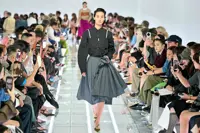
When Usha Nair first launched Dawn Adaptive, she simply wanted to solve a problem she understood intimately.
Living with severe scoliosis, chronic pain and limited mobility, she found herself questioning why clothing so often overlooked the realities of disability. Rather than viewing adaptive fashion as purely functional, she believed it could be beautiful, culturally expressive and empowering.
Today, that vision has reached one of the world's leading design museums.
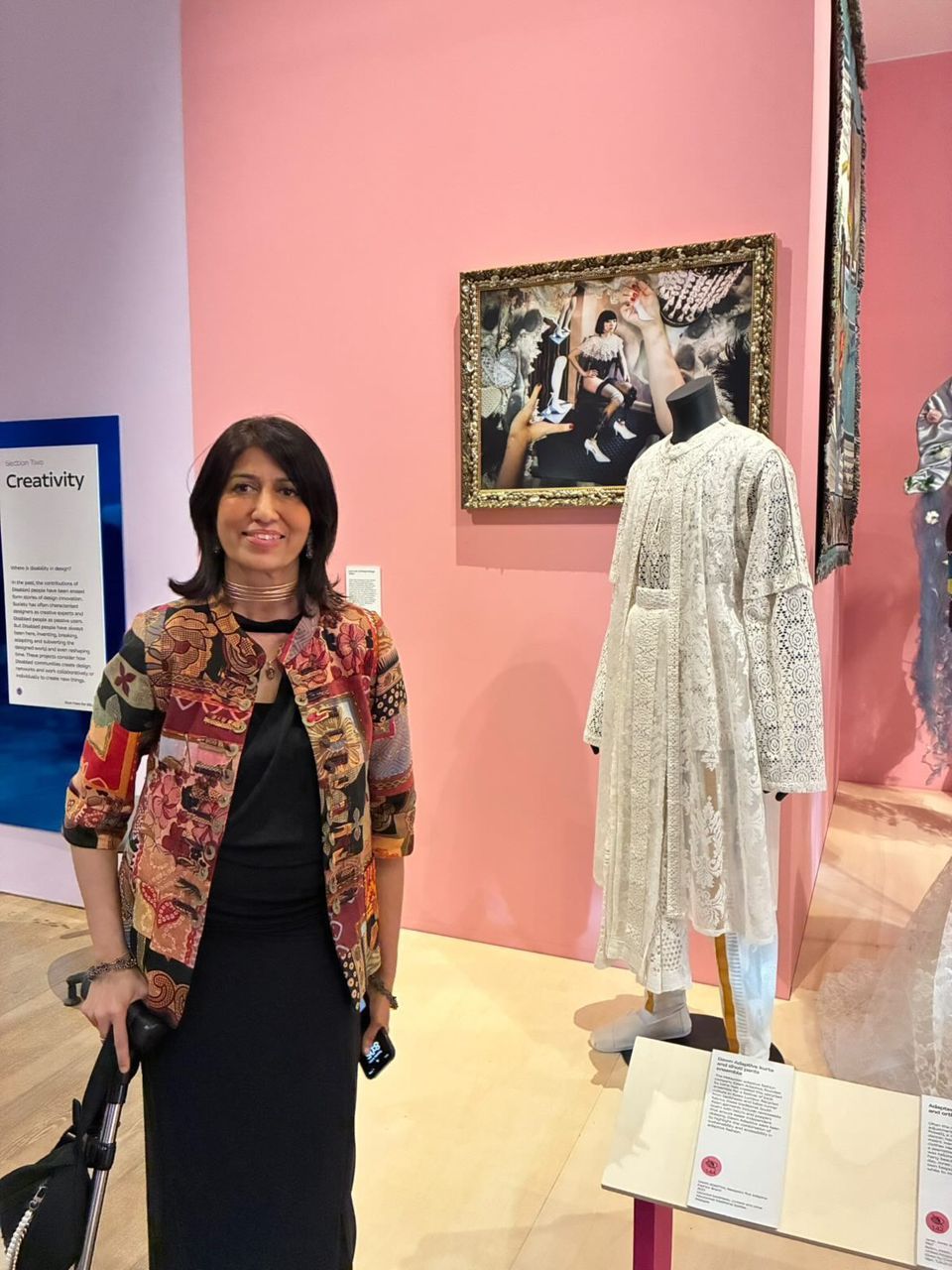
Usha's adaptive kurta and dhoti ensemble is currently featured in the Design And Disability exhibition at the Victoria & Albert Museum Dundee in Scotland, placing Malaysian design alongside internationally recognised works exploring how design can improve lives.
For the founder of the Malaysian adaptivewear label, the exhibition is about far more than international recognition.
"This design represents much more than clothing," she says.
"It represents visibility, dignity and the belief that fashion should belong to everyone without compromising on comfort, accessibility, style or identity."
Read more: Why functional fashion is redefining style, inclusion and everyday design
The ensemble reimagines the traditional kurta and dhoti through adaptive design, enabling people with limited mobility or dexterity to dress more independently while retaining the elegance and cultural significance of the garments.
It includes shoulder openings and removable sleeves, velcro-fastened trousers, an adjustable drape belt and a long vest.
Usha says adaptive clothing is too often designed with function as the sole priority, leaving aesthetics and cultural identity as afterthoughts.
"I wanted to challenge that thinking and show that functionality and beautiful design can coexist."
It is unisex, size-inclusive and designed to adapt to different body shapes, while offering multiple styling possibilities that allow the collection to transition from traditional wear into contemporary everyday dressing.
Rather than expecting the wearer to fit the clothing, Usha says the clothing should adapt to the individual.
She also wanted the design to honour heritage.
"As a Malaysian Indian, culture has always been an important part of my identity," she says. "Traditional clothing carries memories, family traditions and a sense of belonging."
By making the kurta and dhoti accessible, she hopes people with disabilities will never have to choose between celebrating their cultural identity and dressing independently.
Sustainability also forms part of the narrative.
The exhibition piece incorporates repurposed Indian sarees, embroidered table runners, curtains and bedsheets, transforming everyday textiles into contemporary fashion while preserving their craftsmanship and history.
Read more: Authentic human touch: Malaysian leather artisans put craft back into fashion
The journey to the V&A began closer to home.
After being given an opportunity by the Malaysian Fashion & Creative Association to showcase her work, Usha later participated in Keretapi Sarong, where adaptive fashion was presented through the lens of Malaysian cultural heritage.
Those milestones eventually led to her work being exhibited at the V&A in London in 2025 before travelling to V&A Dundee this year.
Seeing a Malaysian adaptive design displayed in one of the world's foremost museums was, she says, deeply emotional.
"It sent a powerful message that innovation from Malaysia belongs in global conversations on design and inclusion."
She hopes the work also represents Malaysia beyond aesthetics.
"Malaysia is a country of diverse cultures, ethnicities, body types and lived experiences. When Malaysian design enters the global stage, I hope it carries not just aesthetics, but values – inclusivity, respect and innovation rooted in real human needs."