IN the heart of Kuala Lumpur’s bustling Jalan Raja Chulan, a quiet dialogue between faith and form has taken root.
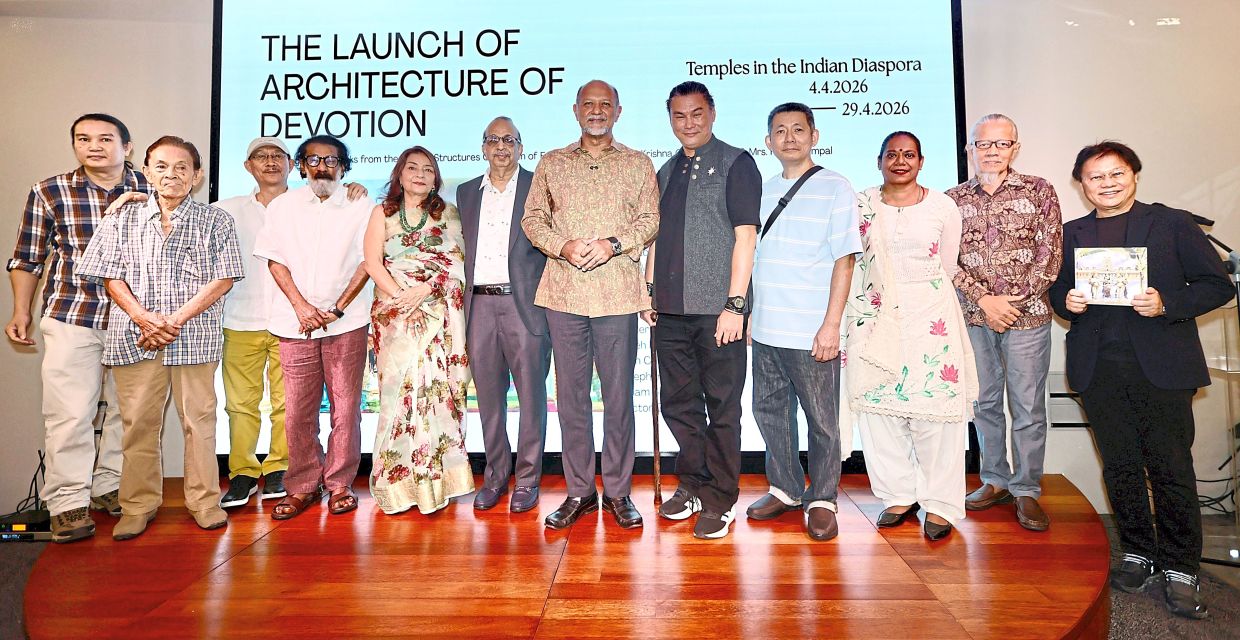
Urban Museum (UR‑MU) at The Toffee unveils “Architecture of Devotion: Temples in the Indian Diaspora”, an expansive exhibition featuring 163 artworks from the private collection of Emeritus Prof Dr Krishna Gopal Rampal and his wife Kamla Rampal.
Launched by Digital Minister Gobind Singh Deo, the exhibition offers a vivid exploration of the Indian diaspora’s cultural and architectural legacy.
Spanning the Project Room and The Crave, the collection documents the spiritual and structural grandeur of sacred sites that have long shaped communities around the world.
For Prof Krishna, the journey began in 2004, when he noticed a striking absence in the local art landscape – there were no paintings of Hindu temples in Malaysia.
“For a country where these temples have stood for generations – quietly anchoring communities, marking festivals, sheltering daily devotion –
their near absence from the visual arts felt like a gap that ought not to exist,” he said at the launch.
What began as an effort to fill that void has since grown into the Sacred Structures Collection – a 22‑year labour of love now comprising more than 400 works.
The pieces on display – ranging from oil and watercolour to pen and ink – take in nine countries.
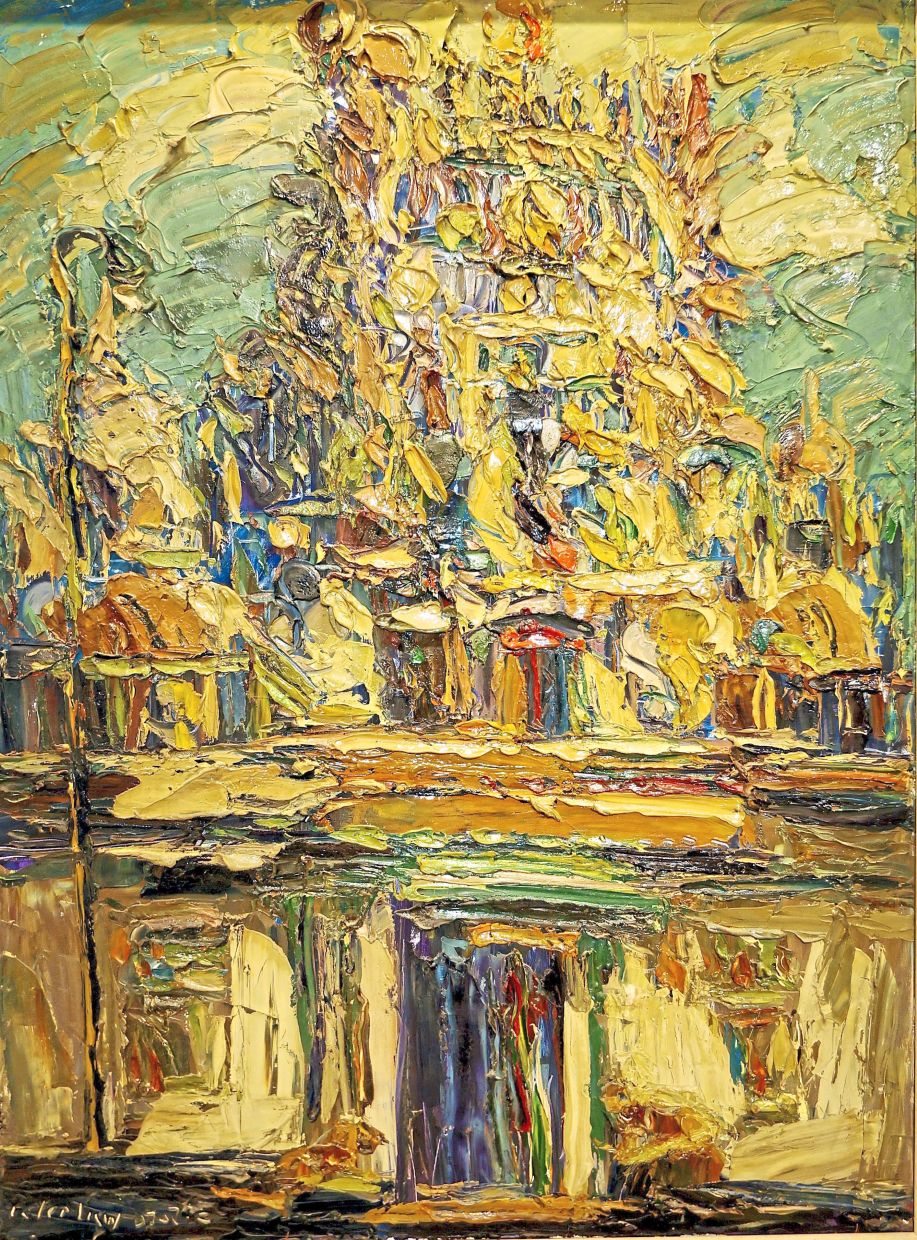
They trace a journey from the Hindu temples of Malaysia and Singapore to the stone mandirs of England and sacred landscapes of Indonesia and Myanmar.
“The 16 artists I worked with bring entirely different eyes and hands to the same subject,” said Prof Krishna.
“Where Maamor Jantan’s ‘Tanah Lot’ captures the Balinese temple as the Balinese tend to experience it, R. Jeganathan’s meticulous rendering of Vishnu on Garuda lays out iconography as precisely as a diagram, making the visual language of Hinduism legible to any careful viewer.”
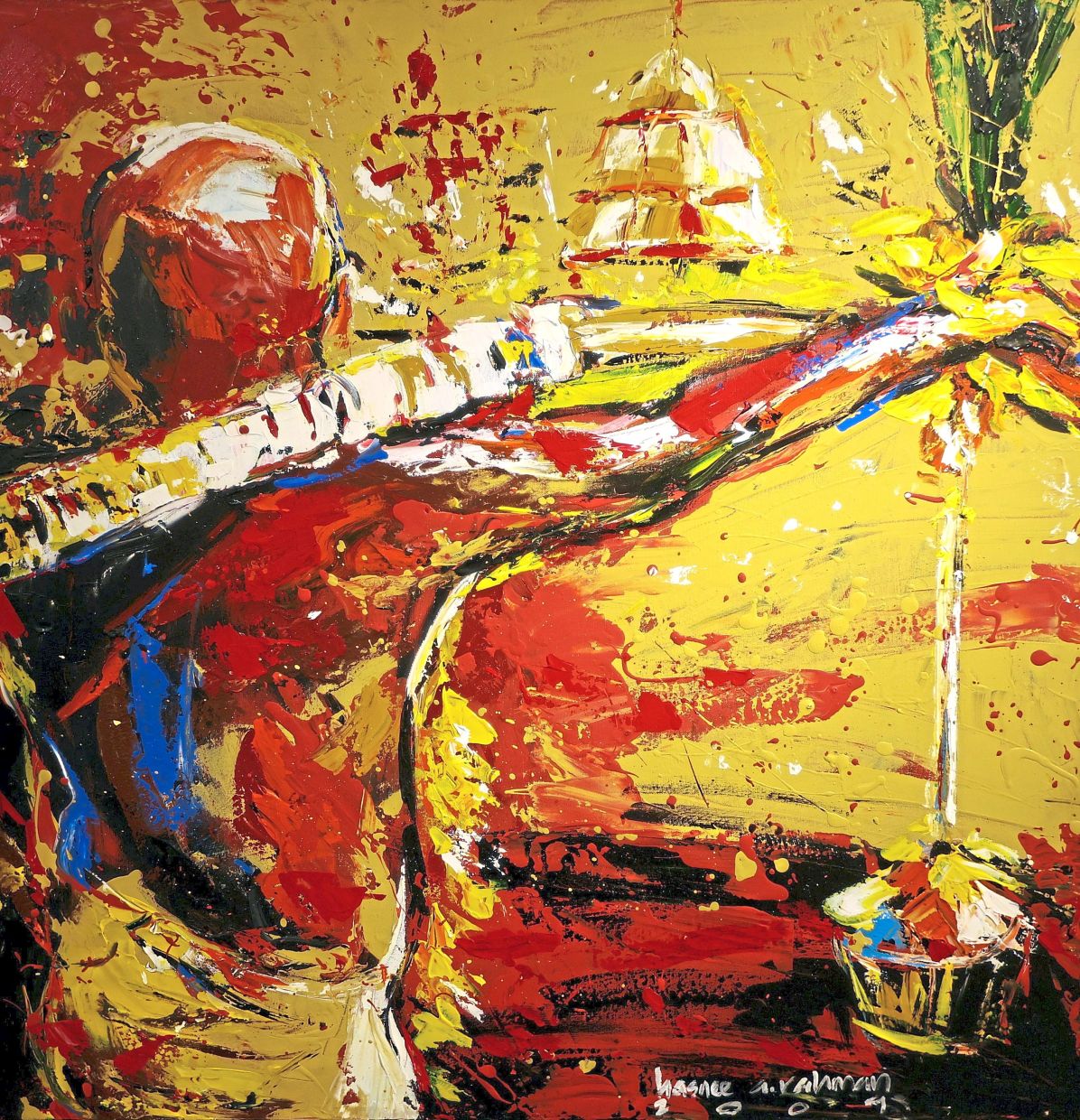
He also highlighted the work of Hasnee Abdul Rahman, whose depictions of the Garba dance, as well as Thaipusam at Batu Caves, Selangor, remind audiences that “a temple is not just a building, but a stage”.
The significance of these structures as cultural landmarks was echoed by Malaysian Institute of Architects president Adrianta Aziz, who said the collection – the largest of its kind in Asia – offered a rare lens into spiritual landscapes.
“Architecture, at its essence, is more than the creation of buildings.
“It is the shaping of experiences, the framing of rituals and the preservation of culture across time and place,” he said.
“Temples, in particular, embody this beautifully.
“They are not merely physical structures; they are sacred markers that carry stories of migration, resilience and continuity.”
Gobind underscored how these structures bridged the ancient and modern.
“From the towering gopurams inspired by South Indian traditions to the intricately carved shikharas echoing North Indian styles, temple architecture outside India faithfully reflects its classical heritage.”
He added that these temples quietly remind us that tradition does not disappear, it adapts – standing alongside skyscrapers and highways as a testament to cultural evolution.
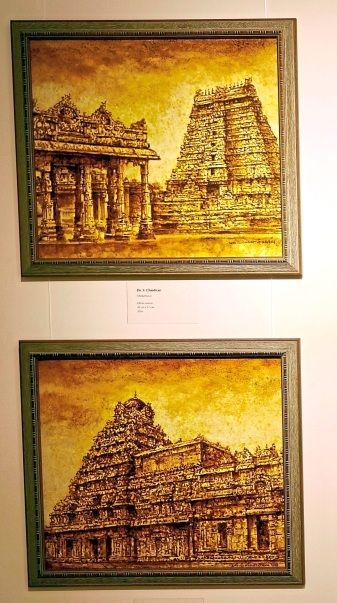
The exhibition is an immersive archive of the Indian diaspora’s architectural footprint.
Featuring prominent Malaysian artists such as Lee Weng Fatt, Long Thien Shih and Nirmala Karuppiah, it is a masterclass in how built forms become narratives of belonging.
The exhibition runs until April 29. UR‑MU @ The Toffee is open Tuesdays to Sundays, 11am to 7pm.
Admission is RM20 for adults and RM10 for seniors and students.