
GAMUDA Technologies, the technology and full-stack artificial intelligence (AI) arm of Gamuda Bhd, is unveiling Wira, a proprietary multimodal large language model (LLM).
This marks what the organisation describes as a significant step toward genuine digital sovereignty, as it is specifically designed for Malaysian enterprise and government workloads.
Benchmarked against MalayMMLU (massive multitask language understanding) – the industry standard for evaluating Bahasa Melayu AI performance – Wira recorded an average score of 89.20% across 24,213 multiple-choice questions spanning 22 subjects, including Bahasa Melayu, Malaysian history, religious studies, science and social sciences.
The result positions it as a leading AI model for local language understanding, capable of processing Bahasa Melayu alongside more than 100 other languages.
It can also understand charts and scanned forms, and process large amounts of text equivalent to a full novel in a single conversation.
True sovereignty
Gamuda group chief digital officer John Lim said that the benchmark is only part of the story, as true digital sovereignty is the core behind the AI model.
“The term sovereignty has been interpreted by a lot of different parties, with varying levels of what people mean by sovereign. Some people just think that it means ‘in-country’ or ‘under government ownership’ – but that’s not sufficient in today’s multi-polar world,” he said.
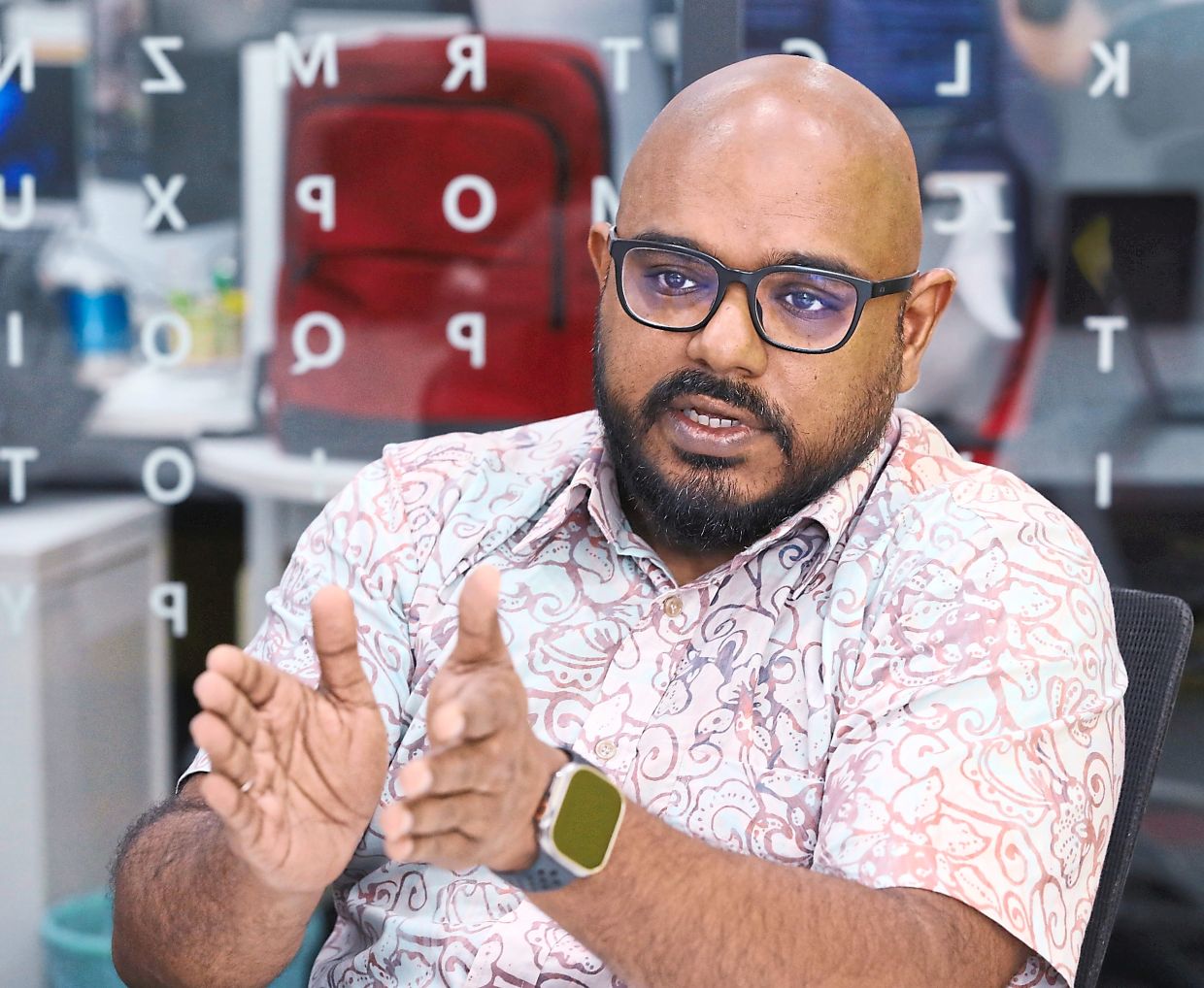
“In the case of Wira, it is a model that we control – we are not dependent on a third party to run. It doesn’t need any connection to any other global data centre to run or keep operational.
“We can run it on anything as small as a laptop, all the way up to a cluster of GPUs. The options are open because it is air-gapped and doesn’t require any connection to survive. So, the idea is that we can run it anywhere.”
Lim noted that this serves as a more rigorous evaluation of sovereignty, effectively mitigating the risks of foreign disruptions during geopolitical conflicts, as the model remains operational even if external access is severed.
Additionally, with the government pushing for broader AI adoption across public agencies, data security has been a persistent sticking point.
Lim added that Wira is positioned as a direct answer to that concern, as it is an LLM that runs “entirely independently”.
This means that government bodies could deploy on-premises and on their own hardware, without requiring a large upfront hardware investment to start.
AI for real-world tasks
Gamuda Technologies has also built out a portfolio of AI agent-specific harnesses to sit on top of the model, including SpatialQ, Agentlinc and Trudax.
SpatialQ is a no-code, conversational AI platform that transforms complex earth and geospatial data into quick outcomes.
Agentlinc serves as an internally developed, centralised knowledge platform to personalise workflows, draft reports and summarise documents in your enterprise file storage.
While Trudax deploys AI agents as always-on business analysts to provide instant answers directly from numerous enterprise dashboards.
Each is designed to pair the LLM with purpose-built tooling for specific use cases, such as enterprise search, multimodal reasoning for understanding GIS maps and agent-to-agent protocols for uncovering large data insights.
“Right now, we are able to take this model and run it anywhere it is needed. But the LLM is just one part of the equation. The next part is being able to create harnesses and tooling around that LLM to achieve a task,” said Lim.
“That’s why we’re offering not just the LLM but the full software stack and hardware stack to go with it, and offer end-to-end solutions.”
He described Gamuda’s move into sovereign AI as less of a pivot but more of a natural extension of the organisation’s engineering identity.
“Over the past 50 years, our DNA has never changed; we’re an engineering company at heart.
“It used to be that we just built roads, bridges, tunnels – the most complicated things for the time. But now, we’re applying that engineering heritage to building digital infrastructure.”
Wira does not stand alone, however, as it sits within a broader ecosystem assembled under Gamuda Technologies.
This ecosystem brings together the LLM, a growing suite of AI-powered software applications and sovereign cloud infrastructure via Gamuda DNeX Cloud, a special-purpose vehicle co-owned by Gamuda Technologies and Dagang NeXchange Bhd.
Gamuda DNeX Cloud chief executive officer Ashraff Ismail highlighted the significance of this combination to provide sovereign AI cloud services.
“We have the sovereign infrastructure stack that can operate completely without internet connectivity – the highest level of sovereignty,” he said.
“And then Wira comes in, understanding the local context and cultural intricacies. The software is also developed by Gamuda Technologies with upskilled Malaysian talent from the Gamuda AI Academy. So, its sovereignty is end-to-end.
“When it comes to any government agencies or ministries that want to communicate locally with the AI in a disconnected environment, Wira is considered the leading LLM for the Malay language, as it gives a very tailored response that incorporates local contexts.”
He added that Gamuda DNeX Cloud offers both air-gapped and connected cloud infrastructure, allowing Wira to be deployed in high-security government environments where risks of foreign disruptions are totally mitigated. For less sensitive workloads, the model can be deployed on existing cloud platforms or on edge devices.