
WITH Visit Malaysia 2026 well underway, Kuala Lumpur has been stepping up efforts to present a cleaner, more welcoming image to tourists.
Cleaning and beautification works have been intensified across key visitor zones, including Bukit Bintang and the heritage precinct around Dataran Merdeka.
However, beneath the freshly painted facades and manicured landscapes, road users are encountering a jarring reality – potholes and “patchwork” surfaces that resemble a tattered quilt.
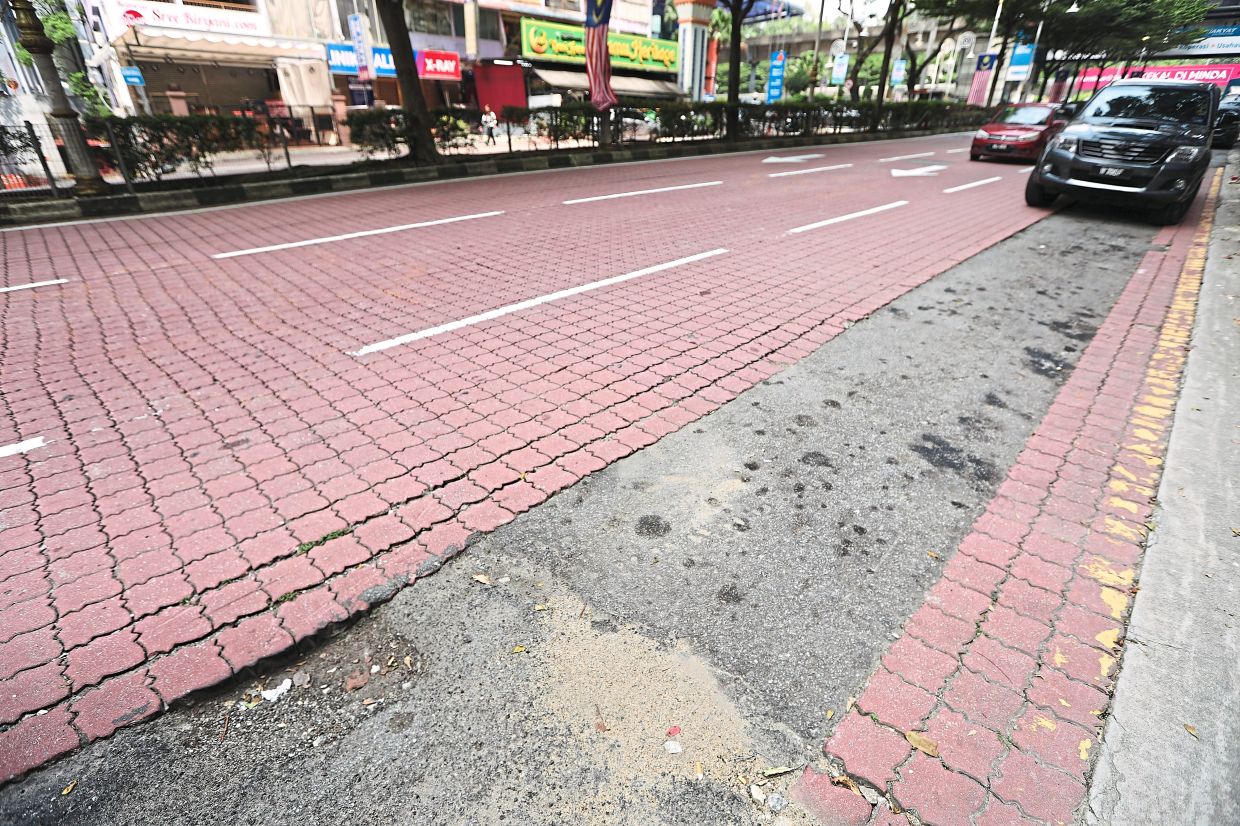
In areas framed by restored buildings and heritage features, cobblestone charm is often interrupted by crude asphalt patches.
These “quick-fix” repairs leave the city’s major thoroughfares looking worn and inconsistent, a direct contradiction to the carefully curated tourist image the government hopes to project.
Eyesore on the streets
The problem is not confined to the city centre.
Throughout suburban neighbourhoods, potholes, mismatched repairs, sunken trenches and rough utility cuts have become a common sight.
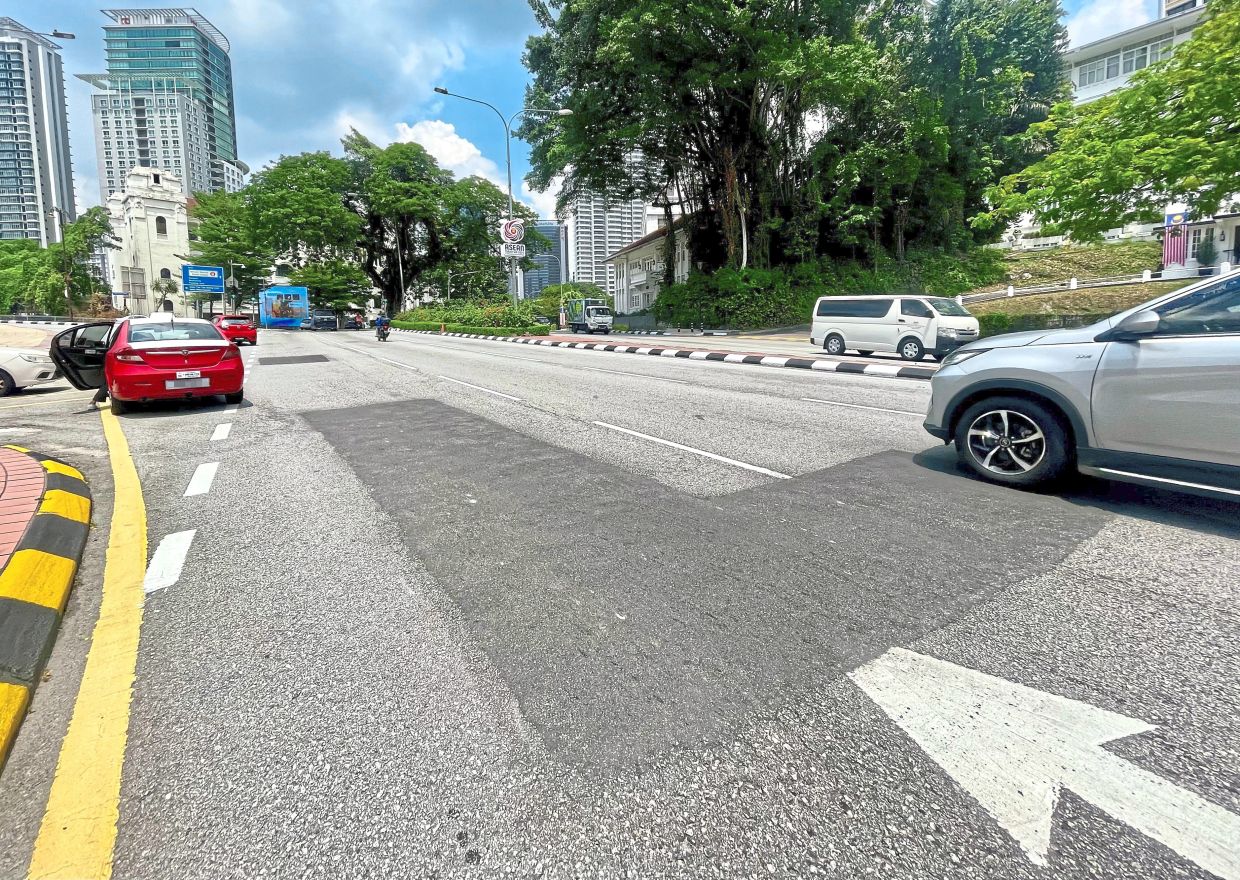
Utility maintenance often involves digging up specialised surfaces, but these trenches are often closed in haste.
In Little India, Brickfields, parts of the traditional heritage paving has been covered with tar, creating a visual clash that does not fit the city’s identity.
“If the surroundings look polished, why do the roads look so battered?” asked veteran tourist guide Jane Rai.
Beyond aesthetics, the “bumpy” reality poses a genuine threat to those on two wheels.
Poor road repairs raise safety concerns for motorcyclists and cyclists, often signalling weak enforcement of standard operating procedures (SOPs).
The 24-hour dilemma
The pressure to perform stems partly from a federal mandate.
Last year, the Works Ministry announced that potholes reported via the MyJalan mobile app must be fixed within 24 hours.
Deputy Works Minister Datuk Seri Ahmad Maslan previously said swift action must be taken by all authorities, regardless of jurisdiction.

He said the turnaround time for patching roads under the ministry was 24 hours.
Local authorities are also required to fix the road within the same timeframe.
“Complaints on other damages should be resolved within 15 days,” he told the Dewan Rakyat.
However, industry experts worry that this demand for fast turnaround time will only create shoddy work.

A specialist in transport, mobility and logistics, MDS Consultancy Group managing director Dr Rosli Azad Khan, said the 24-hour requirement should be seen as a risk-control measure rather than a standard for workmanship.
“From an engineering perspective, you have to balance urgency with durability.
“You must separate making the road safe from making the repair permanent,” Rosli said.
He explained that a best practice approach involved two phases.

The first, carried out within
24 hours, uses cold mix or quick-setting materials to eliminate immediate hazards such as sharp edges and water seepage.
The second phase involves a planned, permanent repair, including proper edge cutting, surface cleaning, tack coating, correct compaction and use of compatible materials.
“Trying to achieve permanent quality under rain, heavy traffic or limited preparation often leads to poor outcomes.
“Early intervention is for safety, but durability requires time.”
Rosli added that repeated patchwork repairs in the same location was often a sign of deeper structural problems.
“Red flags include patches that keep failing in the same area, closely spaced repairs forming long bands or what looks like leopard spots, depressions around patched sections, or water being forced out after rain.”
He noted that such conditions usually pointed to underlying issues such as poor drainage, failure of the road base or subgrade, or a pavement that had exceeded its structural design life.
On the matter of appearance, Rosli said uneven patching could also affect safety.
“Inconsistent surfaces can affect vehicle stability, especially for motorcycles, as well as drainage and skid resistance.”

Safety over aesthetics
Engineers say appearances, however, can be misleading.
Institute of Engineers Malaysia (IEM) members say some repairs are completed quickly to address urgent damage, where safety takes precedence over a neat finish.
In such cases, the goal is to make the road usable as fast as possible – not to make it look good.
“Safety is always the priority. In an emergency, work must be done quickly to prevent accidents,” said IEM president Prof Dr Jeffrey Chiang Choong Luin.
He said rapid patching was designed to stop motorcyclists from skidding and prevent vehicle damage.
“It is about public safety, not a long-term fix.
“But, if there is no immediate danger, contractors are required to follow proper procedures, which involve applying for the necessary paperwork and permits before starting work.”
Under existing rules, contractors must apply for a permit before carrying out any non-urgent roadworks.
IEM member Nur Afifah Zainuddin said: “Local council engineers must inspect the site before work starts and during the repair process.
“Contractors must place a deposit, calculated based on the length of road affected.
“This deposit acts as a form of guarantee.”
Nur Afifah, who is also a Shah Alam City Council engineer, said that if reinstatement work was poorly done or failed to meet required standards, the local authority had the right to withhold part or all of the deposit.
“In short, if the job is done badly, contractors risk losing their money,” she said.
“We can reject the work and refuse to issue the certificate of practical completion (CPC).
“A proper job requires proper compaction and sometimes roads must be closed for one or two months, and there must be proper traffic management and clear communication with residents.”
Shared responsibility
Senior consulting engineer Fong Chong Yit warned that even a repair that looked good initially, might fail after being subjected to heavy traffic.
He urged residents to lodge immediate complaints if a surface began to break up.
Experts also warn the public against “DIY” pothole repairs, regardless of how noble the intention.
Senior engineer Foo Kam Fai said individuals putting themselves in the middle of traffic to patch holes were taking a big risk and stressed that proper traffic management was essential.
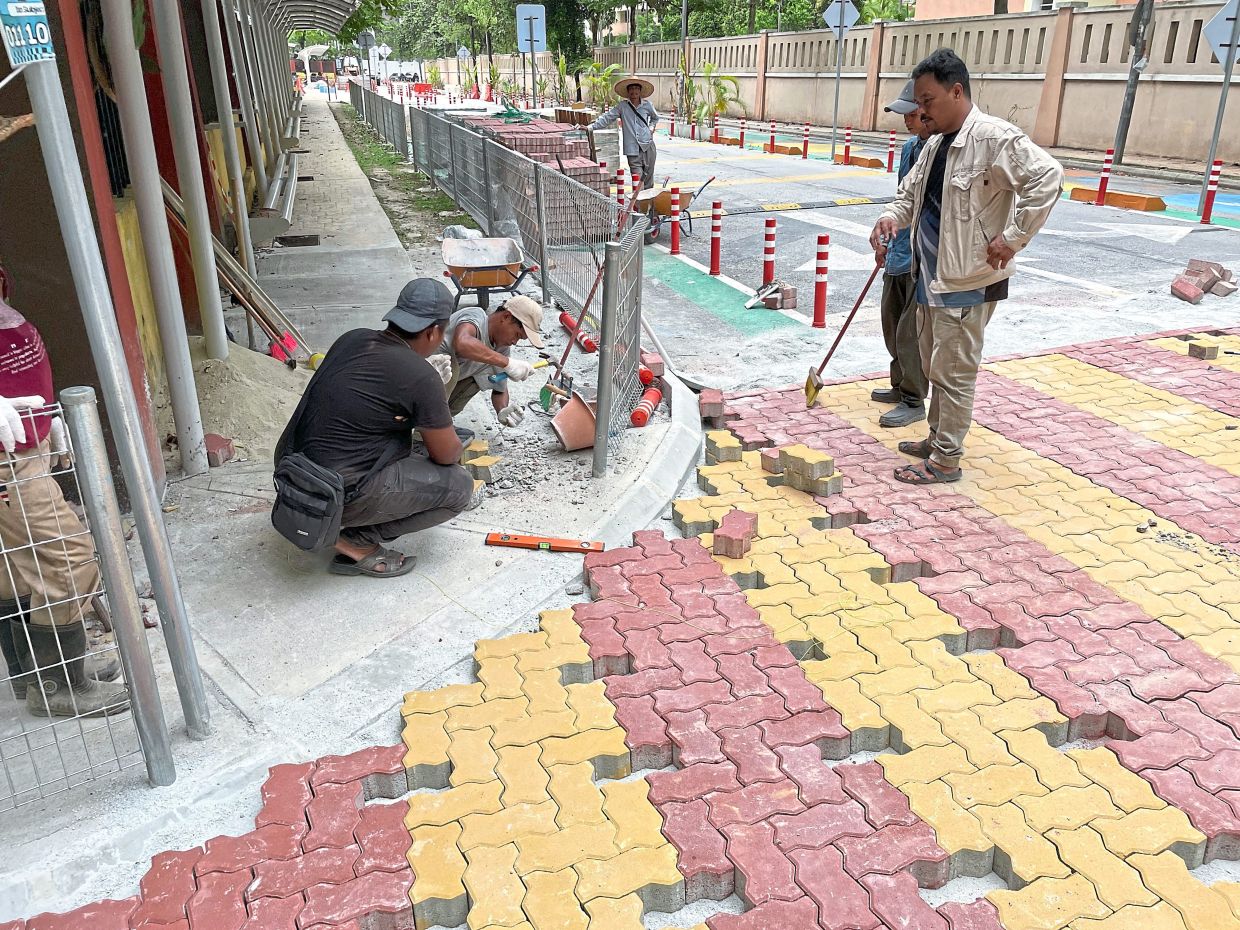
Foo added that for roads with interlocking or heritage designs, contractors were required to return later to reinstate the road properly once the immediate hazard is cleared.
“The local authority’s jurisdiction is vast, and constant monitoring is not always possible.
“Ultimately, contractors must take their responsibilities seriously and return to complete the job properly,” he said.