Traders at First Garden morning market hope Ipoh City Council (MBI) will legalise their business, as enforcement actions are disrupting their livelihoods.
There are about 40 unlicensed traders operating on Lorong Taman 10 and Lorong Taman 11 in First Garden, near the commercial centre.
The makeshift morning market, falling under the Jelapang constituency, operates from 7am to 1pm.
Many of the hawkers want to be permitted to trade at the unsanctioned market or some place within the First Garden commercial district.

Rice dumpling and herbal jelly seller Teoh Yoke Yeng, 55, who has been trading at the market for 12 years, said she had been issued several RM100 compounds over the years.
“I hope MBI grants us the licence to trade here.
“Even on good days, I earn about RM30 only, so receiving RM100 compounds is too much for me,” she said.

Vegetable seller V. Tamil Selven, 61, who has been trading for two years, said he had been fined six times, which he paid at discounted rates.
“Whenever the enforcement officers come, my weighing machines and large umbrellas are confiscated,” he said.
“It is a hassle to go to MBI each time to retrieve my items.”
Teoh said motorists had complained that the morning market was causing traffic congestion at Lorong Taman 10 and Lorong Taman 11.
However, Tamil Selven said the road was wide enough for vehicles to pass through.
“We are only earning an income and making ends meet, so I hope MBI will legalise the market,” he said, adding that they hope to continue trading at the same site.
Fruit vendor Loh Jia Zheng, 34, who has been trading for 10 years, said he was willing to cooperate with any plan the city council came up with, as long as his business was not disrupted.
“We do not object if we are relocated to the nearby food court, provided that it is not far from the original location.”
He added that the traders currently enjoyed high traffic because they were within the commercial area and catered to the needs of local residents.
Chee Chin Yoon, 72, who sells deep-fried cempedak, said he moved to the First Garden market a year ago after trading elsewhere for more than 30 years.
“Everyone here just wants to earn a living.
“It would be good if MBI could legalise our operations,” he said.

Plant seller Justin Chan, 43, has been dealing with compounds too since he set up shop two years ago.
“Paying the fine is one thing, and going to the city council to retrieve confiscated pots, plants, sand and fertiliser is another hassle,” he said.
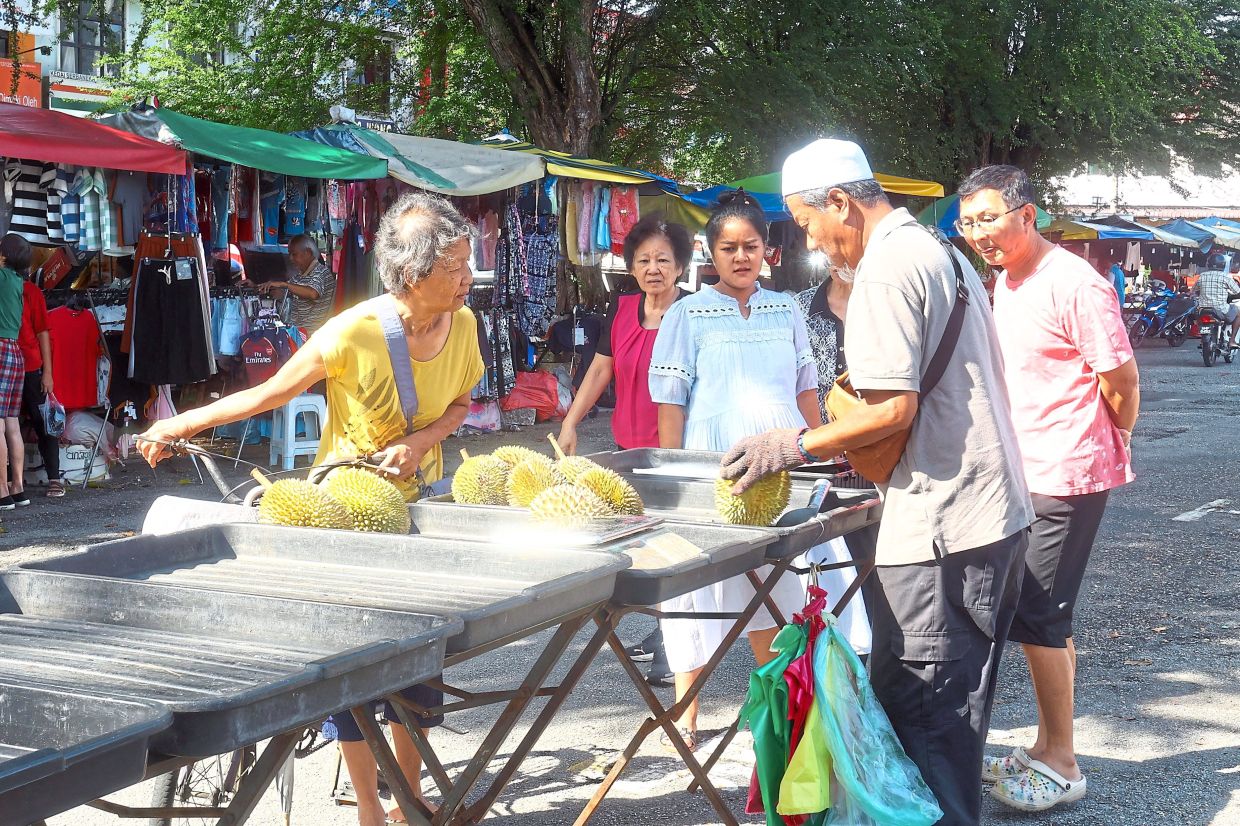
Durian seller Mohd Latib Said, 62, from Sungai Siput, said business was better at the market during his three years there than at other locations.
“Whenever I see the MBI enforcement team, I don’t unload fruits from my vehicle.
“I hope MBI will issue us licences instead of compounds.
“This area is shaded and nice for a morning market,” he said.
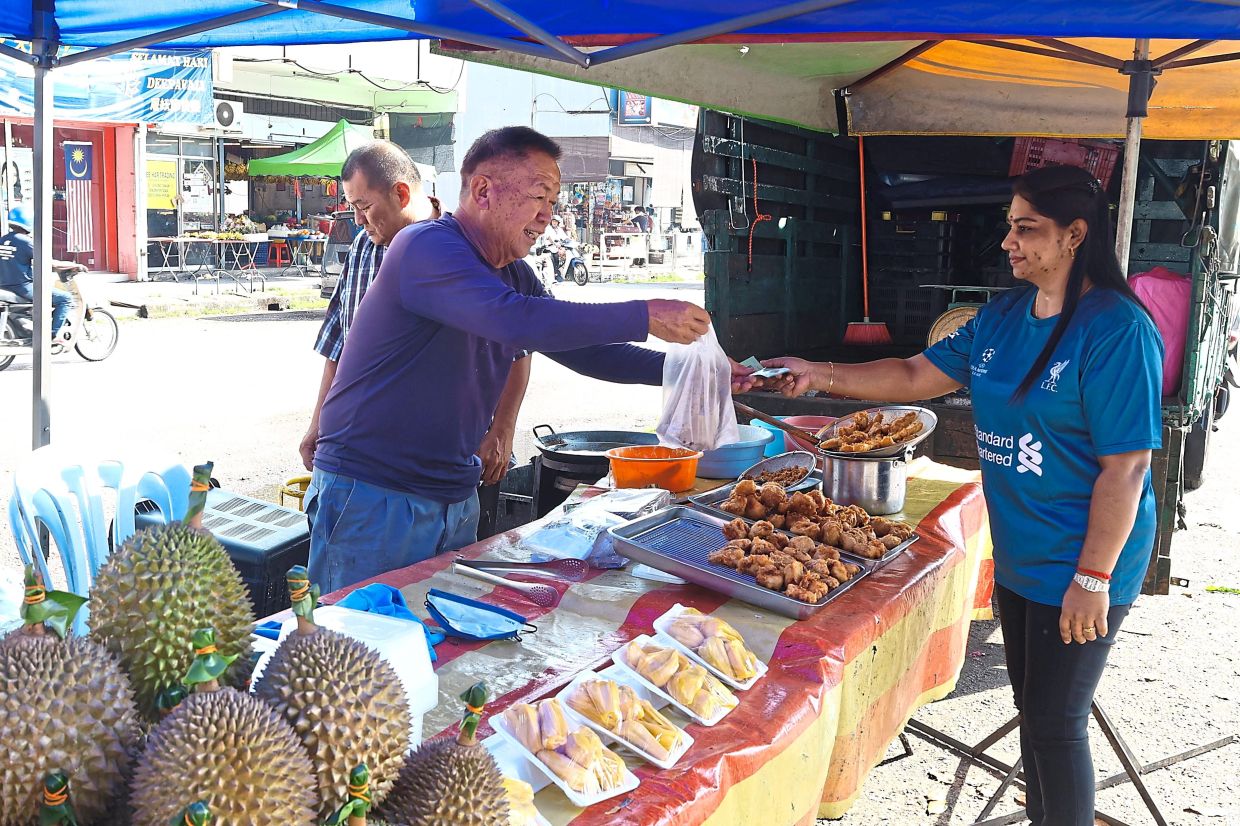
Single-mother M. Sarania, 43, said she visited the market at least twice a week.
“It is very convenient to do my morning shopping here.
“I buy vegetables, fruits and other necessities from the roadside traders, besides going to the nearby restaurants for breakfast,” she said.
Driving local economy
Parti Sosialis Malaysia (PSM), which highlighted the issue, is calling on the city council to safeguard the traders’ livelihoods.
PSM Batu Gajah parliamentary coordinator K. Kunasekaran said the market, which had been operating for over 30 years, was a place for residents to buy daily necessities and fresh produce at affordable prices.
He said the businesses were an income source for traders.
PSM submitted a complaint letter to Ipoh mayor Zamakhshari Hanipah and Perak housing and local government committee chairman Sandrea Ng Shy Ching on Sept 4 last year, following enforcement action which included confiscation of umbrellas and issuance of compounds.
“The traders say that they only operate at the site until 1pm and are not the reason for the congestion.
“Besides, they are also contributing to the local economy,” said Kunasekaran.
He questioned why a night market was allowed to trade at the site on Fridays.
“If a pasar malam can operate in the same area, there is no reason to stop the morning traders from operating there,” he said.
PSM, he said, visited the traders on Jan 2 and learned that continuous enforcement action had caused anxiety and affected their livelihoods.
“Petty traders contribute to the local economy by providing affordable goods and form part of the long-established social heritage of the First Garden community,” he added.
Kunasekaran hopes the city council will provide a positive response while ensuring the traders can continue operations.
“MBI must recognise their presence and issue licences to protect their welfare,” he said.
Contrary viewpoint
Jelapang assemblyman Cheah Pou Hian said the site was not designated for trading activities in the morning.
Aside from contributing to traffic congestion, he said, the traders’ presence raised hygiene concerns amid urban planning considerations.

Cheah said the city council had never authorised trading at the site, even though traders said they had been operating there for decades.
“Whether they say 30 or 50 years, that is not the main issue.
“The key point is that MBI never approved anyone to trade at that location in the morning,” he said.
He added that illegal traders’ applications for licences had been repeatedly rejected.
With the makeshift market pitched along parking space in a commercial district, Cheah said roadside trading involving the sale of vegetables, fish and meat could lead to hygiene problems, unpleasant odours and damage to road surfaces due to daily exposure to water and waste.
He said enforcement action, including the issuance of compounds, had been carried out over the years.
“The fact that traders continue operating does not mean approval has been given,” he reiterated.
He also addressed comparisons made with the night market, explaining that the pasar malam operated during off-peak hours and was managed by an association responsible for cleanliness and compliance with MBI’s conditions.
“Night markets are governed by specific licensing conditions, and MBI conducts inspections to ensure cleanliness and compliance.”
On the area’s urban transformation plan, he said MBI was upgrading infrastructure at Lorong Taman 11, including installation of a physical road divider with LED lighting, to improve visibility and safety at night.
“We don’t want the area to look like a village-style roadside market.
“This is a commercial zone and it should be attractive to shoppers and tourists.”
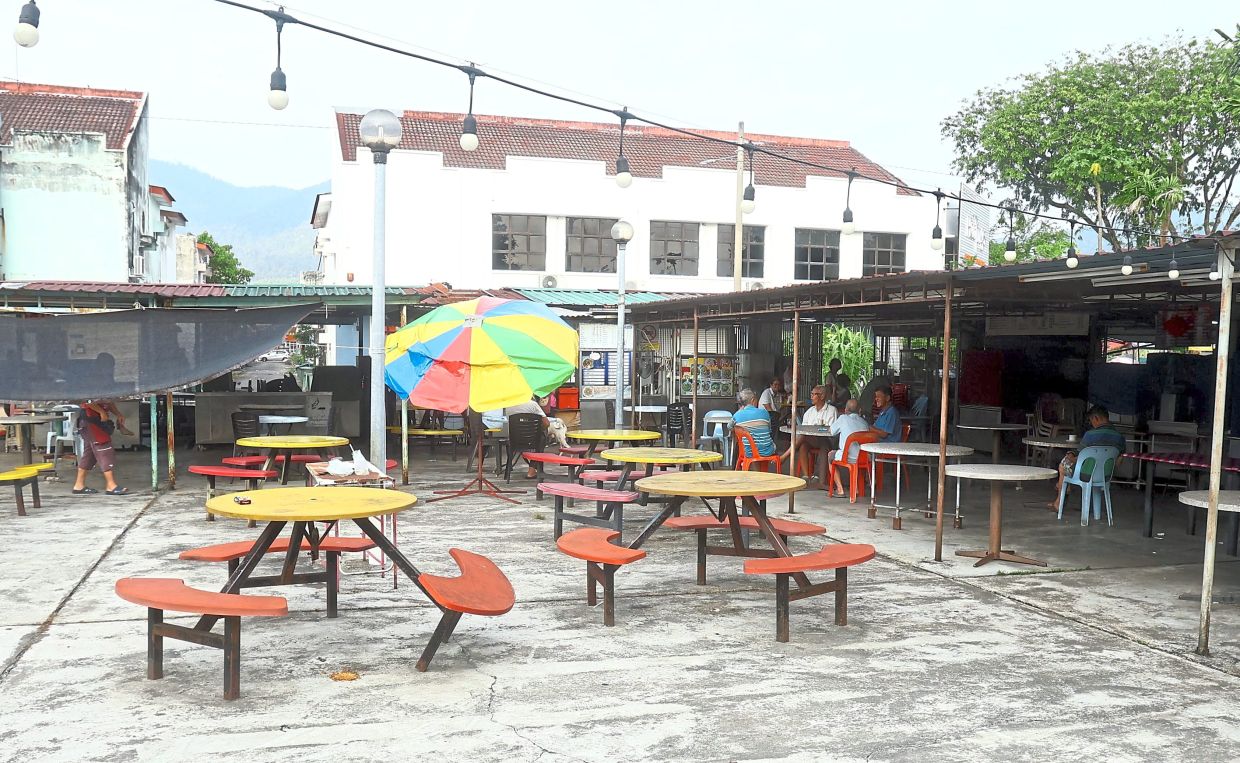
To address traders’ livelihood concerns, he said the city council was considering alternative locations nearby, including a food court and a field.
Both locations are within a short walking distance of the current site.
“These are temporary measures to resolve the issue.
“If the food court option works, it may become permanent. But trading on the road is not allowed,” said Cheah.
He said traders might be eligible for licences if they relocated to approved sites, but they must comply with local government regulations.
“This is about balancing the needs of a small group with wider public interest.
“Development and modernisation mean changes are necessary,” he added.
Complaints received
Ng, when contacted by StarMetro, said MBI informed her that it had received complaints about the presence of traders operating on roads.
She said that following a review, the city council was unable to issue licences to the hawkers because they were trading on parking bays.

This constitutes an offence under By-law 17(2) Hawkers and Stalls By-Laws (MBI) 2020.
“The by-law stipulates that no licence holder shall conduct business in a manner that obstructs or disrupts the smooth flow of vehicular traffic or the free movement of pedestrians.
“Nevertheless, MBI has taken steps to identify a strategic and safer location, namely within the First Garden Business Square (food court) which is not far from the existing trading site,” she said.
Ng said a study related to the traders had been carried out, and the relocation process would be handled by the city council.