The annual Ramadan bazaar is often a culinary adventure, offering a wide range of dishes that reflect Malaysia’s multicultural identity, from traditional Malay favourites to international treats.
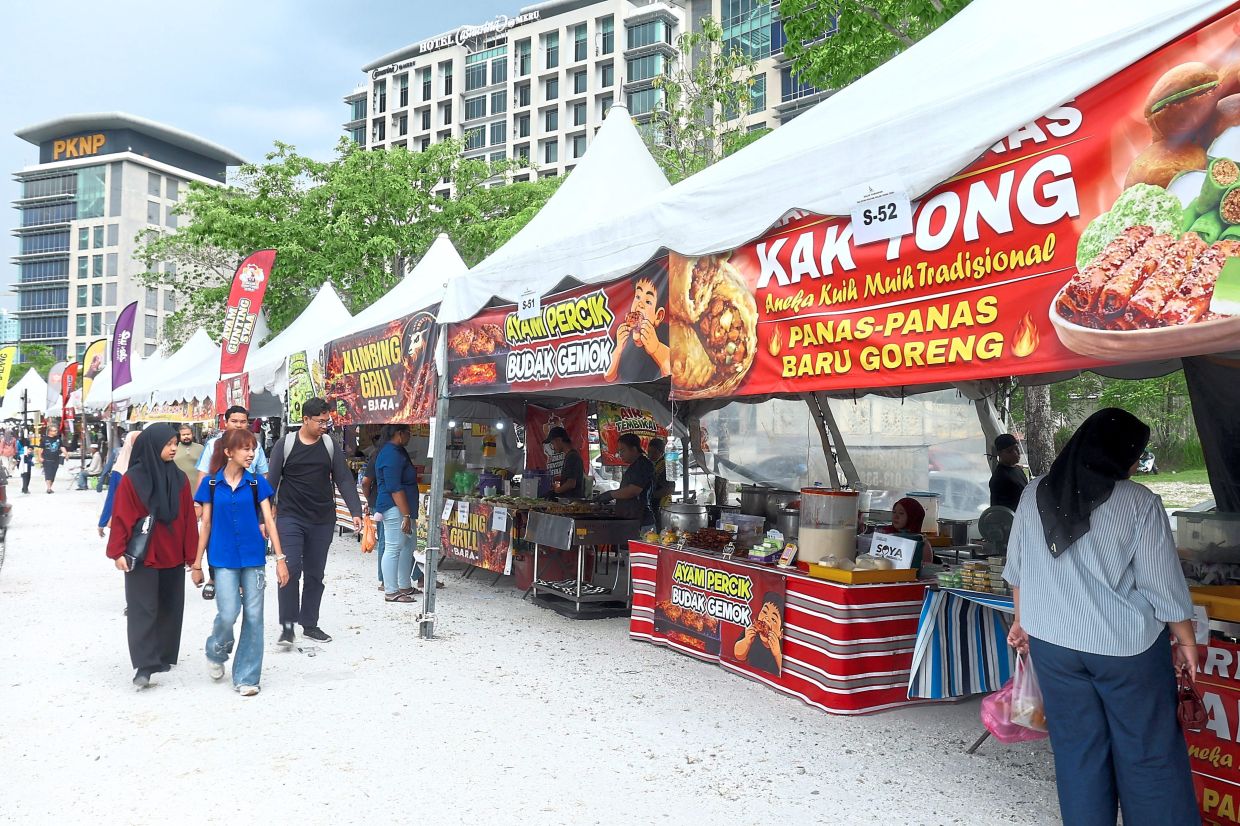
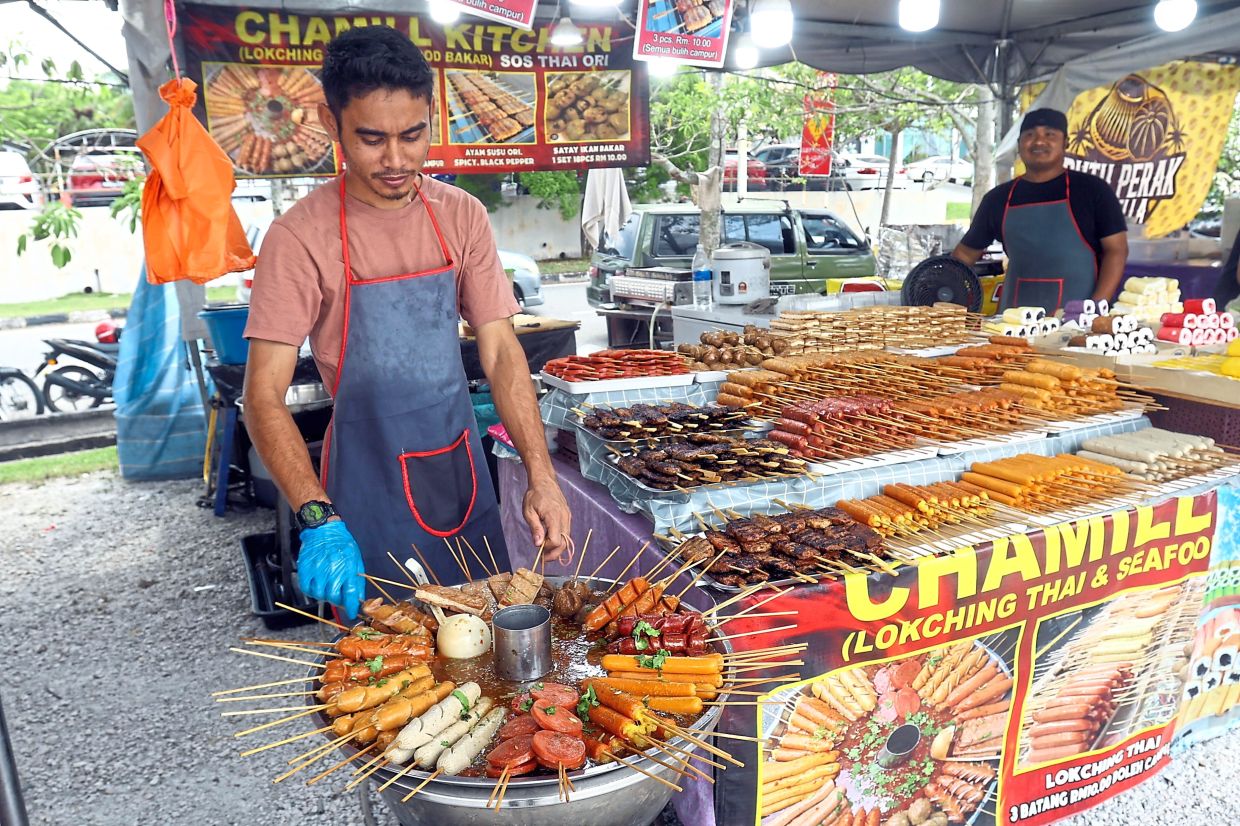
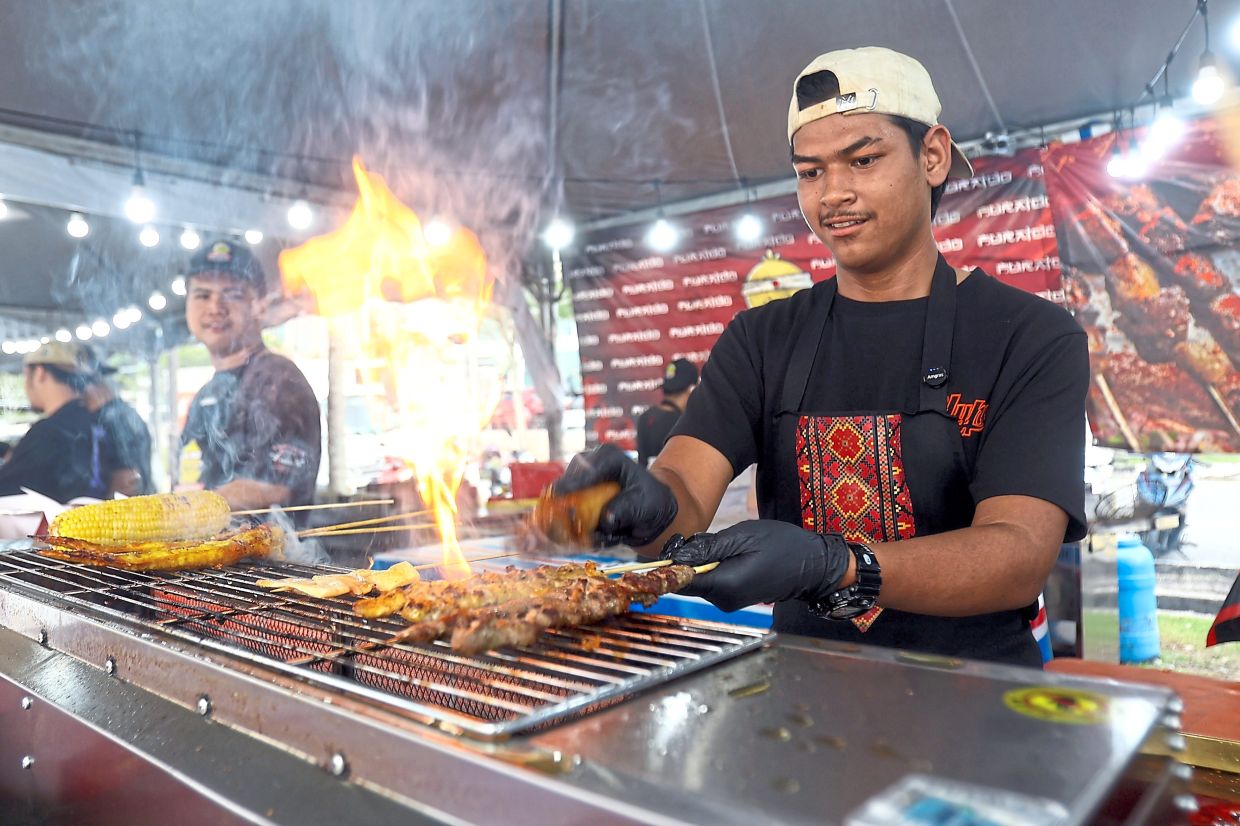
At the Bulatan Sultan Azlan Shah Ramadan Bazaar in Ipoh, Perak, one stall is drawing curious glances and attracting crowds with an unconventional delicacy – Satay China Xinjiang.
Seller Muhd Syafiq Nazeri said the idea to introduce the dish came after his employer discovered the street food during a business trip to Xinjiang region in China.
“It took about two months to master the recipe.
“This satay is very different from the Malaysian version we are used to; there is no peanut sauce.
“Instead, the skewers – mutton, chicken and vegetables such as brinjal – are seasoned with chilli oil and aromatic spices, following an original recipe from China,” he said while manning the stall.
He was met with plenty of questions from curious visitors who wanted to get a sense of whether these bold, smoky flavours would suit their palates.
“Many asked what it tasted like and if it was spicy.
“However, as the days passed, more customers were willing to try it, with some returning for repeat orders,” said Muhd Syafiq.
He said the dish was a popular street food in Xinjiang and while similar style of skewered food could be found in Malaysia, they were mostly sold at Chinese Muslim restaurants.
“We noticed that no one was selling this kind of satay at Ramadan bazaars, so we felt it would be something new.”
His bestsellers are mutton and brinjal, with prices ranging from RM1 to RM8 per stick.
Muhd Syafiq starts his day as early as 5am to prepare the ingredients before opening at 1pm.
“On the first day, we had about 50 customers and by the sixth day, the number grew to over 300,” he said, adding that word-of-mouth played a big role in the stall’s success.
Certain viral food trends are also making their mark at the bazaar.
Nurul Rohaida Salleh is drawing a constant stream of visitors with her pani puri (deep-fried Indian street food) and other snacks.
Her Malaysian version of pani puri is sold at RM15 for 15 pieces and comes with tamarind, mint sauce and a spiced potato mixture.
“Many people have bought to try it,” she said.
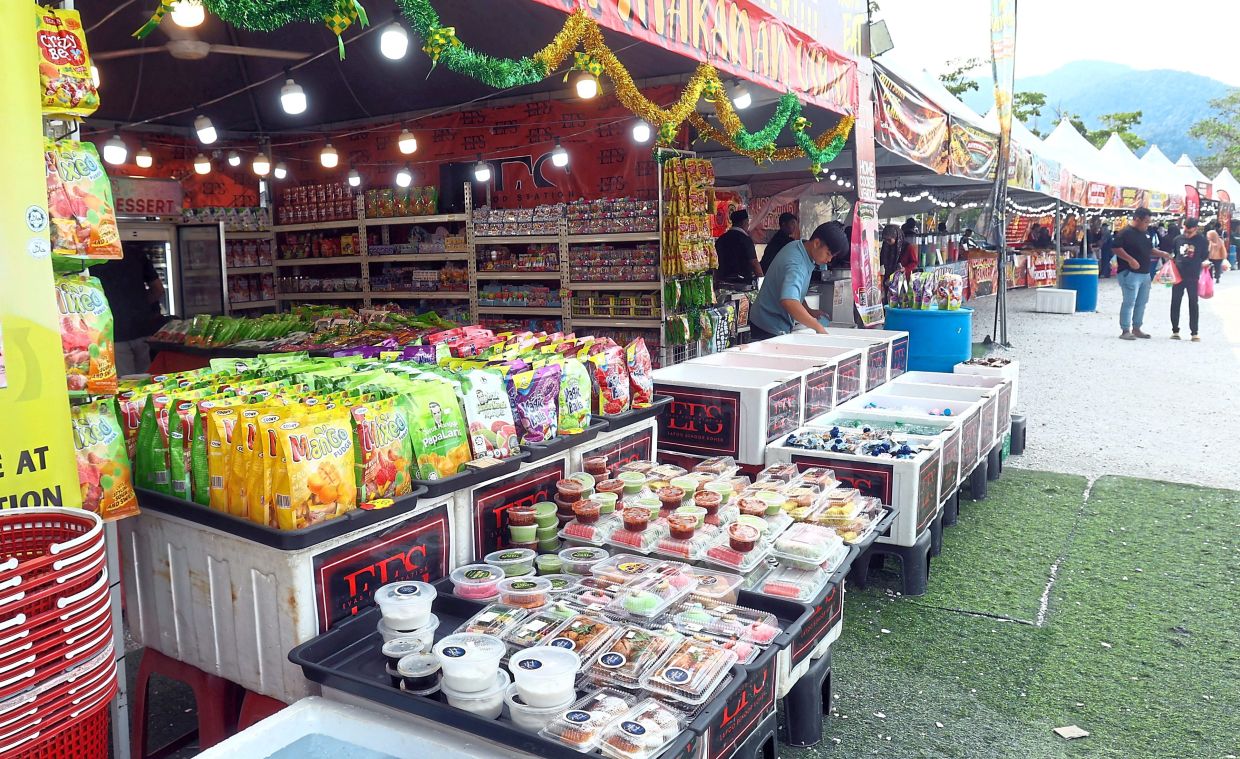
Her stall also offers treats such as tanghulu (a traditional Chinese snack consisting of sugar-coated fruits like strawberry and kiwi), kek tapak kuda (a Bruneian cake roll with chocolate, pistachio and strawberry filling) and popular Middle Eastern dessert kunafa (pastry soaked in syrup and layered with cheese and nuts).
These eye-catching desserts often attract the attention of children, with queues forming from around 3pm.
“People come to my stall looking for snacks and children make up a large portion of our customers,” said Nurul Rohaida.
Several kilometres away at the Stadium Perak Ramadan Bazaar, Muhamad Reza Fahmi Mohd Haspanizal offers a selection of fresh fruit juices.
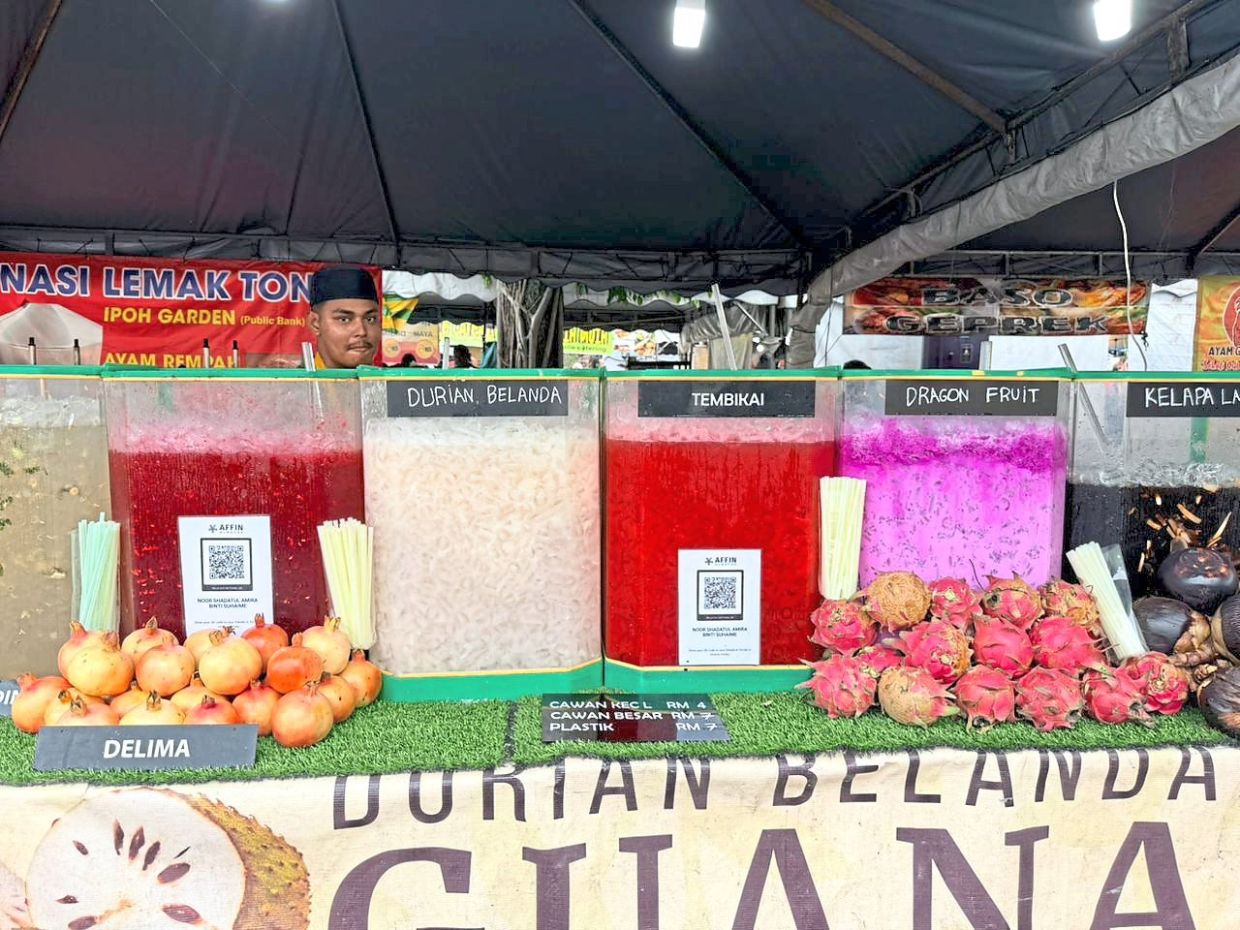
His stall focuses on freshly squeezed juices, including pomegranate and sea coconut, with prices starting from RM4 per cup.
“Usually you see a lot of sugary, milk-based or carbonated beverages at these bazaars.
“I think a healthier option is what people really want,” he said, adding that the juices at his stall were prepared without added syrup or artificial flavouring.
“Many customers are excited to try pomegranate juice.”
Other drinks available include soursoup, lemongrass mint, dragon fruit and watermelon juice.
“I just want people to have another choice when they come to the bazaar – something fresh, natural and good for them when they break their fast,” said Muhamad Reza.
The stadium bazaar also features a slice of Sarawak.
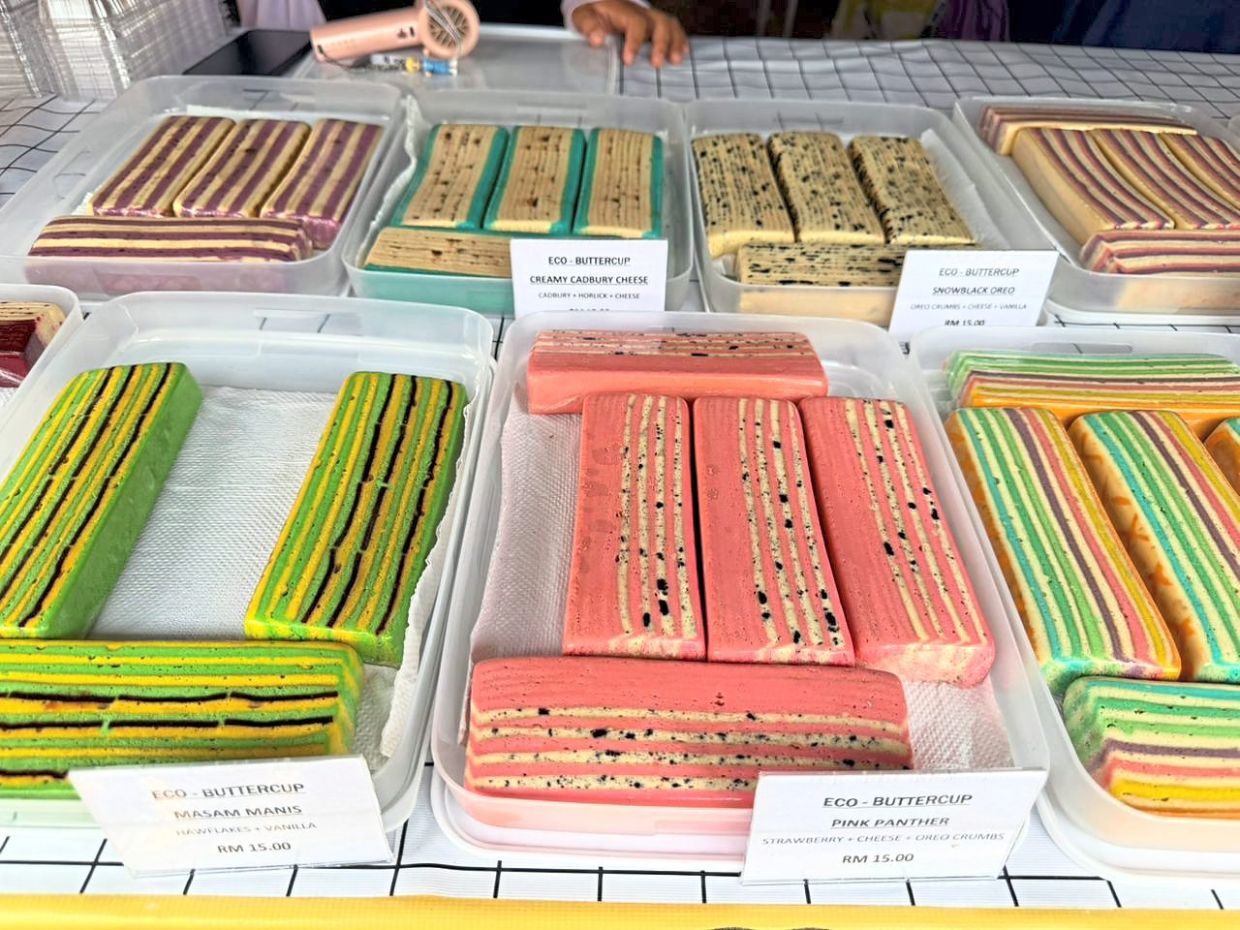
The famous Sarawak kek lapis has emerged as a popular choice with at least three stalls offering the colourful, layered dessert.
Among the sellers is Nurani Suraya Ibrahim who takes pride in the family recipe.
“This recipe comes all the way from Limbang in Sarawak.
“I learned the art from my mother who was taught by the generations before her.”
For Nurani Suraya, setting up shop in Ipoh was about more than just business; it was about cultural representation.
“I chose to sell this because it is iconic and represents my state.
“I want more people here to know about Sarawak’s food heritage,” she said.
Despite it being her first time trading at a Ramadan bazaar, she said the response had been encouraging.
“I hope to continue selling for years to come,” said Nurani Suraya.
Positive reception
The variety this year has earned praise from visitors like food vendor S. Meera, who noted that sellers were becoming more adventurous.
“Usually, we only get to taste local dishes like nasi campur and traditional kuih.
“This time, it is interesting to see Xinjiang satay and pani puri.
“It becomes a place to explore other types of food and try something new.
“I would not be surprised to see even more international cuisines introduced in the future,” said Meera.
The growing variety is a positive shift, said dancer Nazirwan Aziz, who was pleased with the healthier options on offer too.
“The first thing you usually notice at a bazaar is the drinks.
“This time, there are more hydrating and healthier options, which is important when breaking fast after a long day.”
Another visitor, Emmanuel Bili said the lively atmosphere and wide selection were the highlights.
“It is interesting to see so many types of food in one place, from traditional favourites to items people usually only see online.”
He added that the bazaar had become more than just a place to buy food, by serving as a space to explore trends and experience the bustling atmosphere.
Ensuring safety standards
On Feb 19, Perak Mentri Besar Datuk Seri Saarani Mohamad conducted a walkabout at the Stadium Perak Bazaar to inspect food safety and facilities, accompanied by Ipoh mayor Zamakhshari Hanipah.
In a media statement, Perak housing and local government committee chairman Sandrea Ng said 24 Ramadan bazaar locations involving 1,394 licensed trading lots were operating under its supervision.
“Management rights were granted to five hawker associations, three residents’ associations, two mosque or surau committees, one hawkers’ cooperative and four private agencies,” said Ng.
She added that briefings were conducted for all organisers to ensure compliance with cleanliness, food safety standards and reasonable pricing.
Ng said 80 enforcement officers had been deployed to monitor licensing and cleanliness under the Ipoh City Council’s Hawkers and Stalls By-laws 2020, Food Act 1983 and Food Regulations 1985.
“Common offences include traders failing to wear aprons, head coverings or closed shoes, as well as not attending the required food handler training course,” she added.
Ng said stern warnings were issued for illegal renting or selling of bazaar lots to third parties.
“Strict action, including the cancellation of licences without notice or compensation, will be taken against offenders.”