
Johor festival brings together practitioners of age-old trades under one roof
Lim Tian Seng’s career took an unexpected turn after the 1997 Asian financial crisis ended his job in the construction industry.
Drawing on a skill he had learned from his mother as a boy, he began a new chapter in his working life.
Lim, 65, said he was used to getting curious looks from others when sewing traditional beaded shoes, which are an iconic part of Peranakan heritage.
Although he has been in the shoe embroidery business for two decades, it did not appeal to him when he was younger.
“I was first introduced to shoe embroidery by my mother when I was about 10 years old.
“At first I only helped sort the tiny beads by colour, and then slowly picked up sewing.
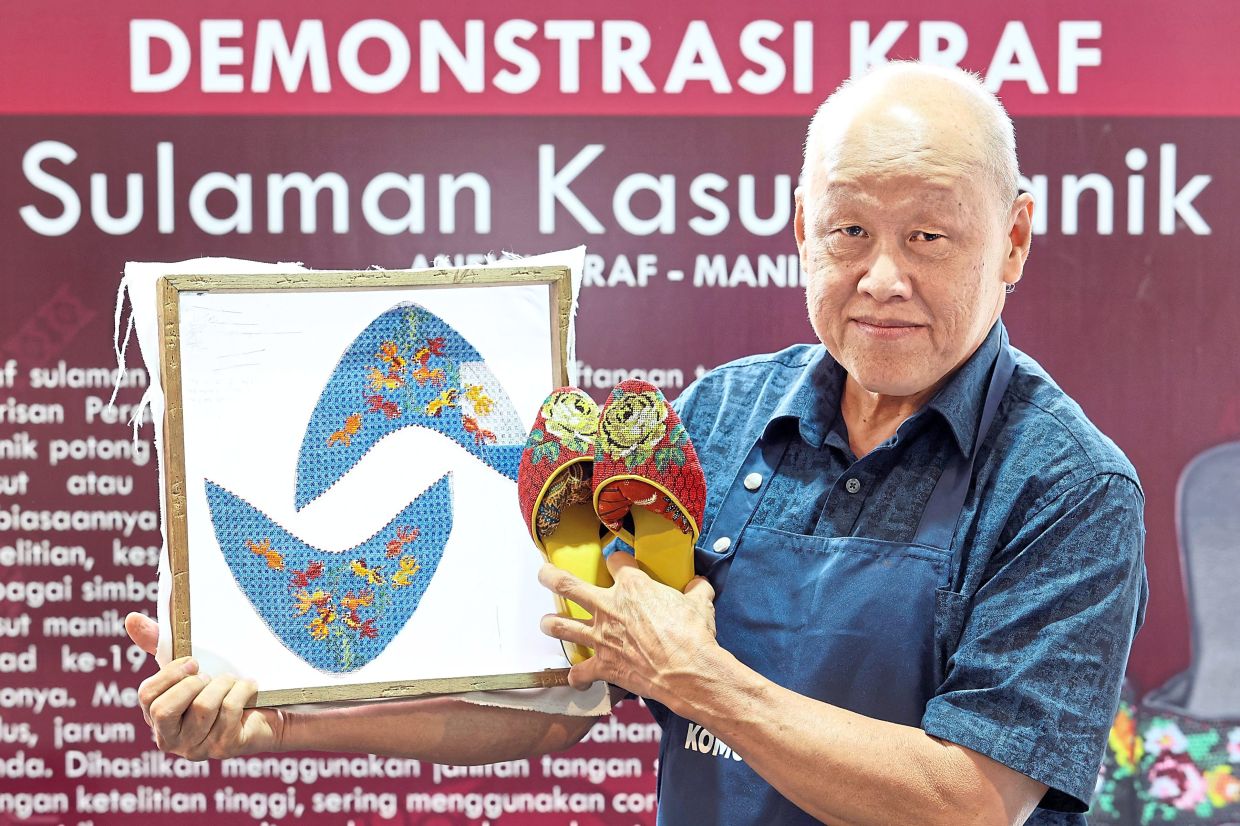
“But back then, people used to say that sewing was women’s work so it was not something I thought of pursuing,” he told StarMetro.
After finishing school, Lim entered the construction industry where he met his wife, who was working in the same company.
However, everything changed when they lost their jobs during the Asian financial crisis.
It forced the couple to return to Melaka in 2000, where Lim took over his family’s shop following his mother’s advice.
“My wife and I initially sold souvenirs at the shop, but she later noticed that handmade beaded shoes from the Baba Nyonya community were becoming popular,” said Lim.
“She started sewing shoes, and at first she did not believe that I could do it too.
“After relearning the stitching techniques, I slowly got the hang of things,” he recalled.
Today, Lim works with three types of beads, namely coarse beads (manik kasar), fine beads (manik halus) and cut beads (manik potong) which he describes as vintage and nearly impossible to find.
Prices for his handmade shoes start from RM398 for open-toe ones to RM498 for designs made with coarse beads, while a pair of shoes made with cut beads can cost up to RM2,000.
“The process of producing a pair of shoes using cut beads can take up to two months,” Lim said.
“Shoes made with coarse beads usually take about five to 10 days, while those with fine beads take around a month to complete.”
Lim was among the exhibitors at Johor Craft Festival held at Padang Akasia, Angsana Johor Baru Mall.
He said the response from visitors was encouraging despite it being his first time at the fair.
Visitors, he said, often paused to watch him stitch the intricate beads onto a shoe upper.
“Many have taken my business card even though they did not make a purchase,” he said.
“They told me they plan to visit my shop in future because I have more designs and sizes there.”
Lim believes such festivals play a crucial role in keeping Malaysian handmade products visible and relevant.
From father to son
Another exhibitor, woodcrafter Mohd Herman M. Surib, 40, learned the craft from his father.
He is the only one among four siblings to follow in his father’s footsteps.
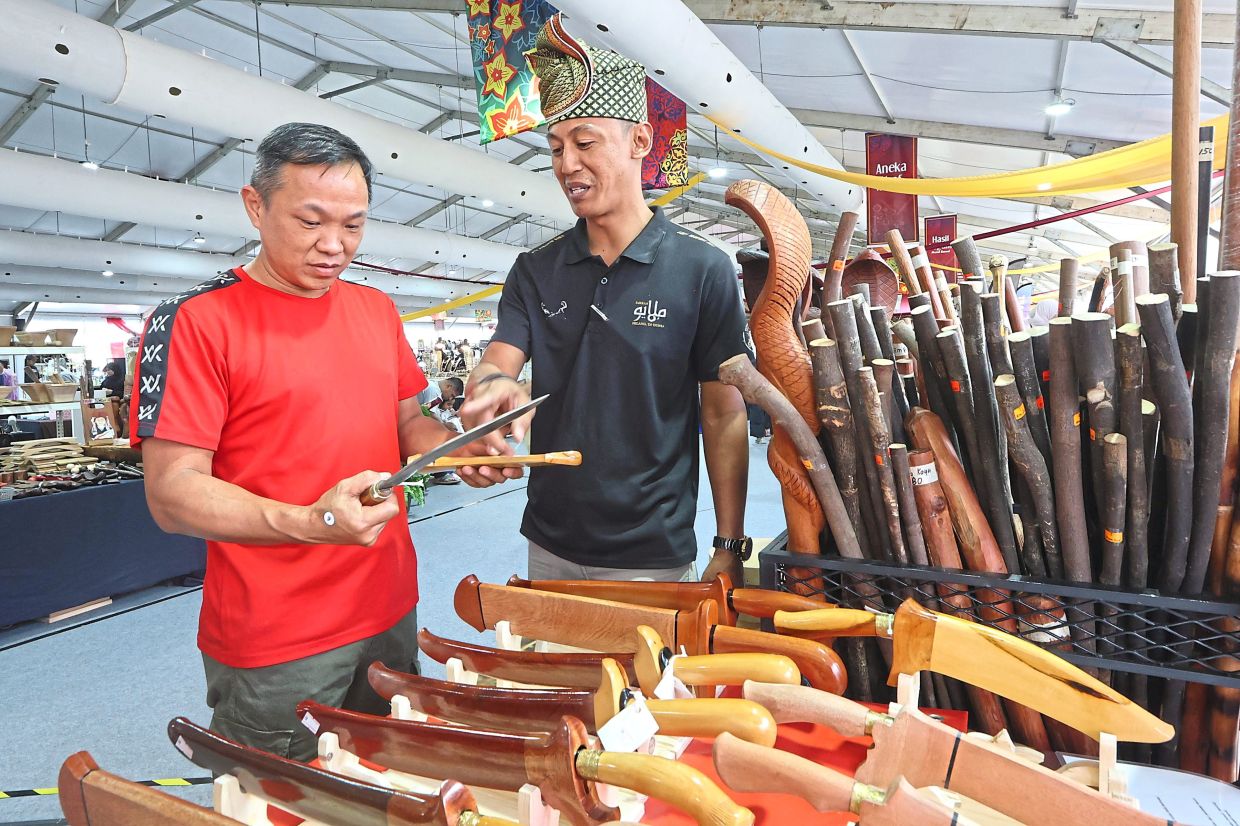
The man from Ipoh, Perak, has a collection of keris, golok (a type of parang) and walking sticks carved from rare hardwood that drew attention from visitors.
“I started making knife sheaths in 2007 and later travelled around Peninsular Malaysia to hone my craft.
“Eventually, I became interested in making keris. The craftsmanship involved is much more intricate compared to an ordinary knife.”
Mohd Herman works primarily with one of Malaysia’s most prized and expensive wood – kayu kemuning emas.
Some of his blades are priced between RM1,200 and RM2,000 each, depending on the grade of the wood and level of craftsmanship involved.
“Kayu kemuning emas is very hard to find. I have to go into the forest with Orang Asli guides who help source and carry the wood,” he said.
“The wood is extremely heavy and difficult to transport, but the quality is unmatched.”
His collection also includes walking sticks made from kayu kenaung, traditionally used by royalty in Thailand.
“It is very popular in Kelantan, where a walking stick made from kayu kenaung can cost almost RM2,000,” he said.
While keris today are largely decorative due to legal restrictions, Mohd Herman believes their value lies in preserving artistry rather than function.
“People buy keris and golok as display pieces for their homes.”
One-of-a-kind pieces
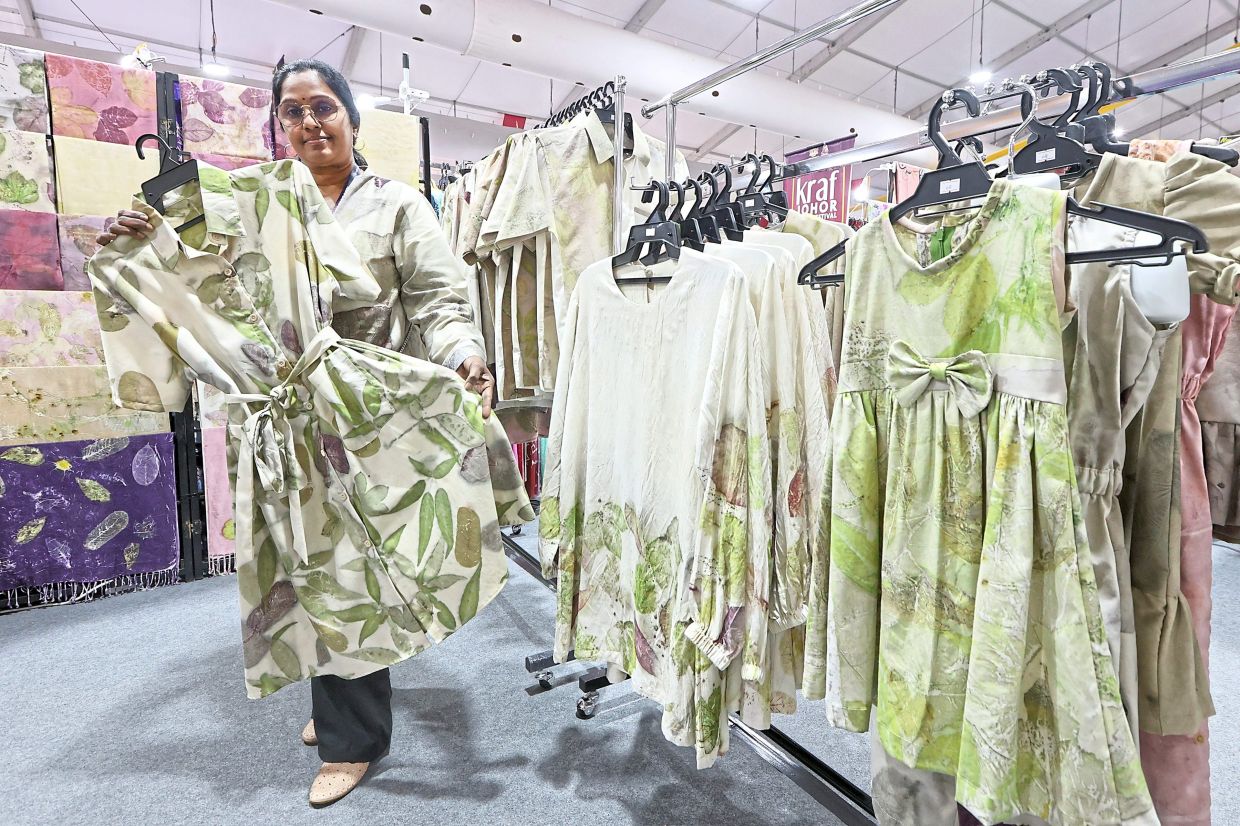
Artisan M. Ratha, 54, who specialises in eco-print batik, said her craft was deeply intertwined with nature.
“I use leaves for motifs as well as tree bark and roots for natural dyes to imprint organic patterns onto fabric.
“Eco-printing is about sustainability and it connects the wearer to the environment,” said the Negri Sembilan-based artisan.
Ratha has been practising eco-printing for five years, initially as a hobby that turned into something more substantial.
“The process – from preparing the fabric to steaming and fixing the colours – takes about two weeks,” she said, highlighting that each piece is unique.
“The fabric that I use must be pure cotton or silk, because synthetic blends will not produce good results,” Ratha explained.
“Since it is Visit Malaysia 2026, I believe my products are something tourists will truly appreciate because they are handmade, natural and sustainable.”
This is Ratha’s third time at the festival and she said seeing returning customers was the greatest compliment.
“Some recognised me from previous years while others came back to purchase my products again and this means a lot.”
Her items are priced from RM85 for pure cotton scarves, while children’s wear starts from RM50.
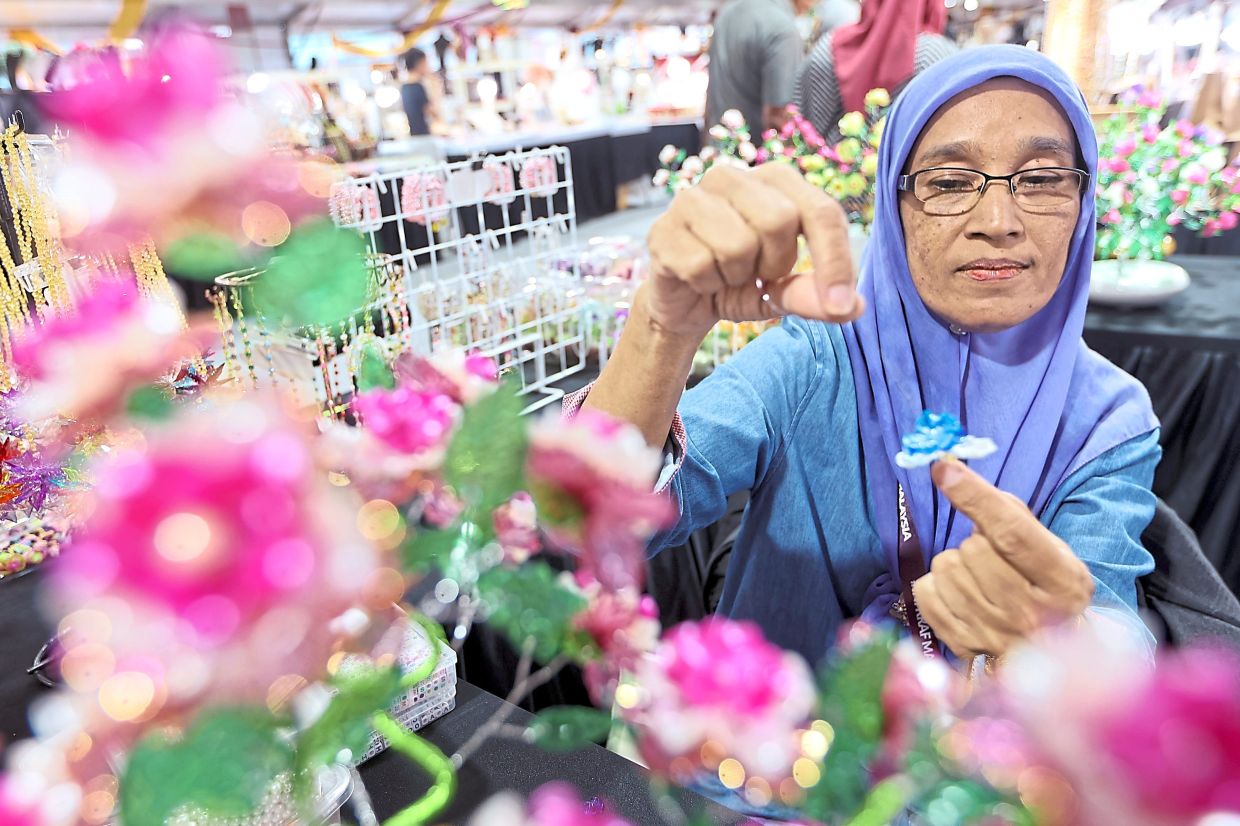
For long-time festival participant Rosnah Bakar, it is a platform to showcase her shimmering crystal flowers.
With 18 years of experience, the crystal beading artisan from Kedah said each piece was put together using wire, acrylic and crystal.
“I have always had a passion for art, and I did sewing and crochet work previously.
“I have been participating in this festival for 11 consecutive years and each time, I will create new acrylic and crystal floral arrangement designs because regular customers are always looking for something different,” said the 58-year-old.
She prefers working alone from home because this way, she can ensure prices remain affordable despite rising material costs.
Her items made from acrylic pieces start from RM15 for door gifts, while crystal arrangements can reach RM220 or more, based on size and complexity.
“Crystal looks more elegant, but it is also more expensive.
“As a long-time participant of the festival, I have built a loyal following of customers from Johor, Singapore and Indonesia,” said Rosnah.
“Some of my customers even make a collection of my works, as each piece is limited,” she added.