State forges ahead with projects to move people, vehicles across island and mainland
YEAR 2025 saw Penang forging ahead in improving its transportation system.

The Mutiara Line will have 21 stations across a 29km-long route that connects key residential, commercial and industrial hubs.
The end points will be at Komtar in central George Town, Silicon Island in the Penang South Reclamation area, as well as Penang Sentral in Butterworth.
Once completed by 2031, the LRT is expected to significantly ease traffic congestion, transform urban mobility and reduce dependence on private vehicles.
North Coastal Paired Road
The new four-lane North Coastal Paired Road (NCPR) is another artery to improve connectivity along the island’s northern corridor.
It will ultimately span 10.61km from Tanjung Bungah to Teluk Bahang, with 8.41km being inland of the existing Batu Ferringhi coastal road.
The remaining 2.2km will be elevated coastal sections.
Also slated for completion in 2031, the RM2.9bil project is expected to significantly reduce travel time and handle traffic more efficiently.
Construction will begin next year, but preliminary clearing works took place this year.
Elevated highway
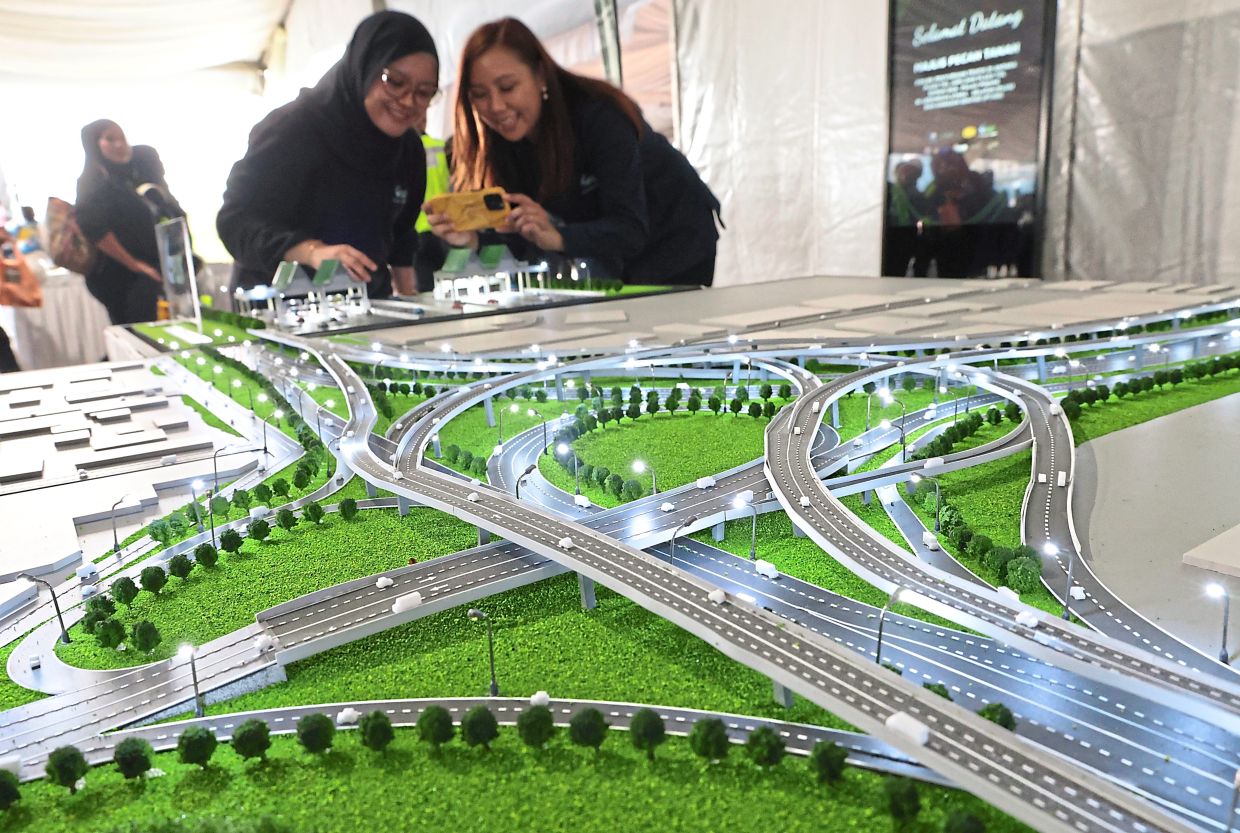
On Nov 8, Prime Minister Datuk Seri Anwar Ibrahim launched the Juru-Sungai Dua Elevated Highway construction.
The 17.3km, eight-lane project linking Juru in the south to Sungai Dua in the north, is expected to benefit 200,000 daily users. About 8.95km of the route will be elevated.
Costing an estimated RM3bil, the highway is designed with multiple interchanges, pedestrian pathways and even dedicated cycling lanes for smoother traffic, better road safety and quicker commutes for residents and workers alike once it is ready by 2030.
Physical works for Package 1 started in November and other packages are due to begin by mid-2026.
The improved connectivity is also expected to boost local economic activity through better logistics services.
Silicon Island
Land reclamation efforts saw about 100ha of 510ha under Phase 1 reclaimed to date.
A makeshift 378m steel bridge linking it to the southern coast of Penang island was completed in March, and now serves as a crucial access point for construction vehicles and infrastructure works.
A further 420ha will be re- claimed under Phase 2.
The project was dubbed Silicon Island as it is expected to anchor Penang’s future semiconductor and manufacturing ecosystem.
This will enhance the state’s position in the global supply chain, unlocking new opportunities in investment, attracting high-tech firms, advance innovation and create high-paying jobs.
Airport upgrades
The multi-phase Penang International Airport (PIA) expansion plan, estimated to cost upwards of RM1.2bil, will boost capacity from 6.5 million to 12 million passengers annually.
Works to expand the passenger terminal from 54,000sqm to 115,000sqm, and increase aprons from 16 to 28, began in the first quarter of the year.
The latter are also designed to accommodate larger, wide-body aircraft, to cater to rising demand for leisure and business travel.
This could lead to new direct routes and enhance connectivity.
Once completed by mid-2028, the enhanced terminal will improve passenger experience with modernised check-in processes, baggage handling and better retail spaces.
New head of state
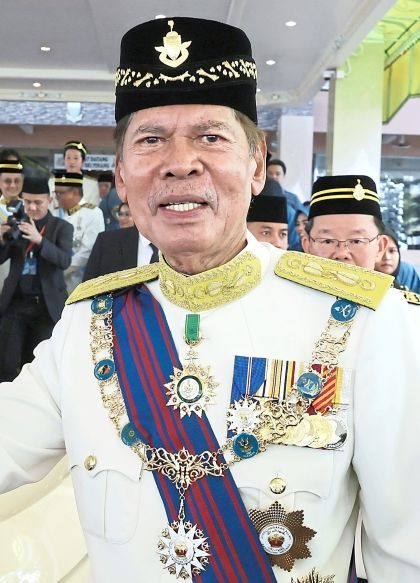
Tun Ramli Ngah Talib was sworn in as the ninth Penang Yang Di-Pertua Negeri, succeeding Tun Ahmad Fuzi Abdul Razak.
The 84-year-old from Perak is a seasoned statesman, having served as his home state’s mentri besar from 1983 to 1999.
He was appointed Transport deputy minister in 1999, a role which he held until 2004.
Later that year, he became Dewan Rakyat Speaker and served until 2008.
Ramli received his letter of appointment from His Majesty Sultan Ibrahim, King of Malaysia, in a ceremony at Istana Negara in April.
Enduring landmark
Komtar Tower marked its 40th anniversary with “Karnival Komtar 2025”, a three-day event featuring an exhibition of old photographs, documents and original scale models in December.
There were also free Tech Dome tours, e-sports tournaments, children’s drawing contests and cultural performances.
The 65-storey, 231.7m tower – conceived as the focal point of a large office and retail block to rejuvenate George Town’s urban centre – was South-East Asia’s tallest when completed in 1985.
The podium, filled with food and retail outlets, was Penang’s premier shopping destination in the 1980s and 1990s.
But the arrival of newer malls by the 2000s led to a gradual decline in fortunes, until the opening of The Top Penang in 2016 which added family- oriented attractions and three new floors that increased the tower’s height to 249m.
Many of state government departments and agencies occupy the tower today, but most of the podium remains a shadow of its former self.
Various rejuvenation plans have been mooted, but implementation is hampered by the fragmented ownership of units and high costs of updating old infrastructure.
Mainland development
Penang’s second Urban Transformation Centre, known as UTC Seberang Perai, opened at Penang Sentral, Butterworth, in November.
It centralised various government agencies including the National Registration Department (JPN), Immigration Department (JIM), Road Transport Department (JPJ), Inland Revenue Board (LHDN) and the police under one roof.
There are also health and dental clinics as well as Kiosk Sentuhan Madani (KSM) self-service machines.
Penang-Perak water deal
A memorandum of understanding was signed between Penang and Perak in November to ensure long-term water security.
Under the 40-year agreement set to kick in by 2031, Penang will buy an expected 300 million litres per day (MLD) of treated water from its southern neighbour for an annual sum of RM210mil.
That is the capacity charge, in addition to a variable charge of RM1.70 per cubic metre of treated water purchased.
In a recent state assembly sitting, Penang infrastructure committee chairman Zairil Khir Johari said the financial commitment was due to Perak’s consortium (PKNPk-Gamuda JV) having to build a new 500MLD treatment plant in Sungai Kerian, Perak, along with the necessary pipelines, reservoirs and infrastructure solely for this project.
Preserving rail history
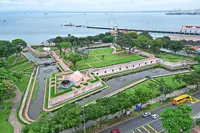
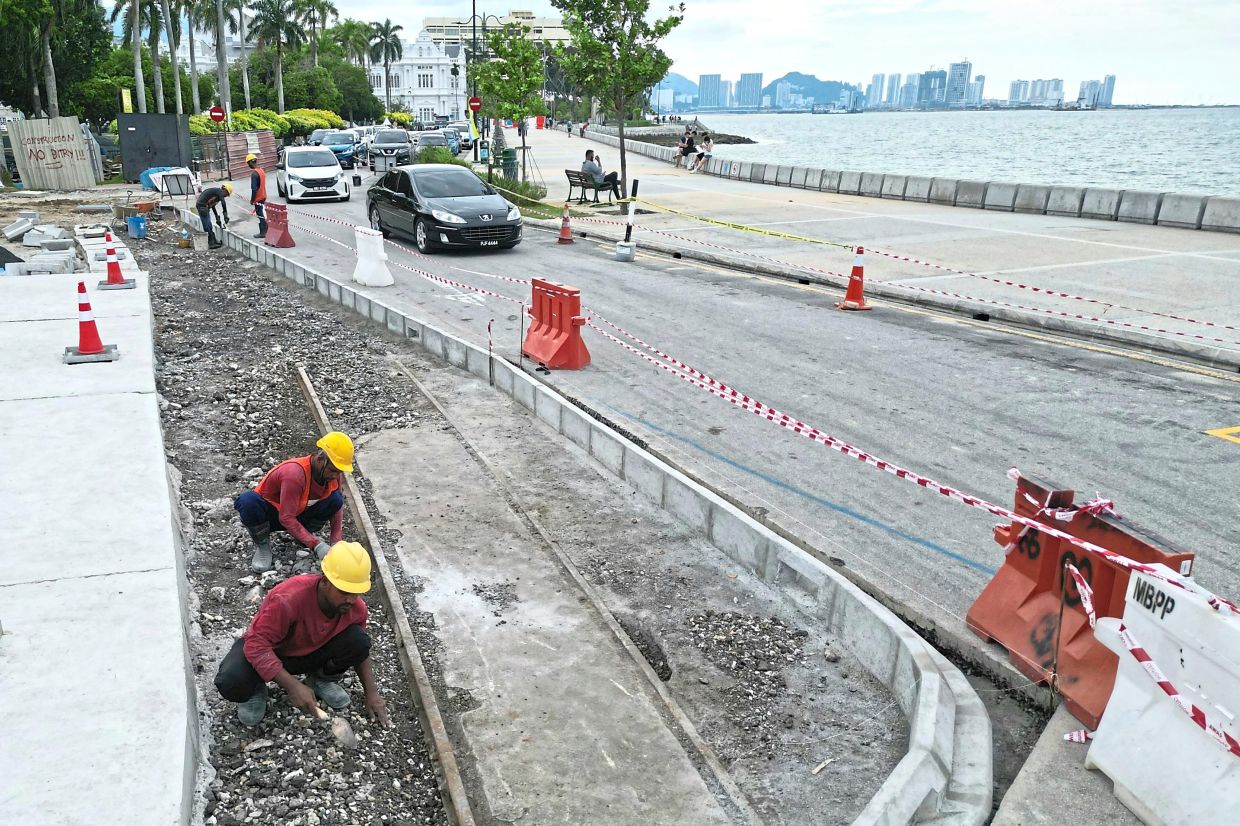
A 7.4m-long steel trolley track dating to 1895 was discovered in June during sidewalk upgrades at Jalan Tun Syed Sheh Barakbah beside Fort Cornwallis.
Marked with the words “Barrow Steel”, it is believed to have been part of a light rail network used to move supplies between the fort and nearby port facilities.
During the Japanese Occupation in the Second World War, it was likely used to transport ammunition, rations, fuel and other essential supplies from ships to military warehouses in the area.
Other small segments of the track were unearthed in 2017 and 2018 during conservation works for the fort.
The latest discovery would be preserved under thick glass panels and turned into an open-air public exhibit.
Turf club closure
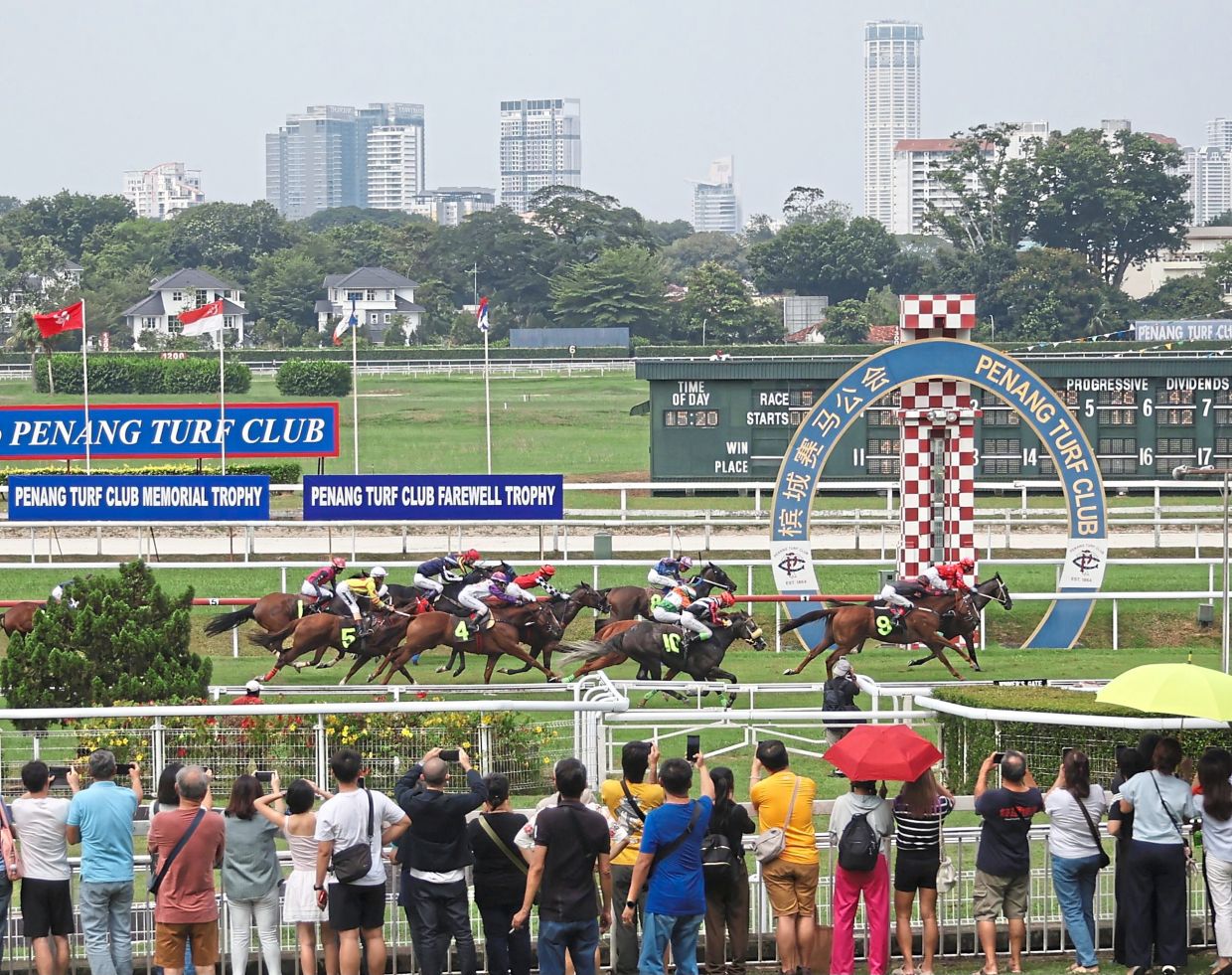
The Penang Turf Club (PTC), Malaysia’s oldest horse racing institution, hosted its final event in May, bringing the curtains down on 161 years of history.
Seven races were staged, including the RM250,000 PTC Farewell Trophy and RM150,000 PTC Memorial Trophy.
Originally established on a parcel of land along Macalister Road (now St George’s Girls’ School), PTC relocated to its present Batu Gantong site in 1939.
Declining attendance and revenue led to members voting to dissolve the club and sell its 81.75ha site.
The land is valued at billions of ringgit upon conversion to commercial status.
But there are concerns among civil society groups that the proposed rezoning from a green recreational space to a possible mixed development area could bring negative impacts.
Errant motorists
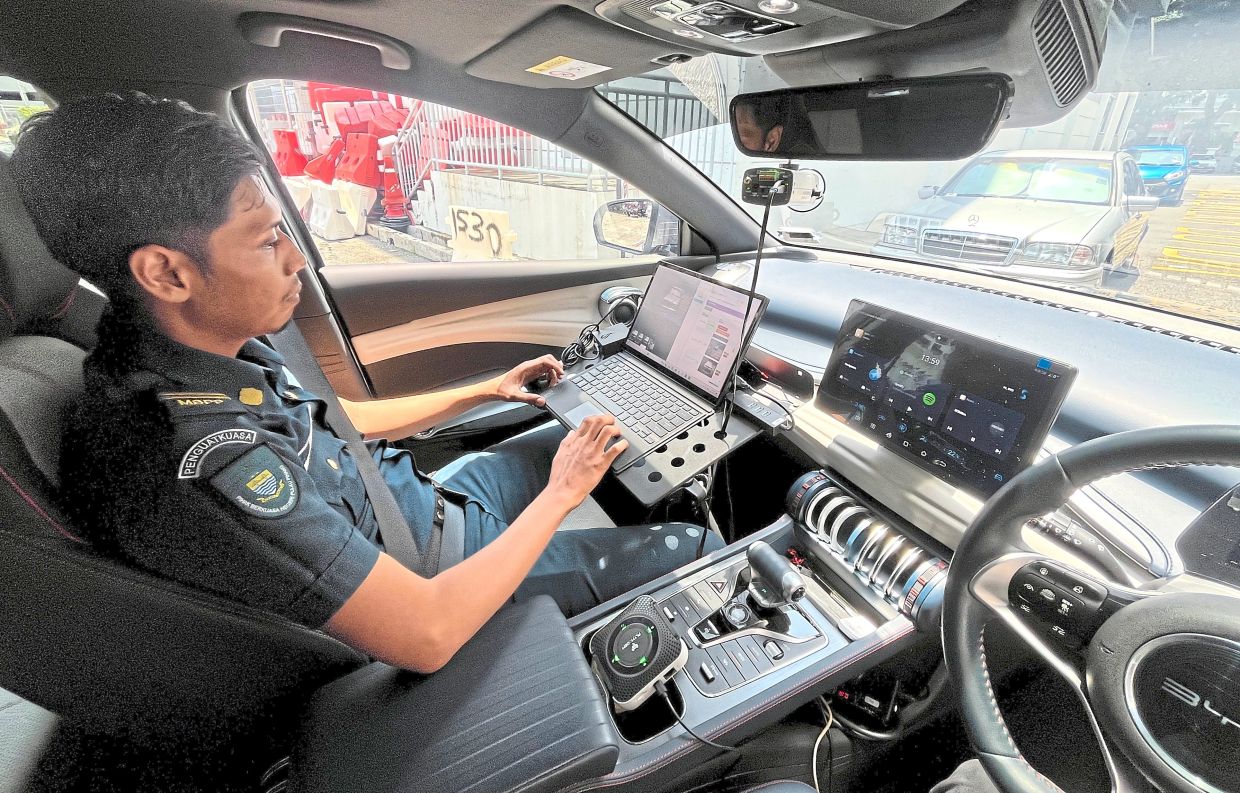
Both Penang Island and Seberang Perai city councils rolled out the Automated Number Plate Recognition (ANPR) system for roadside parking in April.
Implemented as part of the Penang Smart Parking (PSP) app, it uses high-tech cameras mounted on patrol vehicles to scan vehicle number plates in real time and instantly check on payment status.
Violators are automatically flagged and summonses sent directly to drivers via the PSP app.
This reduces the reliance on manual enforcement by about 60%.
The local councils said the system improved efficiency, accuracy and transparency while ensuring public compliance and safety for their officers.
Quit rent rebates
Property owners will enjoy a 50% rebate on their quit rent in 2026, up from the earlier 32.5%, following a decision by the state executive council in December.
The move aims to soften the impact of the impending rise in quit rent rates – between 29% and 200% – which will then remain the same for a minimum period of 10 years as provided by the National Land Code (Act 828).
Nearly 370,000 land titles across the state will be affected, covering residential, commercial, industrial, agricultural and other special categories.
The state also announced a 100% exemption on fines for arrears of quit rent and parcel rent from Jan 1 to Dec 31, 2026, amounting to some RM25mil.
Scrap metal syndicate
A smuggling syndicate was believed to have evaded nearly RM1bil in export duties over six years by falsely declaring scrap metal shipments as non-taxable machinery and goods.
It allegedly bribed officials to facilitate these large-scale exports, which then went to countries like China and India.
The group operated its own scrapyard and processing facilities, allowing it full control over documentation and shipments.
Luck finally ran out when the Malaysian Anti-Corruption Commission (MACC) launched a large-scale crackdown codenamed “Ops Metal” in July, targeting 19 locations across Penang, Selangor, Negri Sembilan, Johor and Kedah.
No arrests were made then, but investigations into tax evasion, bribery and money laundering are ongoing.
Centenary celebrations
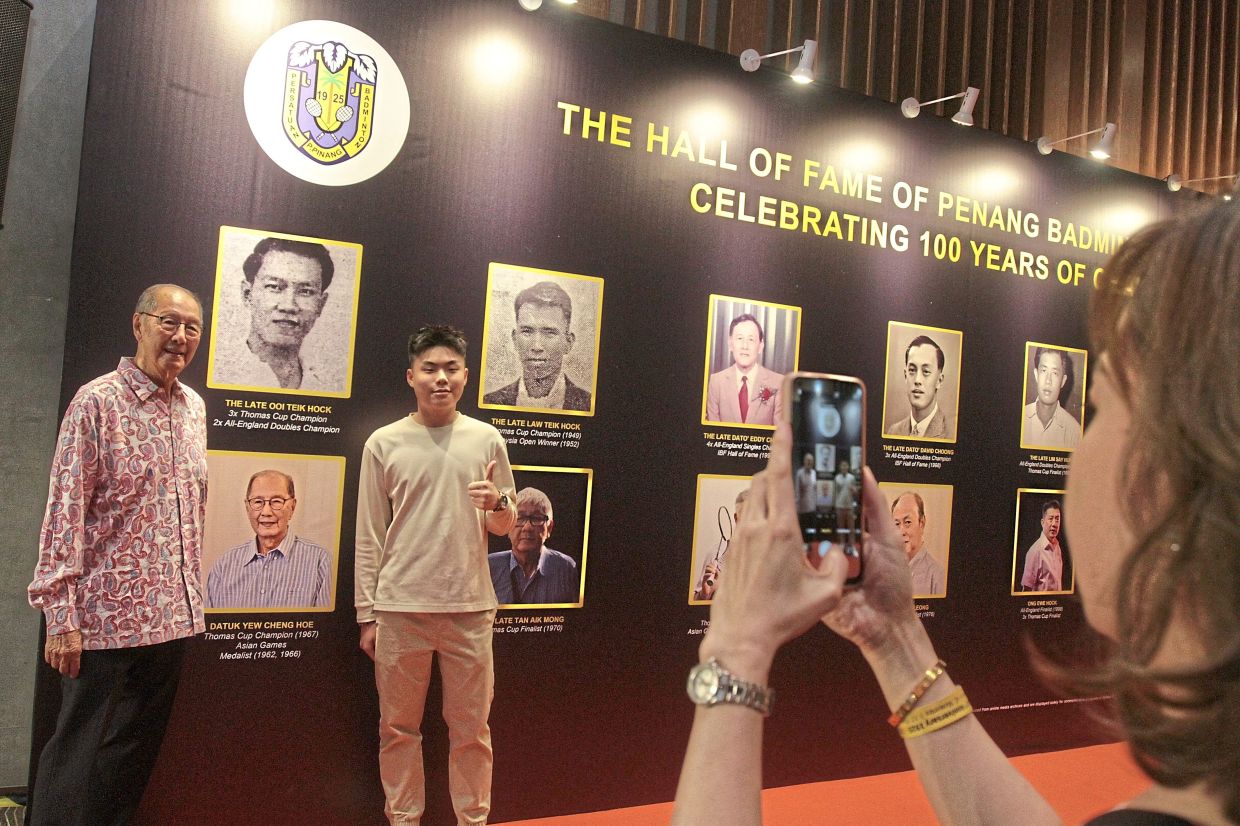
Penang Badminton Association (PBA) celebrated 100 years with a black-and-gold gala dinner themed “Milestones and Memories” in November.
The association predates both the Badminton World Federation (BWF) in 1934 and the Badminton Association of Malaysia (BAM) in 1935.
For a century, Penang has been the nation’s foremost source of world-class badminton talent, producing champions who brought Malaysia global recognition.
The history of PBA is closely linked with players like Datuk Eddy Choong and Datuk Tan Aik Huang, right up to Datuk Seri Lee Chong Wei, earning the state the moniker “Cradle of champions.”
The state’s legacy also extended into women’s badminton with names like Chin Ee Hui, Wong Pei Tty and Goh Jin Wei.
PBA also announced plans to publish a centennial magazine in 2026 and a coffee-table book as well as establishing a permanent badminton heritage gallery at its clubhouse in Bukit Dumbar.
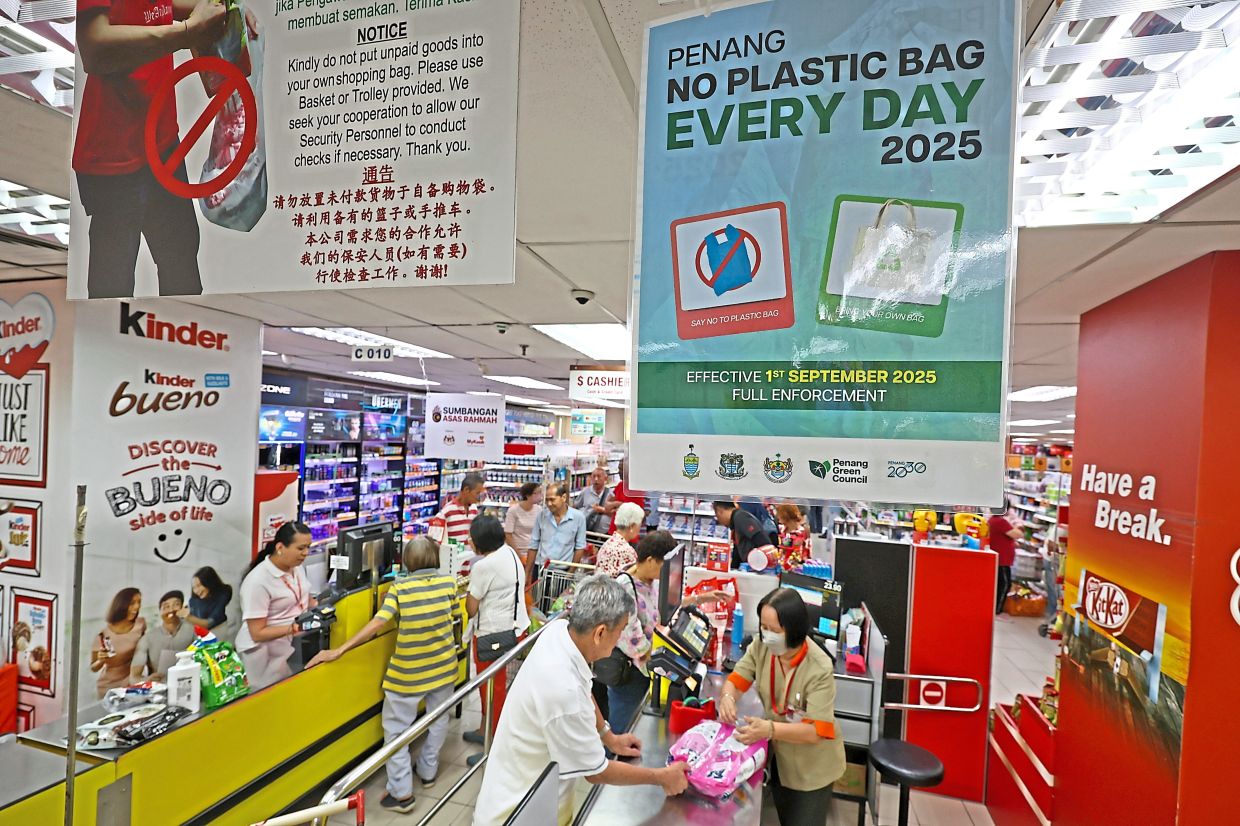
Single-use plastics ban
The state began applying a full ban on single-use plastic bags across businesses in September, with an education phase lasting until August 2026 when full enforcement commences.
The move builds on 16 years of anti-plastic policy, starting with Malaysia’s first “No Free Plastic Bag” campaign in 2009.
Authorities progressively expanded restrictions, ran awareness efforts and implemented charges, in alignment with the nation’s zero single-use plastics roadmap for 2018-2030.