IN a significant escalation of the fight against dengue, a new state-of-the-art insectarium capable of producing up to 180,000 Wolbachia mosquitoes per week has been established in Putrajaya.
Health Minister Datuk Seri Dr Dzulkefly Ahmad said the insectarium, the second in the country after Johor Baru, was an important science and evidence-based innovation aimed at controlling the spread of the disease.
However, he urged all stakeholders to not let their guard down as Wolbachia mosquitoes were not the “silver bullet” for the disease.
“The release of Wolbachia mosquitoes is to complement the existing dengue intervention measures such as destroying the breeding spots of Aedes aegypti mosquitoes and fogging.
“The whole of nation approach involving the Health Ministry and its strategic partners, local authorities and community leaders through the Communication for Behavioural Impact (Combi) initiative must be continued to make sure that we are always prepared,” he said during the insectarium’s launch yesterday.
He added that as of Dec 6, the number of dengue cases in Malaysia this year recorded a 56.5% decrease (51,046 cases), compared to the whole of 2024 (118,921 cases).
“The release of Wolbachia mosquitoes into various localities could have helped.
“In fact, the government has released the mosquitoes into 51 localities and 26 out of those places we studied recorded a 40% to 100% drop in the number of dengue cases.
“I hope that such insectariums can soon be rolled out in more places. A thorough cost-benefit analysis needs to be conducted before we develop the initiative further,” he said.
Also present was Minister in the Prime Minister’s Department (Federal Territories) Datuk Seri Dr Zaliha Mustafa, who said proactive interventions were needed to not only reduce the number of dengue cases, but also alleviate the government’s burden in managing the disease.
“The treatment of dengue is putting a huge burden on public hospitals.
“The disease also impacts the work force.
“Hence, I fully support science and technology-based initiatives like the insectarium and I expect to see more of such initiatives, probably with applications of artificial intelligence, in the future,” she said.
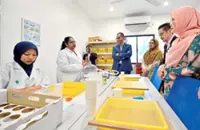
The insectarium, about 1,200sq ft in size, was repurposed from former government quarters in Precinct 20.
“The project cost about RM500,000 and I believe this is a worthy investment to maintain Putrajaya’s liveability.”
Dr Zaliha said more than 100 buildings in Kuala Lumpur could be repurposed not only into public health facilities, but also other functions that could benefit the people.
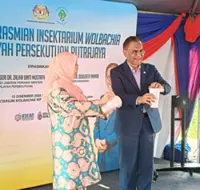
Dr Dzulkefly and Dr Zaliha also released two cups of Wolbachia mosquitoes during the launch.
Wolbachia is a bacteria that blocks viruses such as dengue, chikungunya and Zika from growing in the bodies of Aedes aegypti mosquitoes, reducing the insects’ ability to transmit these viruses to humans.