WHO would’ve thought that oysters would be key to coastal protection and flood mitigation in Carey Island, Selangor?
A group of students proved just that in a prize-winning proposal submitted for the Coastal Flooding Adaptation and Resilience (COFAR) challenge, which aims to bring together undergraduates to tackle coastal flooding.
The multi-university team, known as Fantastic Six, consisted of Sunway University accounting students Liau Ziwen, Leong Kai Ni, Benedic Francis Lim Jern Kang and Wan Naely Batrisyia Adiana Wan Asmadi; UCSI architecture student Pee Xin Ran and Monash University engineering student David Lau.
Aptly named Project Tiram – short for Tidal Innovation for Resilient Aquaculture and Mitigation, the team proposed a three-pillar solution combining a geotextile barrier, oyster reef staircases and a storm surge drainage system to strengthen the island’s coastal defences.
Carey Island’s low-lying terrain makes it highly susceptible to tidal changes, meaning even minor tide increases or small storm surges can breach its existing flood barriers.
The island is surrounded by 120 kilometres of earth bunds because during high tide, Carey Island sits 6ft to 8ft below sea level. These bunds are monitored and maintained daily to ensure their integrity and protect the island from flooding.
Recognising these risks, SD Guthrie Bhd (Guthrie), as the technical partner for the COFAR, hosted a site visit on the island to help university participants explore real-world coastal vulnerability and resilience strategies within one of Malaysia’s most ecologically significant plantation areas.
“One of the main problems at Carey Island is sediment disruption. By bringing in these oysters, we can strengthen the existing bunds that are constantly being eroded by the waves,” said team lead Liau Ziwen.
She explained that the oyster staircase helps stabilise the seabed, slows down incoming waves and blocks saltwater from creeping into plantations in the island. It also acts as a filter feeder to enhance overall water quality and clarity.
The students also suggested the use of a geotextile barrier and a storm surge drainage system to complement the work of the oysters.
“The geotextile barrier will help slow down shoreline retreat and coastal erosion by reducing wave action that constantly hits Carey Island,” Liau said.
The proposed drainage system will be equipped with sensors to detect rising water levels, thus allowing accumulated water to be channelled away from the island and preventing floods.
To be financially sustainable, the team proposed an oyster restaurant and farm business to turn their flood solution into a profitable commercial opportunity and take advantage of the ecotourism demand.
Adapting the farm-to-table model, tourists will be able to visit the oyster farms at a fee and eat the oysters harvested from the same farm. The shells can then be returned to the sea to strengthen the structure of the oyster reef staircase.
The inspiration for this proposal came from team member Leong Kai Ni’s dream to start an oyster farming business, but became a far-reaching thought seeing as her background is in accounting.
The COFAR challenge allowed her to revisit this dream and make it a reality.
“We did some research and found that other places, including Florida in the United States, are also using this approach, so we have several countries to use as benchmarks,” she added.
The youth-making change
COFAR is organised by the Securities Commission Malaysia (SC) and the Institute of Chartered Accountants in England and Wales (ICAEW) Malaysia, in partnership with Guthrie and Universiti Kebangsaan Malaysia (UKM)’s South-East Asia Disaster Prevention Research Initiative (Seadpri-UKM). The competition attracted 30 actionable proposals from 24 universities.
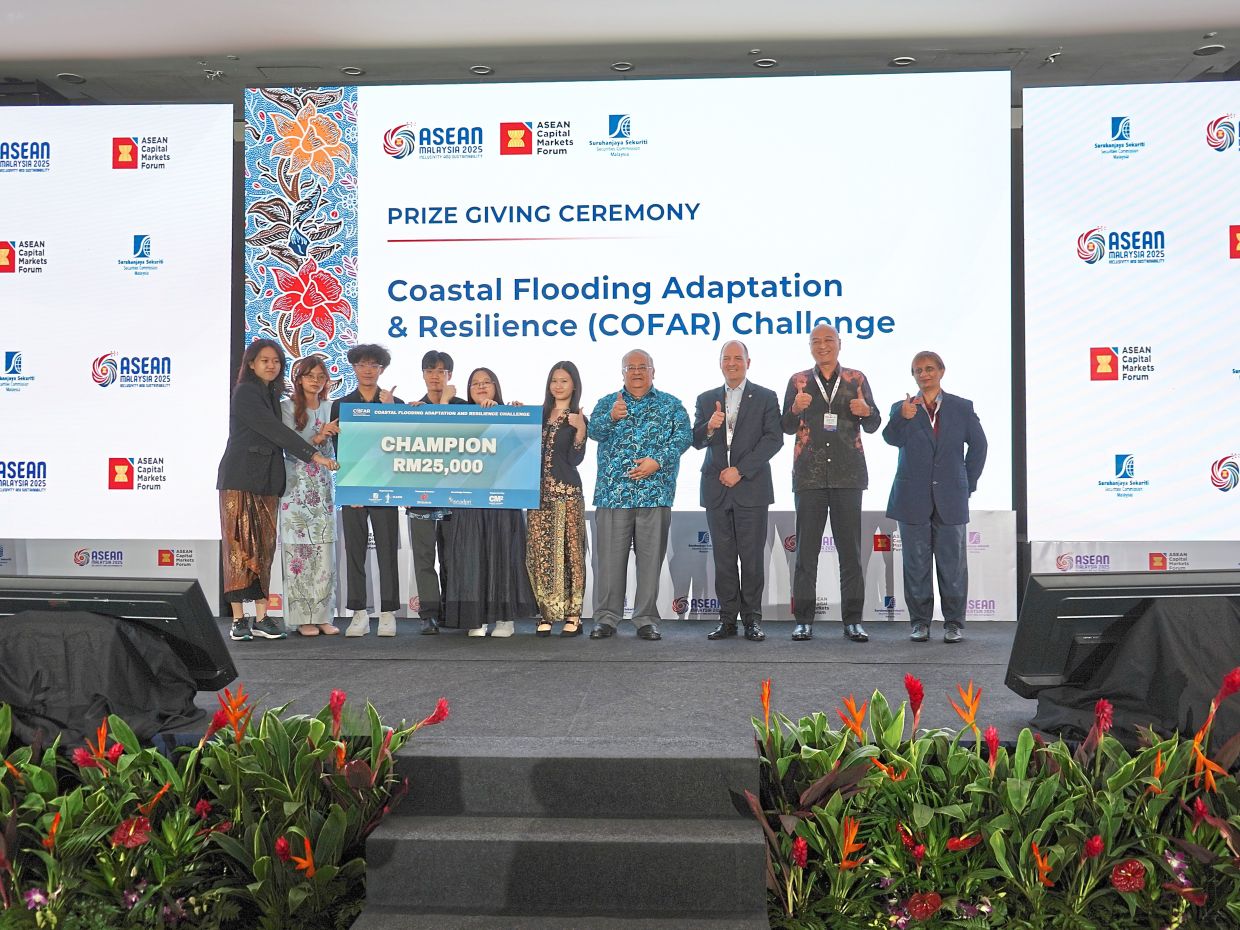
The winning proposal from Fantastic Six earned them RM25,000 awarded at the Asean Capital Markets Forum (ACMF) International Conference on Nov 6 while the first and second runners-up won RM15,000 and RM10,000, respectively.
The win was extra sweet for the team as they had to completely change their proposal one week before submission after Lau noticed certain problems during the site visit to the island.
Participants also had the opportunity to learn from SC, ICAEW and Guthrie, building their technical knowledge on financial modelling, projection and the overall landscape of sustainability financing in the Asia market.
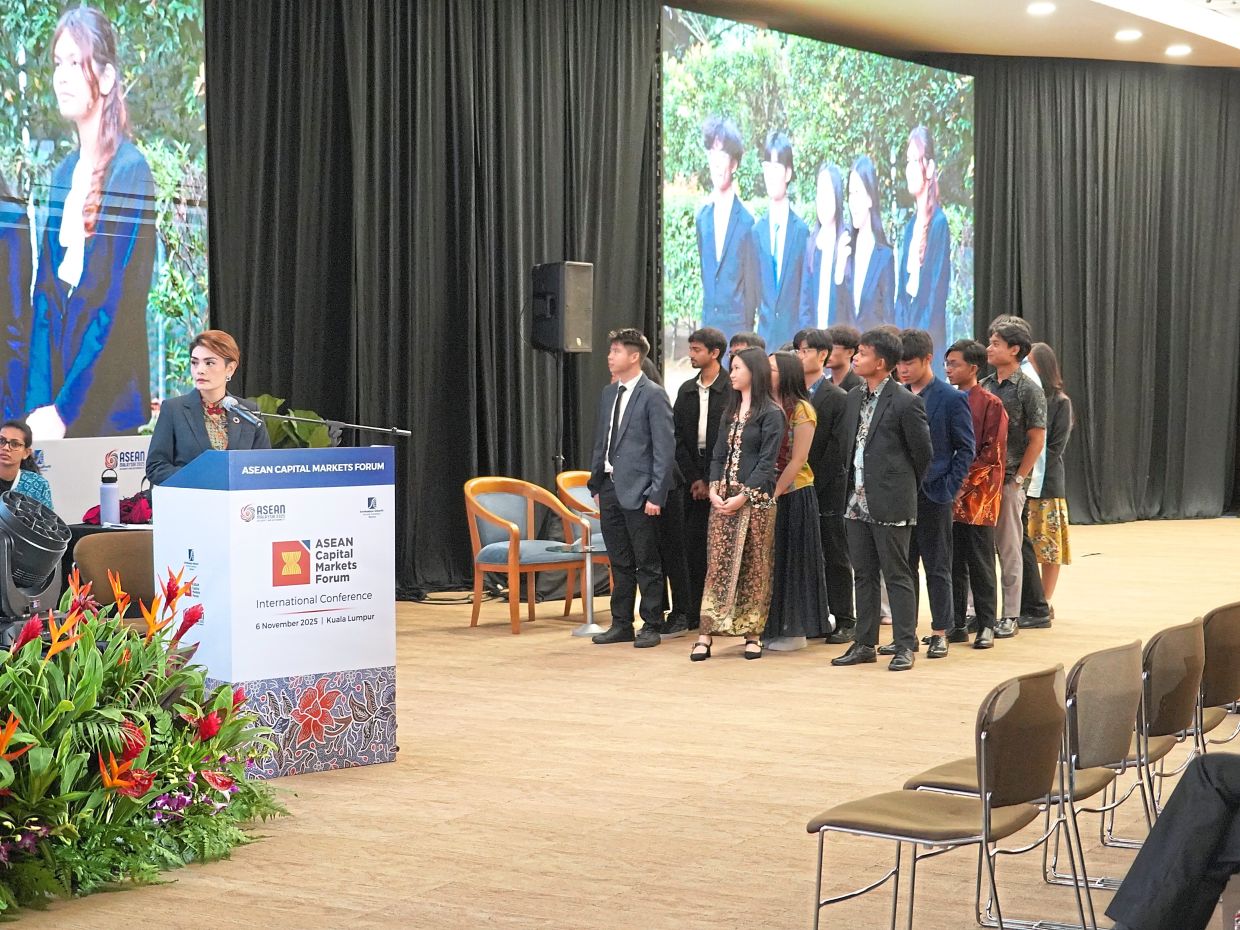
Fantastic Six hopes that other students are encouraged to pursue their passions like they have.
“Our main message to other students is to be there, to take risks and actually make your ideas come true. Believe in your dreams because that was one thing that brought us very far,” Liau said.
The team will later meet with Guthrie to implement their solutions, as the company owns 80% of the island and is committed to supporting the process.
“COFAR was created to inspire bright young minds to think boldly and solve problems from every angle,” said Guthrie’s chief executive officer of Upstream Malaysia, Jeffry Faizal Kamaruddin.
“Our participation reflects Guthrie’s commitment to climate resilience. Carey Island, with its century-long battle against floods and unique ecological and cultural heritage, is the ideal test bed.
“By supporting COFAR, we empower the next generation to turn sustainability ideas into real impact.”
The COFAR challenge took place across several stages, starting with an introductory webinar on Carey Island’s climate adaptation needs and continuing with field visits to the island.
Participants also received feedback at two checkpoints before delivering their final written proposal and video presentation.