A traditional item from the Bajau Samah community has proven to be a hit, and a source of income, for one woman in Kota Belud, Sabah.
The tudung duang is a traditional food cover made of dry palm leaves from the serdang or nipah variety.
It mirrors the bold geometric patterns of Bajau Samah traditional clothing and can be spotted at feasts, ceremonies and even gotong-royong activities in the community.
Jaimme @ Afmieza Ayub, 47, thanked her mother for teaching her the skill of making tudung duang.
As the third generation to continue the family business in Kampung Pangkalan Abai, she said her interest in handicraft started at a young age when she used to watch her older sisters make traditional items.
“In the Bajau Samah community, skills for weaving baskets or mats are passed down from one generation to the next and are regarded as an asset for women,” she said.
She sells her products at the tamu (local market) and via e-commerce platforms, getting interest from across the country and Brunei.
Jaimme said tudung duang’s unique shape and geometric pattern appealed to handicraft fanciers and decor enthusiasts.
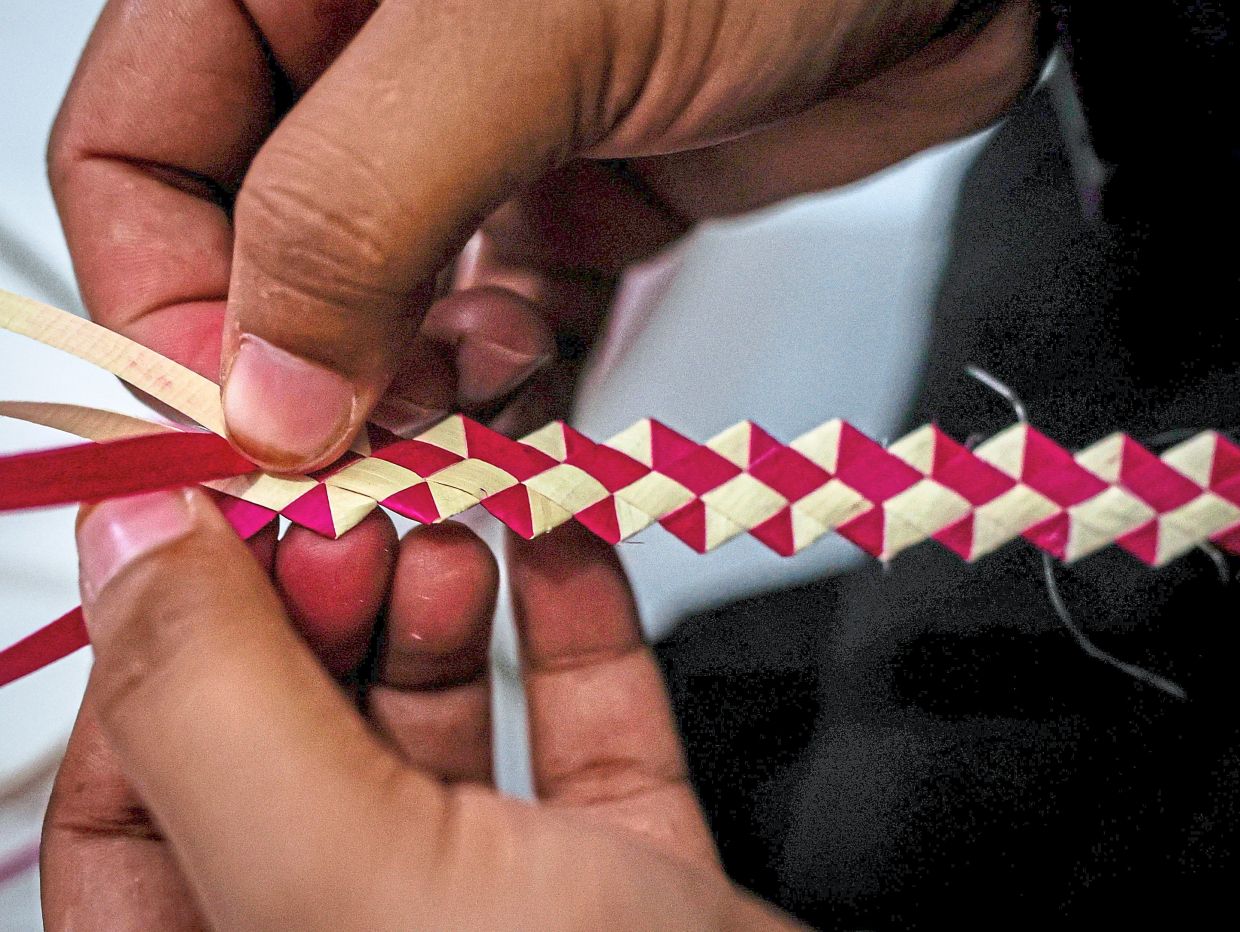
The process begins with soaking palm leaves in hot water mixed with dye and then sun-drying them, reported Bernama.
“Once the leaves are dry and the colour set, we need to lightly moisten them with a damp cloth before rolling them.
“If the leaves are too dry, they will break easily and the tudung will not look good.”
Jaimme also entertains customisation requests, needing just one to three days to fulfil the order.
Each item costs between RM8 and RM45, and she often receives large orders of up to 400 units.
Jaimme said there was good demand because tudung duang could serve as wedding gifts, corporate event souvenirs or decorations at official functions.
Rainy seasons, she said, slowed down the drying process and acquiring the nipah leaves.
“We used to use nipah, but there are so many crocodiles now that it has become difficult to access the river and forest.
“That is why we switched to serdang, which is more easily available,” she said.
Jaimme hoped the younger generation would continue the tradition.