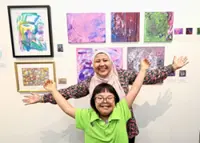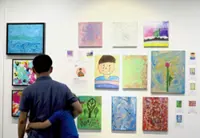
BEYOND being a creative outlet, painting and drawing can also serve as physical and emotional therapy for children with disabilities.
This belief inspired Edmund Lim, 53, to co-found FriendenArt, a social enterprise based in Petaling Jaya, Selangor, that aims to help children with disabilities realise their potential through creative activities.
Lim said the idea stemmed from his experience raising his youngest son Branden, who was diagnosed with Spinal Muscular Atrophy Type 1 at age two.
This rare genetic disorder causes severe muscle weakness and progressively affects movement, breathing and swallowing.
As a child, Lim said Branden underwent regular physical therapy sessions.
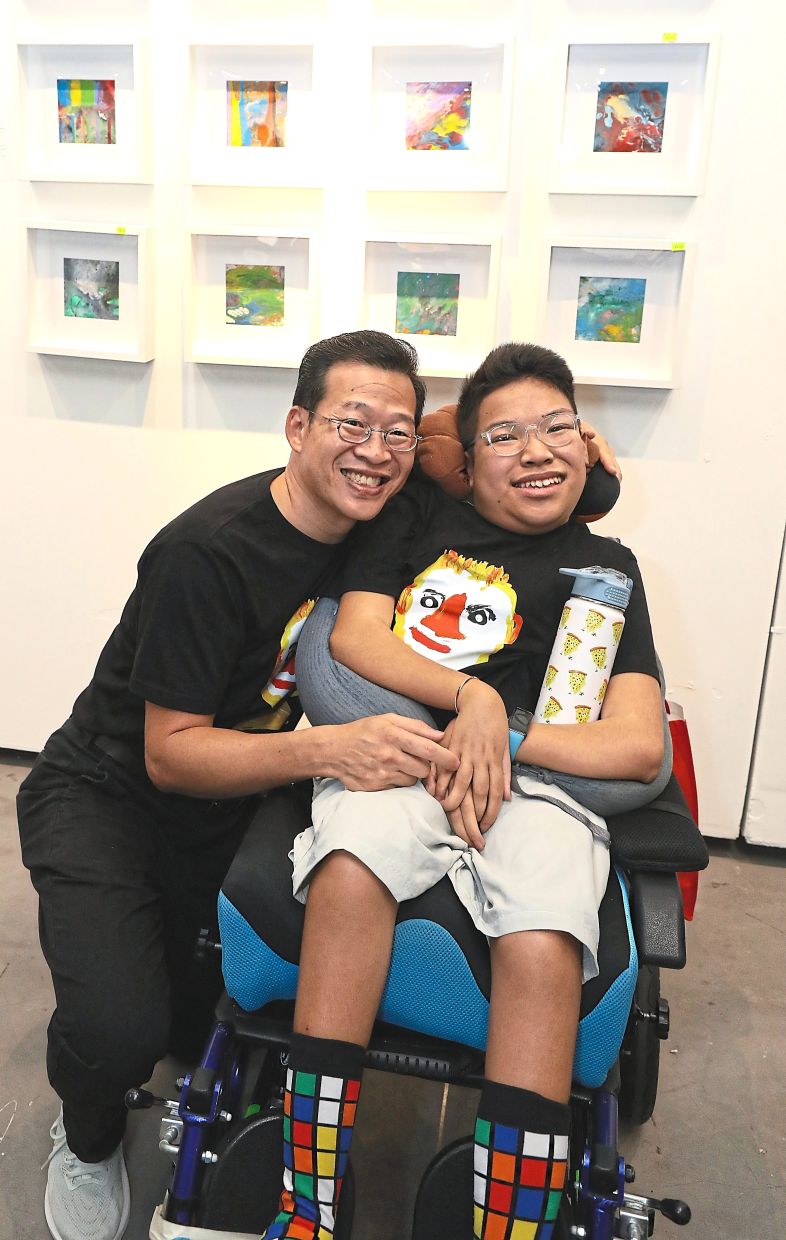
“But I wondered whether these therapies were too boring for a child his age.
“That was when my wife and I decided to give Branden some paint and let him draw with his fingers,” he said.
Art, he added, became a way for him to better understand emotions and thoughts his son struggled to express verbally.
“Just because a child doesn’t speak, it doesn’t mean that he or she has nothing to say,” he stressed.
Lim said FriendenArt had worked with more than 50 children since its inception about a decade ago.
Drawing from his observations, he said disabled children were bolder and more honest with their artistic expression.
“While I don’t think they see art differently, they do tend to be braver and freer in their expression.
“They are just as talented as their able-bodied peers. We just have to nurture them and help them grow,” he said.
Kiwanis Down Syndrome Foundation Alumni president Shahbina Khurshid, 47, advised parents of disabled children to seek out support groups and connect with others facing similar challenges.
“Some parents may feel overwhelmed, especially if they lack the financial means to support their children fully.
“But there are many activities available that do not require a lot of money.”
As an example, Shahbina pointed to a recent Kiwanis Down Syndrome Malaysia programme called “KL Explorer” which taught children how to use public transportation such as the LRT.
“It provided a good opportunity for them to learn how to be independent and navigate public spaces,” she added. — By FARID WAHAB