Penang’s badminton icons recount the intense discipline and training that sharpened their skills for international recognition
THIS Saturday, Penang Badminton Association (PBA) celebrates its 100th anniversary at Setia SPICE Convention Centre in Bayan Lepas, a milestone that serves as a powerful reminder of the state’s unmatched legacy in the sport.
ALSO READ: Gala dinner to celebrate 100 years of badminton excellence
For a century, Penang has been the nation’s foremost source of world-class badminton talent, reliably producing champions who brought Malaysia global recognition.
The history of PBA is closely linked with these successes, spanning from Thomas Cup legends − including Datuk Eddy Choong and Datuk Tan Aik Huang − right up to contemporary star Datuk Seri Lee Chong Wei, who all helped secure Penang’s reputation in international badminton.
The pioneers
The event marks more than a simple anniversary; it serves as recognition of sustained excellence spanning many decades.
This success was built on a solid bedrock laid during the 1940s, 1950s and 1960s – a golden age when shuttlers from Penang established Malaysia as a powerhouse.
Luminaries such as Law Teik Hock, Ooi Teik Hock, Datuk Eddy Choong, Datuk David Choong, Datuk Teh Kew San, Datuk Tan Aik Huang, Datuk Yew Cheng Hoe, Lim Say Hup and Johnny Heah were instrumental in this.
Their collective victories in the prestigious Thomas Cup and the All England Championships didn’t just win trophies, they propelled the nation onto the global sporting stage and set an enduring standard for excellence.
Momentum continues
The tradition continued unabated as the 1970s and 1980s saw a new generation stepping up to ensure Penang’s legacy remained vibrant.
Names like Saw Swee Leng, Ho Khim Soon, Koay Kar Lin, Chuah Han Khim, Khaw Cheow Kheng and Ong Ewe Chye became household fixtures, ensuring a consistent pipeline of world-class talent emerging from the state.
As the sport professionalised and evolved through the 1990s and early 2000s, Penang’s star continued to shine, championed by figures such as Ong Ewe Hock and Chew Choon Eng.
The torch was then carried by an athlete who would define a generation: Chong Wei.
His rise, marked by unmatched consistency and tenacity on the world tour, did more than capture medals – it inspired an entire new cohort of Malaysian shuttlers.
Alongside him, Chan Peng Soon, who claimed a silver medal in the mixed doubles at the 2016 Olympics with partner Goh Liu Ying, prominently carried the Penang flag on the global competitive stage.
Women’s contribution
Penang’s legacy also extends into women’s badminton. Among the modern standouts is Chin Ee Hui, who reached the world No.1 ranking in women’s doubles alongside Wong Pei Tty.
More recently, the state celebrated Goh Jin Wei, who clinched the coveted World Junior Championships titles in both 2015 and 2018.
This tradition stretches back to pioneers like Datin Ng Mei Ling, Khor Lay See, Yap Hei Lin, Lim Siew Choon and Tan Sui Hoon, leading up to more contempo-rary stars at the turn of the century, including Lee Yin Yin, Ooi Sock Ai, Tee Jing Yi and Cheah Yee See.
Distinctive culture
Chong Wei, who is serving as centennial celebration ambassador, remains fiercely proud of Penang’s distinctive badminton culture.
Now the Badminton Association of Malaysia (BAM) performance committee chairman, Chong Wei speaks from the unique experience of a three-time Olympic silver medallist and four-time All England champion who spent an astonishing 349 weeks as world No.1.
He credits PBA with fostering a robust system that excels at identifying and developing talent from the grassroots.
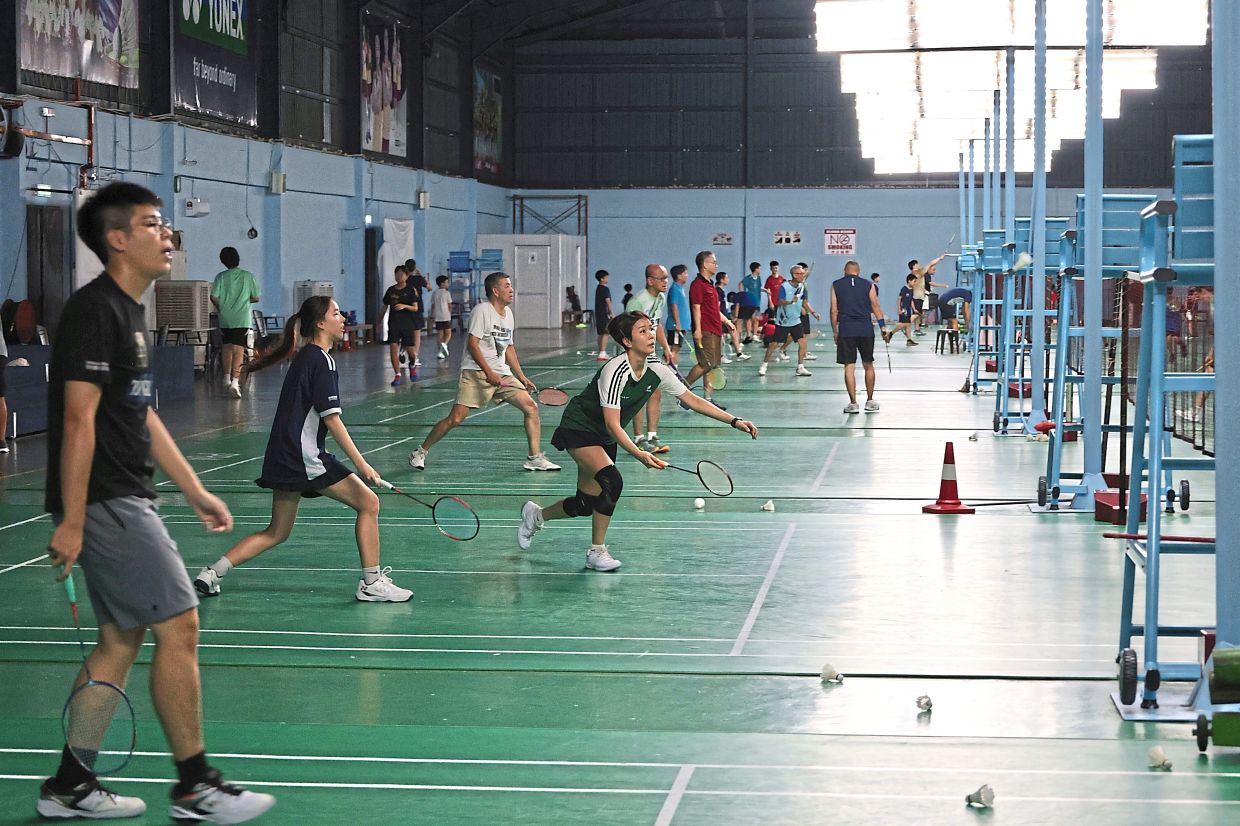
“From kampung courts to school halls, badminton is everywhere; it is part of our lifestyle.
“You can see we have legends like Datuk Tan Aik Huang, the late Datuk Eddy Choong, and now we have Choong Hon Jian and Goh Jin Wei,” he said.
Chong Wei points to the competitive energy of the state as a key factor.
“Penang is famous for its healthy rivalries – schools versus schools, clubs versus clubs.
“Every weekend there are some competitions.
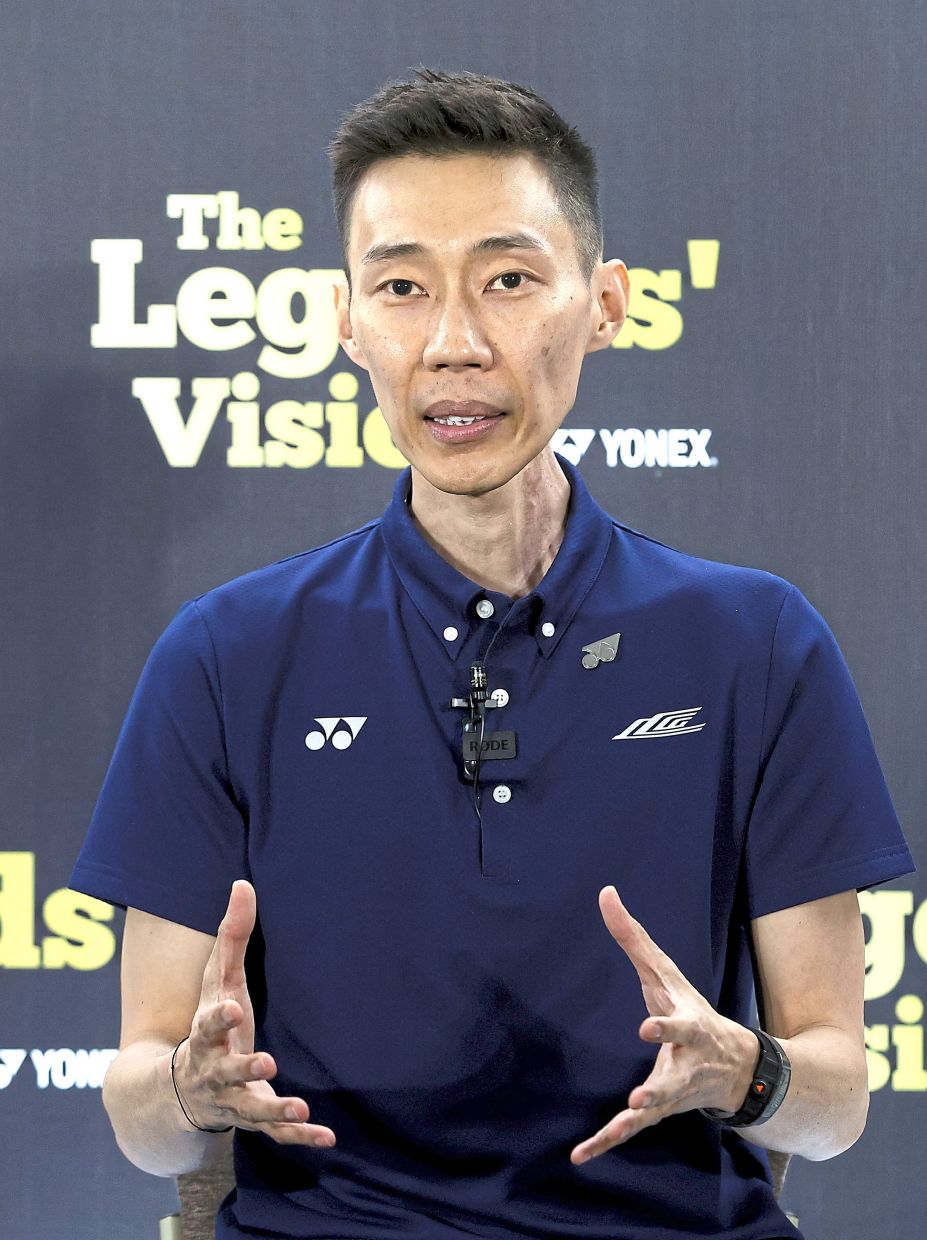
“When you grow up surrounded by that kind of environment, you naturally become tougher, sharper and hungrier,” he said.
“Maybe our famous Penang food helps too!” he quipped.
The 43-year-old was deeply reflective when discussing the association that gave him his start.
“To be recognised as part of its legacy is something I hold close to my heart.
“PBA did not just provide a court to train on. It was where I learned what it truly meant to be a badminton player,” he elaborated.
Chong Wei also talked about the holistic training he received.
“The coaches drilled into us the basics, the discipline and the hunger to improve. They did not just sharpen my skills; they shaped my mentality.
“Off the court, PBA was like a second family.
“They taught us values like humility, teamwork and responsibility, lessons that have stayed with me throughout my career and even after retiring.”
For Chong Wei, the PBA’s 100 years represent generations of sacrifice and passion, and he is grateful for being part of the long journey.
Offering advice to the current crop of junior players, he maintained that success would come naturally “if you enjoy improving yourself every day”.
He urged juniors to stay curious, observe, ask questions, and absorb as much as they could from the experienced coaches and seniors.
“Players must be strong mentally. You will lose matches, feel disappointed, and sometimes, doubt yourself. That is normal. What matters is how you bounce back,” he advised.
Cradle of greatness
Kew San, a four-time Thomas Cupper between 1958 and 1967, is living proof of Penang’s long-standing status as a cradle of badminton greatness.
His 1958 Thomas Cup debut was notably a Penang affair, with the squad featuring five players from the state, led by Eddy as captain, alongside Ooi Teik Hock, Johnny, Say Hup and Kew San himself.
Although the team lost 6-3 to Indonesia in the final, the campaign was the launchpad for a storied international career.
Nearly a decade later, in 1967, Kew San completed the circle by captaining the national team to a decisive 6-3 victory over Indonesia in the same tournament.
At 90 years old, Kew San’s eyes still sparkle when he speaks of the sport. His finest year came shortly after the 1958 disappointment.
In 1959, he and Say Hup swept five major titles, including the prestigious All England, US Open and Malaya Open.
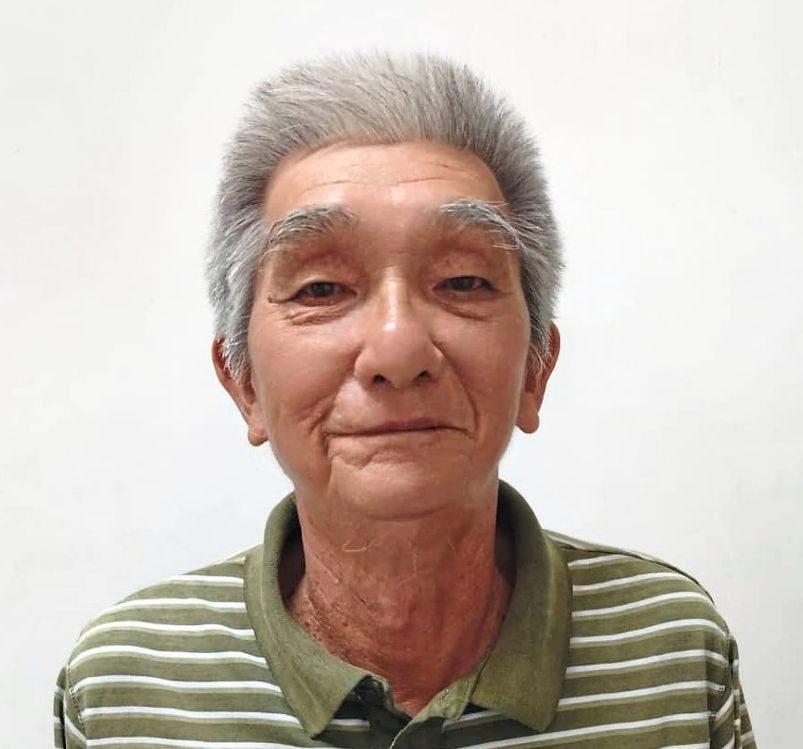
He also formed a formidable mixed doubles partnership with his wife Datin Ng Mei Ling, capturing several titles, including the Malaysia Open twice.
For Kew San, those early days were built on pure passion, involving long hours on outdoor courts, driven not by professional glory but by an unwavering love for badminton.
“We trained on outdoor courts, and if it rained, we could not train,” he recalled with a nostalgic smile.
“During my younger days, I used to play in the back lanes, sometimes barefooted.
“Shuttlecocks were quite expensive then, at 65sen each.
“And there weren’t many local tournaments to look forward to,” he recalled.
Nurturing talent
Another figure considered among the greats is Aik Huang, the 1966 All England champion and a member of the victorious 1967 Thomas Cup team.
Reflecting on his career and the PBA’s centenary, the 79-year-old credited both the association and his family for shaping his path.
“PBA had dedicated badminton officials.
“However, aside from PBA, my parents played a major part,” he said.
Aik Huang stressed that the standard of competition in the state was exceptionally high.
“During that time, Penang players had a lot of confidence in their standard of badminton...Eddy Choong and Kew San were real standard-bearers of the high quality of badminton in Penang. They were world-class.”
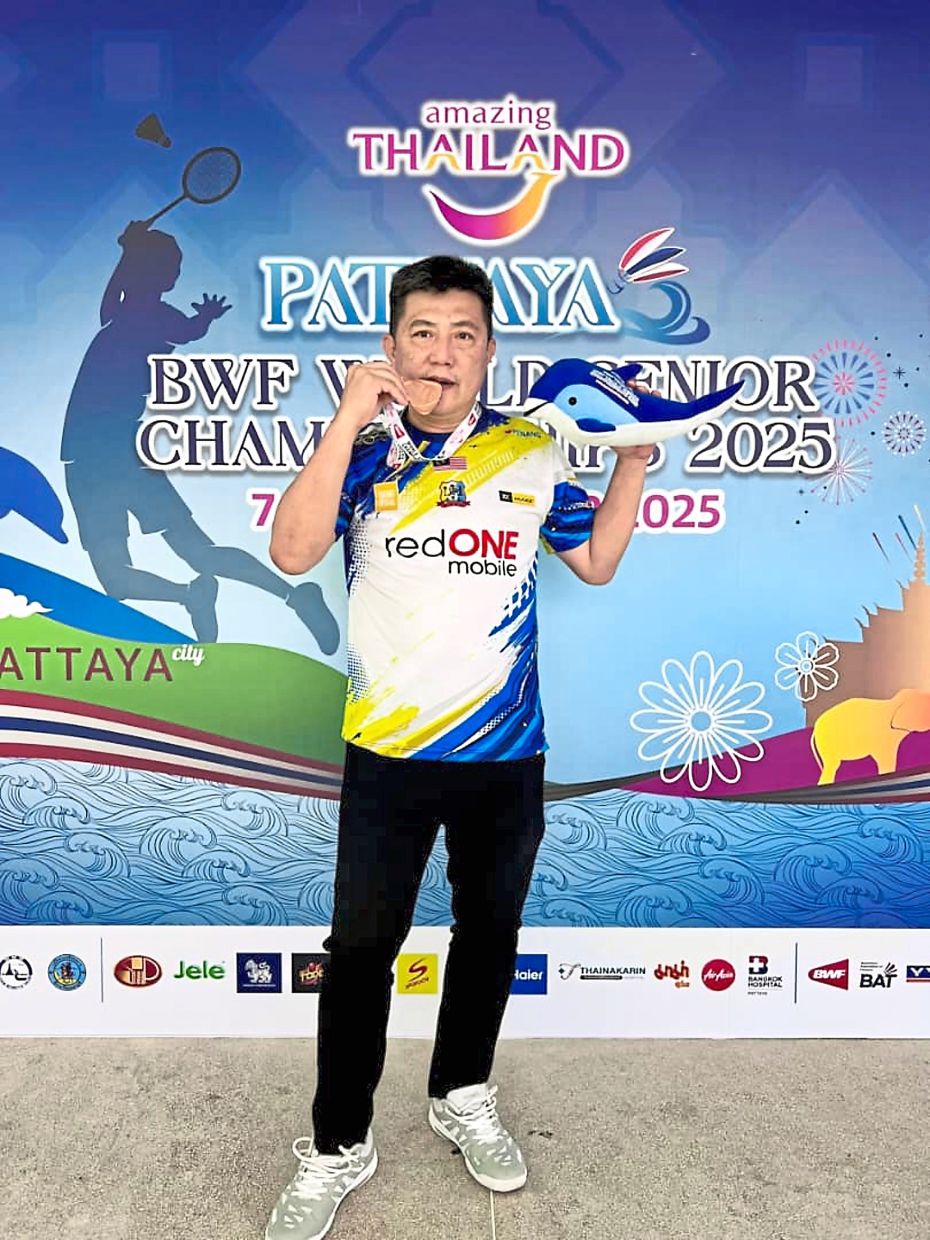
On the PBA reaching its 100th year, Aik Huang said, “It feels great. Personally, I am very thankful to be part of PBA’s legacy.”
His advice to the younger generation echoed the simplicity and discipline that defined his own rise: “Just continue to love to play and improve your badminton to the highest level you can, and have the confidence to do so.”
Ewe Hock, one of the country’s stars from the 1990s and early 2000s, who represented the nation at the biggest stages, also paid tribute.
Known for his fierce fighting spirit and blistering speed, Ewe Hock said: “I owe almost everything to PBA for recognising my potential and nurturing me during my formative years from the age of 13 to 16.
“I still remember training under the late Eddy Choong at his badminton centre in Bukit Gambier, and that experience inspired my lifelong passion for the sport,” he said.
Now 53, Ewe Hock stressed that raw talent must always be paired with dedication.
“Talent alone is not enough.
“One must train with passion, discipline and a hunger to improve every day.
“Above all, you must love the sport, as only genuine interest will sustain you through the challenges.”