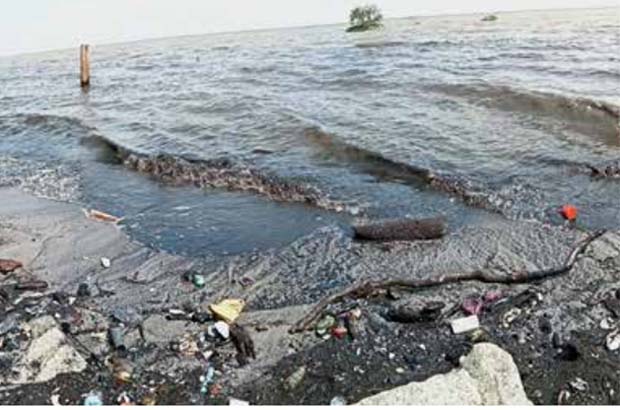
THE first thing that greets visitors upon their arrival in Tanjung Sepat, Kuala Langat, is the shoreline. However, it is not a pretty sight.
The pungent odour of animal waste from livestock farms in nearby Ladang Tumbuk fills the air and the waves lapping the shore is a grim shade of black.
A satellite view of the area on Google Maps shows a dark blob, indicating water pollution.
Tracing the problem
Global Environment Centre river care project programme coordinator and water expert Dr Kalithasan Kailasam said effluent from livestock farms and plantations were the cause of water pollution in Tanjung Sepat.
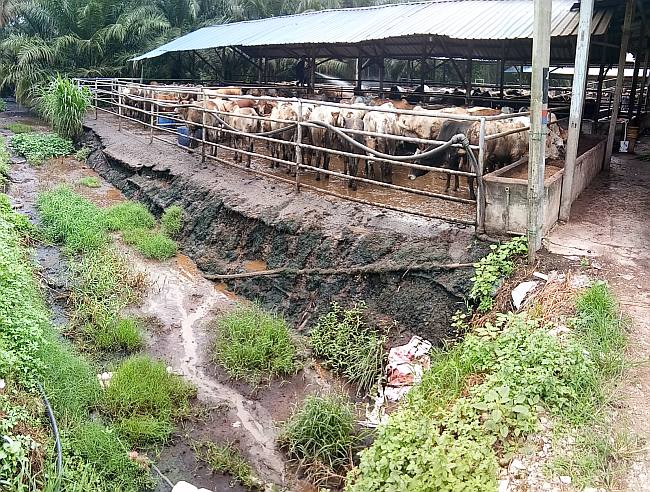
One tell-tale sign is the drains surrounding the livestock farms that are choked with thick, black and smelly muck, which is eventually discharged into the sea.
While tracing the source of air and water pollution, StarMetro found that two cattle feedlots in Jalan Parit A discharged their animal waste directly into the drains.
The operators said they were aware of the need for a sewage retention system but admitted that they could not afford the facility as it was too expensive.
Following previous press reports of pig farms contributing to the problem, StarMetro also visited these farms.
A drive along the inner roads of Ladang Tumbuk revealed puddles of brackish water outside one pig farm and drains leading out of the farm were flooded.
The owner of this farm declined to comment.
Dealing with waste
At the Hong Seng Pig Farm owned by Chua Kee Look, 60, we were shown how waste from 2,000 pigs were channelled into three retention ponds via a drainage system.
Water is sieved as it flows from the sties and through the ponds before it is discharged into a drain. Once a year, the sullage is removed.
Chua, who has been in the business for 38 years, explained that this method was approved by the Selangor Veterinary Services Department (DVS Selangor).
However, the cost of installing and maintaining such a system is high.
“The ponds alone occupy 0.8ha of land. Including the cost of digging these ponds, I had to fork out about RM200,000 to instal this system.
“But this was 20 years ago. It costs much more now,” Chua added.
Kuala Langat Pig Farmers Association chairman Chuang Hock Meng said all pig farms in Ladang Tumbuk complied with DVS Selangor’s waste irrigation requirements.
There are 129 pig farms in Tanjung Sepat, of which 69 are in Ladang Tumbuk.
Of late, farmers have resorted to adding enzymes into pig feed in an attempt to reduce waste and smell.
The enzyme optimises the animal’s digestive system to absorb more nutrients from the feed thus lessening the volume of solid discharge.
Kalithasan said the retention ponds were merely for sedimentation settling purposes but they did not address sewage treatment requirements.
He added that factors such as pond size, time needed for water to settle and frequency of sludge removal must be taken into account.
“If the water that ends up in drains contains even sediments of animal waste, it will still pollute the environment,” said Kalithasan.
This waste irrigation systems were not found at any cattle farms in Ladang Tumbuk and DVS Selangor confirmed that cattle farms did not require licensing.
This pollution also poses a health risk to public. A report from the Malaysian Leptospirosis Research Network states that livestock such as cattle, pigs and goats harbour leptospira strains which can easily infect and cause serious illness in humans.
If the animal waste or sludge is not properly disposed of or is allowed to seep into waterways, it invariably exposes humans and other animals to the deadly disease.
Looking for solutions
In 2016, the state government announced that Ladang Tumbuk would be turned into a modern pig farming centre within two years.
The plan included turning farm effluent into biogas, contributing to the Tenaga Nasional Berhad energy grid, which will address hygiene and pollution issues.
There were also plans to rehabilitate the beach.
But Chuang said there had been no update on the project.
“The authorities have been talking about this for the past 13 years. We are still waiting,” he said.
Selangor Infrastructure and Agriculture Committee chairman Izham Hashim said a solution to the pollution was in sight but it might take several years to implement due to the size of the project, which will be located in Ladang Tumbuk itself.
“We are in the midst of assessing the financial strength of the company for this project as it will have to acquire the land and set up a closed farming system.
“The area needed is about 133.6ha, large enough to accommodate 25,000 pigs. The assessment period will take six months.
“The good news is the pig farmers have already agreed to this move,” said Izham.
The two authorities overseeing livestock farming in this area are DVS Selangor and Lembaga Urus Air Selangor (Luas).
Luas senior assistant director Nor Zamri Sondor said its standard operating procedure required water tests to be carried out at the farms once every three months.
If an operator is found guilty of causing pollution, he may be fined no more than RM10,000 or be sentenced to six months in jail.
DVS Selangor director Dr Akma Ngah Hamid said according to standards set by the Environment Department, the discharge into public drainage could only have a biochemical oxygen demand (BOD) of below 50 p.p.m. and tests are conducted twice yearly.
For now, Dr Akma said remedial action would entail advising livestock farmers on how to treat sewage using effective microbe products and enforcing the law on errant operators.
She added that DVS Selangor was ready to assist in technical aspects and long-term programmes that could reduce the pollution caused by livestock farming.
Already a subscriber? Log in
Get 20% OFF The Star Digital Access
Cancel anytime. Ad-free. Unlimited access with perks.