
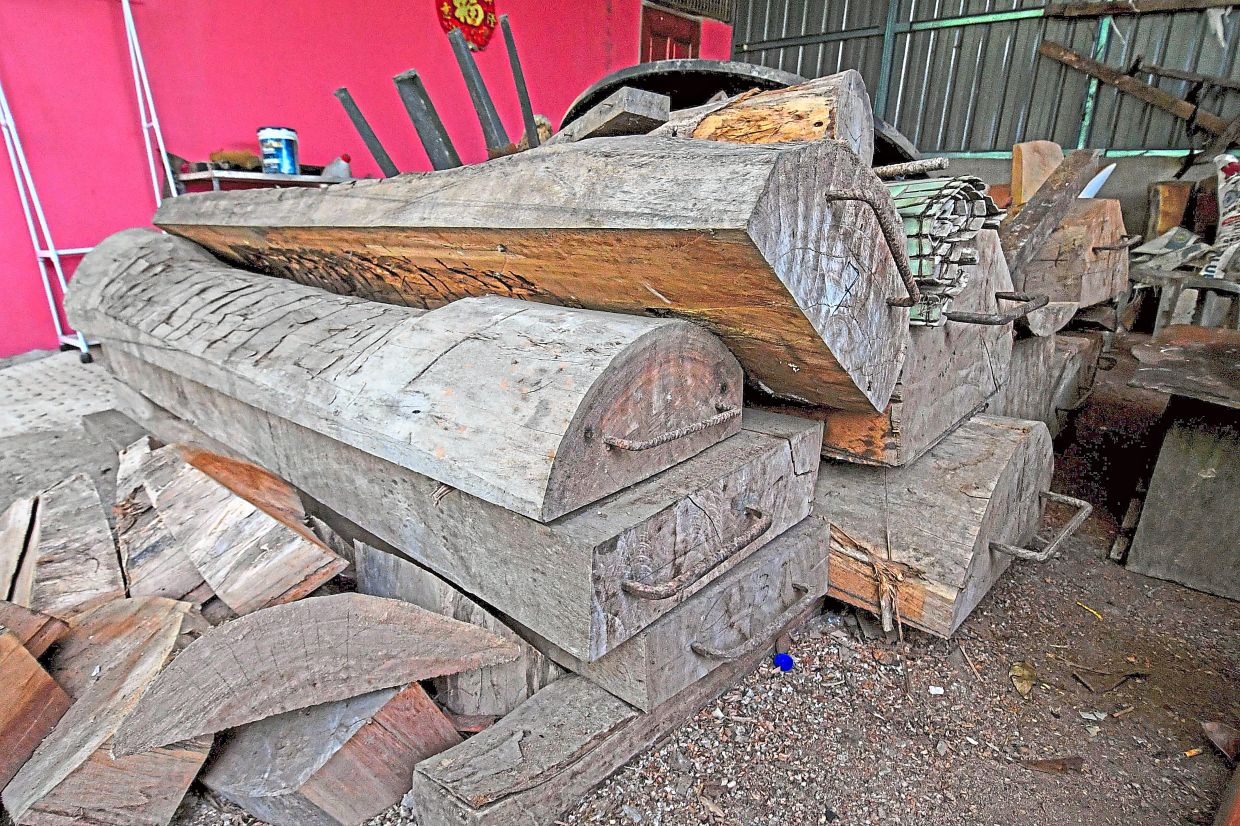
RHYTHMIC tapping and scrapping of tools echo through a simple workshop stacked with cengal and merbau wood in Kampung Seneng, Jelawat.
In this space in Bachok, Kelantan, Tan Kee Lim, fondly known as Pok Ku, crafts traditional Chinese coffins with quiet concentration.
At 67, he is among the few remaining coffin makers in Kelantan still relying on hand tools and physical labour.
He said traditional wooden coffins continued to be relevant among older Chinese people.
“The main challenge today is the absence of a younger generation willing to continue this tradition,” he told Bernama.
“I was offered RM100,000 to teach traditional coffin-making in China, but I turned it down because I want the craft to remain in Malaysia.”
The fourth-generation coffin maker added that he sometimes felt that he would be the last generation in the business.
The father of three children all in their 30s said he inherited the business some 26 years ago.
“Young people simply are not interested anymore.
“The work is not difficult; you just need to master the techniques.
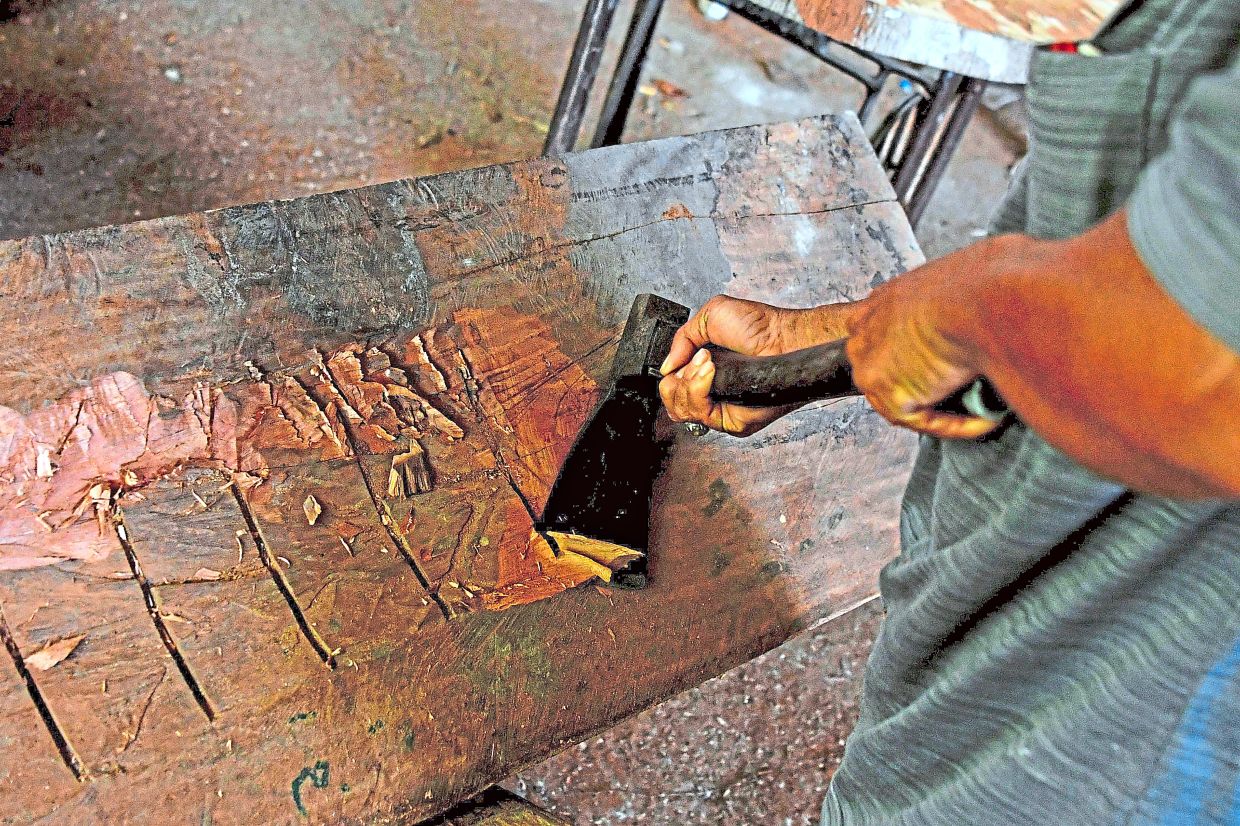
“But nowadays, everything can be automated, so few youngsters care to learn how to use an axe, chisel and hand saw,” he said.
To Tan, every coffin he makes represents heritage, cultural identity and respect for the deceased.
That is why every stage of the process, starting with wood selection, is done meticulously to achieve a craftsmanship that technology cannot replicate, he said.
“A craftsman must understand each step,” Tan said.
“The process also incorporates the philosophical beliefs and cultural taboos of the Chinese community.”
Tan uses only premium hardwood which can last centuries.
“It usually takes about a month to complete a coffin, including carvings.
“Unlike modern coffins, traditional ones have a curved lid, which is the most challenging part.
“If you are off by even a millimetre, the lid will not close properly,” he said.
Weighing up to 200kg, a finished traditional coffin is 1.8m long, painted red and adorned with prayers and tributes in Chinese calligraphy.
In Chinese culture, there are rituals and customs that must be followed strictly.
“When sealing the coffin, for example, the nails are driven in differently depending on the gender of the deceased.
“For a man, the first nail begins on the left side near the head, while for a woman it begins on the right.
“Each nail is accompanied by specific recitations,” he said, adding that these acts are deeply symbolic.
Tan added that it had become increasingly difficult to preserve the traditional craft due to a lack of successors and dwindling supply of quality wood.
“Using premium hardwood ensures the coffin is durable.
“That is one of the key advantages over modern ones.
“Chinese families generally keep the deceased for three to seven days before burial, so there may be an unpleasant odour from a modern coffin after three days.
“A traditional coffin, with its thick sides, can preserve the body for up to a week without any odour.”
He said a coffin made from merbau could cost around RM10,000 while a cengal coffin could fetch up to RM12,000.
He also makes cheaper, modern coffins, which are usually ordered for cremation services.
As he enters his twilight years, Tan said profit was no longer his main motive.
“If there is no one to inherit this, when I am gone, the skills will disappear.
“If there is anyone who wants to learn, I am more than willing to teach them.
“A heritage like this cannot be replaced.
“No amount of money can buy back skills that are lost because this knowledge is built through decades of experience,” he said while stating again why he declined the China offer.
“With that RM100,000, I could have bought more timber, new machines or even built a bigger workshop.
“But money cannot buy a heritage built up over generations.”
He hoped the younger generation will answer the call to keep this legacy alive.