
Tanzania and Kenya are truly blessed – together they host some of the world’s finest national parks, which naturally become the grand stage for a spectacular cast of wildlife animals.
Some people say that “to go to East Africa and not see the ‘Big 5’ is like going to Japan and missing Mount Fuji under the clouds, or chasing the Northern Lights in the Arctic and yet seeing none”. It’s a little exaggerated, perhaps, but there is also truth to it.
For example, the Big 5 beasts do hold up the legend of the African savannah. And often, travellers find themselves seeing only three or four out of five.
Africa’s Big 5 are the lion, leopard, African elephant, buffalo and rhinoceros. These are said to be the hardest “stars” of the savannah for photographers to capture. But that’s not how they got their name. Apparently, back in the day, hunters listed these animals as the most dangerous and difficult to kill, thus calling them the Big 5.
Thankfully, today we carry cameras and smartphones instead of rifles to “shoot” the animals. Still, when we do shoot, our hearts pound just the same.
The lion: King or sleepy cat?
In the Maasai Mara National Reserve and Serengeti National Park, lions are the ultimate celebrities. The moment a safari vehicle rolls onto the plains, everyone starts asking, “Will we see lions today?”
The reality, however, is that usually tourists won’t get to see a lion roaring away like a dramatic scene from the Lion King, but rather a “family siesta”, with the big cats sprawled out lazily in the grass.
One time, I saw a pride of seven or eight lions – once even 20! – all comfortably stretched out, napping in the heat. A few cubs played half-heartedly nearby. Our nature guide explained, “Lions sleep up to 20 hours a day. Spotting one awake is real luck.”
Indeed, the most thrilling moments often come at dusk. As the sun dips, lionesses rise, stretch, and call their pride, readying everyone for the hunt. In that instant, you understand why they are called “King of the Beasts” – a synchronised hunting force, eyes gleaming with cold determination.
Try to set out on a game drive before dawn, the peak of animal activity and predator drama. If the pride had captured a wildebeest the night before, come morning, its carcass would be a feast for vultures, and soon enough, the hyenas would start gnawing at the bones.
Leopard: Master of disguise
If lions are the “easiest” to spot, then leopards are the “mysterious” ones. Shy and elusive, they slip between shadows, often lounging in trees or rocks.
Searching for a leopard truly feels like a treasure hunt.
My most vivid memory of a leopard sighting was in the Serengeti. The guide suddenly halted the car and pointed to an acacia tree, saying, “There! On that branch!”
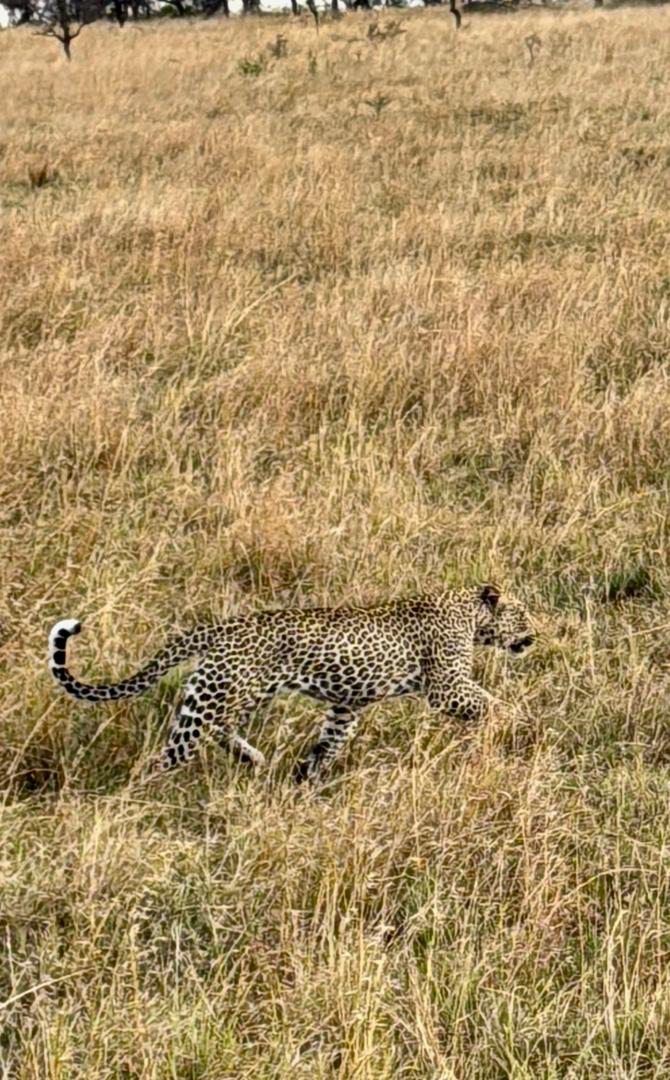
Using binoculars, we spotted a dappled leopard draping lazily across the bough, its tail dangling like a ribbon swaying in the breeze. Its eyes were half-closed, yet fixed with intensity on the gazelles below.
At that moment, I understood the saying, “motionless as still water, swift as a startled hare”.
In an evening game drive, three safari vehicles sped across the grassland, chasing the spotted cat, which ran nearly twice as fast as an ostrich. During that breathless moment, my travel buddy Yvonne, with a sudden burst of energy snapped a string of photos, perfectly catching the leopard mid-run.
Later she laughed and said: “I only pressed the phone randomly because the cars behind couldn’t keep up. Who knew I’d capture the winning shot!”
The leopard may be the recluse of the savannah, but because of its rarity, its appearance often becomes the highlight of any journey. Many travellers say that seeing a leopard makes the whole trip worth it.
Elephant: Gentle giants
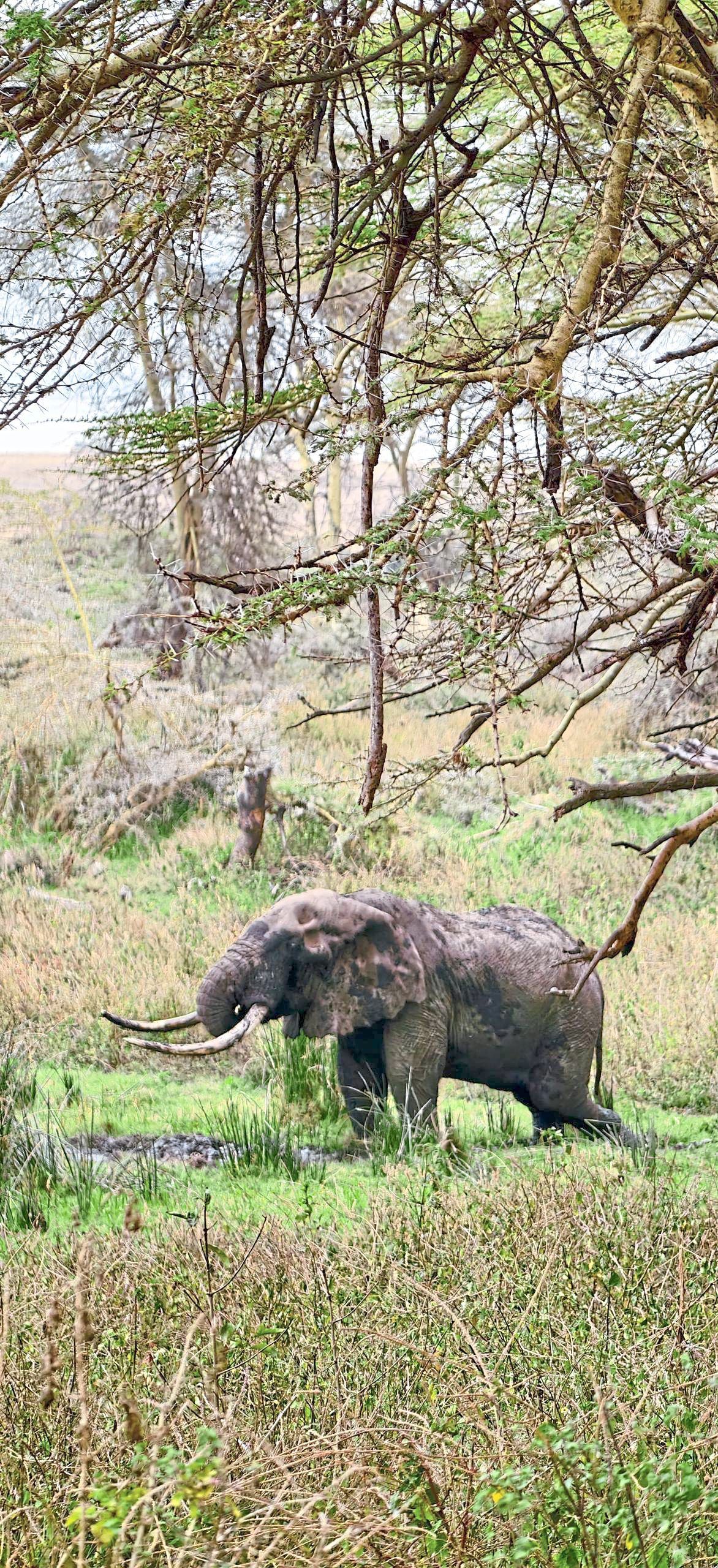
The African elephant is the most weighty figure of the savannah. My first sighting of one in Amboseli National Park left me speechless. Dozens of elephants strolled slowly across the plain, ears flapping like giant fans. Baby elephants clung to their mothers, clumsily trying to pluck grass with their trunks, drawing bursts of shutter clicks.
Yet don’t mistake their gentleness for meekness.
Anger an elephant, and it can charge with terrifying force. Our guide often warned us to “never block their path”. A furious mother elephant, weighing several tons, could easily flip a safari vehicle.
People may call lions kings, but in front of a herd of elephants, even lions give way.
Buffalo: Deathly stares
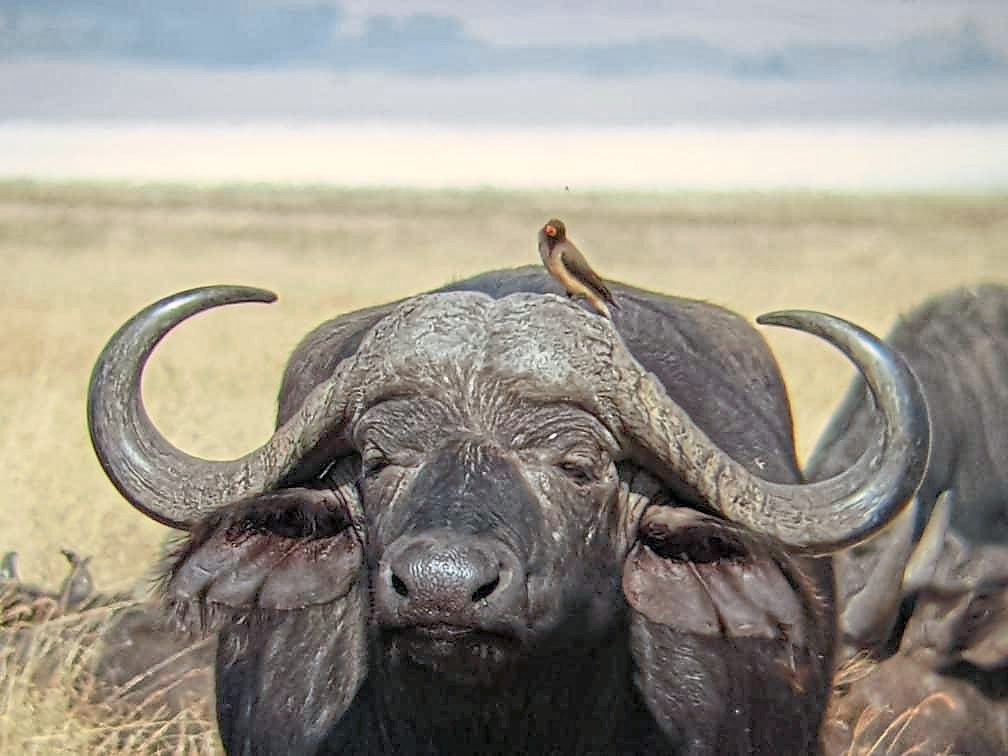
Among the Big 5, the buffalo are often underestimated. They lack the lion’s majesty, the leopard’s mystery, the elephant’s size, and the rhino’s rarity. But when those buffalo eyes stare you down with a deathly glare, even the bravest will be worried.
When our guide stopped the car and cut the engine to let us watch a herd of buffalo up close, we felt the “arrogance” and defiance in their gaze.
He joked, “Buffalo look harmless, but they’re the most ill- tempered. They’ll fight lions head-on rather than retreat.”
Before the pandemic, the guide said that he once saw a buffalo getting ambushed by lions. Though wounded, it still ran furiously, shaking off the attackers.
Rhino: Endangered heavyweight
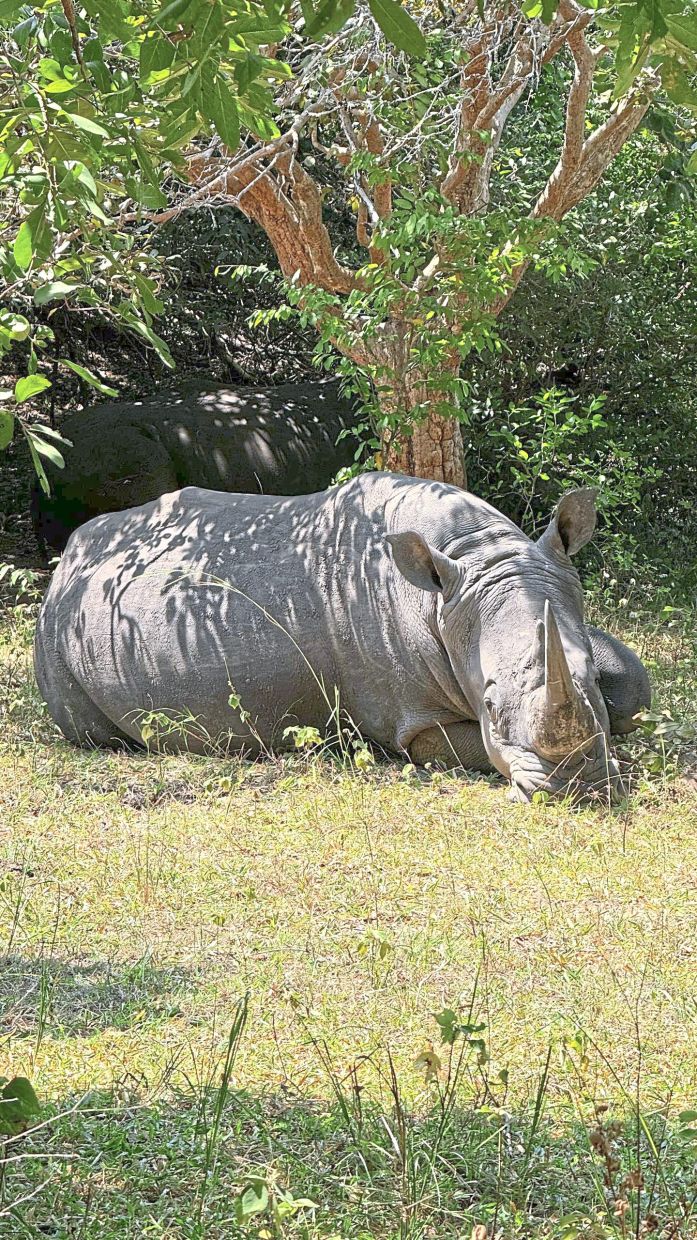
The hardest to spot of the Big 5 is the rhinoceros or rhino. Only about 40 still roam the Serengeti. Kenya’s Lake Nakuru and Tanzania’s Ngorongoro Crater are hailed as sanctuaries for the rhino but even there, sightings are few and far between.
My first encounter was from a distance – just a bulky silhouette lumbering across the horizon. The guide cried out, “Look, a rhino!”
With binoculars, we glimpsed its armour-like hide and long horn. In that moment, I felt both awe and sorrow – creatures that have survived tens of millions of years now teeter at the edge of extinction, all because of human greed.
Why are we drawn
The magic of the Big 5 is not just size or power, it’s their stories. The lion represents authority, the leopard mystery, the elephant family guardianship, the buffalo defiance, and the rhino endangered legacy. Each is a living epic of the African savannah.
Travelling in East Africa and seeing them is not just about ticking boxes, it’s a dialogue with nature. You realise our so-called “civilised superiority” means nothing here. The animals are the true protagonists, we are merely passing spectators.
Once, while waiting in the Serengeti for seven hours watching zebras and wildebeests cross the Mara River, I thought, “Life is often like this savannah. You may wait long and hard, yet the outcome may never match your hopes. But the waiting itself ... that’s the meaning of the journey.”
The Big 5 are the same. Sometimes you spot only three, sometimes all five if you’re really lucky. The value lies not in “collecting them all” but in the thrill of the encounter, the pounding heartbeat, the brush with the wild.
Tanzania and Kenya’s plains are nature’s grandest stage, and the Big 5 are its unforgettable leading stars. Each meeting is a blessing.
I often tell fellow travellers not to rush things – don’t grab your camera first upon seeing any of these animals. Instead see them with your own eyes. Some images last longer in the heart than on a memory card.
And so, sitting quietly once more in a safari vehicle, watching elephants, giraffes, and zebras move gently against a setting sun, I say to myself, “East Africa is a place one must return to, again and again.”
Next stop? The gorillas, chimpanzees and golden monkeys of Uganda and Rwanda!
The views expressed here are entirely the writer’s own.
Leesan, the globe-trotting traveller who has visited seven continents and 151 countries, enjoys sharing his travel stories and insights. He has also authored six books.