On one of the few “decent” roads in Honiara, the capital of Solomon Islands, a local woman in a pair of flip-flops walked into a Chinese fast food restaurant with her two children.
They stood in front of the small glass showcase, staring at the food items on display. The children’s eyes were fixated on the menu; it seemed like the were really hungry and wanted to eat. But the woman ended up ordering only rice with two dishes, to be shared among the three of them.
The price for that meal? Between RM20 and RM25.
As for us, three foreign visitors, we ordered a plate of fried noodles, a bowl of beef noodles, some cabbage and two glasses of milk tea – it came up to about RM180.
When we dined at another restaurant, we were shocked to find that a plate of fried cabbage cost RM50, while the Wong Lo Kat brand of herbal tea was RM20 a can!
Next door, a sundry shop run by a local Chinese did not have a signboard in Chinese, apparently in an attempt to stay low key. One of my travel buddies, Tom, went in to buy four pieces of regular face masks and paid RM6 for them, but we later found out that similar face masks are only sold at RM3 for 50 pieces online.
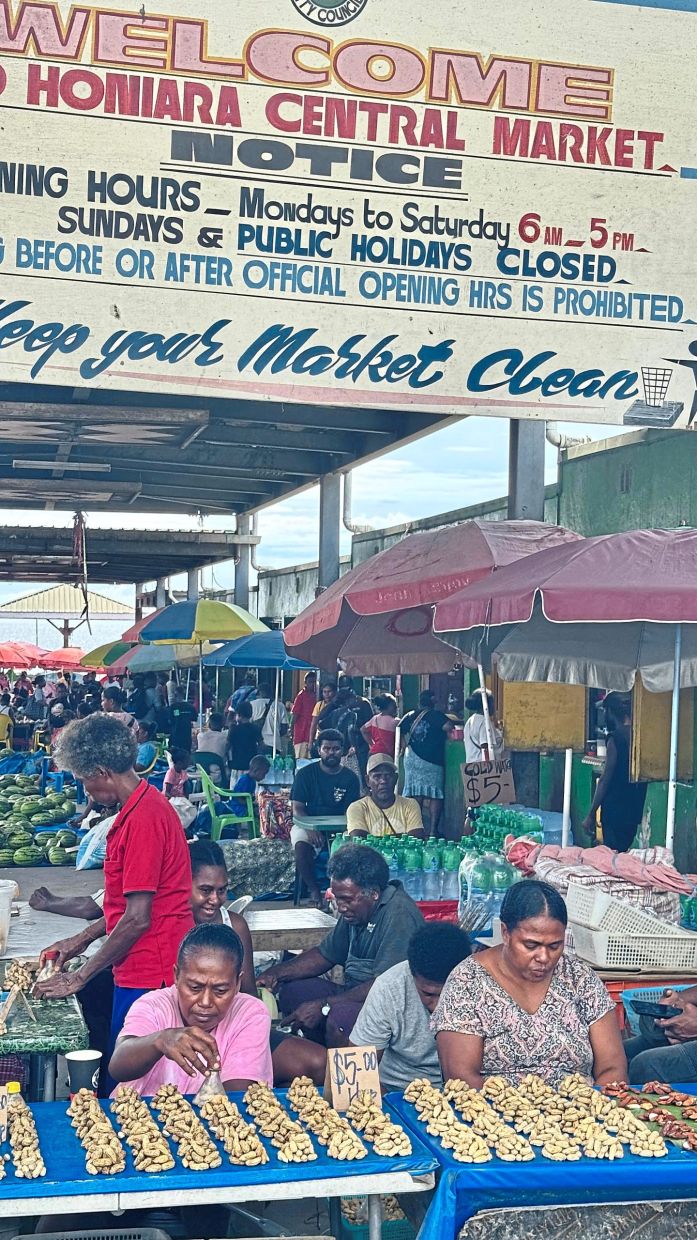
You may think that these prices are insanely high in Solomon Islands because they are imported goods, but then again, the price of a watermelon runs from RM10 to RM100 a fruit at the central market, while a single egg may cost you RM4. Yes, prices are multiple times higher than in Malaysia in this country.
The lady proprietor of the Chinese shop told us, “I came to this place 10 years ago, and prices here increase by so much every year. My monthly rent is now between RM30,000 and RM100,000 – five times what it used to be merely a decade ago.”
I could see from the way she spoke that she was utterly consumed by the bitterness of reality.
She added, “Other than seafood which is slightly cheaper here, everything else is extremely expensive.”
For example, face masks have to be shipped from overseas, and their prices are often marked up at the last minute. Utility bills are unbelievably high, too, while their taxes are complicated to say the least. Policies could also be changed at any moment by the authorities.
In the Solomon Islands, all day-to-day costs are sky-high, but living wages are very low. Menial workers are generally paid RM400 a month, while a degree holder gets just around RM1,200 – too low to cope with the inflation. Moreover, half of the young people here are jobless, while many have a problem with areca nut (also known as betel nut) and alcohol abuse.
Our easy-going taxi driver David shared, “I have four children to feed; my eldest son works at an Australian orchard for a living. A friend of mine has seven kids, all still very young. Many families have to let their children go out and work early to help out.
“With international aid several years ago, we managed to have one decent-looking working road – our only paved asphalt road. Today, that road is full of potholes. Drivers pray hard when they have to brake as the tyres may just explode.
“Fortunately, this road is now being rebuilt and upgraded by a Chinese contractor,” said David.
Honiara may be the country’s capital, but other than a couple of mini markets, small fast food joints, banks, two casinos, several general stores and government offices, hospitals, churches, an Australian international school and a sea port, a major part of the city is made up of tin-sheet houses, muddy ground and mottled walls.
Although it is not exactly dirty and messy, it is hardly “developing,” a description too luxurious for the state of affairs here.
Sounds like a third-world country, doesn’t it? Well, it is but lest we forget, this country is blessed with rich marine, forest and mineral resources, and theoretically should have enough money to spend on development.
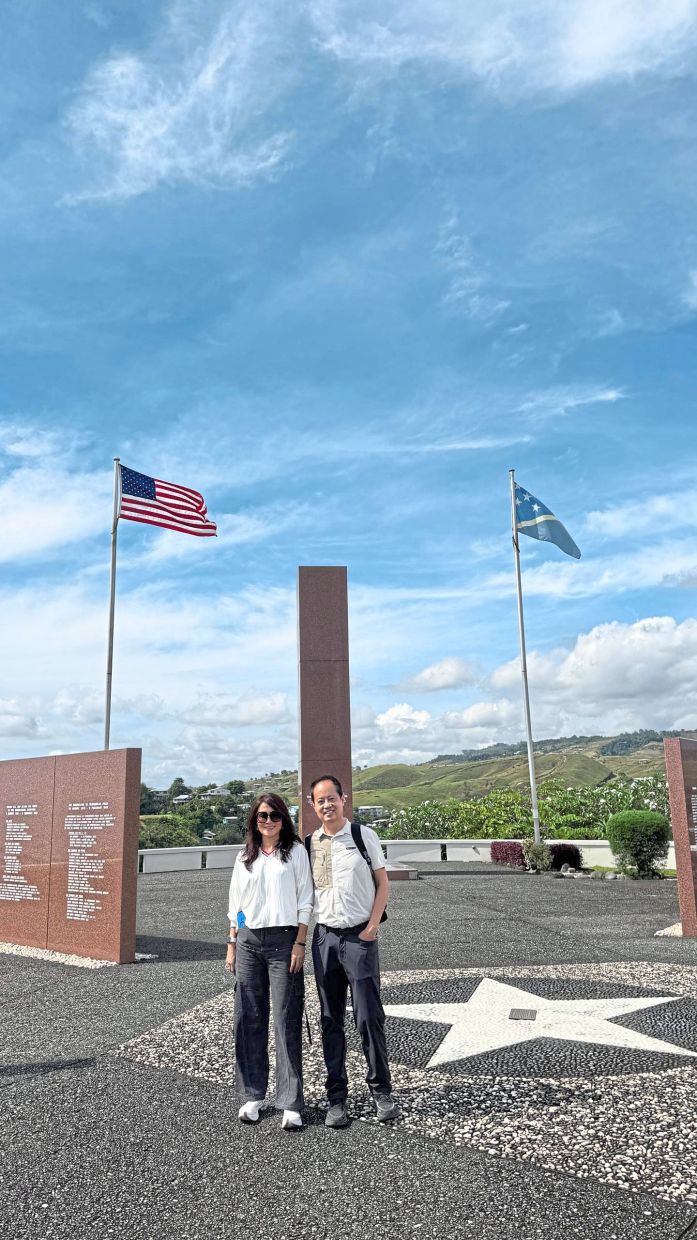
It seems like the entire society here is accelerating towards some kind of disorganisation, and there are many reasons for this. There’s political instability, corruption, over-dependence on foreign aid, and marginalisation from the global trade system. All these conspire to push the island nation from paradise to destitution.
Made up of over a thousand islands, the Solomon Islands sounds like an insular paradise handcrafted by God, but in reality, this place is plagued by a so many problems. Here, prices are getting incredibly high and life is getting tougher by the day.
And the more incompetent the government is, the more local residents get numb.
If you ask me whether this place is good for a holiday, my answer is positive – the scenery here is breathtaking, the water pristine blue ... a paradise for scuba diving fans.
Additionally, the people here are friendly and simple, leading a slow-paced lifestyle as if completely detached from the outside world. They’re easy-going, happy and always smiling.
That said, though, you need to bring along your sense of curiosity when travelling to the Solomon Islands.
It’s hard to believe that in a tiny island nation of only about 800,000 residents, there are so many foreigners “doing business” here. And their stories could be as richly interesting as the coral reef here.
Solomon Islands was the 148th country I that had visited. The more new countries I explore, the more remote and underdeveloped they get, but then again, they are also getting increasingly authentic and unpretentious.
The views expressed here are entirely the writer’s own.
Leesan, the globe-trotting traveller who has visited seven continents and 149 countries, enjoys sharing his travel stories and insights. He has also authored six books.