
My colleagues and I recently went to Labuan Bajo, a humble fishing town earmarked by Indonesia’s government in 2018 for development as a priority tourist destination. This was strategic as the place is close to tourist hotspots like Komodo Island and Gili Laba.
It was also intended to reduce overtourism in Bali.
Our first impression of the island upon landing was that it had a rustic vibe, with lush greenery and kampung houses similar to the ones in Malaysia. You could spot fishmongers selling their fresh wares along the road.
Our first stop was at Puncak Waringin to dine with a sunset view. This hill was a key venue when Labuan Bajo hosted the 42nd Asean Summit in 2023.
The itinerary for the next two days was hectic, but ultimately worth it because there was so much to see. We started off with a gruelling hike up Padar Island’s hills. For our perseverance against the morning heat and steep climb, we were rewarded with a panoramic view of the sea and volcanic mountains from the peak.
The vegetation resembled a savannah during our visit, but if you go during the rainy season, Padar’s yellow and brown hills transform into green.
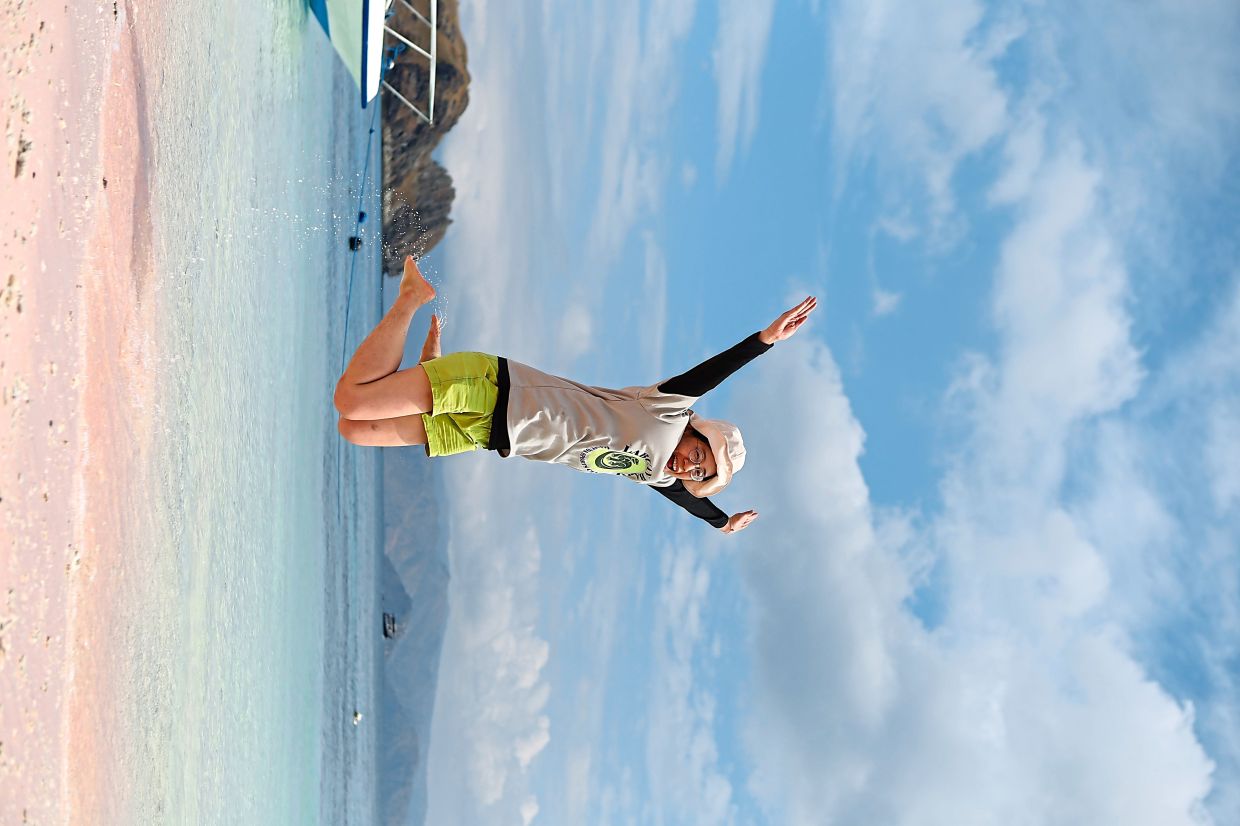
The nearby Pink Beach is every girl’s dream for its attractive, Instagrammable vibes. The sand’s pink colour comes from red foraminifera, tiny plankton-like marine organisms. I took countless photos with this cotton candy-hued scenery, despite the blazing sun.
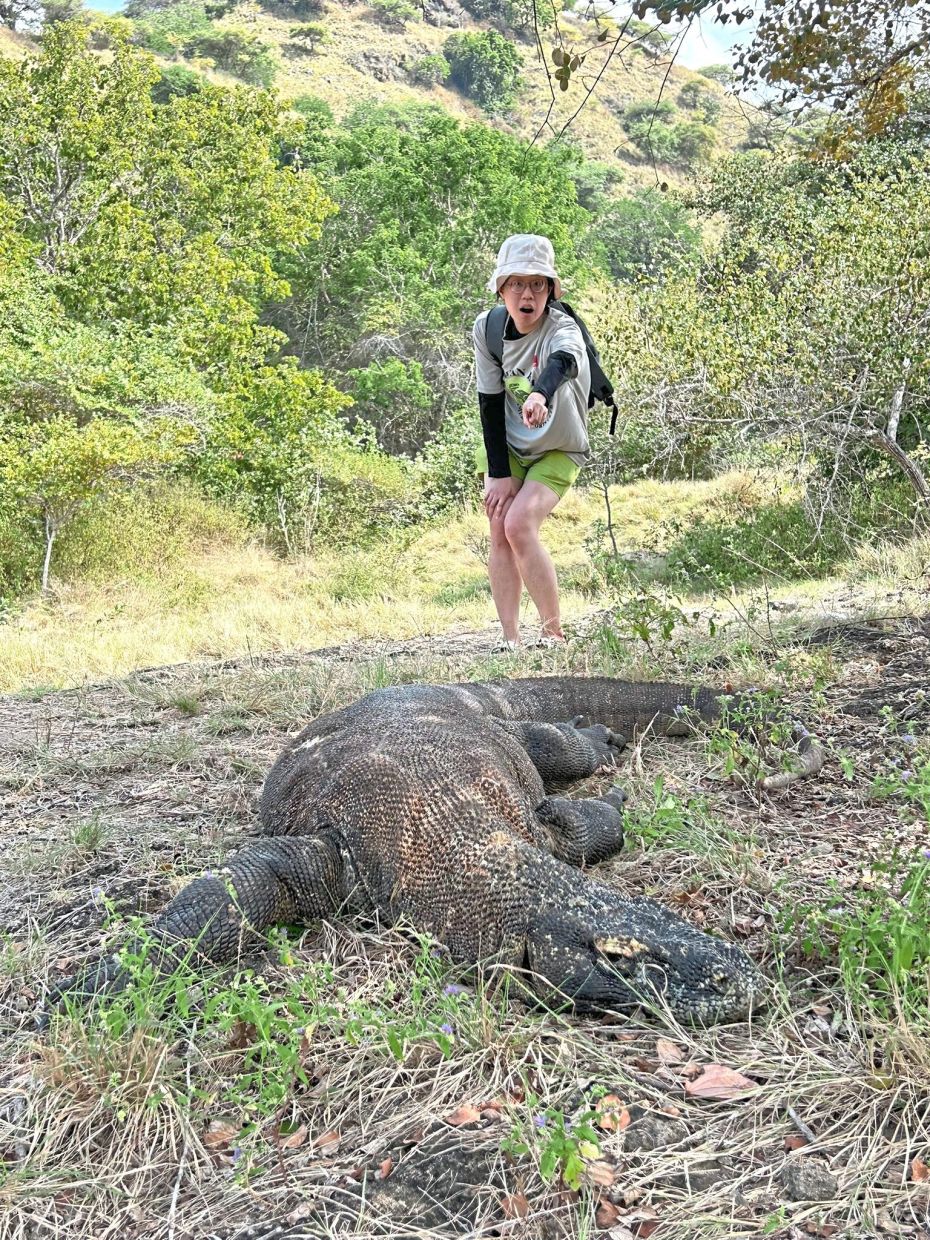
We went to the Komodo National Park to see the giant monitor lizards that are endemic to Indonesia. As we “hunted” for the elusive Komodo dragons, I imagined I was exploring the fictional Jurassic Park.
According to the park ranger, we were considered lucky to spot two of the large lizards. As it was mating season, the odds would be even lower to find them. So, seeing an endangered species in the wild was something worth ticking off my bucket list.
The cardinal rule is to tread carefully around them and keep a distance, but Komodo dragons generally avoid confrontation with humans. Hence, we had nothing to fear since they were lazily basking in the heat.
After lunch, we snorkelled at Manta Point and Kanawa Island, where we managed to see some turtles, stingrays and small sharks. Dinner was at a restaurant highlighting the versatility of moringa in local dishes. Moringa grows extensively in Labuan Bajo and is considered a superfood due to its high nutritional value. Almost every part of the plant is edible and it can also be used for filtering water and soapmaking.
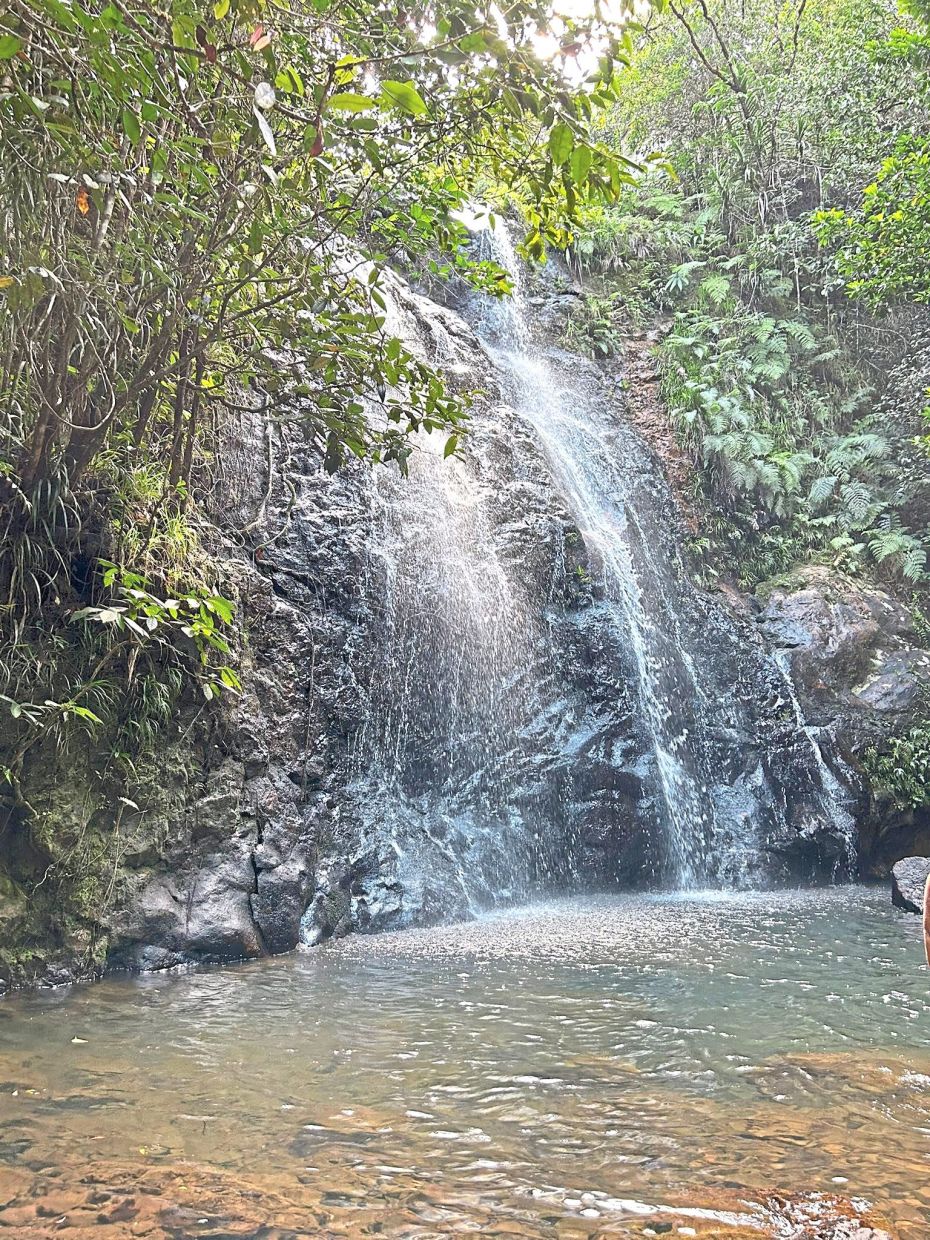
The next day started with a morning trek to the Cunca Plias Waterfall. Strolling through the cool morning air, our guide showed us plenty of crops like pineapple, buah keluak, cocoa and more along the way.
We found the photogenic “pool above the clouds”, which was a mini natural “infinity pool” overlooking the vast rainforest. There was no time to stop for a dip, unfortunately.
Refreshments came in the form of yam, coconut water and strong local coffee at the modest coffee stalls after all that walking. It felt idyllic watching the simple village life go by as free range chickens roamed and children played under trees like the good old days.
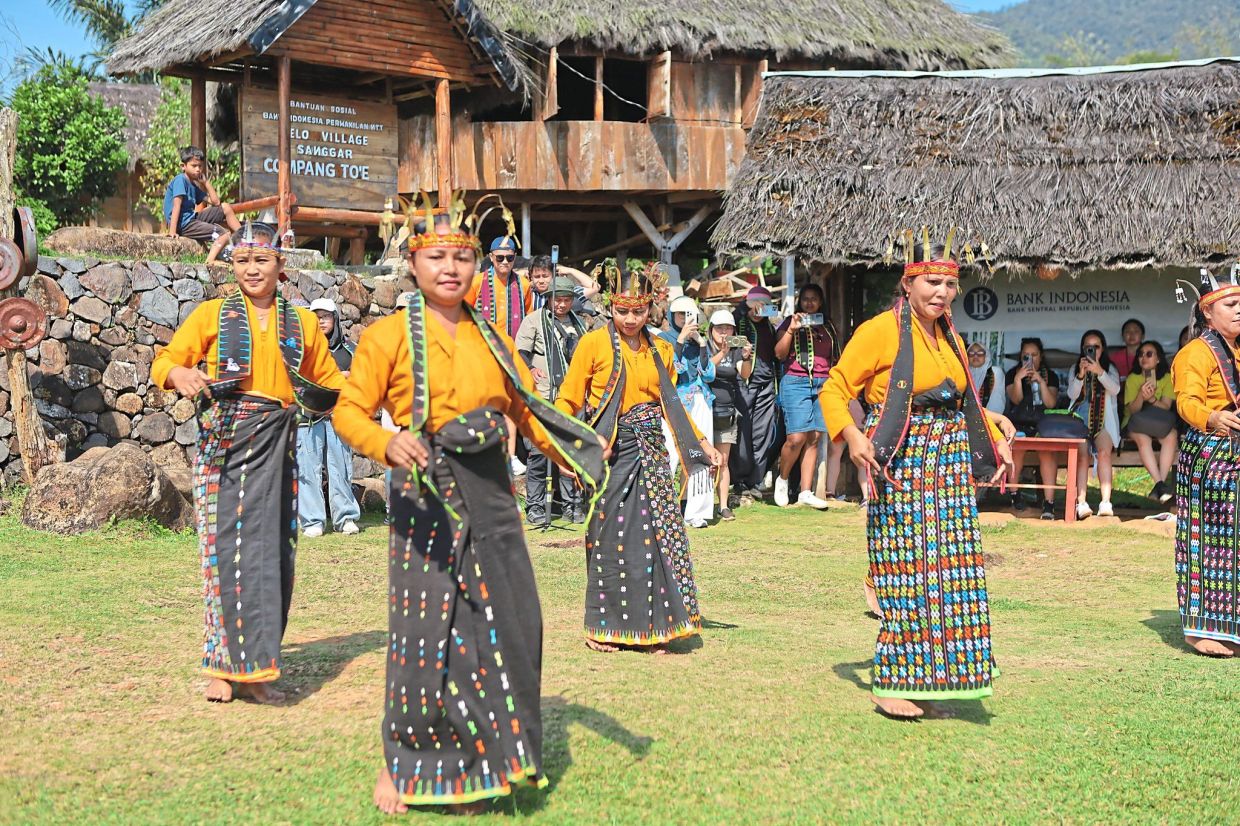
Our next stop was the Melo Village in the highlands. We were greeted with a brief scarf wearing ceremony and tuak by the hospitable Manggarai people. They also served a homecooked lunch where we scraped their plates clean.
With full tummies, it was time to witness and eventually participate as guests in the Manggarai’s Teba Meka welcome dance. However, no one dared to attempt their Tetek Alu dance, which involved jumping and balancing on bamboo poles!
Next up was the Batu Cermin cave, which contained fossilised remains of corals and marine animals. Isn’t this proof that Labuan Bajo was once underwater? The cave’s name comes from a mirror effect that forms when light shines and reflects into the cave at optimal conditions.
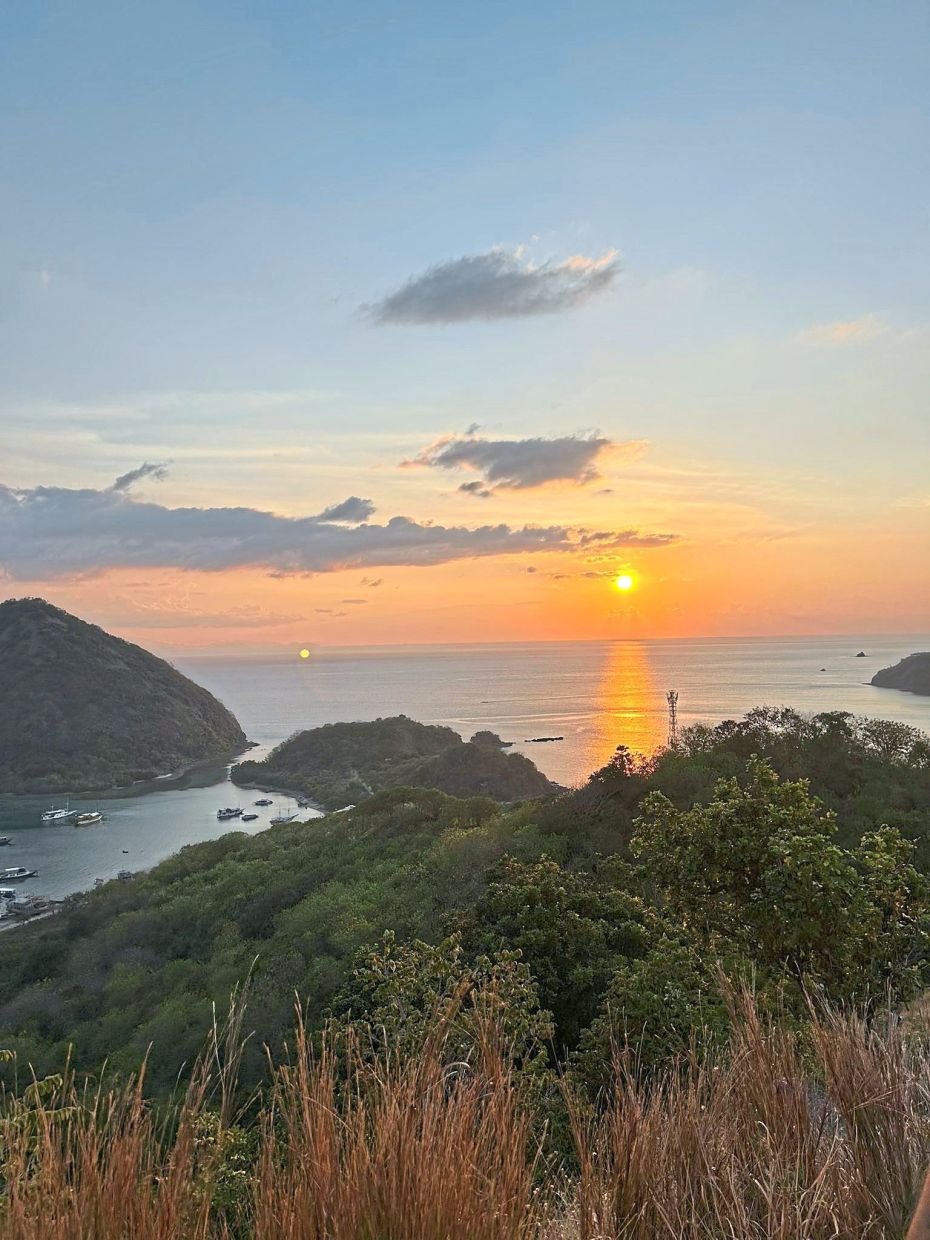
Hiking up Bukit Cinta, a popular place for couples, we watched the magnificent sunset change colours before reluctantly heading down. We spent our final night strolling around the little central area of Labuan Bajo, where tourism development was clearly beginning to take shape in the form of emerging bars, cafes and gift shops.
Reminiscing on the untouched natural beauty of Labuan Bajo, I opine that this region is best left as it is, lest it becomes overcommercialised like Bali.
The views expressed are entirely the writer’s own.
An adventure in Labuan Bajo
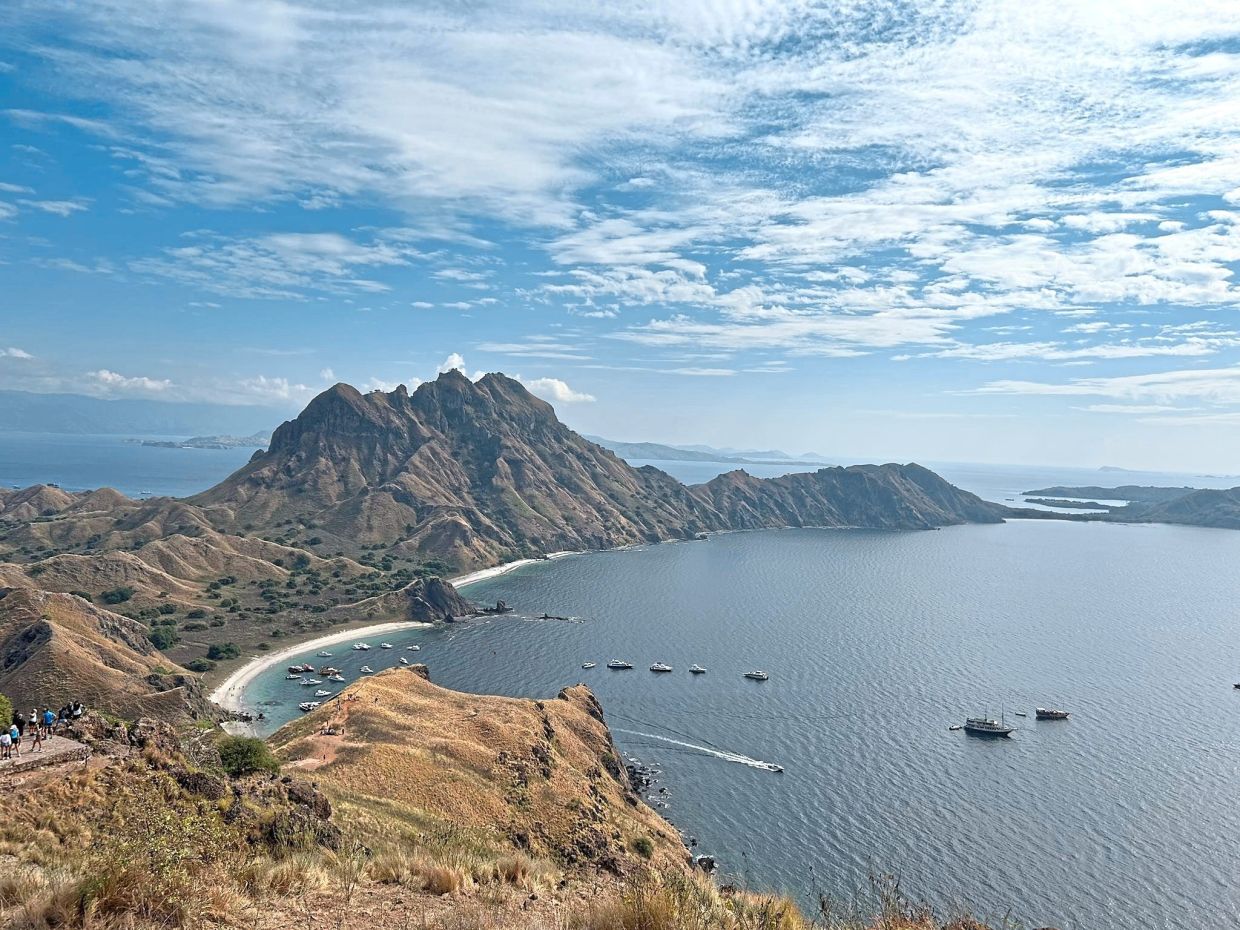
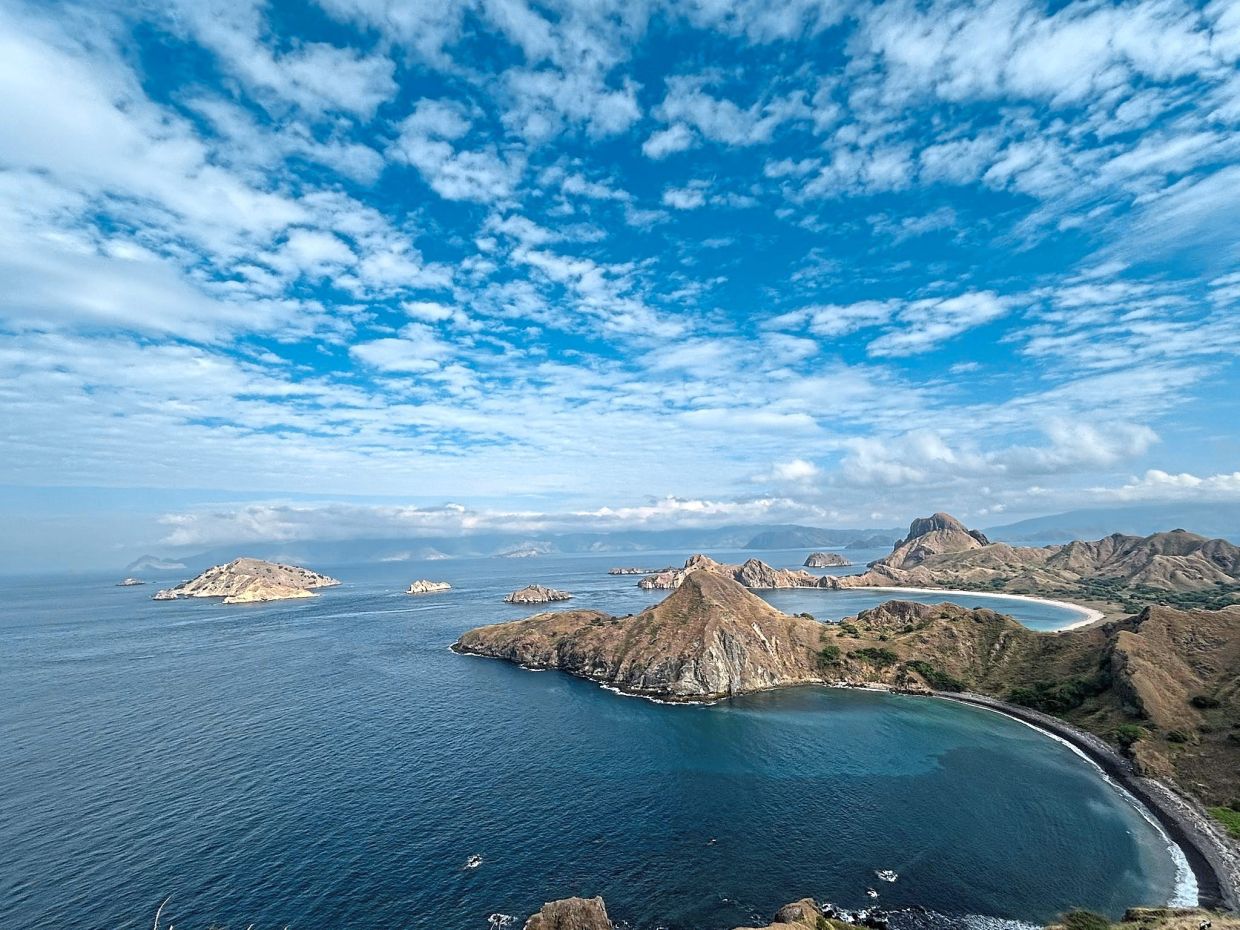
Beautiful scenery from Padar Island's peak. — Photos: EMELYN LEE
The writer jumping for joy at Labuan Bajo’s Pink Beach.
Volcanic mountains overlooking the sea at Padar Island.
Manggarai ladies performing the Teba Meka welcome dance.
Another waterfall near the Cunca Plias Waterfall.
The writer's 'crikey' moment upon encountering the biggest lizard on Earth.
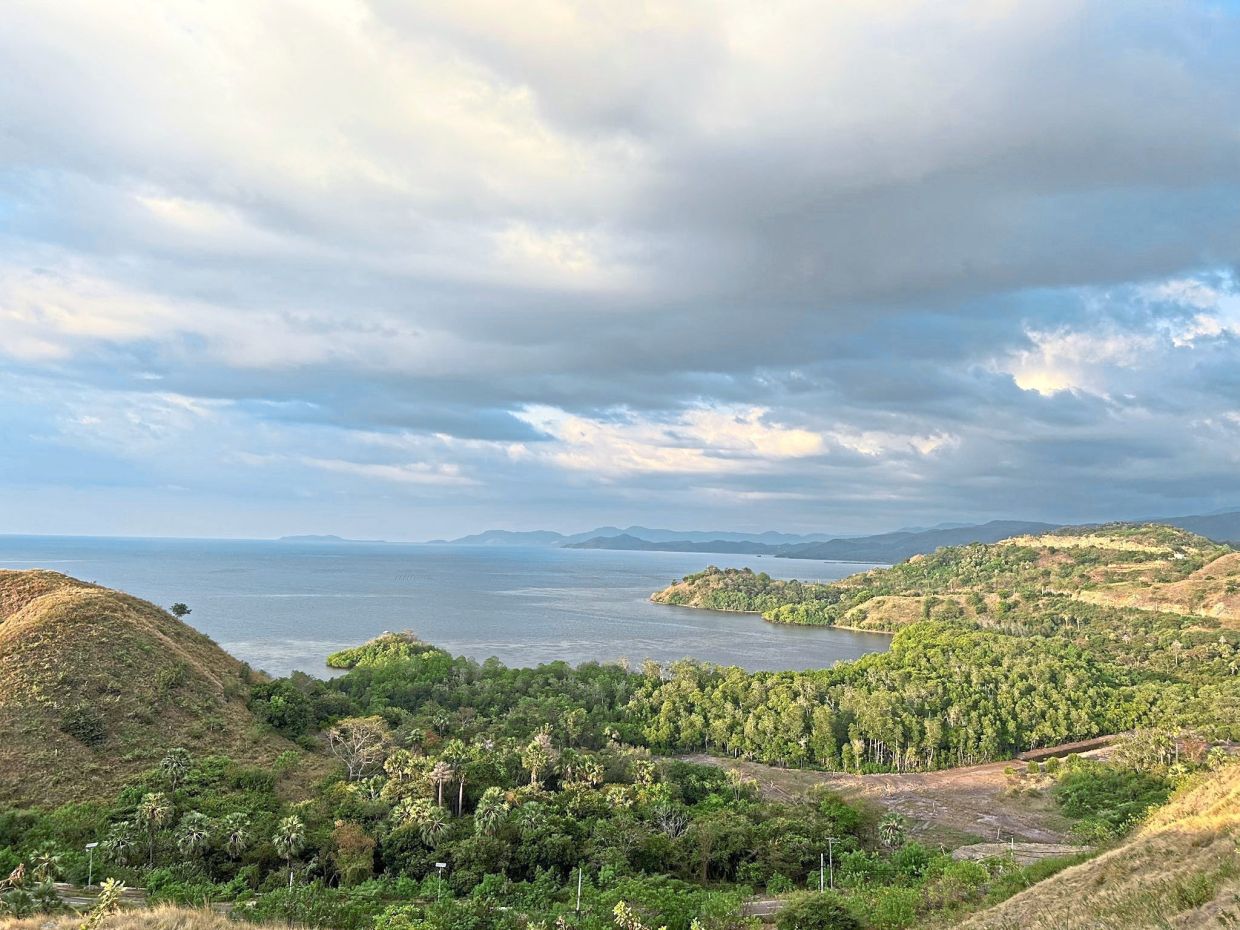
Landscape from the top of Bukit Cinta.
The sunset the writer waited an hour for on Bukit Cinta.