Grab your camera or your smartphone. Grab a friend or two (you can do this solo too). Next, pick a colour or more.
Now you’re ready to “colour hunt”.
This latest trend online has been brightening up people’s days as well as social media feeds.
No doubt you too feel a spark of joy at seeing aesthetic collages of photos featuring only the colour purple, pink, or yellow – whatever colour the “hunters” are focusing on.
If you’re someone who loves taking trips around Malaysia and wants to combine that with colour hunting, an interesting way to do this would be to take photos of local buildings or attractions with your chosen colours.
Trying to visualise how this works? Here are some examples.
Let’s say you pick the colour blue. Some beautiful buildings that you can snap include Sultan Salahuddin Abdul Aziz Shah Mosque in Shah Alam (Selangor), Cheong Fatt Tze Mansion in George Town (Penang) and the Blue House or Rumah Biru in Kampung Baru (Kuala Lumpur).
Pink-only photos can be snapped at the Pink Sand Beach in Port Dickson (Negri Sembilan), Funtasi Land theme park in Sekinchan (Selangor), Chinese History Museum in Kuching (Sarawak) and Putra Mosque in Putrajaya.
Let’s say you don’t want to focus on just one colour – you want them all! – then look for rainbow-coloured places.
Selangor is a good destination for this because the state has vibrant spots like the Elmina Valley Rainbow Bridge in Shah Alam, Tokong Kuan Yik Kerk in Kuala Kubu Baru and likely the most photographed staircase in Malaysia – the rainbow staircase at Batu Caves.
Now you get the idea.
So, coinciding with the Chinese New Year festivity, which this year revolves around the Year of the Fire Horse, why not choose the colour red as your theme?
If you’re back in your hometown this festive season, it makes for a fun activity for you and your loved ones to do together. If you’re taking the opportunity to enjoy a day trip or domestic getaway, this is also a good way to record your memories of it.
Here are a few red landmarks you can “hunt” around Malaysia.
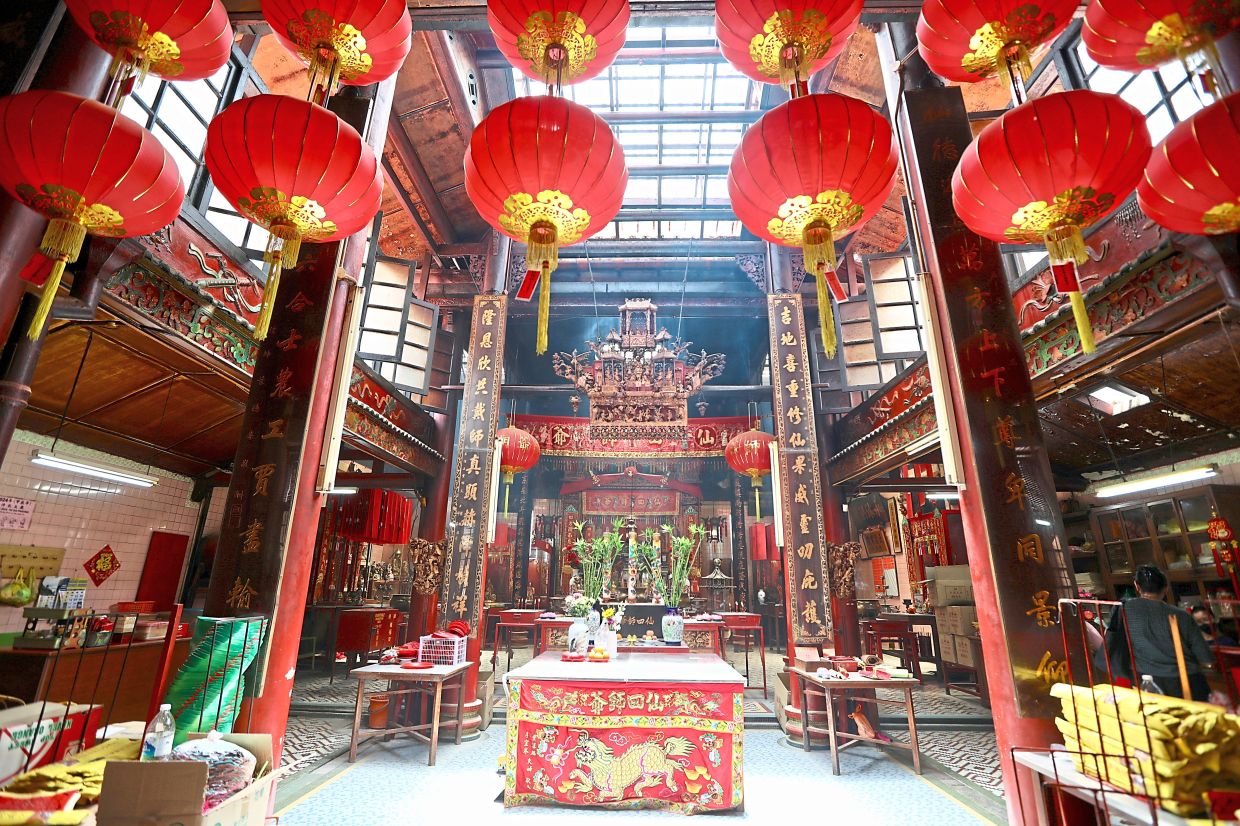
Sin Sze Si Ya Temple (KL)
In the spirit of Chinese New Year, let’s start off with a temple. The Sin Sze Si Ya Temple, located not far from Central Market in KL, is known as the city’s oldest Taoist temple.
It was built in the 19th century by Yap Ah Loy, a historical figure who played an important role in transforming then-small-town KL into a thriving city.
Here, you can do more than just take photos of the crimson interior, adorned with towering pillars and swaying lanterns. You can learn about the history of KL too.
That’s because located next to the temple is the Pioneers of Kuala Lumpur Museum. Opened in March 2023, the museum recounts the founding of the temple and the city.
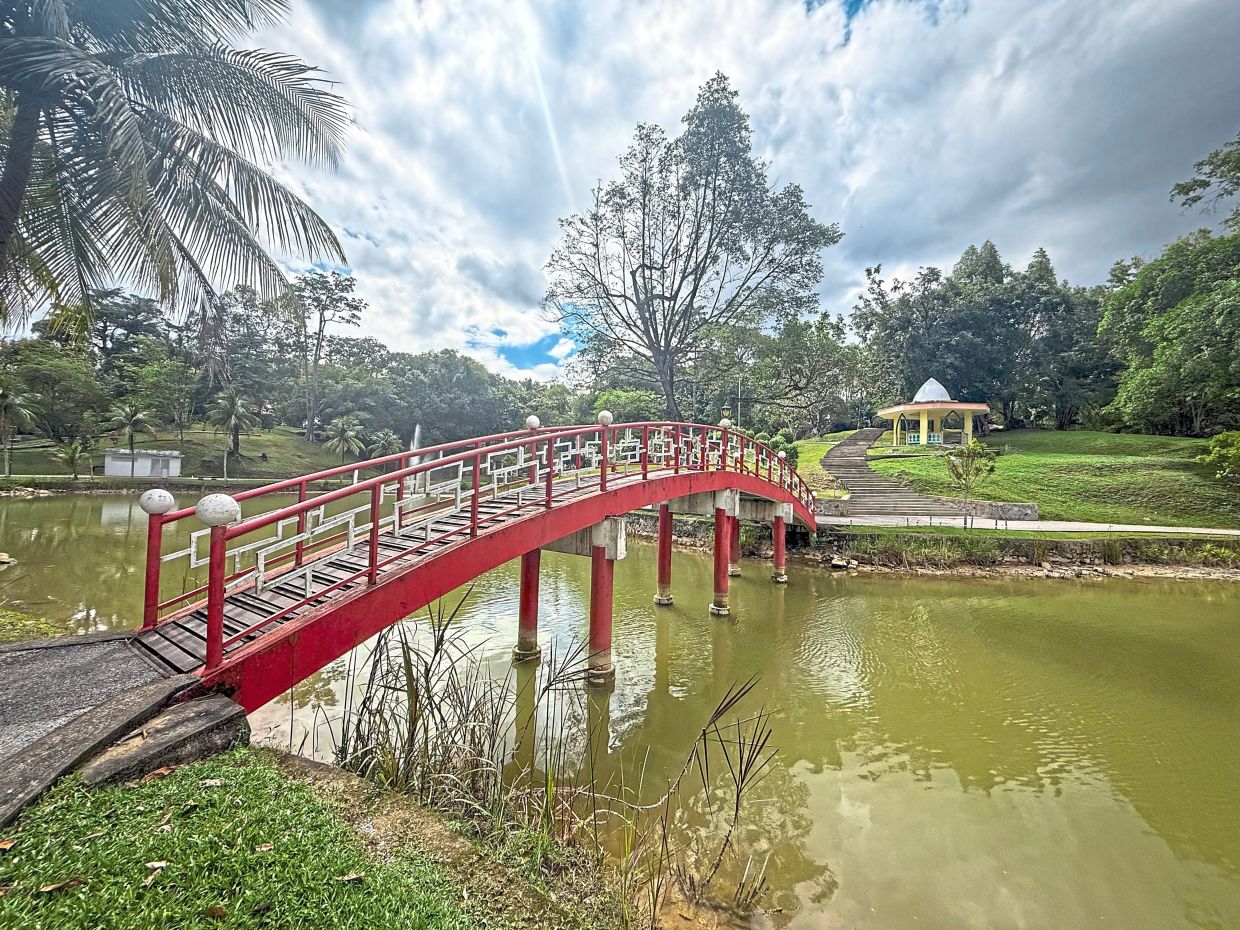
Reservoir Park (Sarawak)
When you visit the Reservoir Park in Kuching, a structure painted in vermilion will definitely catch your eye.
It’s a red bridge that bears a noticeable Chinese influence in its design. You can take photos here looking like you’ve stepped into a Chinese period drama.
As of 2023, the park is also known as Taman Perpaduan (Unity Park). You can see this new name spelled out in big white letters on the lake. Its original name, which it is still referred to by many, is a nod to the park’s aqueduct days back in the 1800s.
In the 1970s, it was developed as a recreational park. That’s when the bridge, among others, was built. The park underwent refurbishing a few years ago to give it a fresher look.
Since the park is located close to several other landmarks in Kuching, you can do a self-guided walking tour to see more of the city.
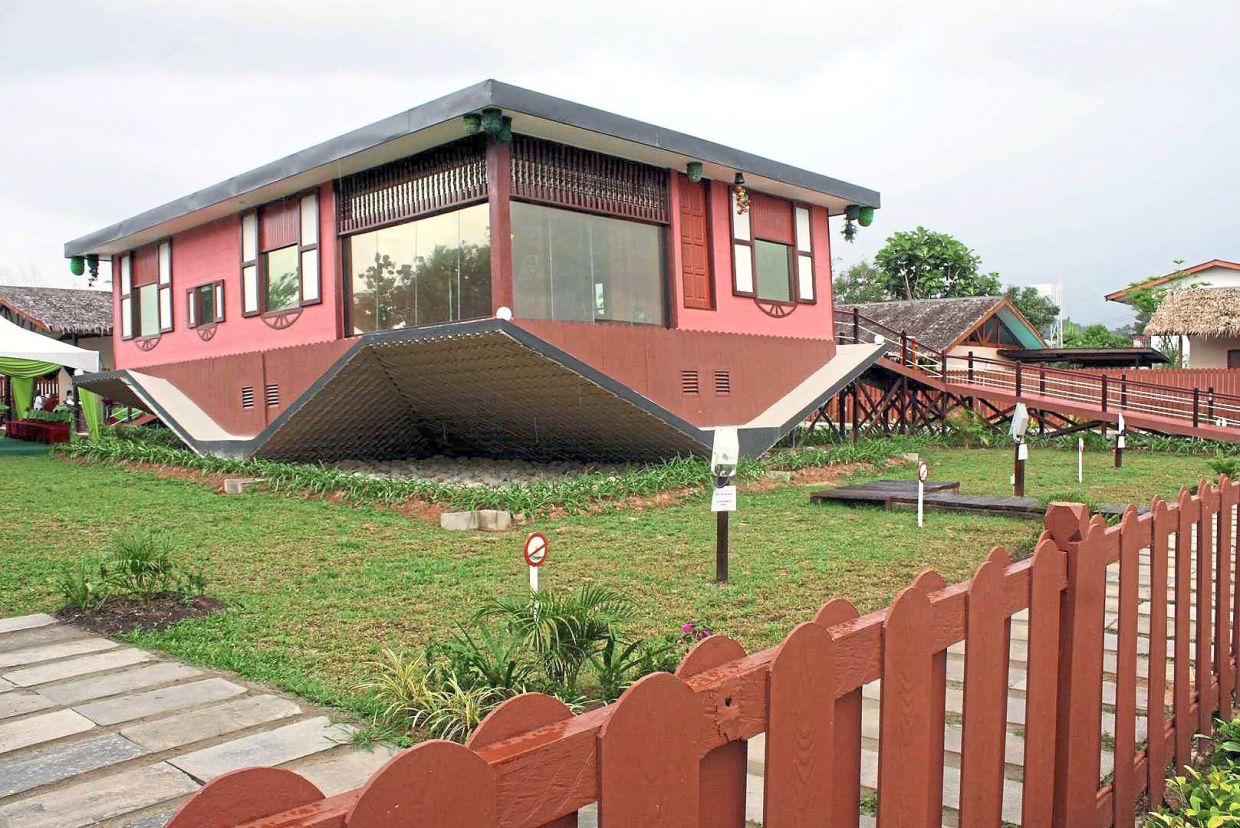
Rumah Terbalik (Sabah)
Don’t be alarmed if you are driving down the roads of Tamparuli, in the Tuaran district of Sabah, and you come across a house that seems to have flipped itself upside down.
Rumah Terbalik (Upside Down House) is meant to look like that.
Standing on its roof, the red-coloured house has been one of Sabah’s popular attractions since its opening in 2012. It was the first of such attractions to open in Malaysia.
Don’t just take a photo of the carmine dwelling from the outside. Venture inside – this is where you’ll truly feel like the house is obstinately defying gravity.
You’ll get a glimpse of Sabah’s heritage too. Just pore over the decorations, such as the wooded furniture and rattan baskets, hanging above your head. (Remember, everything’s upside down.)
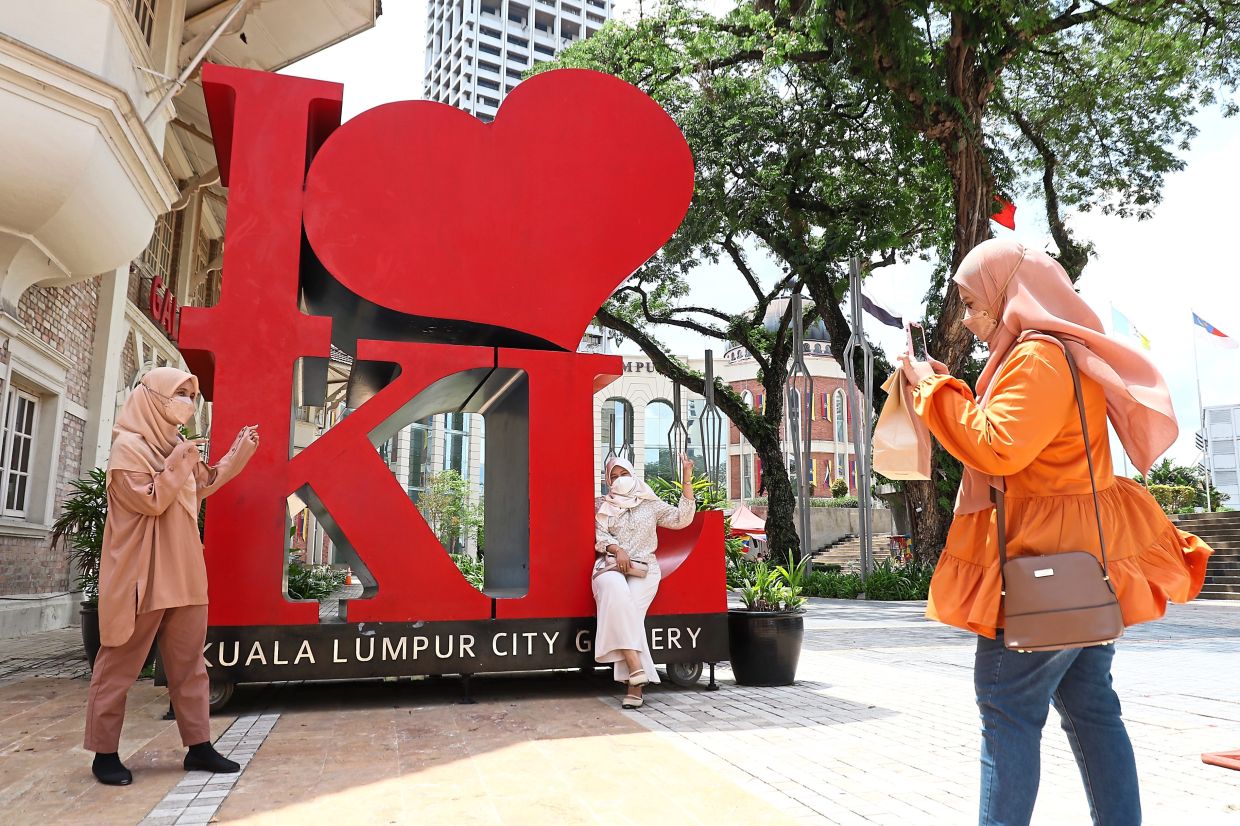
I Love KL (KL)
At the entrance of Kuala Lumpur City Gallery, near Dataran Merdeka, you’ll see a popular landmark that’s hard to miss.
It’s the “I Love (heart) KL” art installation. An incredibly easy sculpture to locate not just because of its size – 3.6m tall – and its bright red colour, but also because there is usually a throng of tourists happily posing next to it.
Don’t be shy. Join the queue, and you’ll get a brilliant red photo that perfectly captures the essence of the colour hunting activity – it’s all about loving the fun of the hunt.
Dutch Square (Melaka)
When it comes to red-coloured tourist attractions in Malaysia, one of the most famous is the Dutch Square in Melaka.
Standing in this square are historical buildings like the Stadthuys, which served as the centre of Dutch administration in Melaka in the 1600s, and Christ Church, an Anglican church built by the Dutch in the 18th century.
Also here are the Tan Beng Swee Clock Tower and Queen Victoria’s Fountain. Other than the fountain, everything mentioned here is painted in the distinctive terracotta red that has become synonymous with Melaka.
That means you’ll have endless photo option when you’re doing your red colour hunting here.
Jonker Walk is just a short distance away from the square. The area being the Chinatown of Melaka, the auspicious colour red can easily be spotted here too.