Pilgrimages undertaken for faith, reflection and tradition – sacred journeys have fascinated me for as long as I can remember.
These ancient routes have guided travellers across centuries, connecting people from all walks of life. Three years ago, I felt my own calling, inspiring me to explore the profound meaning behind these journeys.
In May this year, my wife and I embarked on a life-changing pilgrimage, walking the entire Camino Frances. This iconic route spans 779km, beginning in southern France and weaving through northern Spain. Over 35 days, we crossed mountains, vast meadows, farmlands and countless villages, immersing ourselves in the heart of the pilgrimage.
For centuries, pilgrims have walked the Camino in search of spiritual growth, adventure, and cultural immersion. The pilgrimage gained prominence in the 9th century with the discovery of Saint James’ relics, securing its place as one of Christianity’s most significant journeys alongside Rome and Jerusalem.
Today, it is recognised as a Unesco World Heritage Site for its rich history and cultural significance.
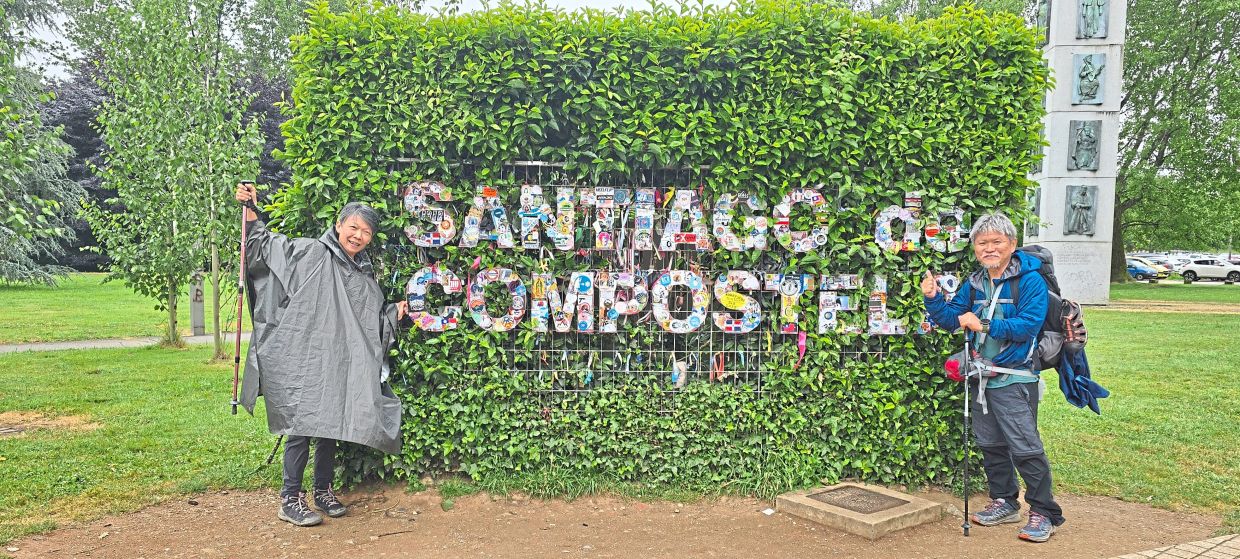
Preparing for nearly 800km on foot required meticulous planning. We mapped out our route, calculated daily distances and carefully packed essentials, keeping our backpacks light – 8kg for me, 6kg for my wife.
We began our journey at Saint-Jean-Pied-de-Port, a picturesque town at the foothills of the Pyrenees in France. Upon arrival, we registered at the pilgrim office and received our pilgrim passport – an essential document. This credential must be stamped at each stage and serves as a prerequisite for staying in pilgrim hostels, known as albergues.
The first few days’ hike was demanding, taking us up the Pyrenees and across the border into Spain. The effort was rewarded with breathtaking views – vast open meadows stretching for hundreds of kilometres. Being immersed in nature was exhilarating, with free-roaming horses and sheep dotting the mountain slopes, adding to the serene beauty of the journey.
Before long, we settled into a rhythm – walk, eat, walk, sleep – covering 25km daily through Spain’s varied landscapes.
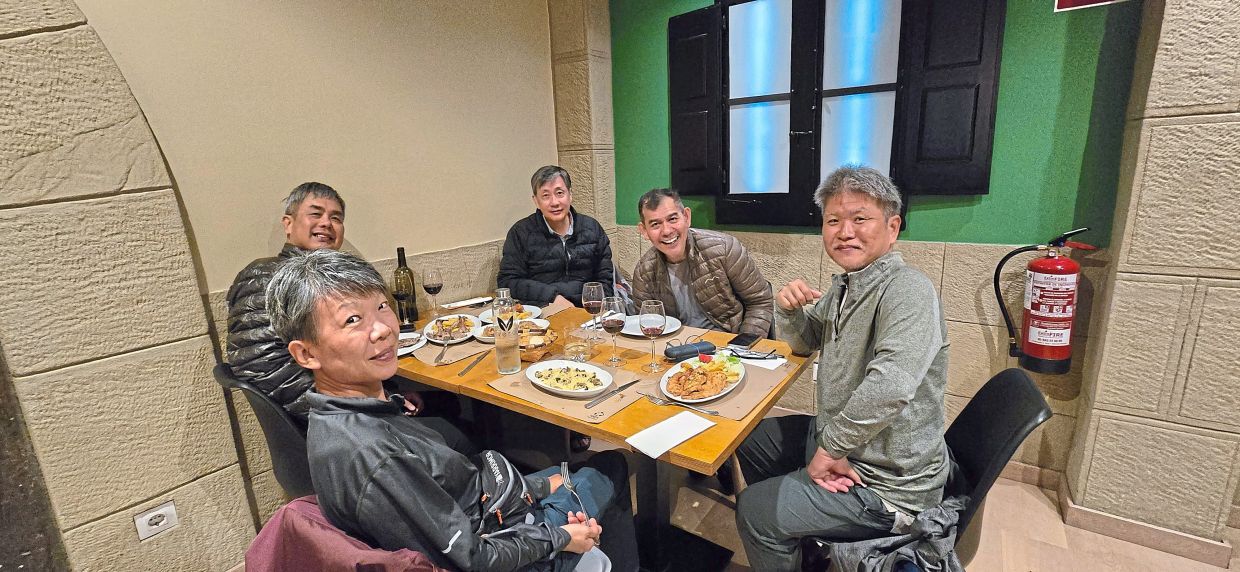
Meals remained simple: Coffee and pastry for breakfast and lunch, with a hearty dinner in the evening. Every town offered a “peregrino menu”, an affordable three-course meal designed to nourish weary pilgrims.
Each day, we met pilgrims from all over the world, easily recognisable by their backpacks, hiking poles, and the scallop shell displayed on their packs – a universal symbol of the pilgrimage. Here, pilgrims are known as peregrino, and there is something deeply moving about seeing people from all walks of life united by a common journey.
On the Camino, barriers fade – conversations flow freely, and meals are shared without regard for race or politics, creating a rare and beautiful sense of connection. Many friendships were built during our time here.
The Camino is rich with cultural and historical landmarks, and among its most breathtaking are the Gothic cathedrals of Saint Mary in Burgos and Santa Maria de Regla in Leon. Their towering spires and intricate craftsmanship left us in awe – testaments to the artistry and devotion of builders who shaped them more than 700 years ago.
One of the most profound moments of the walk was reaching Cruz de Ferro (Iron Cross). For centuries, pilgrims have left stones at its base, each one symbolising a burden released, a blessing sought or a prayer carried forward.
Standing before the cross, I embraced this tradition, letting go of a memory that had stayed with me for years – a quiet yet powerful gesture of closure and renewal.
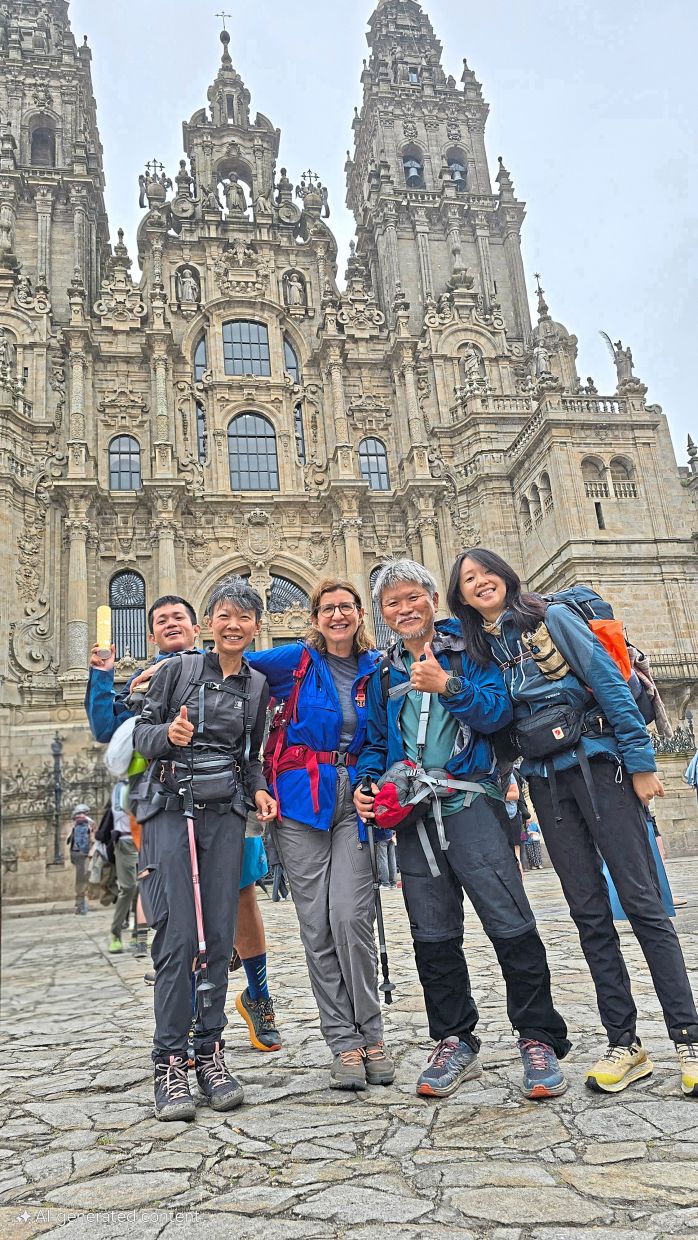
On our final day, we woke early and set off on the last 20km from Pedrouzo to Santiago. It was a day of mixed emotions. Excitement and anticipation fuelled our steps, yet there was a bittersweet feeling knowing the journey was coming to an end.
At noon, we entered Praza do Obradoiro and were overwhelmed by a deep sense of achievement. Fellow pilgrims greeted one another with hugs and handshakes, celebrating this momentous occasion together.
Walking the Camino was more than a physical challenge, it was a deeply personal journey of reflection, resilience and connection. Each step carried meaning, from the solitude of vast landscapes to the warmth of fellow pilgrims.
As I reach the journey’s end, I take with me not just memories but a profound understanding of perseverance, gratitude and the simple beauty of walking with purpose. Though my time on the Camino has concluded, its spirit and lessons will stay with me forever. I emerge from this journey a better person, embracing all that it has taught me.
With hearts full of thanks, we cherish every peregrino and amigo (friend) who graced our path. Each step, a memory; each meeting, a gift. Buen Camino y hasta luego (have a good journey and see you later).
The views expressed are entirely the writer’s own.