
Khafiz al Kicok summited K2 – located on the Karakoram Mountain Range on the border of Pakistan and China – on July 27, 2023.
At 8,611m, K2 is the second highest mountain in the world. It has a notorious reputation for being the "savage mountain". More people have died on the slopes of Mount Everest but by ratio of number of climbers to number of deaths, K2 is the undisputed leader.
Khafiz reached the peak of K2 at about the same time as the incredible Kristin Harila from Norway. On that same day, Kristin had completed summitting all 14 of the 8,000m+ peaks. She did it in 92 days; it is a record beyond belief.
Prior to Kristin, Nirmal Purja of Nepal took six months and six days to do it.
Meanwhile, Reinhold Messner, the first person who summitted Mount Everest without supplemental oxygen in 1978 and the first to summit all 14 of the 8,000m+ mountains achieved the feat in 16 years.
Khafiz successfully summited Manaslu in September 2022 with R.J. Nagarajan; they were the first Malaysians to do so. Manaslu is the eighth highest mountain (8,163m) in the world. Khafiz is aiming for the ultimate trophy – Mount Everest (his third 8,000m+) – in May.
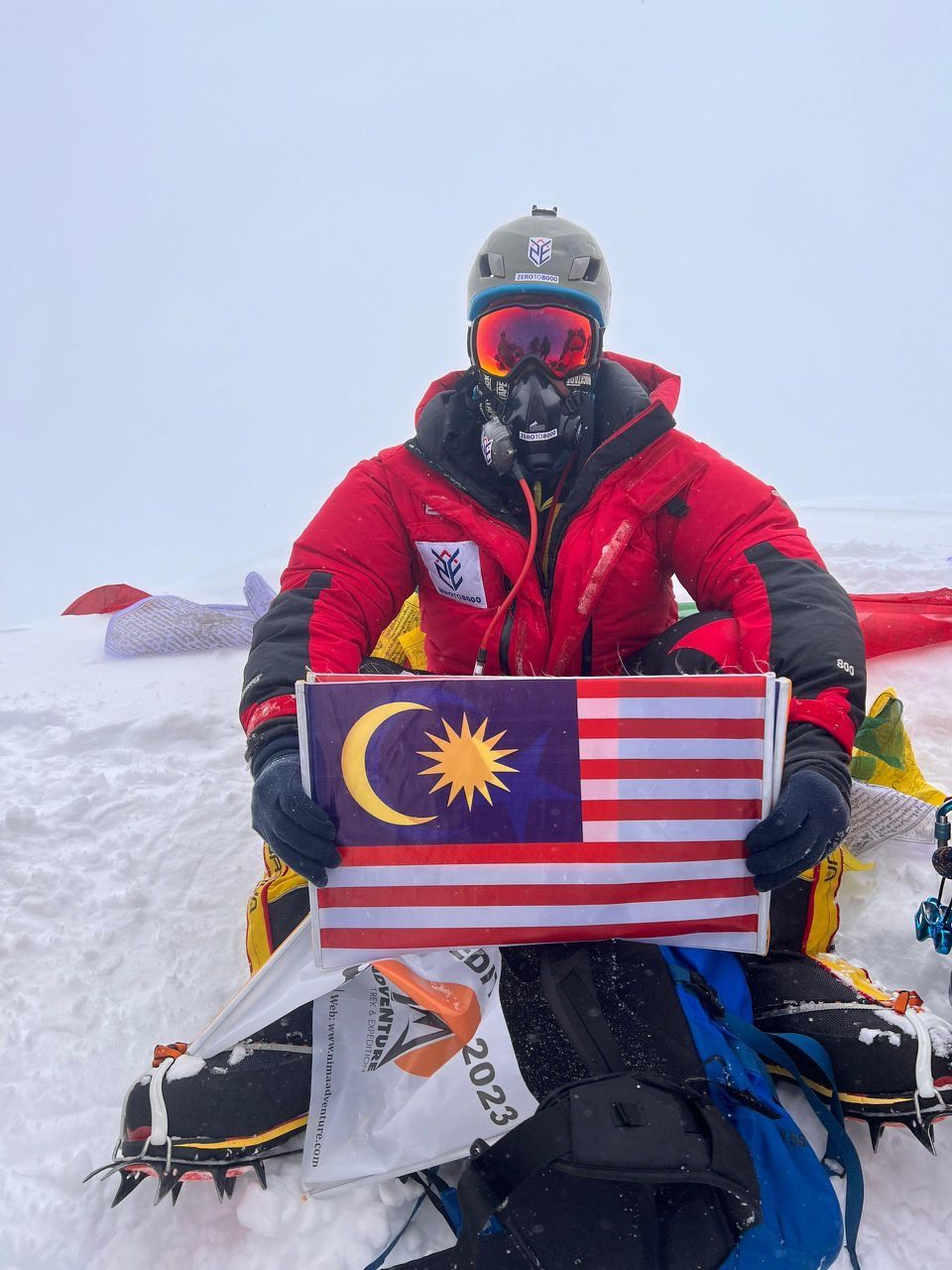
Khafiz has attempted to climb Mount Elbrus in Russia, Mount Damavand in Iran, Mount Kilimanjaro at the Tanzanian-Kenyan border in Africa, Mount Aconcagua in Argentina and Puncak Jaya in Indonesian Papua.
To finance his K2 challenge, he sold his house. He wrote a book on his adventures, Misi K2: Pendakian Ironman Malaysia Ke Puncak Gunung Paling Berbahaya Di Dunia published in 2025 by Bonda Nor.
Khafiz is one of many Malaysians who have summitted the world's tallest mountains, including Mount Everest. Some of them include Marina Ahmad (the first Malaysian woman who reached the top of Everest), Muhamad Muharabbin, Mohd Ilaham Ishak, Zainuddin Lot, Rafi Kori, Siti Hanisah Shahruddin, RJ Nagarajan, Su Chung and Michael Chong.
Khafiz was definitely inspired by the success of Datuk M. Magendran and Datuk N. Mohandas, who placed the Jalur Gemilang on the peak of Mount Everest on May 3, 1997.
On Aug 23 last year, I organised a small gathering of climbers and trekkers at my abode in Petaling Jaya. I had invited M. Magendran and N. Mohanadas, as well as some of the other members of the "1997 Everest Challenge".
Of course, Khafiz was there too, as well as Mohd Noor Mat Amin, who has gone up Mount Kinabalu 200 times.
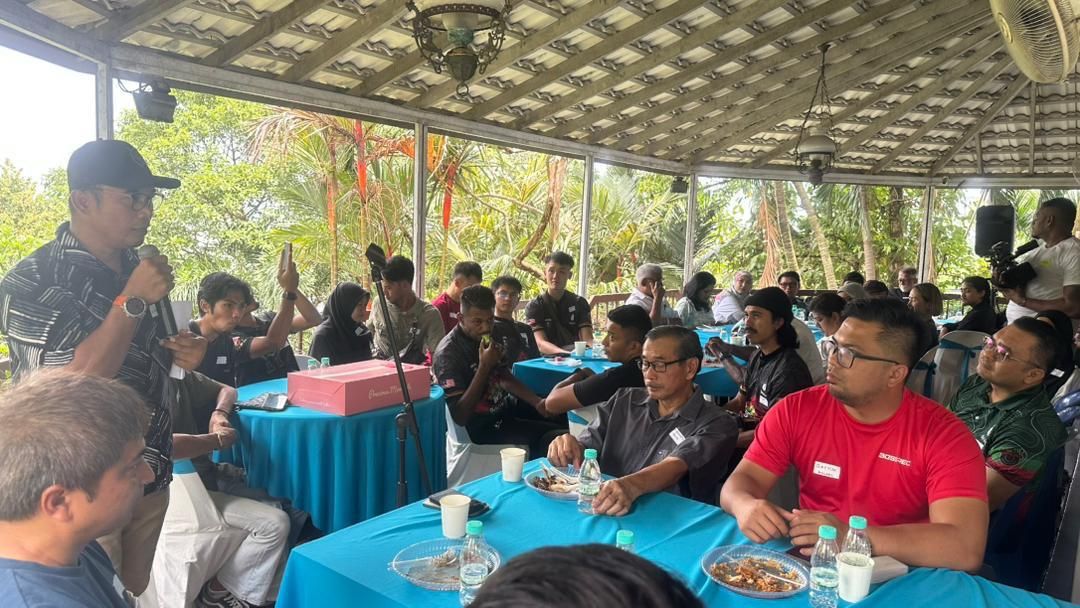
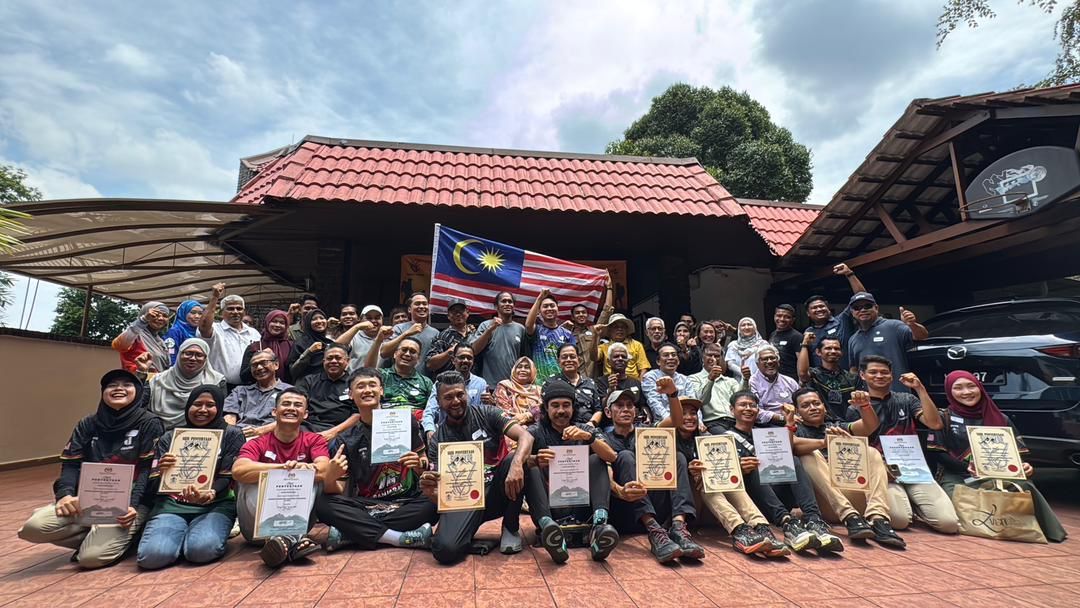
We were celebrating the success of the multi-racial Trans-Titiwangsa Version 6 (TTV6) trekkers, who had transversed a major part of Malaysia's own Titiwangsa Range. The trek from Rimba Dabong in Jeli, Kelantan to Fraser Hill in Pahang took 65 days. They covered four states – Kelantan, Pahang, Perak and Selangor – 378.8km in total.
There were 18 people who completed the feat (including three women) from the original 25.
Trekking and climbing have become popular among young Malaysians. I met many young Malaysians while trekking to the Annapurna Base Camp in Nepal, as well as during my other cimbs. Many have braved Indonesia's challenging Gunung Rinjani in Lombok, Gunung Kerinchi in Sumatera and many other high peaks in Java, as well as the mountains in Africa and the Americas.
But age is merely a number. Our first astrophysicist, Tan Sri Mazlan Othman, was probably the oldest Malaysian to trek through the tough Ghorepani Poon Hill in Annapurna last September.
Undeniably, trekking and mountain climbing involve significant risks. Climbers face the possibility of falls, injuries, hypothermia, depleting oxygen supply, avalanches, rock falls, and Acute Mountain Sickness (AMS). Climbing also demands physical and mental strength and it can be dangerous if proper precautionary measures are not taken.

So far, Malaysians have conquered three of the 14 8,000m+ mountains: Everest, K2 and Manaslu. A few have died trying, while some faced near-death experiences. Others had to be rescued mid-climb.
The cost of mountain rescues is expensive, sometimes amounting to close to RM1mil. The Malaysian government has stopped funding high altitude expeditions, and sponsors are not coming in unless the government is involved.
This is a pity, but such is the reality of life.
Muhammad Shahrulnizam is now 21. He has a dream. He aspires to be the youngest Malaysian to summit Mount Everest. He had wanted to do it in 2024 when he was 19 and then again in 2025, but failed to secure financing for it. He is hoping to make the attempt next year.
He woud be 21 then, but he woukd still be the youngest Malaysian – if he succeeds, that is.
For someone who has been climbing mountains since the age of four, reaching the peak of the tallest mountain in the world is not just a dream. It is natural progression for someone who has made mountain climbing an obsession.
Johan Jaaffar is a National Journalism Laureate and an avid trekker. He has trekked in many places, most notably Indonesia, Britain, Nepal, and of course, Malaysia.
This is the final part of a four-part series. You can check out the other articles here.