Waterfalls make their own wind – at least, when they’re tall enough.
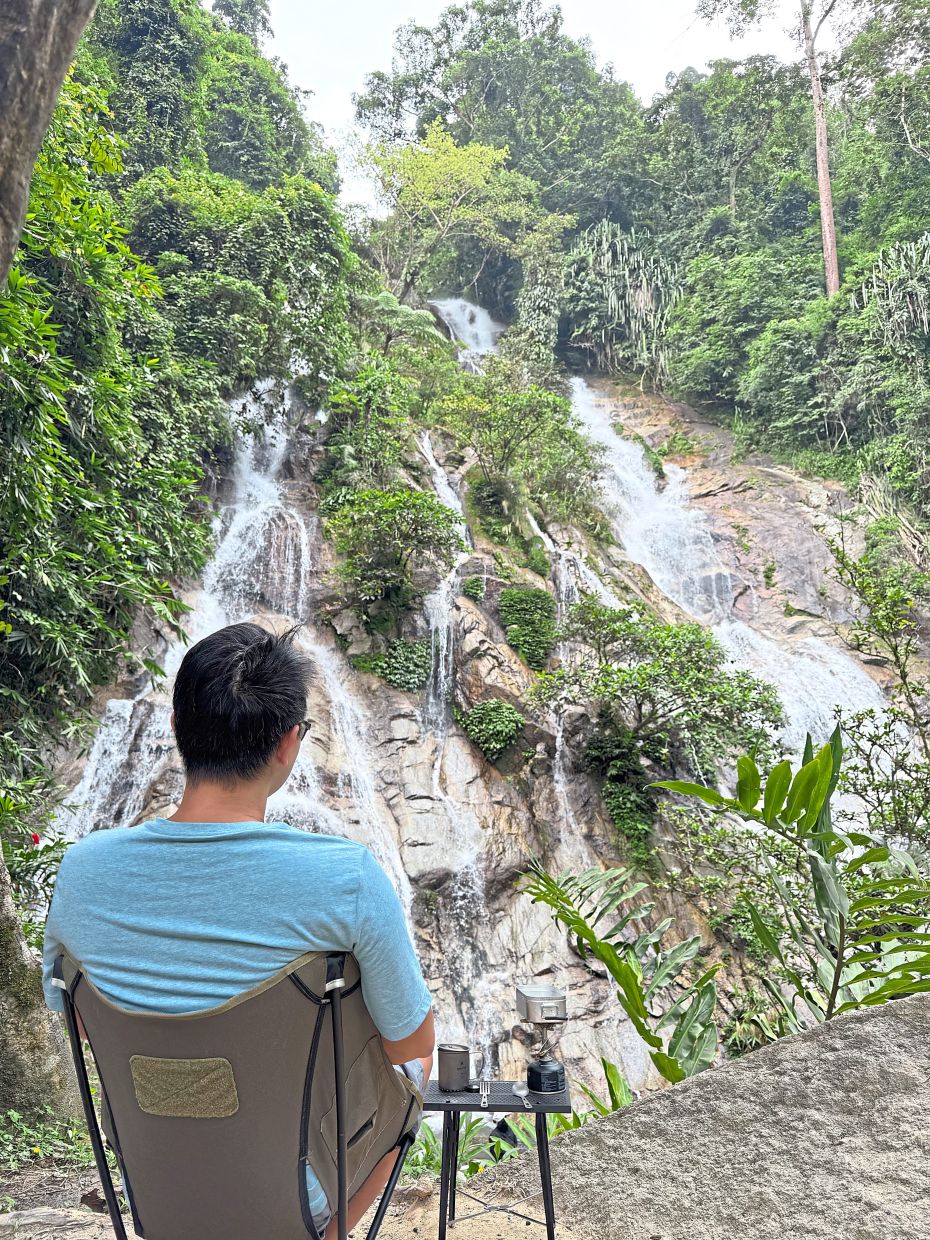
It took me a while to realise that the cool, non-stop breeze at Lata Penyel in Perak wasn’t coming from the sky, but from the 60m-high waterfall tumbling into the narrow jungle valley. That’s about the height of a 20-storey apartment block.
As an engineer, I worked out the mechanics: large volumes of falling water displace surrounding air, creating downward turbulence. When the water crashes at the base, it kicks up mist and more swirling air currents. The narrowness of the valley channels all that into constantly moving drafts.
Even inside the bamboo hut where we slept, the wind swept through day and night. It got so cold, we had to sleep in jackets and socks.
That 24/7 natural air-conditioning alone would’ve made the trip worthwhile. But we added a twist: we camped without our cars.
With car-camping, we can bring anything – a premium stove, a cast iron pot, folding tables, an ice box packed with seafood, you name it.
But one day it hit me: I had never tried minimalist camping. Then I noticed how much public transport in Penang had improved.
So my buddies and I agreed – half as a challenge, half out of curiosity – to reach Lata Penyel by public transport, carrying only the bare essentials in our backpacks.
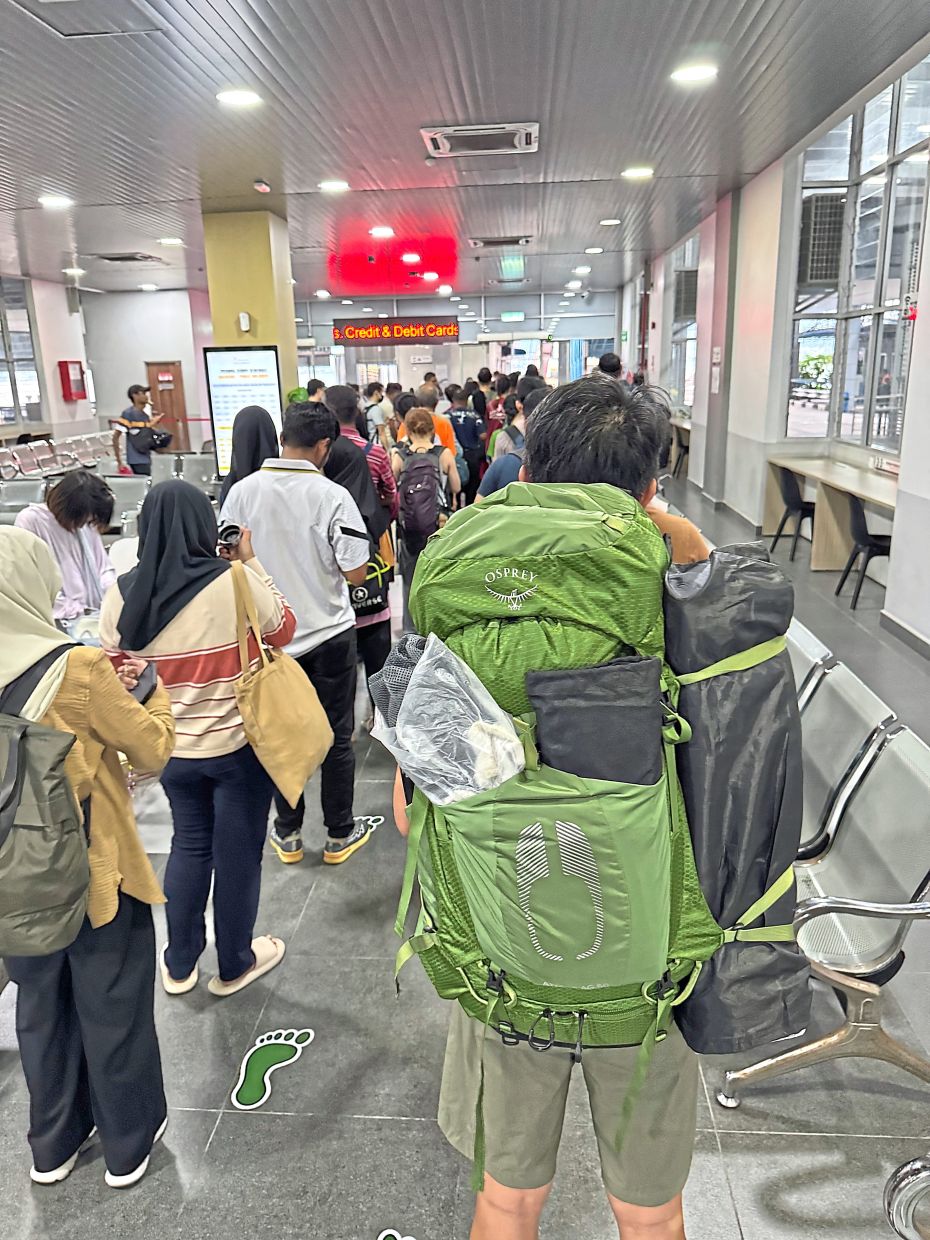
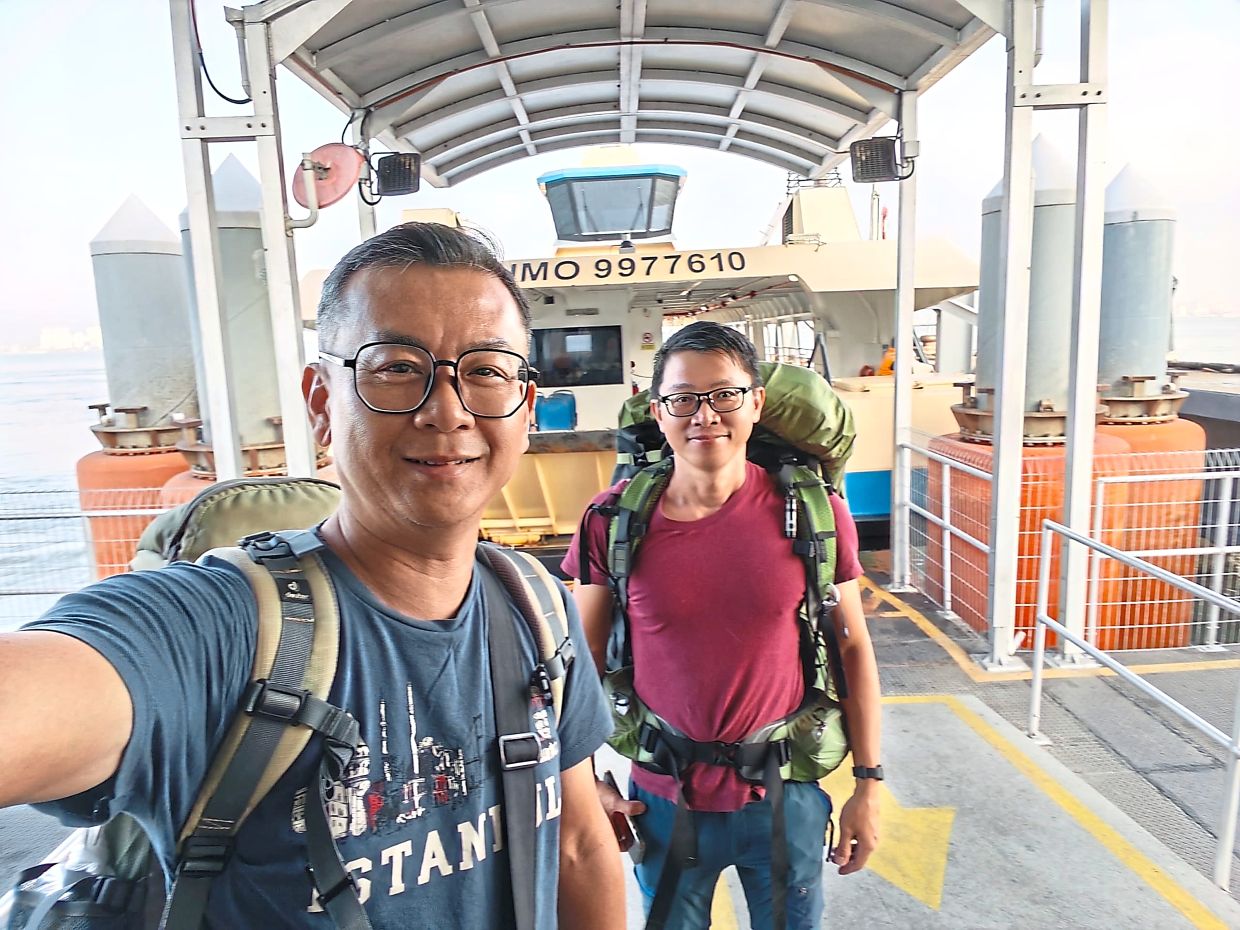
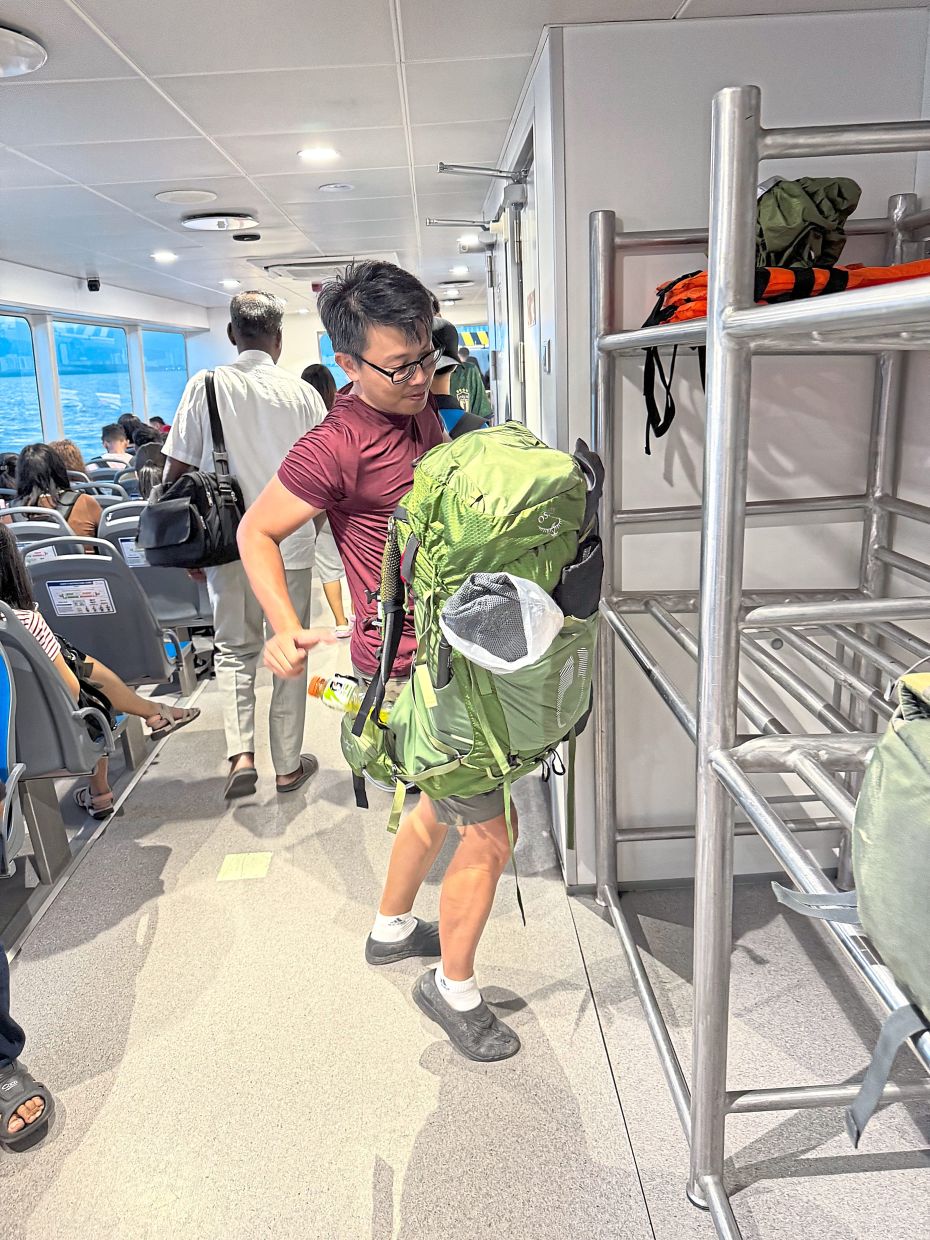
From Penang island, we rode the new catamaran ferry to Butterworth. It was fast, comfortable and surprisingly practical. There were dedicated racks for large backpacks – something the old ferries never had.
Next came the KTM Komuter southbound to Kamunting. No toilets on board, take note.
Tickets don’t come with reserved seats. And during rush hour, the trains can be packed, with passengers even sitting on the floor.
But no complaints – my entire round-trip transport cost came to just RM21.20:
• RM2: Ferry (Penang island to Butterworth)
• RM7.10: Train (Butterworth to Kamunting)
• RM10.10: Train (Sungai Siput to Butterworth)
• RM2: Ferry (Butterworth to Penang island)
After years of car-camping, it felt surprisingly good to spend so little on travel.
From Kamunting, a friend met us with a pick-up truck for the final leg – a slow and winding 2.5-hour drive into Orang Asli territory. There’s no other way in unless you have all day and zero deadlines.
This wasn’t a no-car purist expedition, just a pared-down one. So we accepted the pick-up assist.
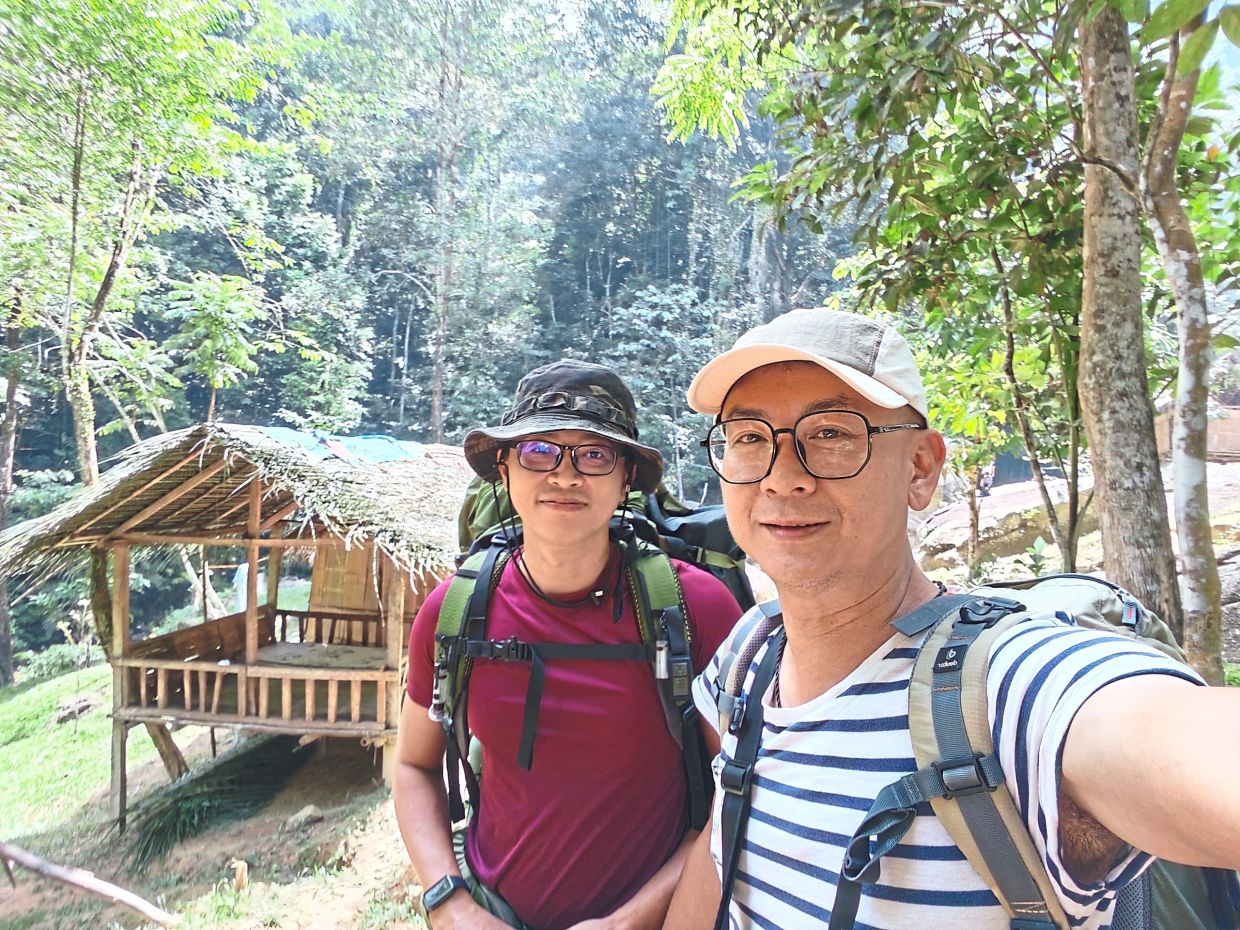
We reached the trailhead by late afternoon and hiked about 20 minutes to the campsite. It felt good to walk in carrying only what we needed.
But that didn’t mean we ate only instant noodles.
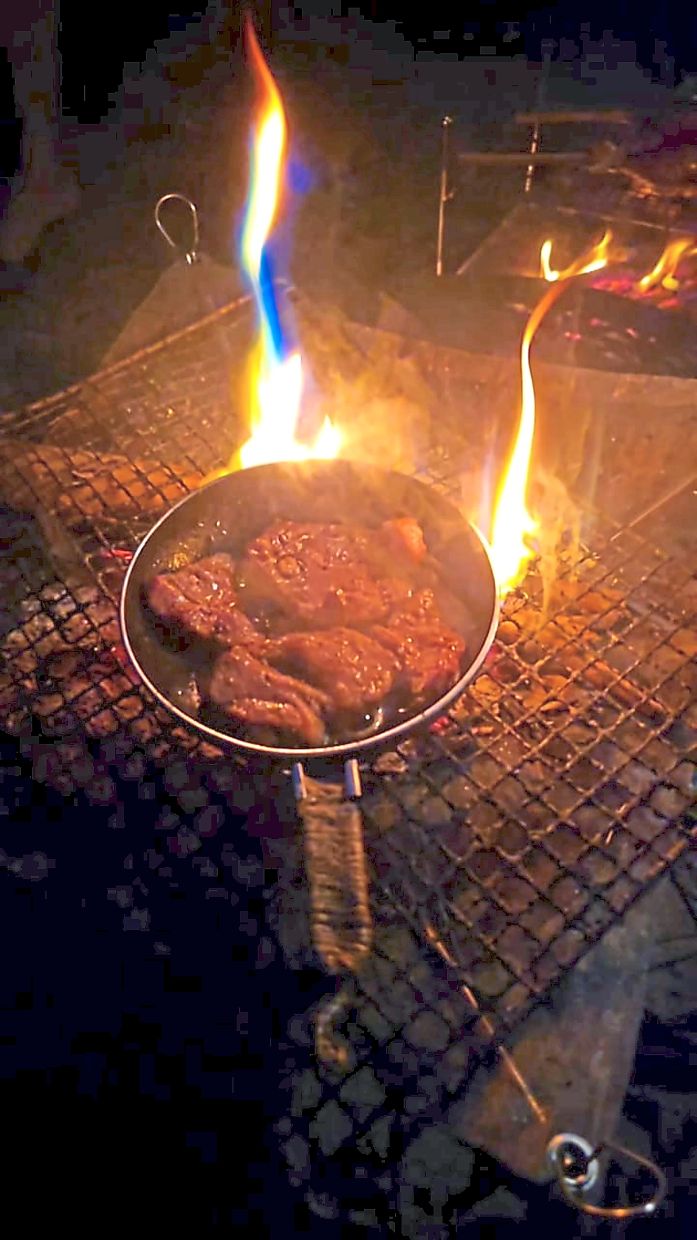
I’d packed a kilo of lamb leg steaks – vacuum-sealed, frozen solid and wrapped thickly in old newspaper. It thawed just in time for dinner.
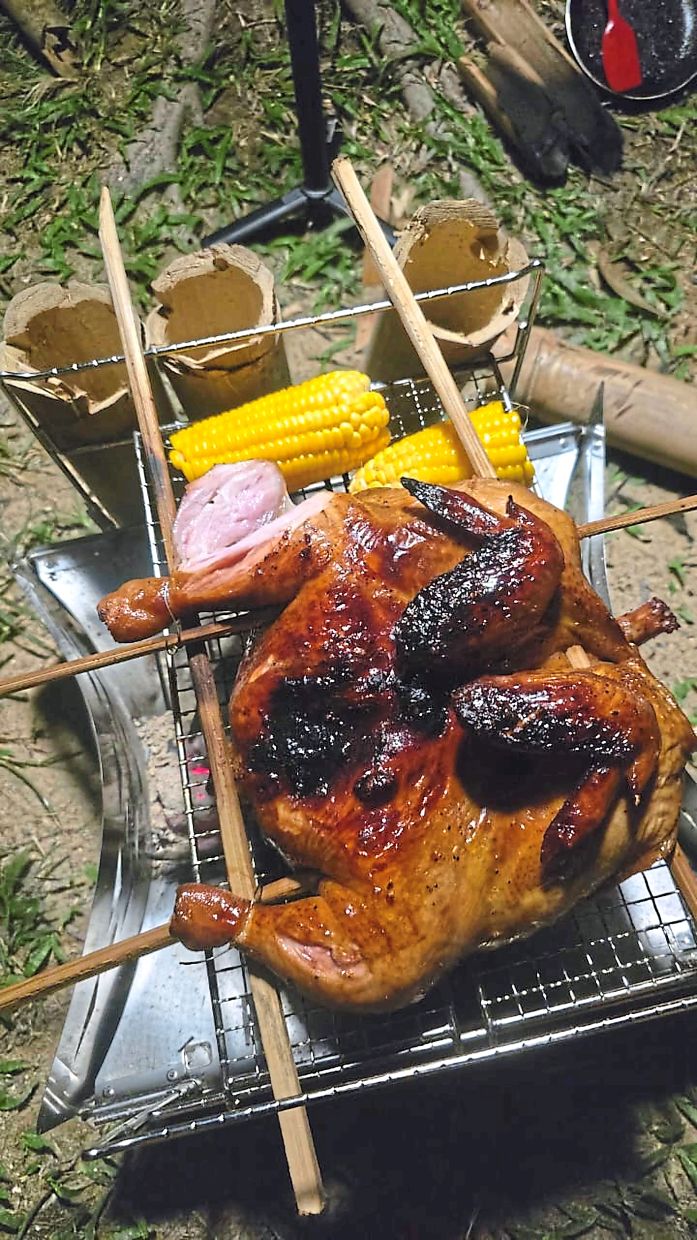
One friend squeezed a spatchcocked chicken into his backpack. Someone else brought sweet corn.
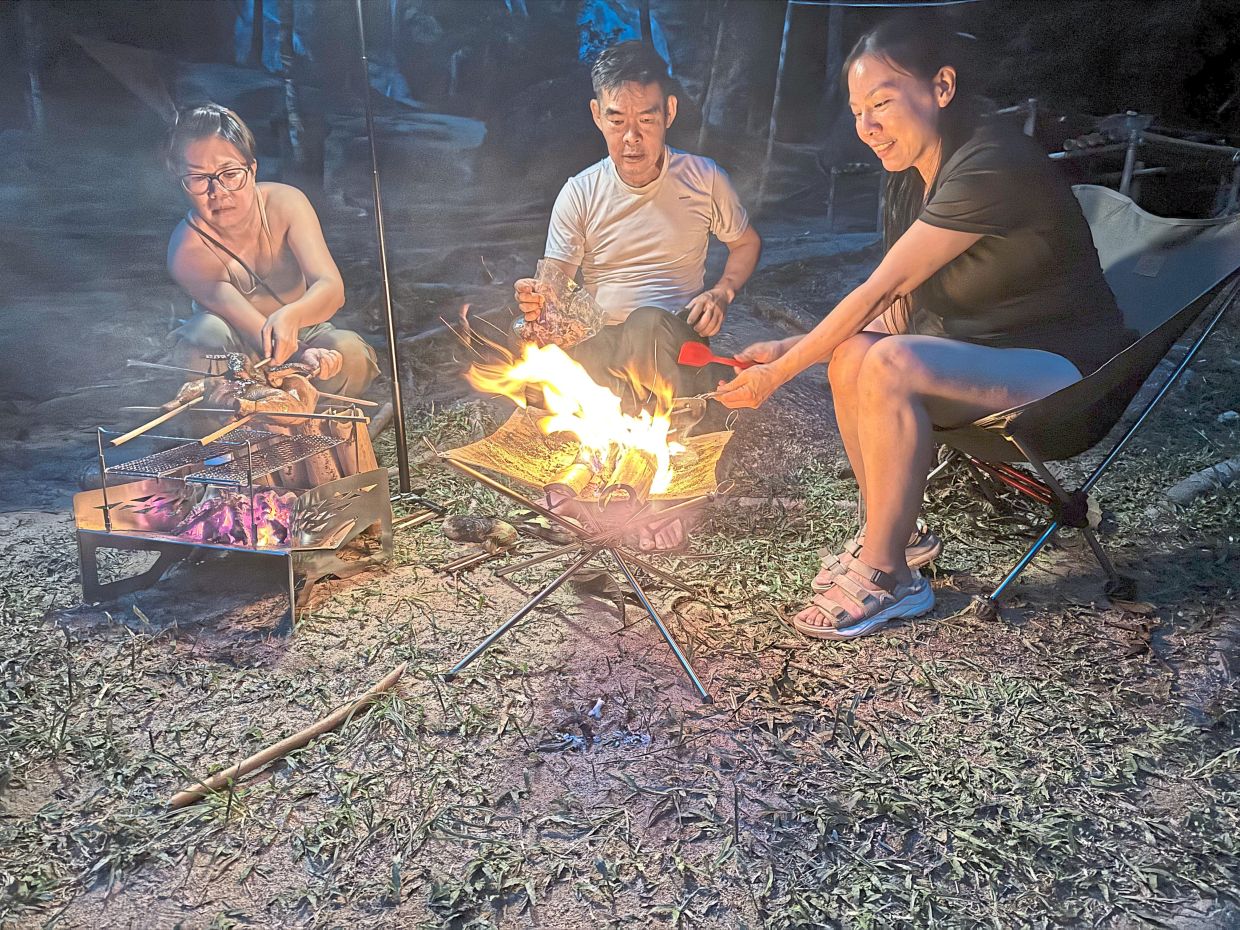
Everything was fire-grilled or pan-fried. Still quite a feast, despite the stripped-down style.
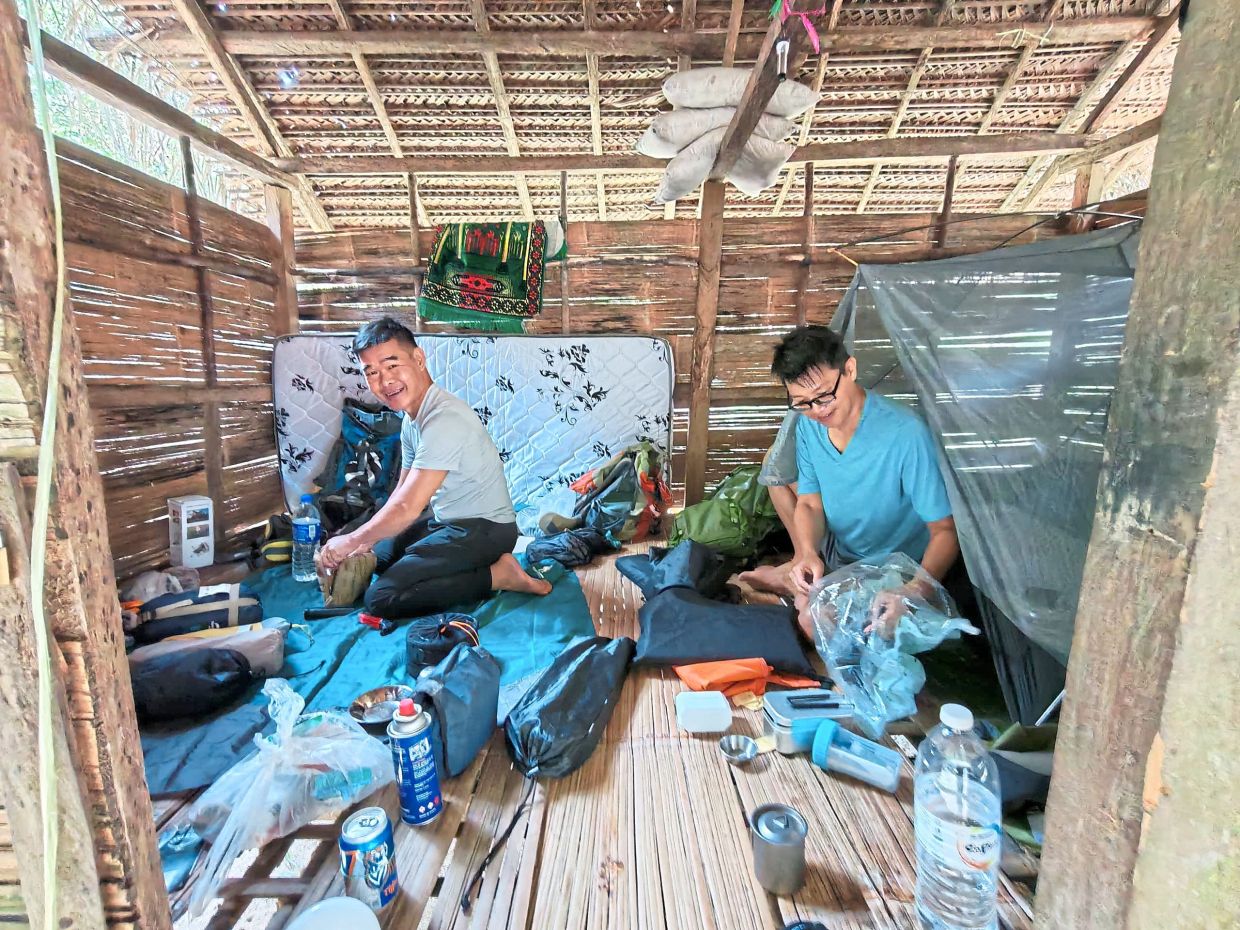
We brought compact tents, fearing mosquitoes, but didn’t need them – the bamboo huts were perfect.
We laid out mats, slept in our clothes and let the roar of the waterfall lull us to sleep.
A few rats nosed around the rubbish bins after dark, but once we realised they were harmless, no one minded.
Not having our cars meant leaving behind all our toys – and that let us rediscover the pleasure of simplicity.
We’re keen to do it again.
Next time, maybe we’ll reach the campsite entirely by public transport – a taxi, perhaps, for the final stretch.
How much should you carry?
A quick guide for a 2D1N leisurely backpack-only camping trip.
Recommended backpack weight
• Men: 15-18kg
• Women: 12-15kg
Stay within 20–25% of your body weight for comfort.
Essentials
• Sleeping gear: compact tent or hammock, groundsheet, light sleeping bag or mat
• Clothing: one change, jacket/hoodie, rain poncho
• Cooking kit: mini stove, gas canister, utensils, lighter, mess tin
• Food: ready-to-cook meals, snacks, eggs, water (2-3 litres minimum)
• Personal items: toothbrush, soap, tissue, mini towel
• Safety/utility: headlamp, power bank, pocketknife, first aid pouch, rubbish bags
• Extras (optional): foldable chair, small table
Packing order
• Bottom of backpack: sleeping bag, tent, clothing (bulky but soft items)
• Middle: food, cooking gear, heavier items (balance load at centre)
• Top: water bottle, snacks, rain gear, first aid pouch
Use side pockets for torchlights, knife and toiletries. Keep electronics wrapped and central to avoid knocks.
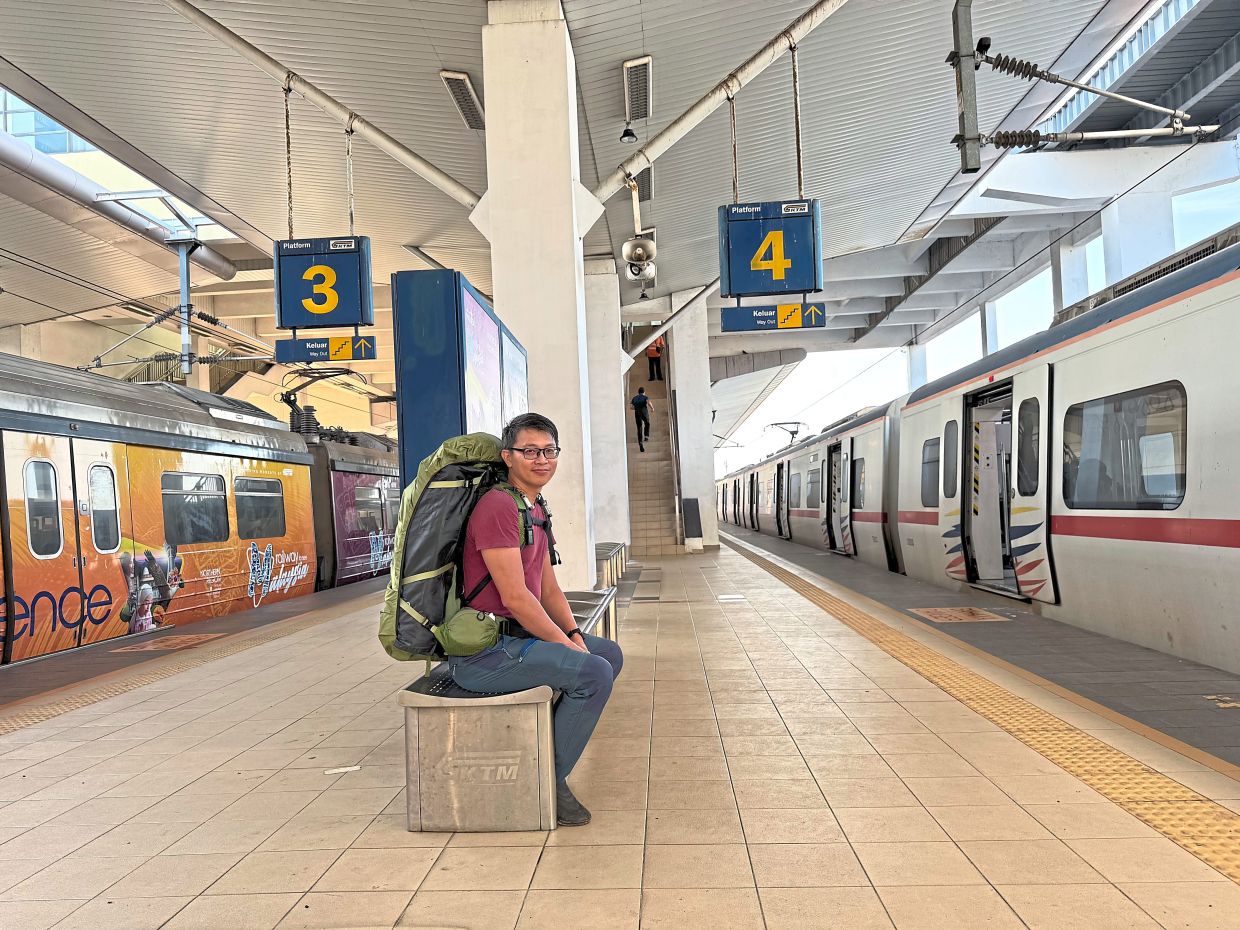
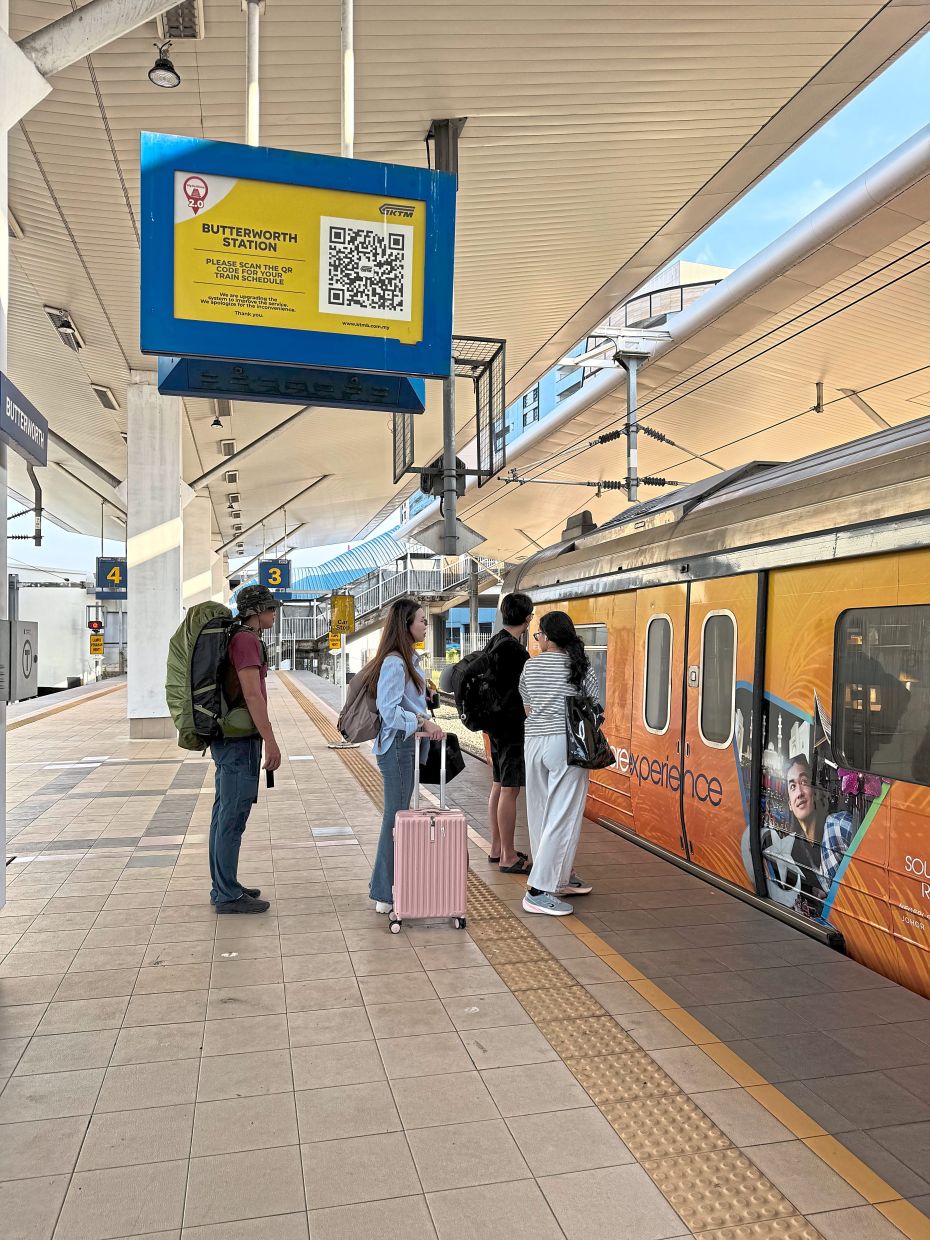
Huge backpack and camper waiting for the right train;
While everybody goes to work, one guy is going camping.
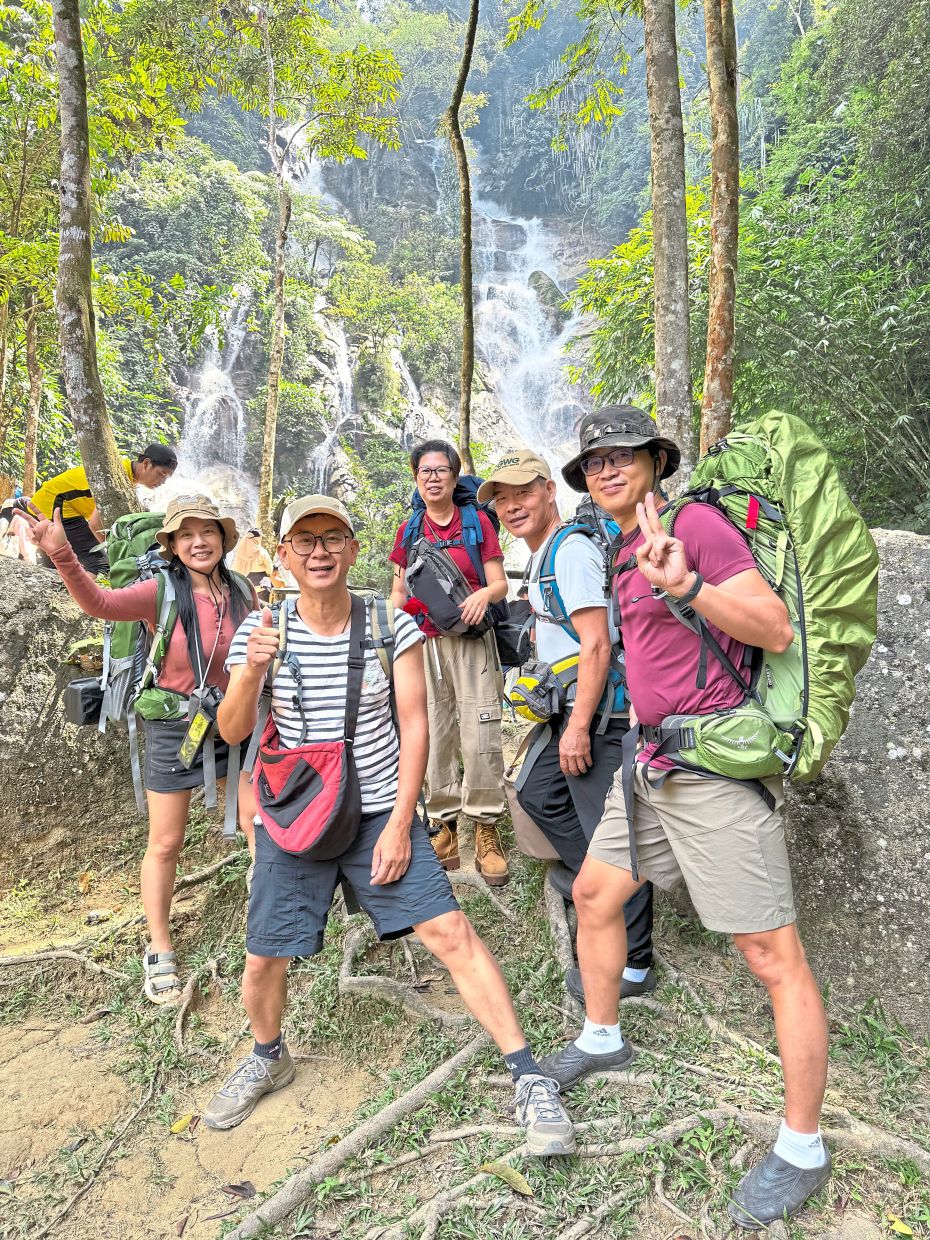
The happy five by Lata Penyel’s 60m waterfall and never-ending breezes.
The writer (in red) and camper Kijohn Yeoh ready to get on board the new Penang ferry.
At the campsite with their Orang Asli bamboo hut – their temporary home – in the background.
Nothing to do but enjoy the never-ending breeze and drink coffee.
Unpacking inside a bamboo hut built by Orang Asli.
Cooking dinner over a campfire built entirely from collapsible parts – tripod, mesh base and steel grill – all of which can be folded neatly into a backpack; clever use of cut bamboo and a steel grill; and lamb leg steaks, sizzling away.
Fine racks in modern Penang ferries to rest large backpacks.
Lamb leg steaks, sizzling away.
Clever use of cut bamboo and a steel grill.
Onward from Butterworth to Kamunting via KTM Komuter.