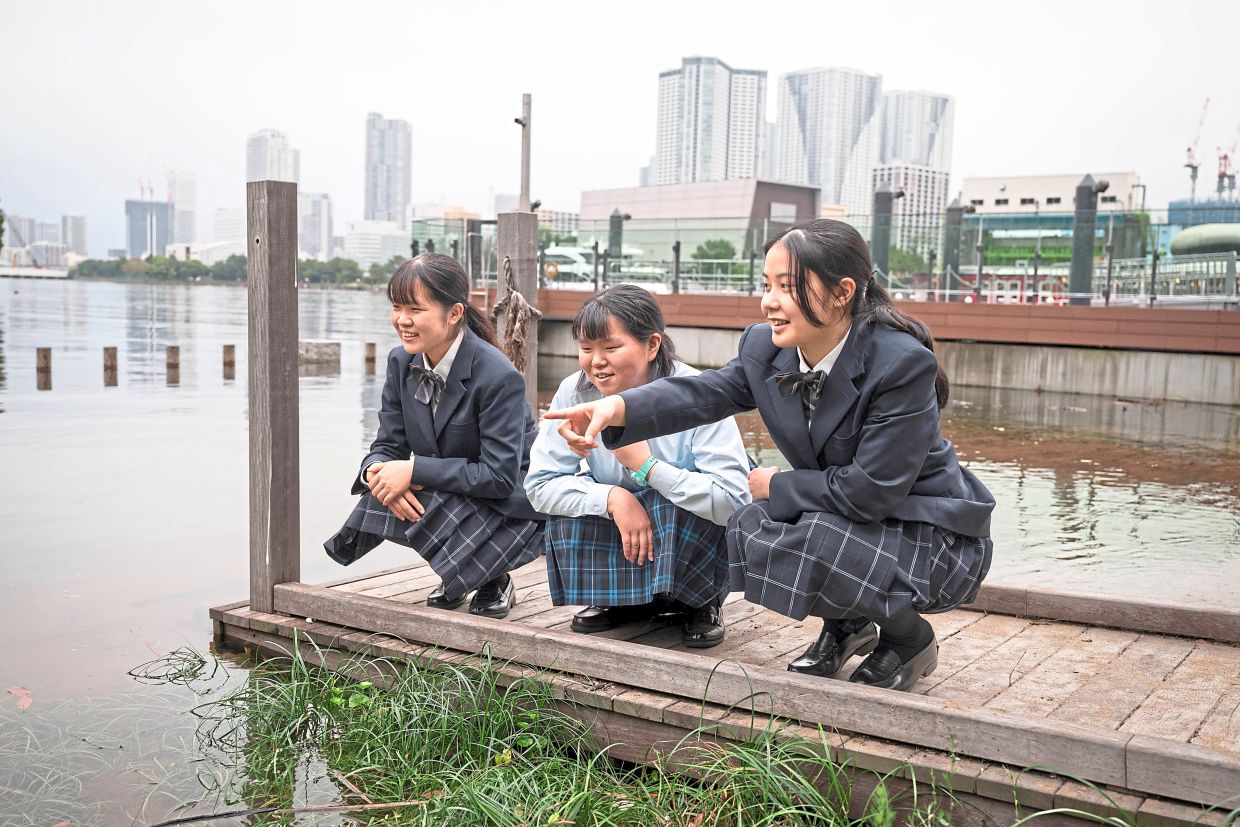
INSTEAD of revising from textbooks, a group of Tokyo teenagers are ankle-deep in tidal mud, hauling plastic waste from the shallows of the city’s waterfront.
On the mudflat at Waters Takeshiba, students from Tokyo Metropolitan Shiba Commercial High School crouch over sediment, sifting through shells, seaweed – and microplastics.
The work is part of the school’s Mudflat Club, which meets monthly with researchers and local families to study and clean the fragile ecosystem edging Tokyo Bay.
For Taguchi Kumino, the difference between classroom theory and lived experience has been stark.
“We learned about waste issues in class at school, but when I actually started to pick up trash on the mudflat, I was shocked to see how much of it really washes up, including microplastic waste,” she says.
“Seeing the situation up close made me talk to family and friends about protecting nature ... not just stopping ourselves from throwing trash into nature but also making an effort to not produce waste at all.”
That tactile encounter with climate and consumption sits at one end of Tokyo’s resilience strategy.
At the other is artificial intelligence calculating flood risk for 1.5 million people living in low-lying districts that would otherwise sit underwater at high tide.
Climate change is sharpening both concerns. Tokyo has expanded for centuries towards the bay, creating densely populated “zero-metre zones” protected by seawalls, floodgates and pumping stations.
As sea levels rise and storms intensify, those defences are under increasing pressure.
But resilience in the Japanese capital is not confined to coastal engineering.
Across the city in Chiyoda ward, with the National Diet Building visible from the school grounds, students at Tokyo Metropolitan Hibiya High School are documenting another kind of vulnerability – and survival.
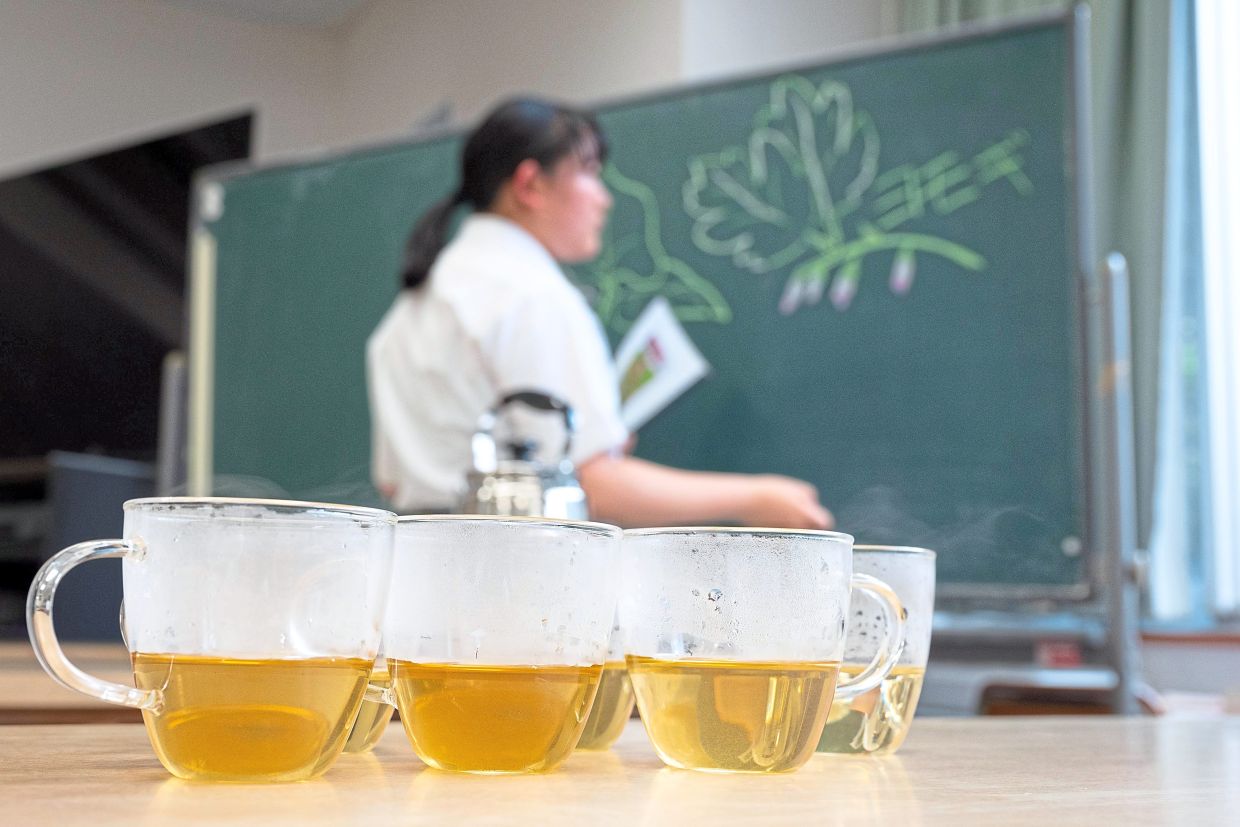
Members of the Weed Research Club catalogue plants growing in overlooked corners of the campus, using their own inherited field guide, Flora of Hibiya High School, to map species across the grounds.
“We once stumbled upon corydalis, a plant listed on the Tokyo Metropolitan Government’s Red List of Threatened Species, right on our school grounds,” says club president Tsutsumi Yugo.
“It had these bright yellow flowers that made it stand out, and when we looked it up, we realised it was endangered.”
The discovery altered how students saw their surroundings.
“Knowing a plant like that exists right here on school grounds made us feel a real sense of urgency,” he says. “Since we’ve been lucky enough to find it, we want to protect it as much as possible.”
For Tsutsumi, the lesson extends beyond botany.
“Plants are fighting to survive too,” he says. “Ideally, I’d like them to coexist with us without causing us too much trouble.”
While students are learning to read the city’s ecological margins, Tokyo’s authorities are refining the systems designed to keep its urban core dry.
The Tokyo Metropolitan Government has layered digital technology over its existing coastal defences.
An online storm-surge information system publishes real-time tide levels, floodgate status and live camera feeds. A risk-search service allows residents to enter an address and see projected flood depths during a major surge.
At the centre is an AI-based water-level prediction model that processes meteorological and tidal data to forecast changes up to 15 hours ahead.
The forecasts guide the operation of floodgates and pumps, buying crucial time before peak impact. Officials are also expanding the use of drones to inspect infrastructure rapidly and safely during extreme weather.
In 2025, Tokyo’s AI water-level prediction system was presented at the Smart City Expo World Congress in Barcelona, positioning the capital as both highly exposed to climate threats and proactive in adapting to them.
From teenagers pulling plastic from tidal flats to algorithms scanning incoming storms, Tokyo’s approach reflects a simple premise: resilience is not a single project, but a culture.
And in a warming world, that culture is becoming as critical as concrete. — Japan Connect/AFP