
Colourful rectangular wooden boats carrying tourists are chugging along at a leisurely pace across the Mekong River.
The atmosphere is idyllic, disturbed only by the monotonous throbbing of the boats’ engines. Hills rise gently on both sides of the mighty river, water buffaloes are grazing on the banks. A fisherman in a longboat casts his net, while the heat of the day slowly descends on Laos from the pale blue sky.
The cosy vessels are dubbed “slow boats” and the contrast to the speedboats that whizz along the canals in neighbouring Thailand could hardly be starker.
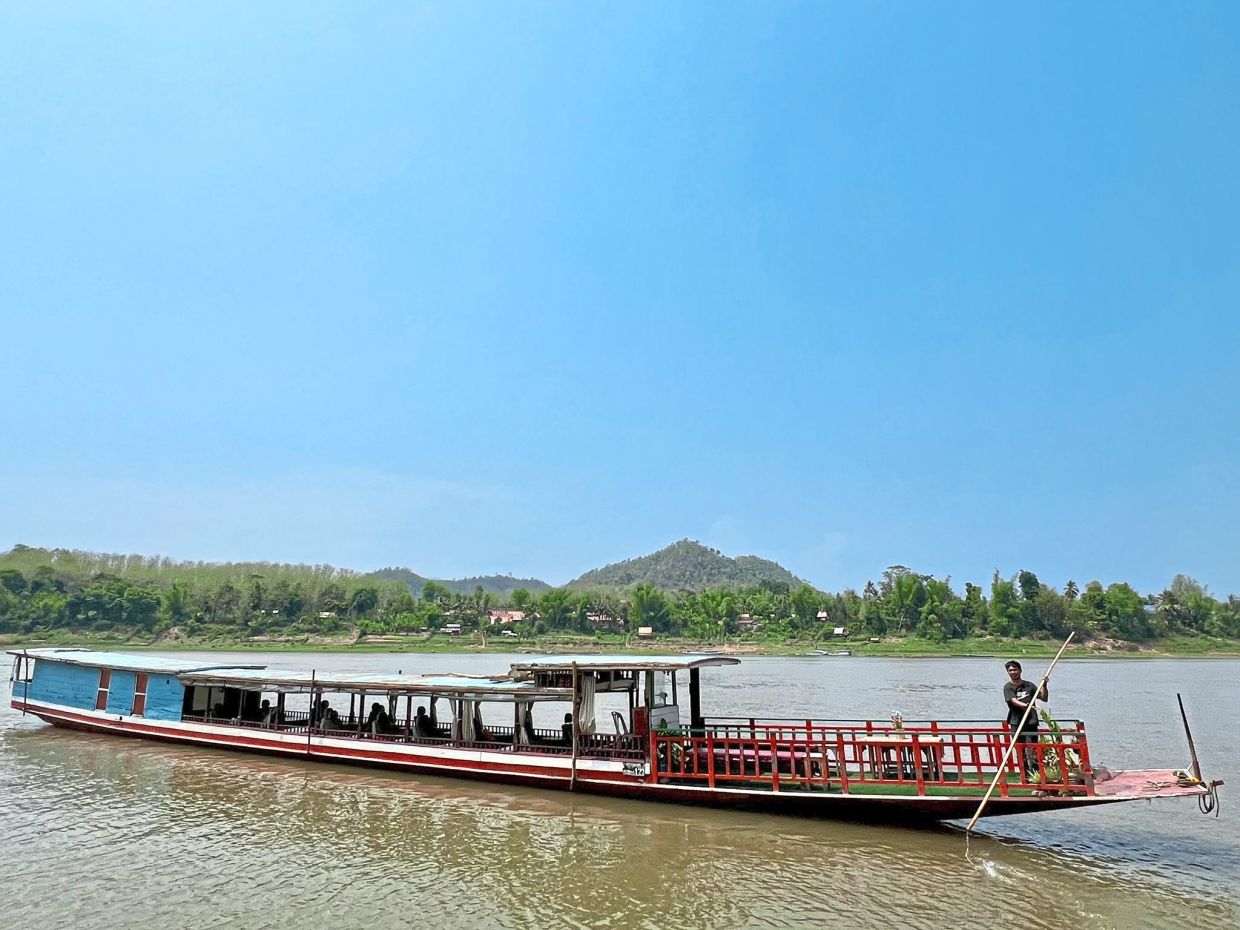
The name embodies the Laotian attitude to life: In South-East Asia’s only landlocked country, taking it easy is a top priority.
“The wise do not hurry and those in a hurry are rarely wise,” our tour guide, Kham Dee says, citing an old Laotian proverb as he slowly steers the boat in the direction of Pak Ou Caves, a famous cave temple containing nearly 6,000 Buddha statues.
While most tourists visiting Laos head to the ancient royal city of Luang Prabang, the capital Vientiane with its temples, markets and French colonial buildings also has much to offer, including the country’s landmark – the Pha That Luang, a golden, terraced stupa dating to the 16th century.
Shortly after sunrise, monks in saffron-coloured robes carry processional umbrellas across the main square in Wat Si Saket, a temple that radiates serene beauty. A gong chimes, followed by deep Buddhist chants.
The few foreign visitors on this particular morning stand spellbound.
With fewer than one million inhabitants, Vientiane offers a relaxed contrast to glitzy metropolises like Bangkok in Thailand, and Singapore. If you’re looking to party, you’re in the wrong place.
In fact, Laos seems to have fallen out of time. But the “land of a million elephants” is changing – and at a pace that doesn’t seem to suit it at all.
The poetic name is the literal translation of Lan Xang – an ancient kingdom in the area of present-day Laos which was home to large numbers of elephants. Today, encounters with the giant creatures are rare: According to the World Wildlife Fund, there are no more than 1,000 elephants left in Laos.
China’s growing influence
Meanwhile, Laos finds itself increasingly in the gaze of neighbouring China, which has been inundating the country with investments worth billions, gaining more and more influence.
In the Golden Triangle on the border with Thailand and Myanmar – a region once notorious for its opium trade – whole blocks of unsightly casinos catering to Chinese businessmen have risen up from the ground.
“Drugs used to be the biggest threat in the region. Now it’s China,” says a man on the Thai side, looking thoughtfully at the drab concrete across the Mekong in Laos.
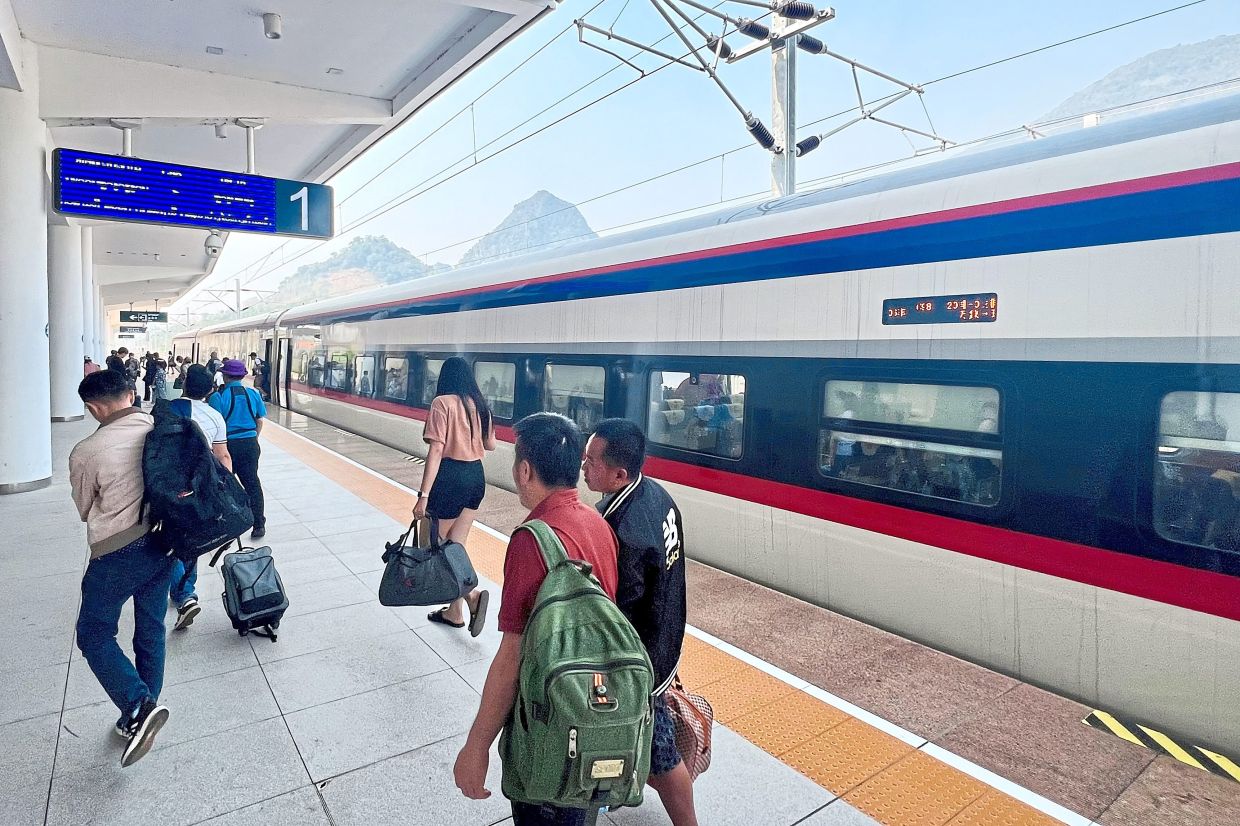
Additionally, the Laos-China Railway (LCR), which was largely financed by China, began operations in 2021, connecting Kunming with Vientiane. In future, the line is set to continue through Thailand and Malaysia, all the way to Singapore.
The many unexploded bombs that are still scattered around Laos posed major difficulties during construction – dangerous reminders of the period between 1964 and 1973, when the United States dropped a bomb every eight minutes over Vietnam’s neighbouring country.
Laos is considered the most-bombed country in the world. To this day, experts are still working on defusing unexploded ordnance.
But back to Vientiane, where several hundred people are waiting to depart from the huge railway station. “Vientiane Railway Station” is emblazoned in red letters in English and Laotian above the entrance.
Journey to Luang Prabang
The journey on the modern train to the former capital Luang Prabang takes less than two hours, speeding past past rice fields and villages at around 150kmph.
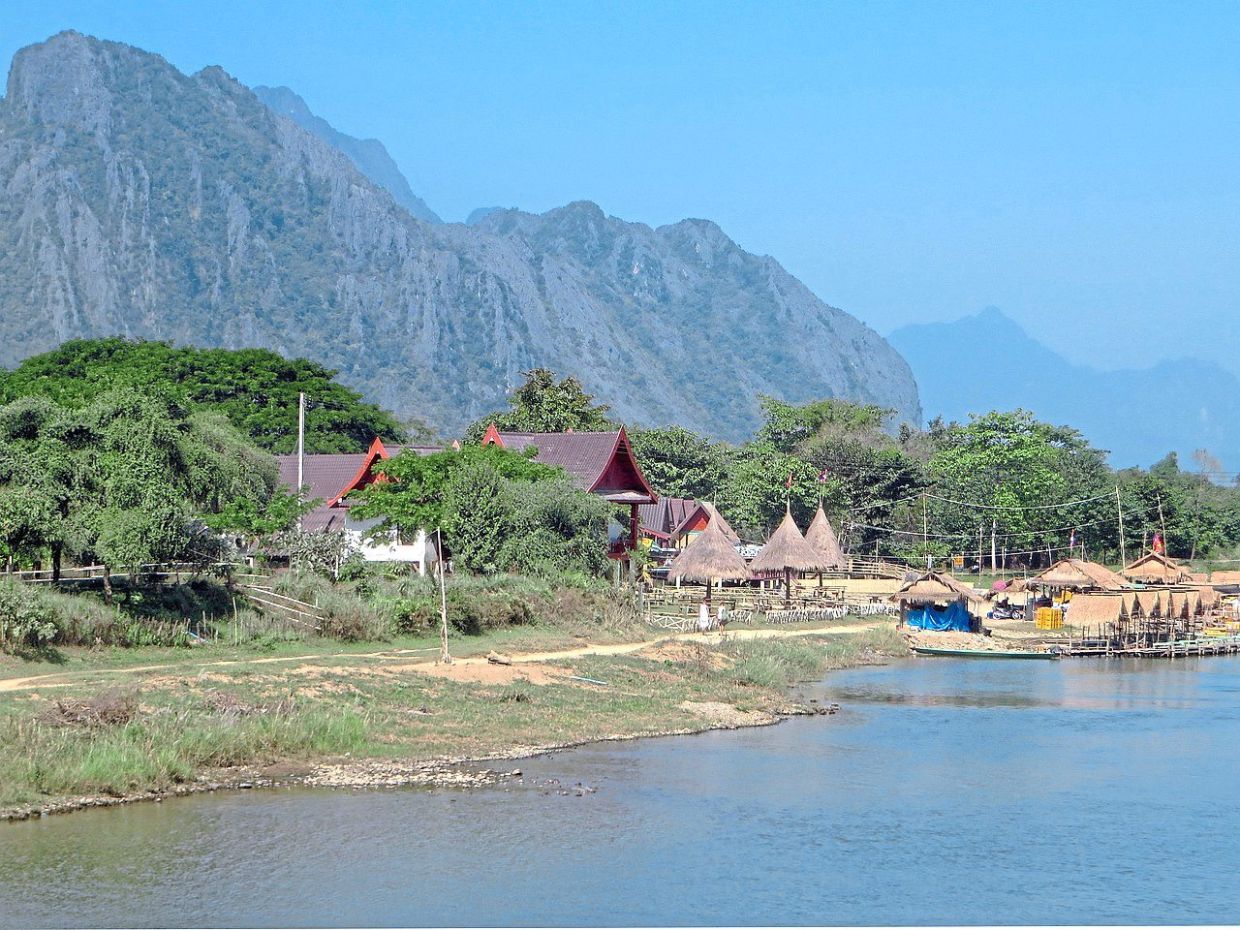
After a short stopover in the town of Vang Vieng, a favourite among backpackers, the journey continues through many tunnels but also provides occasional glimpses of the landscape with its karst formations, jungles and rice terraces.
The next highlight awaits travellers the following morning. Even before the sun has risen, the streets of Luang Prabang are glowing in a rich orange colour: Hundreds of monks are parading through the city to receive alms from the faithful.
The famous Sai Bat alms procession dates back to the 14th century – and is now a well-known tourist attraction. Wordlessly, people on the roadside fill sticky rice, fruit and snacks into the containers and silk carrier bags of the monks and novices.
The most widespread faith is Theravada Buddhism, the oldest teaching of this religion still in existence today.
“It is traditional for boys to live as monks in a temple once in their lives for a few days, weeks or even years to learn it,” says tour guide Somjai Ken. Some only stay for a few weeks, others for a lifetime. – by CAROLA FRENTZEN/dpa