
Ask The Expert is a monthly column to answer your questions on topics related to fashion and beauty.
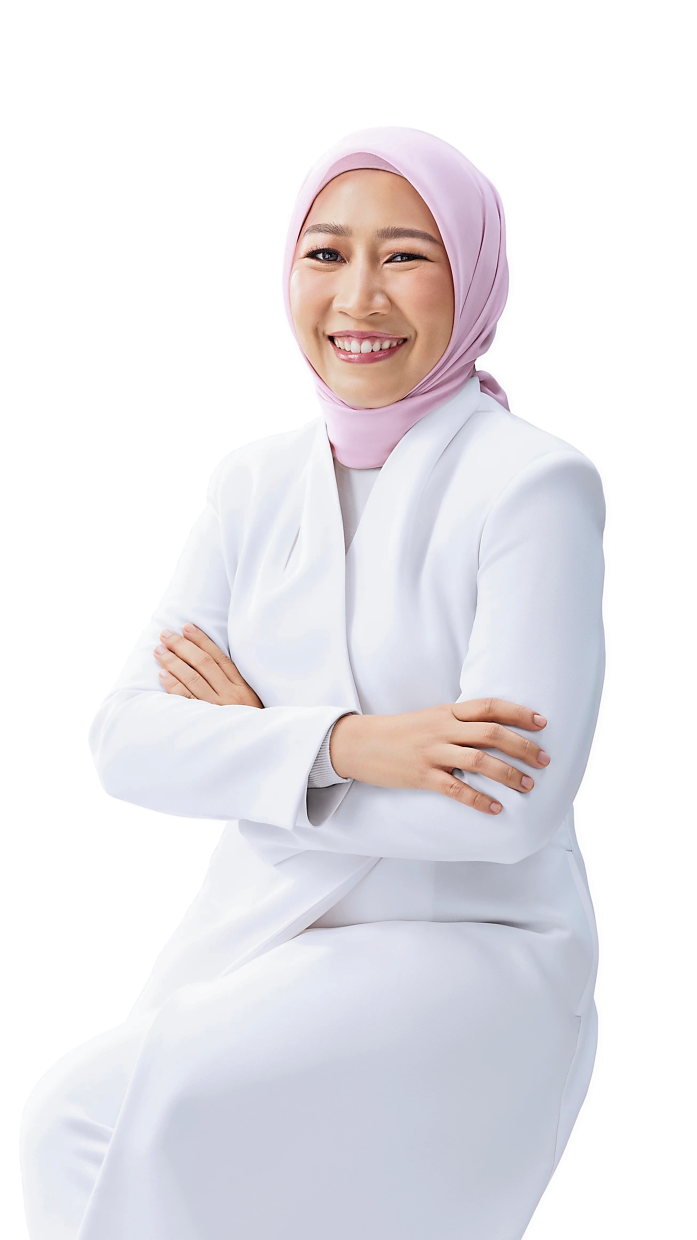
In this edition, ParagonCorp (parent company of halal cosmetics brand Wardah) deputy CEO and chief R&D officer Dr Sari Chairunnisa answers all your questions on halal beauty.
What exactly makes a skincare product “halal”? – Lina, Bangsar
Halal skincare is not simply about being alcohol-free.
It is a comprehensive framework guided by Islamic principles that evaluates ingredient sources, processing methods, manufacturing integrity and the entire supply chain to ensure products are free from prohibited substances and contamination.
At ParagonCorp, halal is not merely a certification checklist – it reflects an ethical way of creating good products and good actions.
For us, halal is about driving inclusivity for the world. It encourages transparency in sourcing, truthful product claims and responsibility across the entire value chain.
Read more: Hydrate, protect, simplify: Caring for your skin during Ramadan and beyond
Is there a difference between halal and “Muslim-friendly” beauty products? – Nur, Penang
Yes, there is a distinction, but the two concepts can complement each other.
Halal refers to a formally verified standard, where certification bodies audit ingredient sources, processing methods, manufacturing systems and supply chains to ensure full compliance with Shariah principles.
“Muslim-friendly,” on the other hand, is often used more broadly to describe products designed with Muslim consumers’ needs in mind.
This may include innovations such as wudhu-friendly formulations or products that maintain performance while still allowing water permeability.
Are natural or organic products automatically halal? – Deeana, Ipoh
Natural or organic products are not automatically halal, as they follow different standards.
“Natural” or “organic” typically refers to how ingredients are grown or processed from an environmental or sustainability perspective.
Halal, however, evaluates whether ingredients and processes comply with Shariah principles.
For example, some natural ingredients may still involve animal-derived components, enzymes, or fermentation processes that require careful verification of their origin and production methods.
Even plant-based ingredients, while generally lower risk, must still be assessed to ensure there is no cross-contamination with prohibited substances during processing or manufacturing.
That is why halal certification evaluates the entire value chain – from raw materials and processing to manufacturing and storage.
While natural and organic values may complement halal principles, formal verification is still essential to ensure full compliance and consumer confidence.
Does halal-certified mean the product is also safer or better for sensitive skin? – Zahra, Sabah
Halal certification ensures that ingredients and manufacturing processes comply with strict standards around sourcing, traceability and contamination control.
In many ways, this careful selection of ingredients and processes can contribute to products that are generally safer and more responsibly produced.
However, halal certification itself does not automatically mean a product is suitable for sensitive skin.
Skin sensitivity is a specific dermatological condition that requires targeted formulation strategies and clinical evaluation.
Beyond meeting halal standards, our formulations are evaluated through dermatological testing and claims such as “sensitive skin” or “acne-prone” are verified before being communicated to consumers.
What about collagen or placenta in beauty products – are those halal? – Nora, Subang
Ingredients such as collagen and placenta are considered critical points in halal assessment, as they are often derived from animal sources and therefore require careful verification of their origin and processing. Placenta, in particular, is typically animal-derived and must be evaluated to ensure it does not come from prohibited sources.
Collagen can come from various sources – including animal-based or biotechnology-derived materials – and each must be assessed to ensure compliance with halal standards.
Advances in biotechnology are now opening new possibilities.
Through recombinant technology, scientists can develop vegan collagen that closely mimics human collagen, offering both performance and clearer sourcing transparency.
Read more: Ask The Expert: A celebrity hairstylist’s guide to healthy hair and scalp
If a product contains animal-derived ingredients, does that automatically make it non-halal? – Suraya, Perak
Not necessarily. The presence of animal-derived ingredients does not automatically make a product non-halal.
What determines its halal status is the source of the material and how it is processed.
If an ingredient comes from a halal animal that is handled and processed in accordance with Shariah principles, and the production process prevents contamination with prohibited substances, it may still be permissible.
Animal-derived ingredients in cosmetics can include materials such as collagen, gelatin, or certain enzymes, which may originate from different animal sources.
Because of this, traceability is essential – covering the species, the slaughtering method where applicable, and how the ingredient is processed and handled throughout the supply chain.
This is why halal verification goes beyond the ingredient list, assessing the entire value chain to ensure integrity, transparency, and consumer confidence.
What does halal certification actually check for, in cosmetics? – Aisya, KL
Halal certification involves a comprehensive review of the entire value chain.
Certification bodies such as MUI (Indonesian Council of Ulama) examine raw material sourcing, supplier documentation, manufacturing facilities, production processes, storage systems and distribution channels to ensure there is no contamination with prohibited substances.
Quality management systems are also evaluated to maintain consistency and traceability.
In the beauty industry, halal increasingly represents not only religious compliance but also a broader standard of responsibility.
It reflects transparency, ethical sourcing and operational discipline – values that resonate strongly with today’s global consumers seeking trustworthy products.
Does halal makeup affect how long it lasts or how pigmented it is? – Ain, PJ
Performance in beauty products ultimately depends on formulation science, ingredient quality, and rigorous testing – not whether a product is halal-certified.
Halal ensures integrity in sourcing and production, while performance is driven by research and innovation.
This is supported by strong scientific capabilities.
Our innovation ecosystem involves over 280 multidisciplinary scientists and dermatologists, working alongside hundreds of local and global research partners to develop effective formulations.
Each year, our teams conduct extensive testing, with more than 10,000 product tests and over 70,000 product trials carried out to validate safety and performance.
Through this combination of scientific research, human insights and responsible sourcing, we aim to ensure that halal beauty delivers the same level of efficacy, innovation and global quality standards expected in the modern beauty industry.
Do you have any questions on fashion and beauty? Email us with the subject heading Ask The Expert at lifestyle@thestar.com.my. Please include your name, address, contact number and if you prefer, a pseudonym.