On a busy street in central Accra, Clement Azaabire hangs neatly sewn fugu smocks on lines, the striped, multicoloured fabrics swaying in the breeze.
For 15 years, Azaabire has proudly sold the garment that is associated with his community in northern Ghana . Now, it's the talk of town.
More Ghanaians are wearing the colourful traditional outfit with pride in a trend triggered by online mockery.
Ghana's president John Dramani Mahama in early February visited Zambia wearing a fugu garment, prompting ridicule from some social media users.
Ghanaians responded by defending what they felt was a rich cultural heritage, and tourism minister Abla Dzifa Gomashie took it a step further by declaring Wednesdays as "Fugu Day”.
Since the "Fugu Day” declaration on Feb 10, more people are wearing the smock to work on Wednesdays, but also on other days. And traders like Azaabire are selling out their stock.
"It makes me feel connected to where I come from," said Wango Abdul Karim, a businessman who wears fugu to work every Wednesday.
In Ghana, which is widely known for its rich fashion style and an agelong weaving heritage, traditional production of smock weaves has been the preserve of the north and an art skill handed down through generations.
The fugu smock, however, gained more prominence in March 1957 when Ghana’s first president Kwame Nkrumah wore it during the country’s inaugural independence ceremony.
Read more: Old kimonos, new cool? Somehow, Japan’s traditional wear gets a fashion remix
Today, it’s worn at festivals, state functions and increasingly in contemporary fashion.
Also known locally as batakari, the loose-fitting fugu smock is made from handwoven strips of cotton fabric stitched together to form a flowing robe, often worn over trousers and paired with a matching cap.
The fabric is traditionally woven on narrow looms in Ghana's northern savannah and sewn into distinctive styles, with the regional identifiers visible in its stripe patterns and in the number of stitch lines.
Scholars link its development to trade and migration across West Africa, including influences from Mossi and Hausa communities.
Batakari, derived from the Hausa language, means "outer gown”, while fugu in the Mossi language means cloth. The smock has long represented prestige and is worn by chiefs, warriors and community leaders with certain designs reserved for special ceremonies.
At the Accra Arts and Crafts Centre, Moses Adibasa guides strips of woven fabric through a sewing machine, pausing to align the narrow bands by hand before stitching them together.
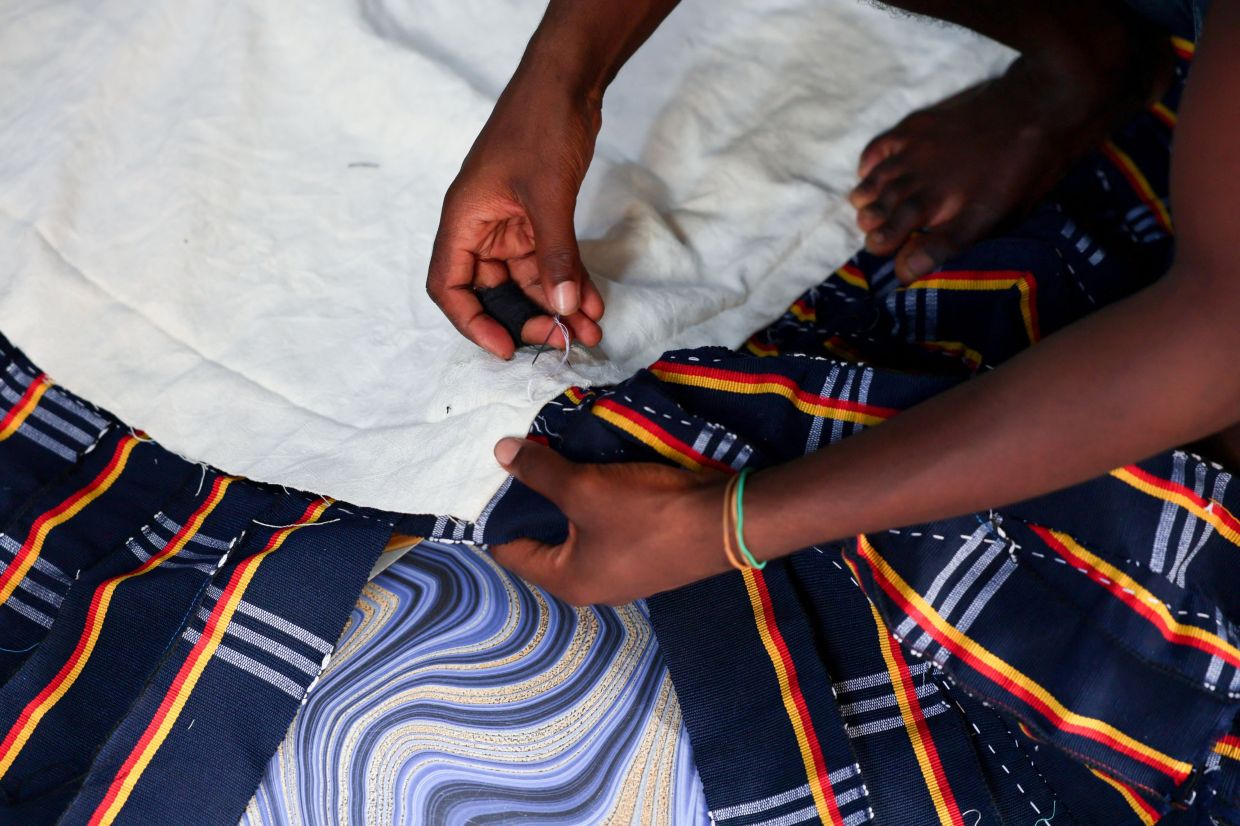
He has earned a living from making traditional smocks for nearly two decades and is optimistic about the ripple effects of "Fugu Day”.
"It will benefit those selling thread, those weaving and those of us sewing," Adibasa said.
In a studio in Accra, Perfectual Linnan, a fashion designer and founder of Roots by Linnan, recreates the fugu fabric into jackets, trousers and tops designed for everyday wear.
She is part of a growing movement of young designers incorporating the fabric into modern designs.
"We want to show that you can wear the northern fabric in different ways," she said. "If you’re not into the traditional smock, you can still carry a piece of culture with you.”
Read more: Beyond corporate life, silversmith Jessie Koh finds her true calling in fashion
Although traditional looms are still used for the clothing, many weavers now rely on imported yarn due to the lack of locally grown cotton.
The "Fugu Day” celebration has meant higher demand and more pressure on the smock weavers, many of whom are struggling to increase production, according to Abigail Naki Gabor, secretary of Ghana's smock weavers and sellers association.
One way to help is through increased government investments, said Gabor.
"Using our hands slows the process and limits our ability to be productive. We need industrial machines,” she said.
Beyond the "Fugu Day”, Ghana is engineering a broader "Wear Ghana” campaign to promote local fashion and heritage with upcoming trade exhibitions planned, according to Kofi Atta Kakra Kusi with the Ghana Tourism Authority.
Back in her studio in Accra, Linnan is sounding an alarm about handling the smock with care despite the labour intensive process of weaving it.
"It is a careful, intentional process," she says. "If we treat it only as a commodity and not as heritage, we lose something important.” – AP