
As a primary school student, Saravanan Manickam had a rare privilege – he was the first to read the news, fresh off the printing press.
His father, the late Manickam Subramaniam, was a newspaper vendor who ran his business in Taman Tun Dr Ismail, Kuala Lumpur from 1979. The family lived in a shoplot above the premises where the business operated.
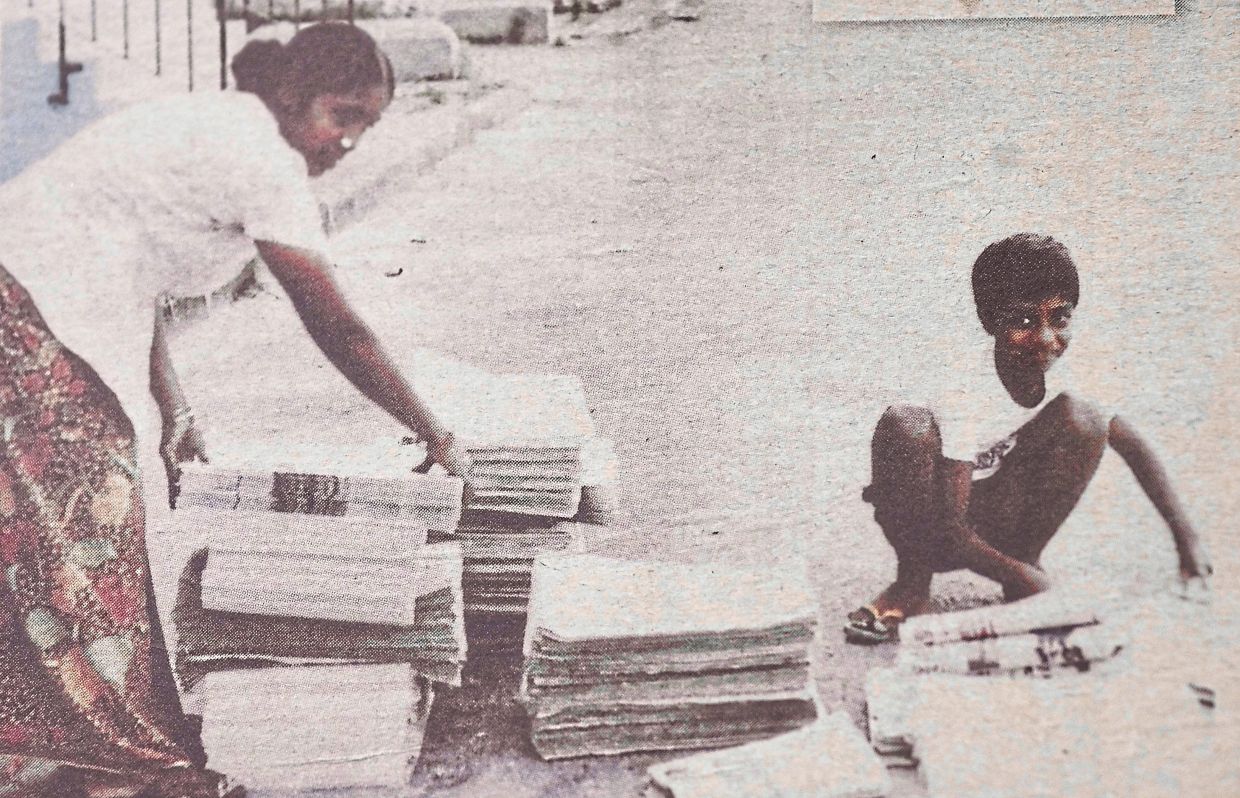
When Saravanan was nine, he would wake up at 3am and join his parents – his father and mother, Danapackiam Ramasamy – to sort stacks of newspapers at the delivery point in TTDI before getting ready for school.
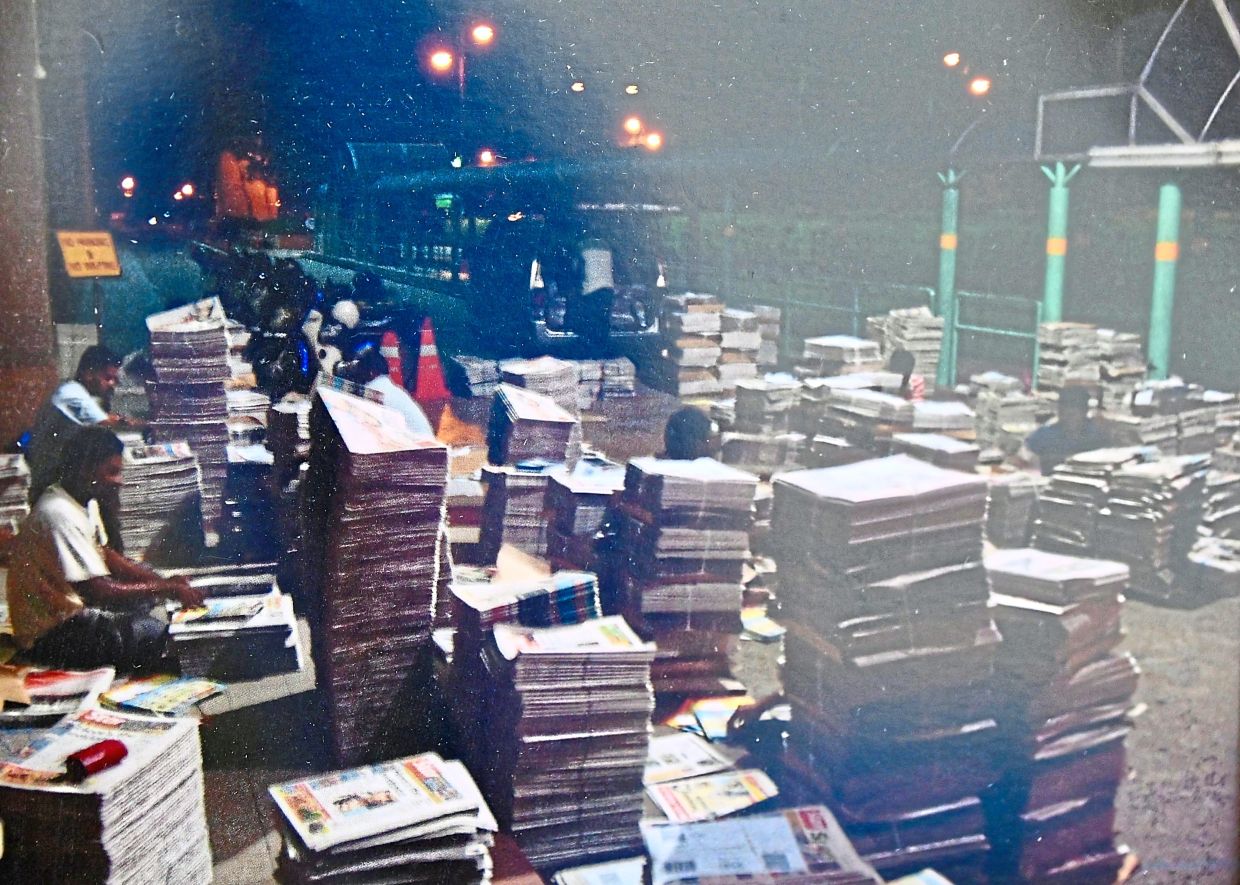
Back then, newspapers arrived in bundles, often separated by sections. They had to be sorted and assembled – a process that could take up to three hours depending on the volume.
"Growing up, I had access to daily news headlines from newspapers in different languages. You can say I was one of the most 'informed' students in school," quips Saravanan, 54, in an interview in Petaling Jaya, Selangor.
He also recalls how being one of the most informed students came with its own "problems". "I used to get scolded by my father for skimming through different sections of the papers. He'd say, 'I asked you to sort the papers, but you're busy reading them!'"
Growing up with the news
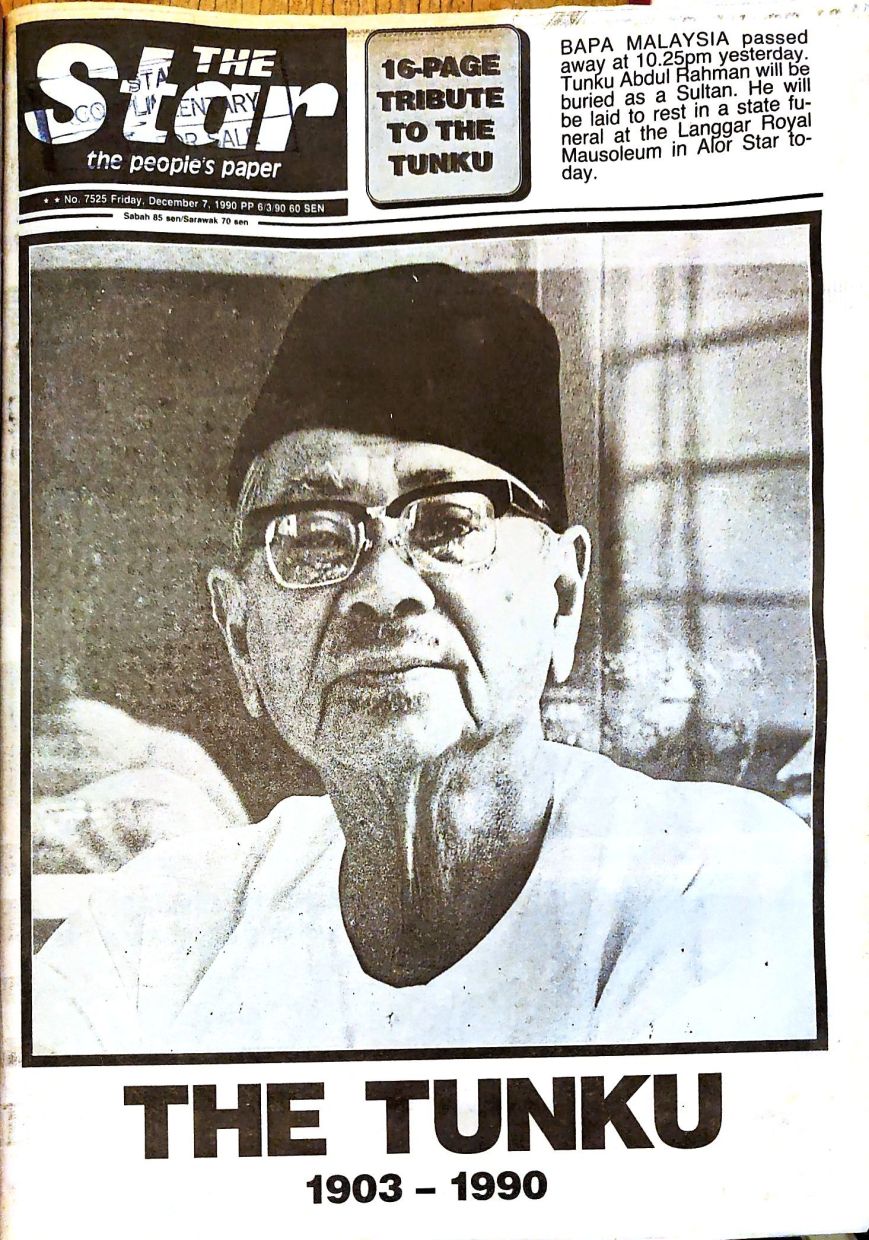
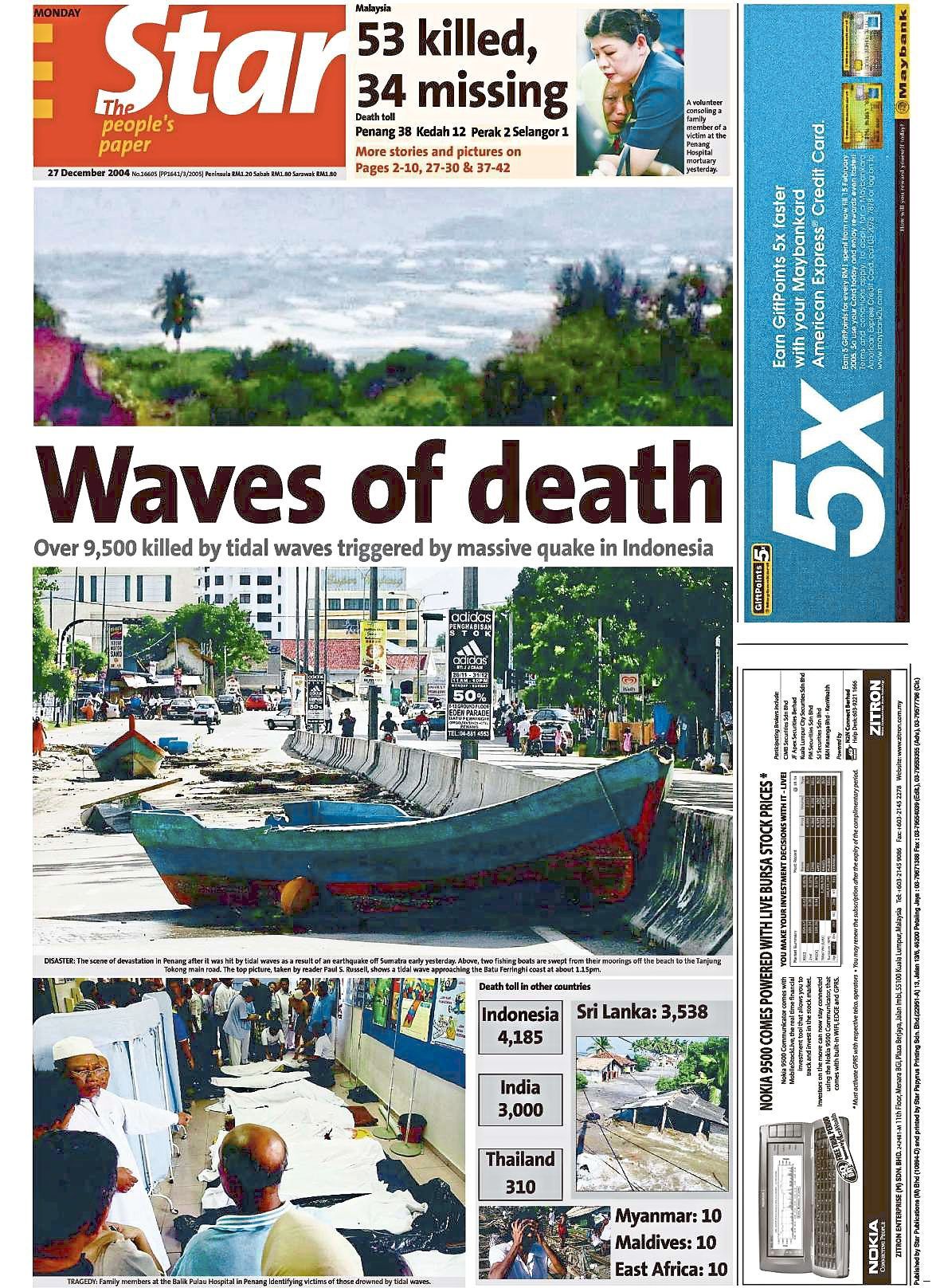
Some headlines remain etched in his memory – such as the passing of Malaysia's first prime minister, Tunku Abdul Rahman Putra Al-Haj, in 1990, as well as major events like the Highland Towers collapse in Ulu Klang, Selangor, which claimed 48 lives, and the 2004 tsunami in Indonesia's Sumatra island.
"During Tunku's passing and the Highland Towers collapse, we didn't have the Internet. Everyone got verified news from the television, radio and newspapers. And these are stories that you don't forget," says Saravanan.
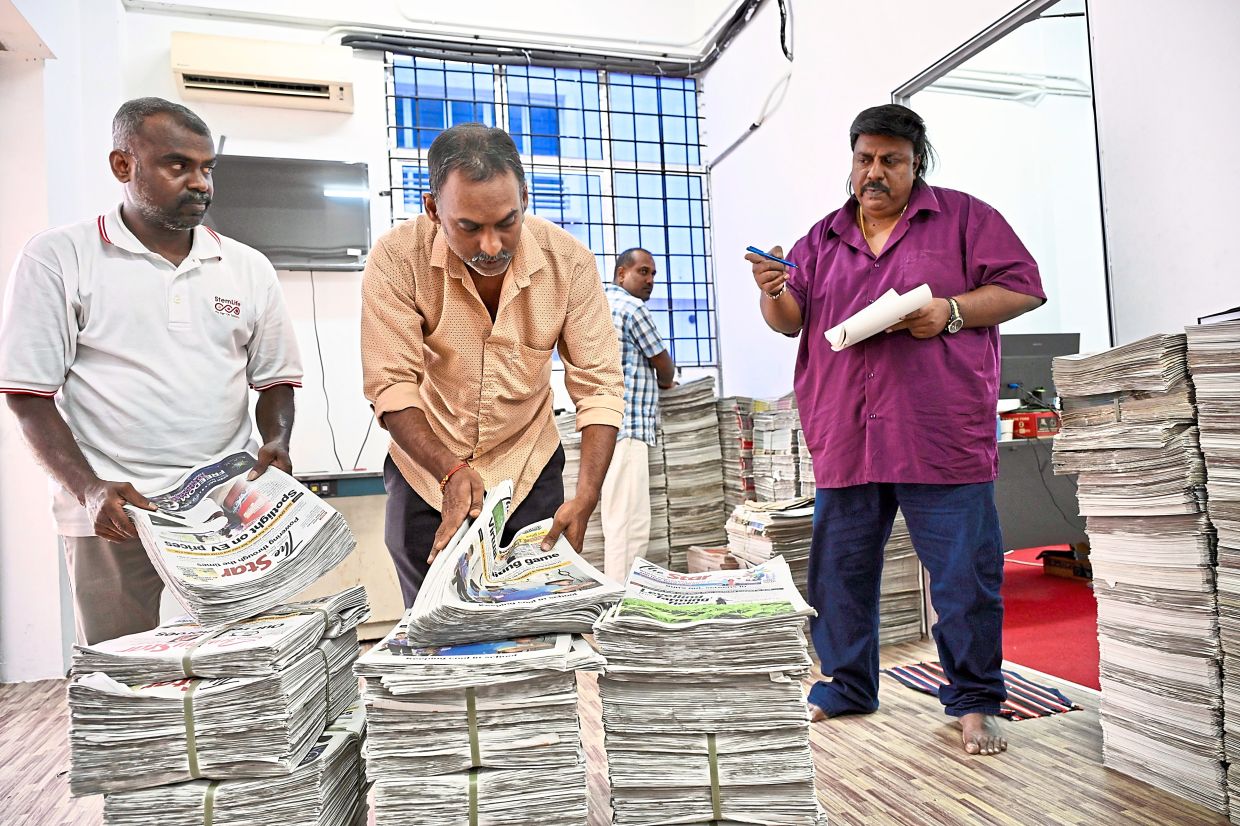
Saravanan is still in the business – a trade he has been part of for nearly his entire life. He is currently a newspaper agent in Petaling Jaya, handling 14 titles in English, Bahasa Malaysia, Chinese and Tamil. He distributes newspapers to vendors who then deliver them to various areas across the Klang Valley.
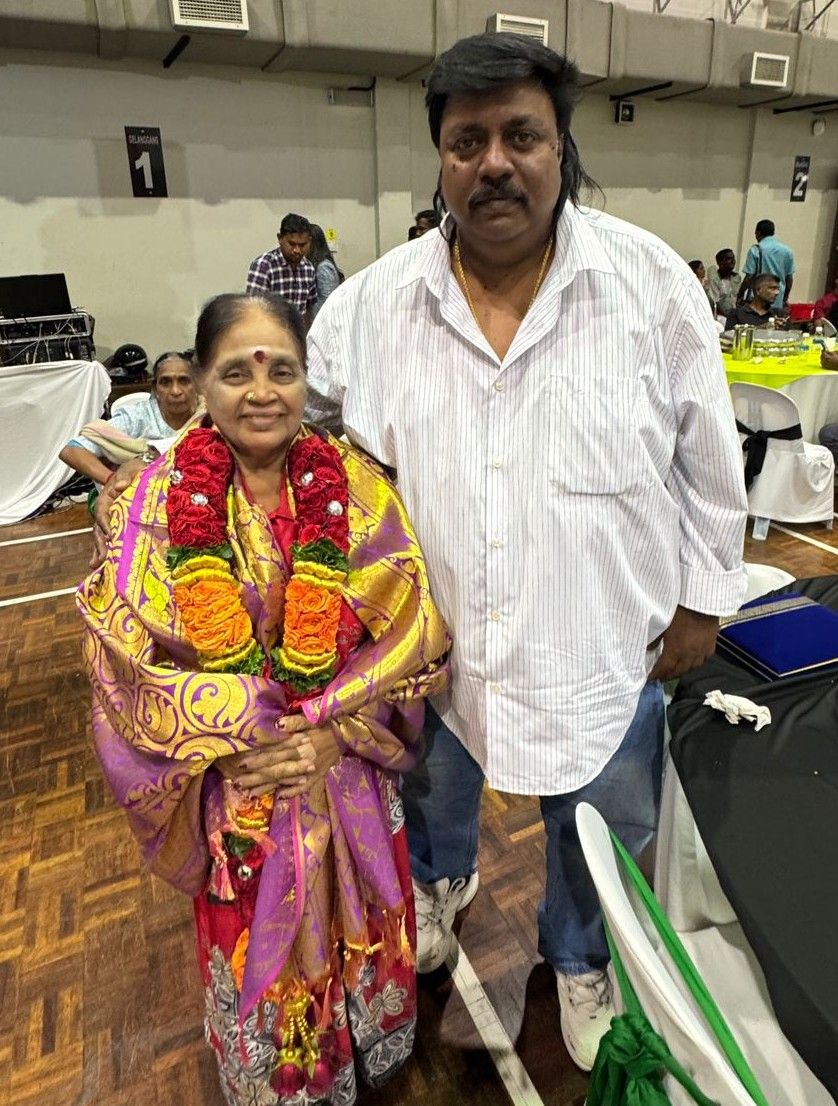
His mother, 78, still runs a newspaper stall in Pasar Besar TTDI.
The father of three says newspapers have been a big part of his life. "I've been doing this since I was young, from the time I would sort out the papers with my parents. When I received my motorbike licence, I would help deliver newspapers to customers around TTDI, Bandar Utama and Damansara Utama in PJ, Selangor. After that, I’d head off to school. It's part of my life.
"I joined the family trade after completing Form Five because I felt the business had good prospects," shares the former student of SMK Damansara Jaya.
At its peak in the 1990s, their business handled up to 40,000 newspapers daily, supported by a team of 42 delivery riders.
Today, Saravanan runs a leaner but still active operation in Kelana Jaya. He works with 18 riders and several staff. He also supplies newspapers to smaller vendors, ensuring the distribution chain continues. These days, papers are already sorted at the printing plant, by machines.
His father, who passed away in 2019 following a stroke, remains his greatest influence.
"Appa believed this job had potential," says Saravanan, the only son of four siblings. "I didn't want to sell the business. I wanted to grow it."
A special skill
Saravanan still remembers his father's strict attention to details, especially when it comes to how newspapers are thrown so they land 'safely'.
"There's a skill to throwing the paper," he says. "It must land where the customer can see it when they open the door – not on the car or in the drain. The secret is to aim for the doorstep or porch," he says. "On rainy days, I make sure it's placed right at the entrance so the papers don’t get wet."
Over the years, the job has come with its share of challenges. Saravanan recalls being chased numerous times by dogs during deliveries and surviving a serious accident in Bandar Utama, where he was knocked down by an ice truck while rushing to complete his rounds.
"I suffered 14 stitches and a broken arm," he says, pointing at the scars on his right arm. "That was my fault for rushing."
For him, the job offers a lifestyle many would envy.
"People think it’s tiring, but actually, it's quite relaxed," he says. "By 5am, deliveries begin. Timing is critical – newspapers must reach doorsteps before readers leave for work.
"We finish our job by by 8am. No traffic jams, no office pressure. Everything is routine, and I know exactly what I need to do every day," says Saravanan, adding papers are delivered to his customers 361 days a year.
While his three children have grown up around the trade, he couldn't say if they would follow in his footsteps.
"Times have changed. But I will never know."
Even so, he continues to advocate for the value of print, especially for young readers.
"Newspapers are good for students," he says. "They improve language and general knowledge – things you don't always get from textbooks."
And as long as there are readers waiting each morning, he will continue his rounds – just as he has done since he was a boy.
"It may be a sunset industry, but let it take its time to set," he says.
"As long as publishers are there, we are here to deliver the papers. "I'll never let go of this business," he says. "We'll cross the bridge when we get there."
A life in print
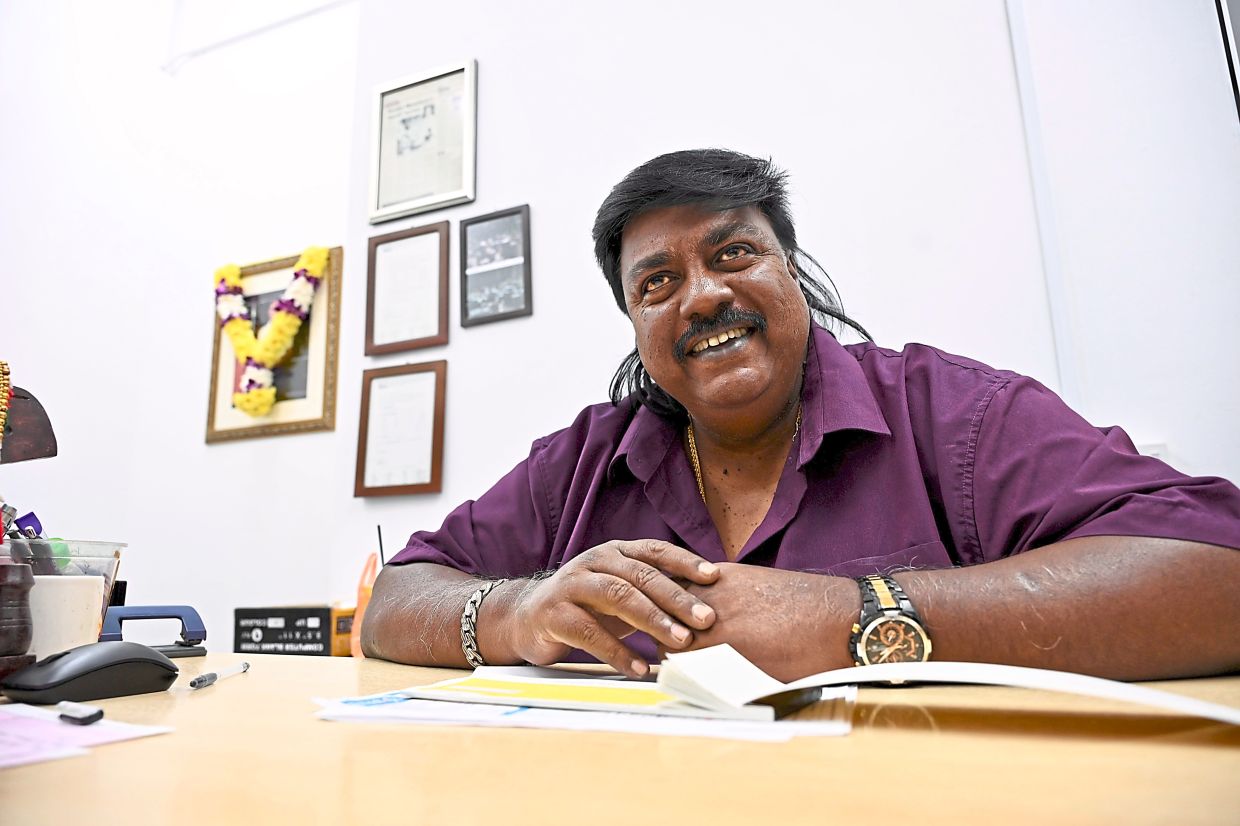
Saravanan’s passion for the job stems from a lifetime of being in the trade. Photos: The Star/Raja Faisal Hishan
A young Saravanan with Danapackiam, sorting stacks of newspapers in the early hours. Photo: Saravanan Manickam
Among the many headlines he encountered, the 2004 tsunami remains one of the most saddening for Saravanan. Photo: The Star
The Star's front page about Tunku Abdul Rahman’s passing. Photo: The Star
Back in the 1990s, thousands of newspapers were sorted in the early hours at a drop point in Petaling Jaya, Selangor before delivery. Photo: Saravanan Manickam
Saravanan's (right) passion for the trade is rooted in his upbringing, having been immersed in the newspaper business from young.
The Star/Raja Faisal Hishan
Saravanan (right) and Danapackiam remain newspaper vendors to this day. Photo: Saravanan Manickam