
PETALING JAYA: Fifty-five years ago, a brand new English newspaper hit the streets of Penang.
The price? A modest 15 sen.
The attraction? It was the first English tabloid newspaper, half the size of the unwieldy broadsheets of the time; it told stories in hard-hitting fashion, had screaming headlines – and also Page 3 girls, ala The Sun of London.
Today, that newspaper – The Star – has grown from a regional upstart into a national media powerhouse and sells at RM3 a copy. The Star Media Group celebrates its 55th anniversary this year.
The start was humble.
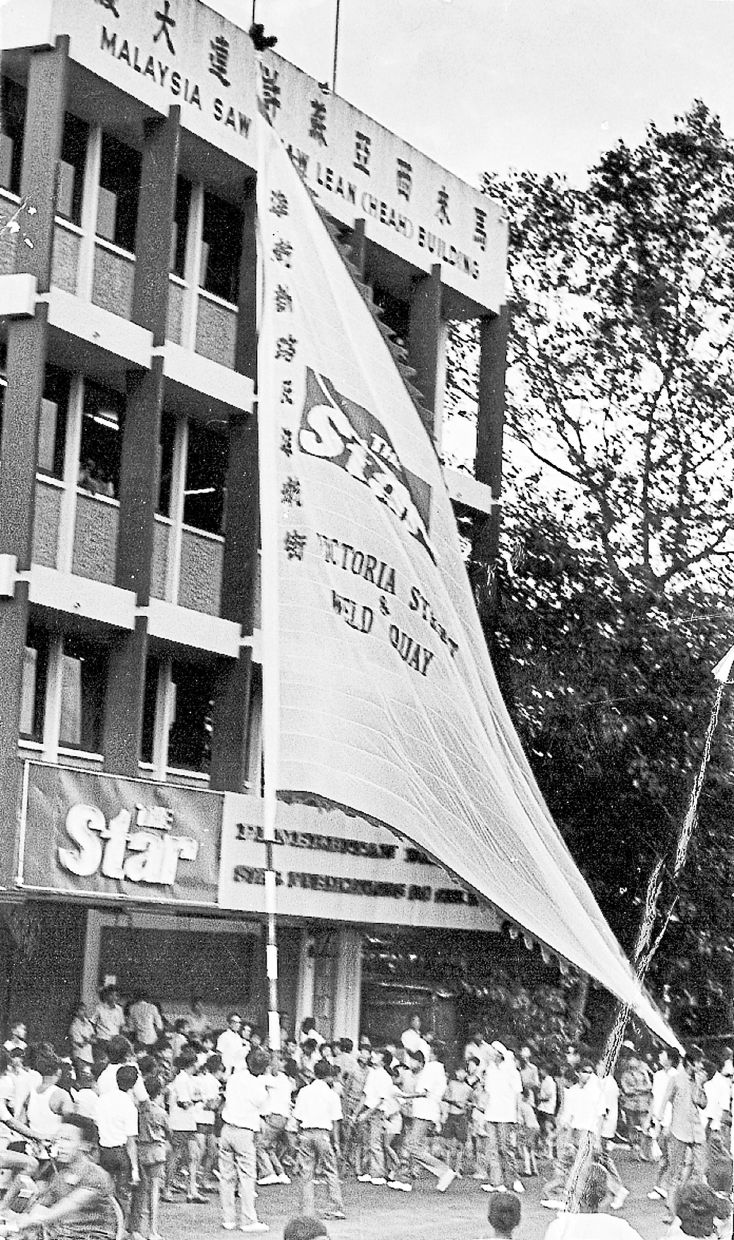
It began at a warehouse in Penang’s Weld Quay, opposite the once shabby jetty area, with mostly fishermen living nearby. Like The Star, the jetties have also risen out of poverty and are now famous tourist attractions.
On Sept 9, 1971, the first newspaper rolled out. Splashed across the front-page was the gripping headline “Jail plot man says ‘guilty’”.

It was a court story of Penang prison officer SP Ganesan admitting his guilt in a RM15,000 deal to help four convicts escape in a “James Bond” -style plot.
On its first day, it outsold all its rivals.
It was a great achievement for Choong Kok Swee, the man who founded The Star.
Choong, better known as KS Choong, had been a news editor with Associated Press’ Penang bureau, a reporter with the now defunct The Straits Echo as well as a press attache to the Malayan Embassy in Washington DC.
He reportedly chose the name The Star after being inspired by The Washington Star in the US.
The newspaper also had a street edition, which would come out at about 7pm on the same day. And street urchins could be seen selling the paper at street junctions, shouting: “Star, Star, tomorrow’s Star”.
There were three editions – “street” which came out at 7pm, “first” which came out at around midnight to be distributed outside Penang island (to Kedah and Perak) and “final”, which came out at 2am and was sold on the island.
With its unbiased reporting and commitment to local community issues, the tabloid grew quickly.
In 1974, it left its rented shoplot at 62, Weld Quay, and moved to its own premises at No. 15, Pitt Street (now Jalan Masjid Kapitan Keling), in January 1974.
It was a building of legend. Built in 1906, the three-storey building towered over its neighbours, little pre-war houses.
More importantly, it has history. It was first built to house the Straits Settlement’s Opium and Spirit Farm Offices (OSFO).
It was fitting that a storied building became one from which many news stories were told.
Just two years later – in 1976 – the made-in-Penang tabloid elevated its status, becoming a “national daily” from a regional newspaper.
In January of that year, The Star moved its headquarters to Jalan Travers (now Jalan Rakyat) in Brickfields, a three-storey building overlooking the railway tracks near the Kuala Lumpur Railway Station.
The Penang operations, however, remained as they were, with the newspaper printed separately there.
At Brickfields, journalists and production staff could look out the windows to see trains rumbling past, even as they worked.
Like the building in Pitt Street in Penang, the office in Jalan Travers was an integral part of life around Brickfields.
Today, the building is no more. In its place stands the imposing KL Sentral complex. LRT tracks run over the spot where the building once stood.
The Star continued to grow, and finally bought its own building in 1981.
In December of that year – even as it celebrated its 10th anniversary – The Star moved to its new headquarters at Section 13 in Petaling Jaya.
It was a far more comfortable building than its earlier ones, with an administrative wing, offices for the advertising section and a large editorial floor.
For 20 years there, The Star kept growing and growing, seeing several leadership changes along the way. However, it stayed faithful to its policy of putting the people first, and the numbers kept growing.
On June 23, 1995, The Star took another pioneering step, starting The Star Online. It was the first digital newspaper in the country.
It started as a mirror of the print version but soon grew into an independent news portal, with its fast breaking news and special features.
By March 2020, some 9.65 million people were reading the The Star Online, up from 2.27million just a year earlier. As of March 2026, it gets over 22 million views a month.
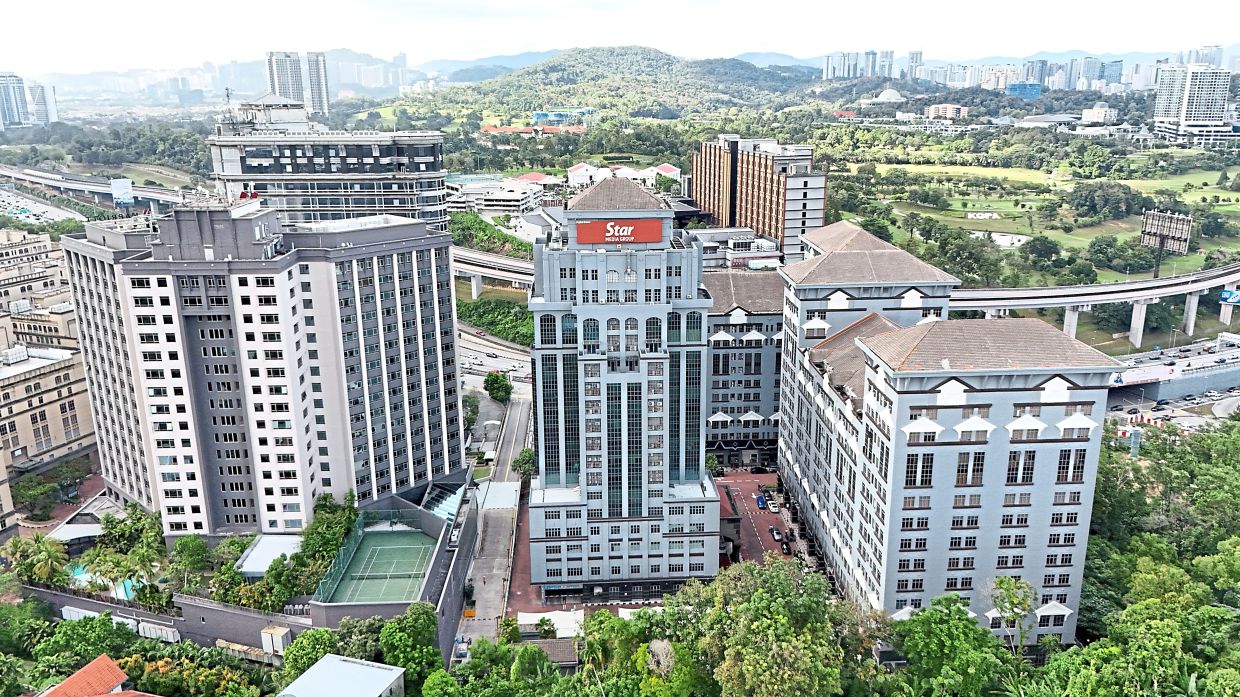
The turn of the century saw more changes. The operations moved to a new, modern headquarters in Menara Star in Section 16, Petaling Jaya.
Fitting, it took place on Sept 10, 2001, a day after the publication had turned 30.
Shortly after the move, The Star Media Hub in Bukit Jelutong, Shah Alam, began operations on Jan 16, 2002. The newspaper is still being printed there today.
It has now been 55 years.
The 15-sen price tag is history, and the news is delivered around the clock across multiple digital platforms.
But the bold editorial DNA of that first day remains. At 55, The Star is more than a newspaper, but it is still as vibrant as it was back then.