
It's the weekend again, and the room comes alive with music from an old record player and the creak of rattan chairs as everyone settles down.
Members of Persatuan Reka Ulang Sejarah (PRUS) – all dapper in historical military uniforms – take their seats around the coffee table, some on chairs, others on the floor, ready for another round of discussion.
The conversation this time is more structured than usual, but the atmosphere remains casual, as always.
For this group, history isn’t confined to textbooks or classrooms. It’s worn, demonstrated, recreated and delivered through stories, down to the smallest detail.
PRUS’s mission centres on making history more accessible through visualisation, especially for younger generations.
“It helps make history more real and understandable,” members say, which is exactly who they are: a re-enactment group that grew from a small community of vintage uniform collectors into a registered society dedicated to historical awareness and preservation.
The group traces its roots to the early 2010s, when collectors of old military uniforms and paraphernalia gathered at an event organised by the Port Dickson Army Museum at the now- decommissioned Royal Malaysian Air Force Base in Sungai Besi, Kuala Lumpur.
From there, they gathered at various events under the name “We Are Re-enactors”, before officially registering the group as a society under PRUS in 2023 with a broader ambition to bring historical awareness to the public. Think of them as a historical cosplay group, but more immersive.
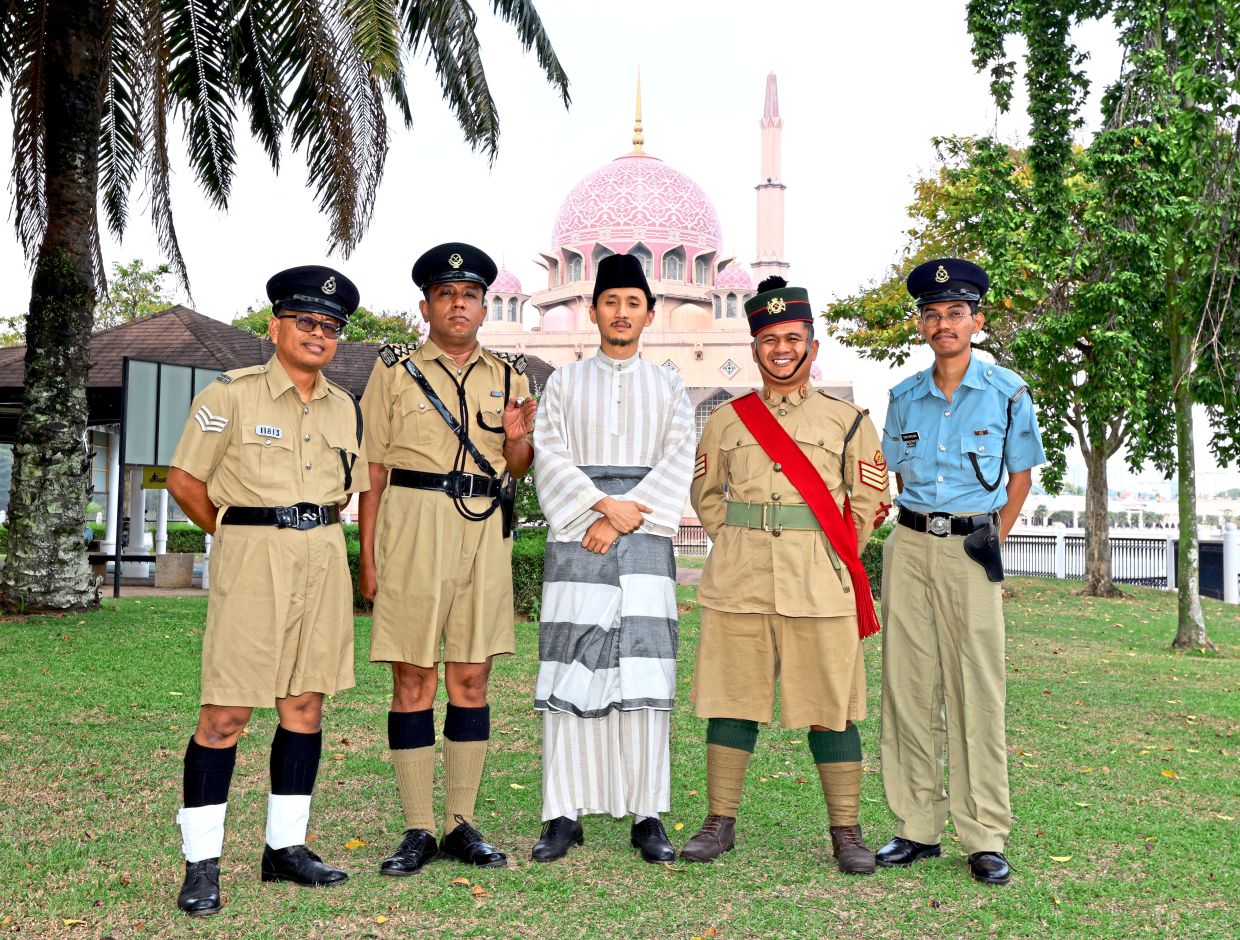
PRUS chairman Abdul Hakim Abdul Rani says one motivation was the confusion he noticed around historical uniforms, particularly from eras when photographs were still black and white and different military forces appeared to wear the same colours.
“We wanted to share the knowledge we have and spread awareness on this subject. Our official registration made it possible for us to organise events and exhibitions at schools and museums, to teach the public and highlight the importance of historical accuracy,” he says.
Down to the details
From the outside, it’s easy to assume PRUS members simply put on a uniform and play soldier. It goes deeper than that.
Different eras carried different etiquette, body language and ways of marching and speaking. Getting those details right is what they strive to do.
“When we re-enact, we really need to get the details right,” Abdul Hakim, who works as a tour guide, says.
“We believe it’s very important to portray our history as accurately as possible because we are not doing it just for fun, it’s meant to be educational.”
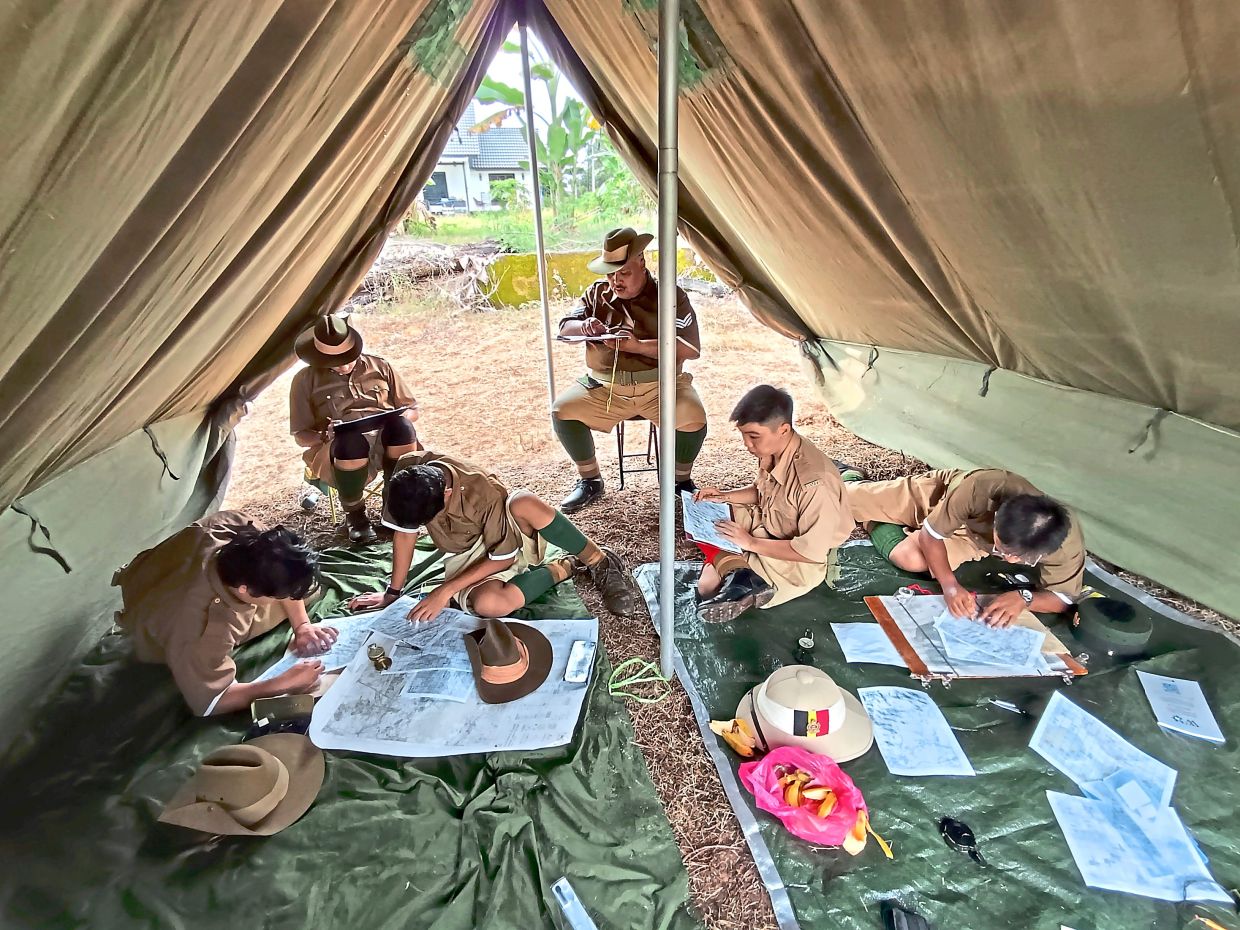
That commitment can be seen in more than just getting the uniforms right. In July, PRUS held a two-day, one-night re-enactment jamboree where members trained in marching, map reading, navigation and basic combat manoeuvres based on original pre-Independence manuals.
Abdul Hakim, who previously served in the Territorial Army (Askar Wataniah), led the sessions with his own skills and knowledge.
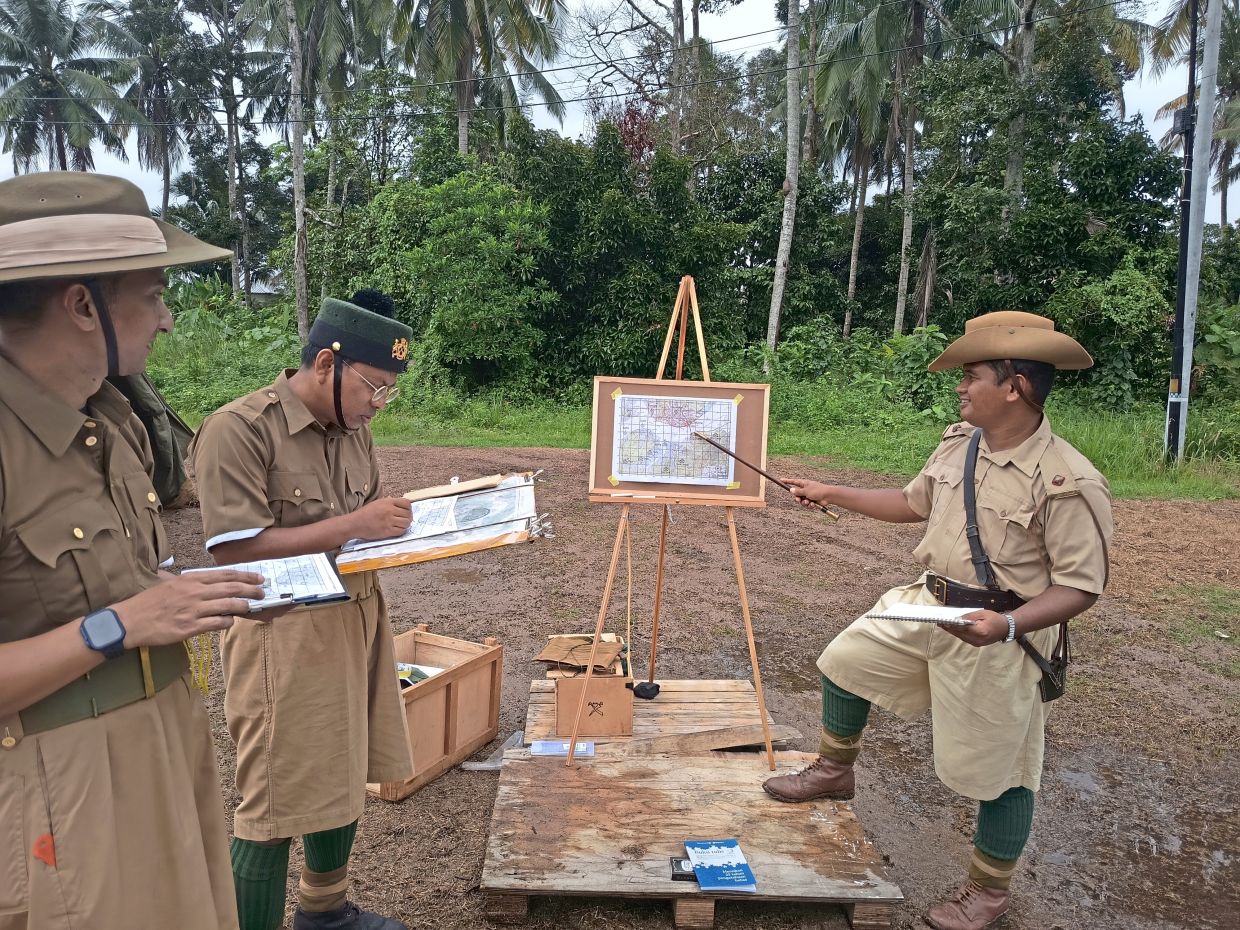
The jamboree was not aimed at reliving combat for its own sake, but to understand how soldiers of the period actually operated.
Even the weapons used for combat re-enactments were swapped with sticks to comply with regulations.
The group also works with the film industry, advising productions on historical uniforms and even appearing as extras.
PRUS vice chairman Mohd Fadzreeq Mokti says their role is to keep productions visually faithful to the period.
“For us, it’s not just acting. It’s what we do when we’re in uniform – re-enacting and presenting to the public exactly how they looked and behaved during that period,” he says.
PRUS is especially active in August and September, when National Month and Malaysia Day activities ramp up.
Members bring their collections to exhibitions, hoping to reach youths who might otherwise encounter history only in school textbooks.
Abdul Hakim has noticed that some students are unfamiliar with important historical figures and events, something he believes should be a major concern, which is why he sees schools as a key avenue for introducing history early to young people.
A walking museum
Mohd Fadzreeq, who is a school teacher, has seen the impact firsthand at his own school.
His students light up when he turns up dressed in historical uniform (greenlighted by the headmaster), and would always ask when he’ll wear it again.
“These children are really interested in learning about our history, but they don’t always have the means to go to museums or the chance to see and touch things,” he says.
“Young children are very curious, they learn best by being hands-on.”
He also describes PRUS members as a kind of “walking museum”.
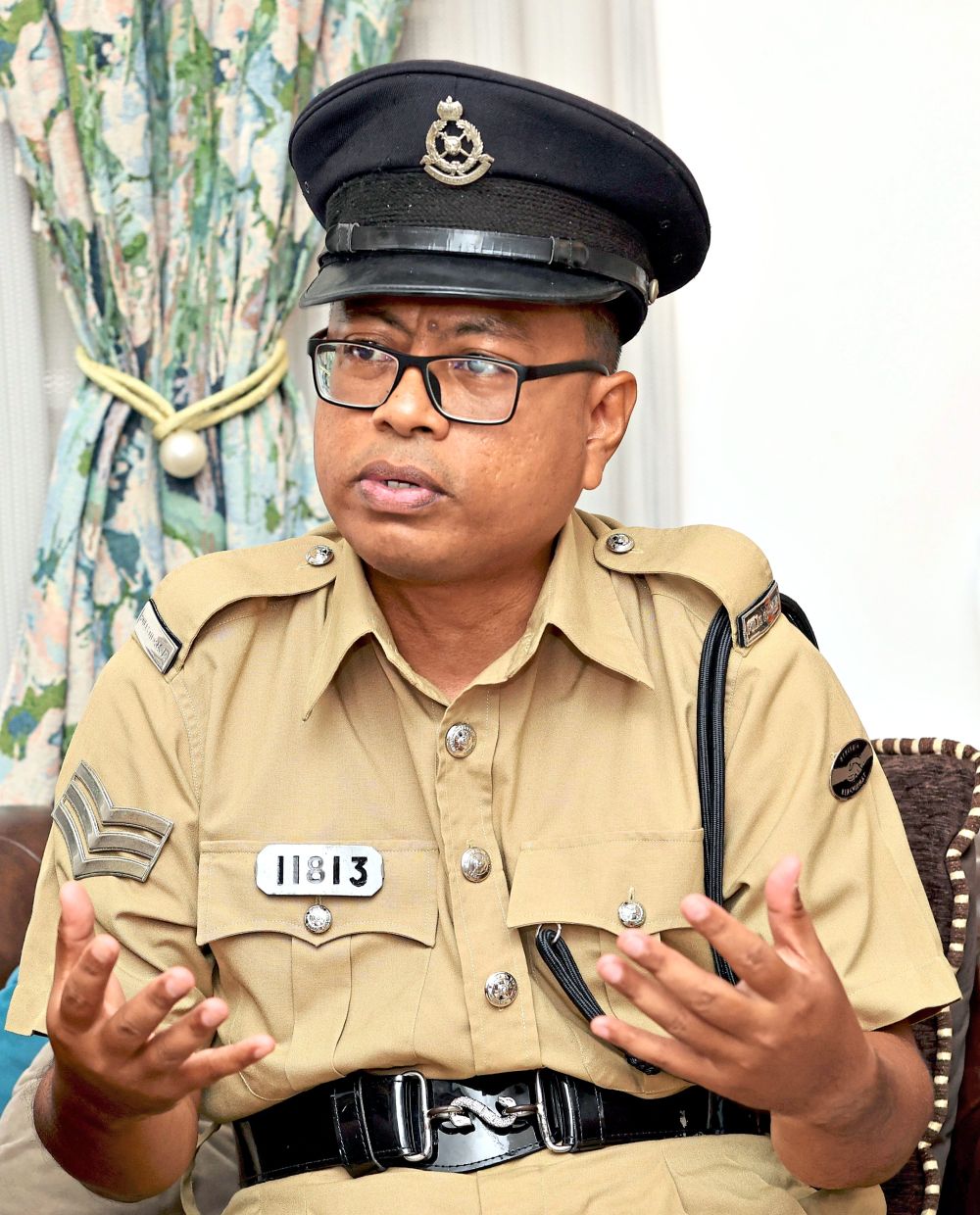
“We are not just showing off our uniforms. We try to embody how it was during those times. When people see us in these outfits, they come up and ask questions, and we try our best to answer them to the best of our knowledge,” he adds, noting how much time members spend studying books and manuals to prepare.
That physical connection addresses a limitation in how history is taught today: the difficulty to visualise the past.
Textbooks can be hard to engage with, Abdul Hakim says, especially when photos shown are faded or in black and white.
“People can’t really visualise how it was at the time. Most just want to know the standard facts – the dates, where and what happened – they’re not usually interested in finer details, like the colour of uniforms. That’s where we come in.”
But recreating the past also comes with responsibility, especially when the uniforms are tied to periods of war.
Abdul Hakim says PRUS acknowledges the events linked to the eras it portrays and approaches what it does through education rather than glorification.
“We’re conscious of the sensitivity of certain things that happened during those times, which is why we try to present our history in a positive manner.”
That distinction matters because the members don’t see the uniforms as ends in themselves. Mohd Fadzreeq also stresses that they aren’t out to analyse historical events or pose as academics in the subject. Instead, their role is to offer accurate visuals and practical references while staying open to correction.
“We’re not 100% correct because the information we have may have been misinterpreted or may be outdated. If others have more accurate information, they’re welcome to correct us,” he says.
“We are not doing this for fame or fortune. We do it because we genuinely love it – it’s not a hobby anymore, it’s part of our lives.”
Remembering the past
That sense of responsibility feels especially pertinent as National Day approaches.
Abdul Hakim says patriotism didn’t end when independence was achieved in the country.
Before independence, it meant the struggle for freedom from occupation. After, it became the responsibility of each generation to preserve what was fought for.
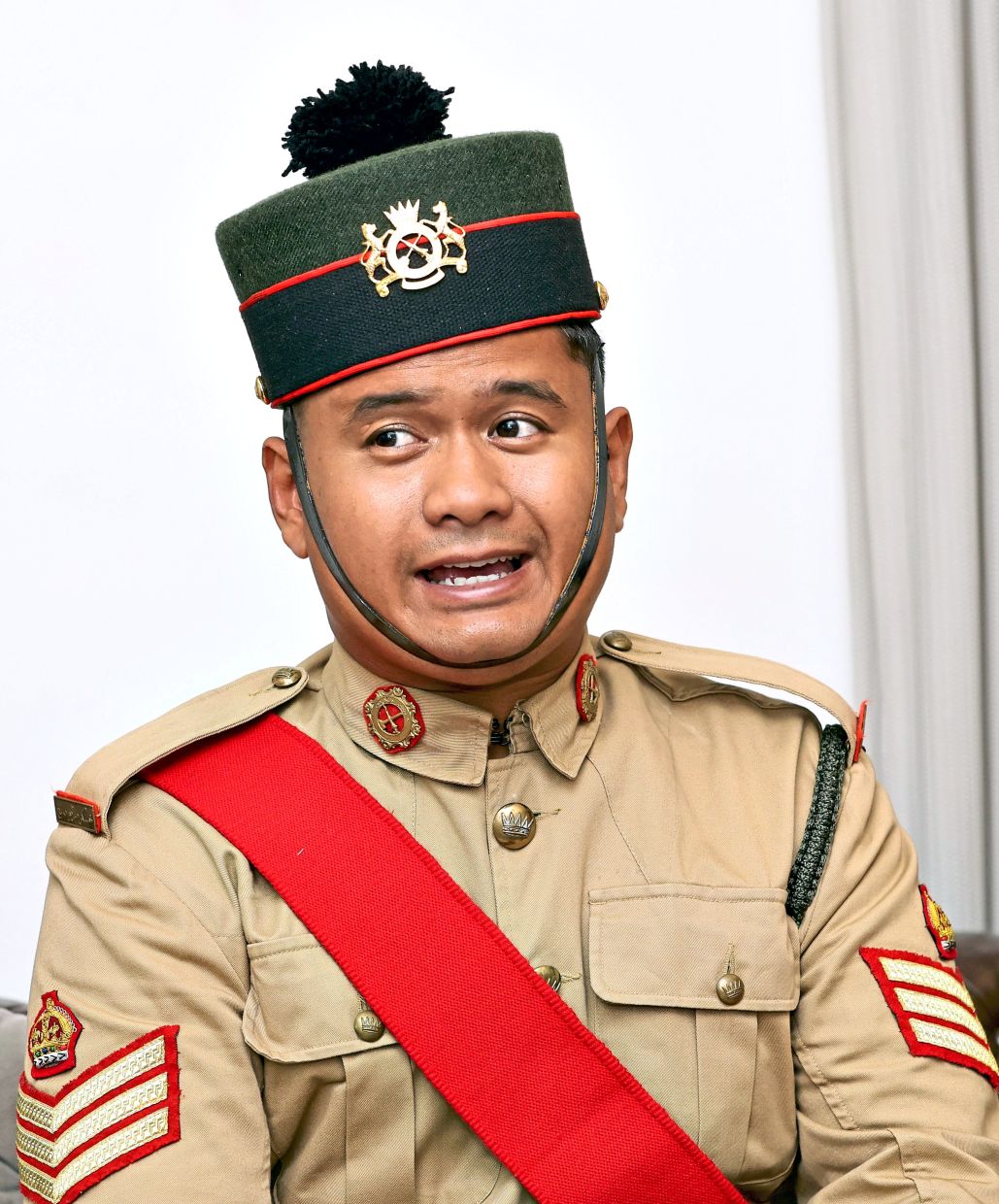
“We need to maintain our peace, multiculturalism and harmony. Our struggle is never over, we have to keep protecting what we have for future generations.”
For Mohd Fadzreeq, learning our own history is itself an act of patriotism.
“When I wear my uniform to teach at school, it makes me proud to see my students finally understand how people in the past struggled to get us where we are today. To me, patriotism is when you take the effort to understand your roots and history.”
That is what turns their fascination with re-enacting history into something bigger than just an interest in collecting vintage items.
The group, currently focused on 1930s and 1940s Malayan history, is now looking to branch out and explore the classical Malay era – a period Abdul Hakim believes is underrepresented in Malaysia’s re-enactment scene.
For a community that began with people simply gathering to share their love of old uniforms, the ambition has grown considerably.
But the enthusiasm at its core hasn’t changed, as seen in the gleam of their eyes as they describe their uniforms and history.
Ultimately, PRUS wants to encourage learning about the past, understanding the people behind the uniforms and developing a stronger sense of what it means to inherit the country shaped by our predecessors.
Preserving the past
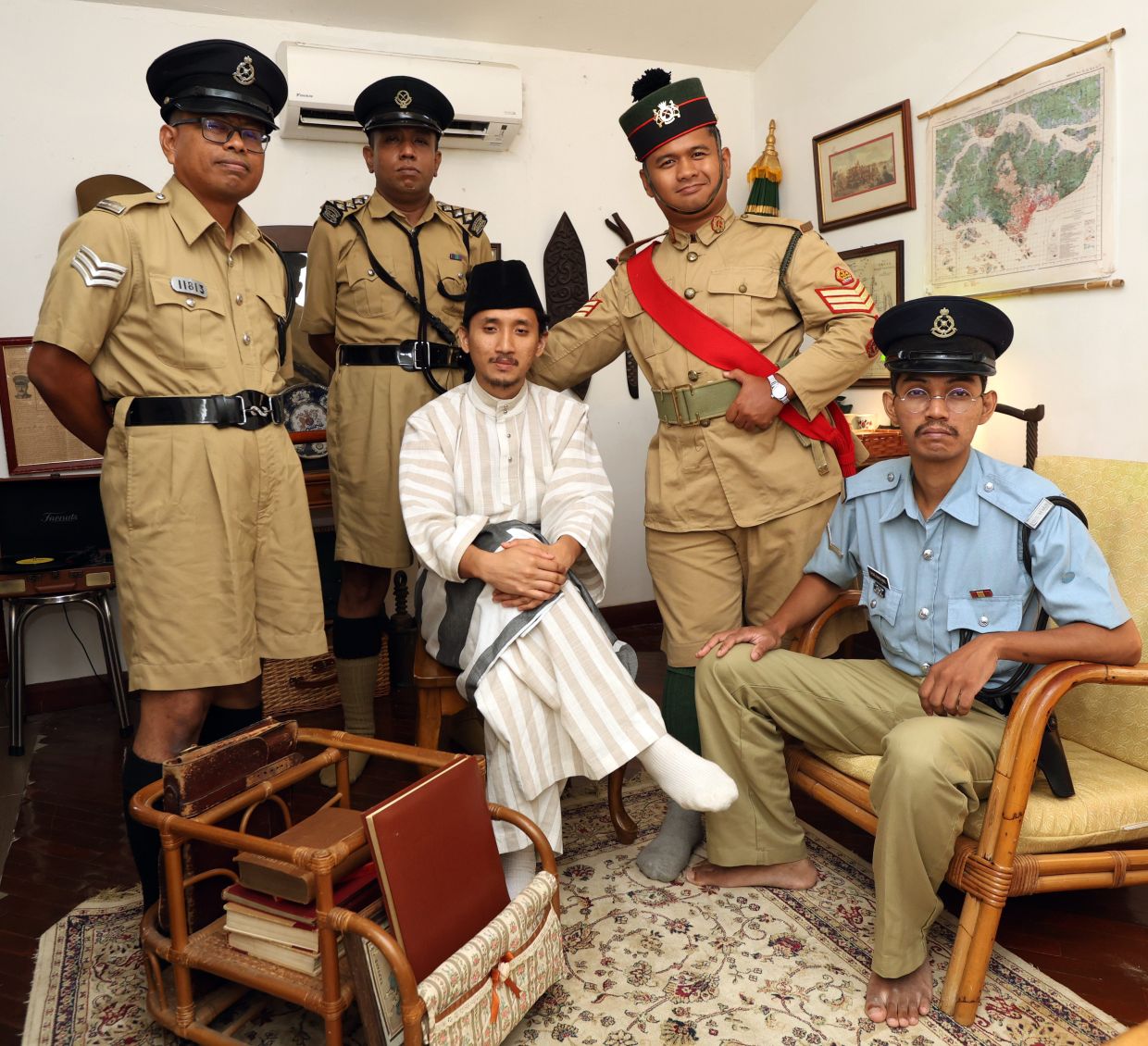
PRUS started out as a group of people who share a love of old uniforms, but now, it is dedicated to educating the public on historical accuracy. Photo: The Star/Chan Tak Kong
Abdul Hakim (right) teaching map reading skills during a recent re-enactment jamboree. Photo: Persatuan Reka Ulang Sejarah
Members sit under army tents as they learn practical skills to train for re-enactments. Photo: Persatuan Reka Ulang Sejarah
Abdul Hakim hopes to reach youths and encourage them to learn history in a more hands-on way. Photo: The Star/Chan Tak Kong
As a school teacher, Mohd Fadzreeq is proud when his students are interested in learning more about the past. Photo: The Star/Chan Tak Kong
PRUS is dedicated to conducting historical re-enactments through exhibiting historical uniforms and telling the stories behind them. Photo: The Star/Chan Tak Kong
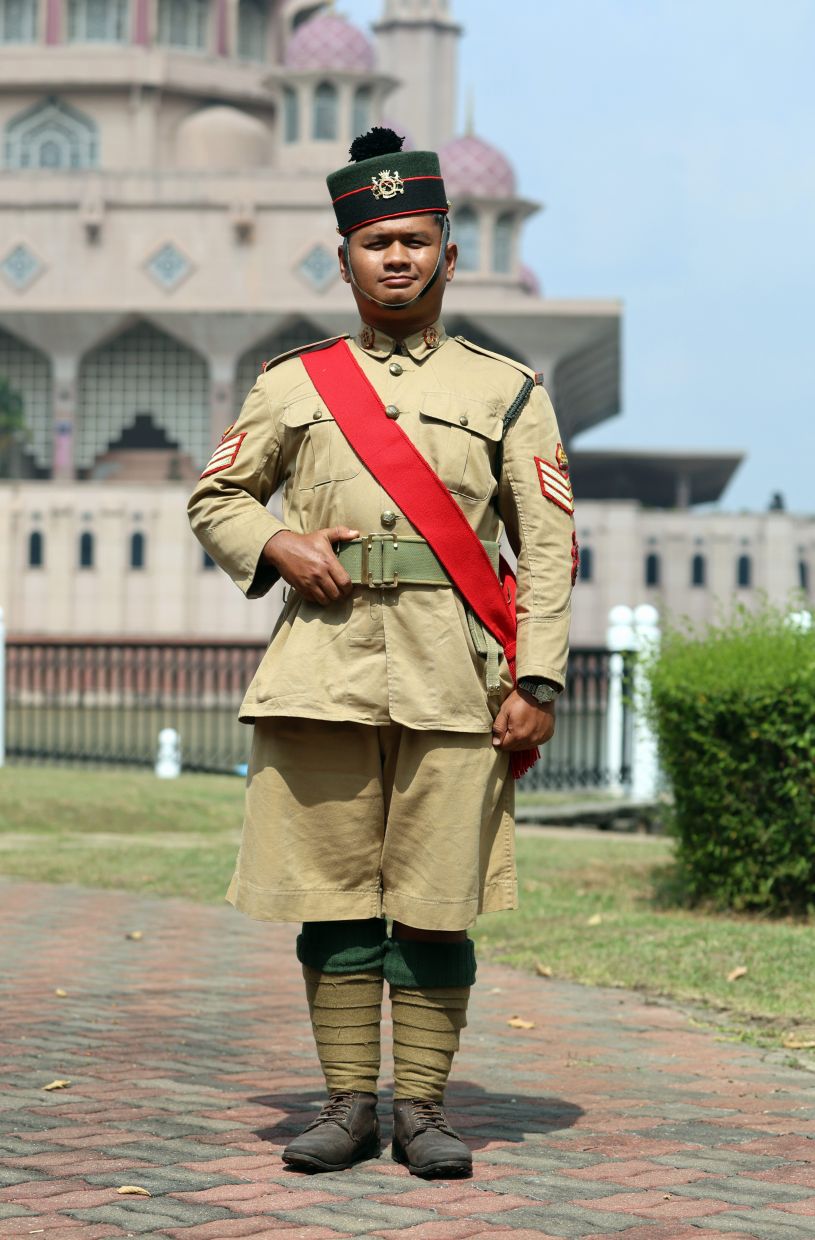
Abdul Hakim dons a ceremonial military uniform, similar to the one worn by historical figure Leftenan Adnan Saidi. Photo: The Star/Chan Tak Kong
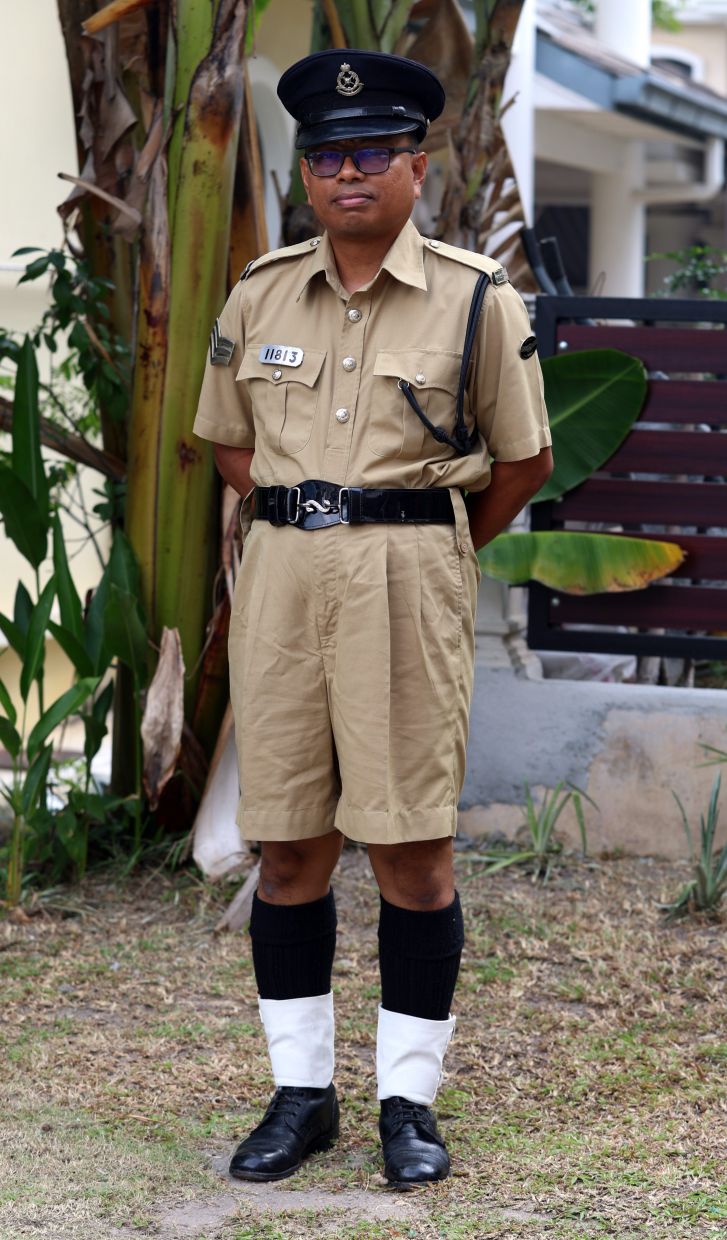
Mohd Fadzreeq wears the standard uniform of the Malayan police from the 1940s to 1950s. Photo: The Star/Chan Tak Kong