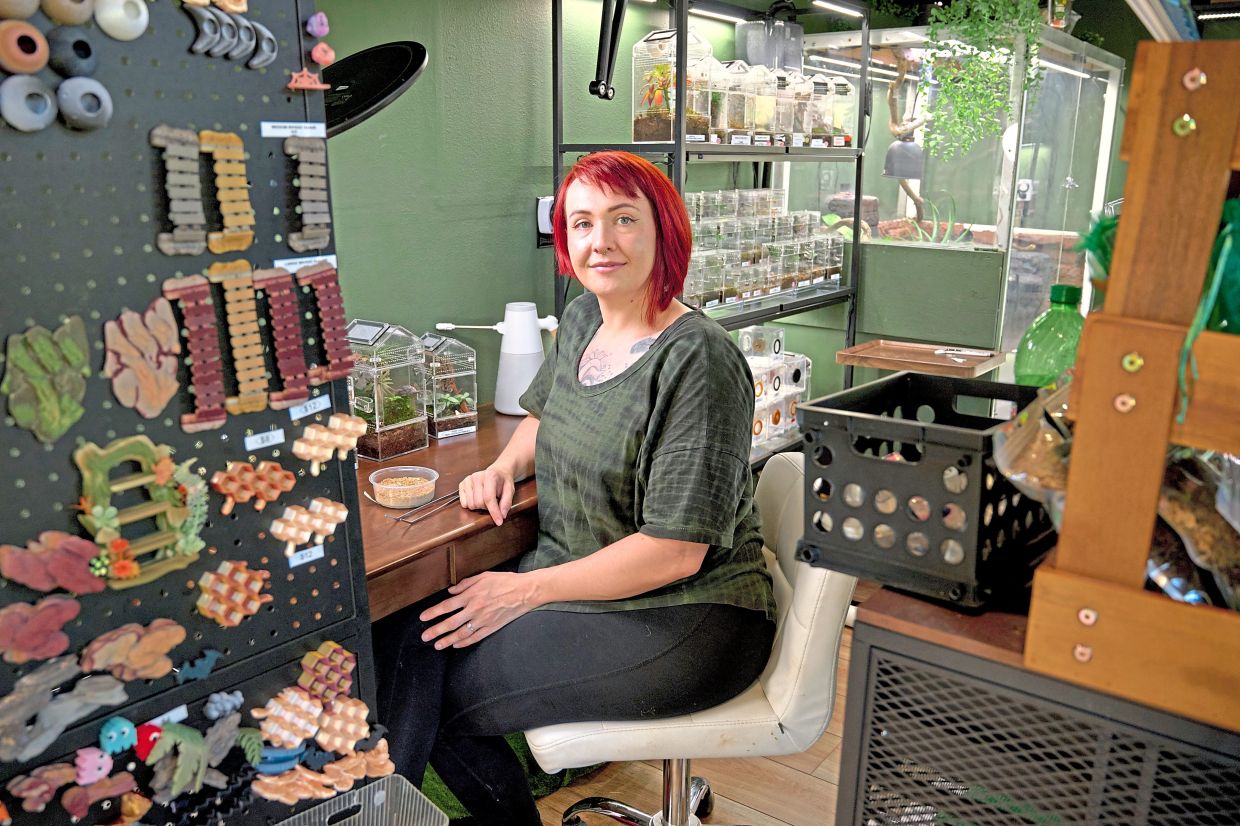
To a lot of people, Lauren Taylor’s home in Reno, Nevada, might seem like something out of a nightmare. She has around 2,000 spiders living in her house, a number that grows by the day as gravid, or pregnant, females lay egg clutches with dozens of new spider babies.
The spider infestation is deliberate. Taylor, a 35-year-old graphic designer, breeds, raises and sells pet jumping spiders, which have quickly become the Internet’s favourite spider: tiny, fuzzy stars of viral videos chronicling their spider antics.
Through her business, Spider Stuff, Taylor has sold about 600 spiders so far this year, as demand for pet jumping spiders has surged. She raises them in “spider condos” she designed, in separate enclosures to prevent cannibalism.
She also has 31 spiders she keeps as pets, including Harry, an adventurous one-year-old canopy jumping spider with dark green fangs and iridescent turquoise spots on his abdomen.
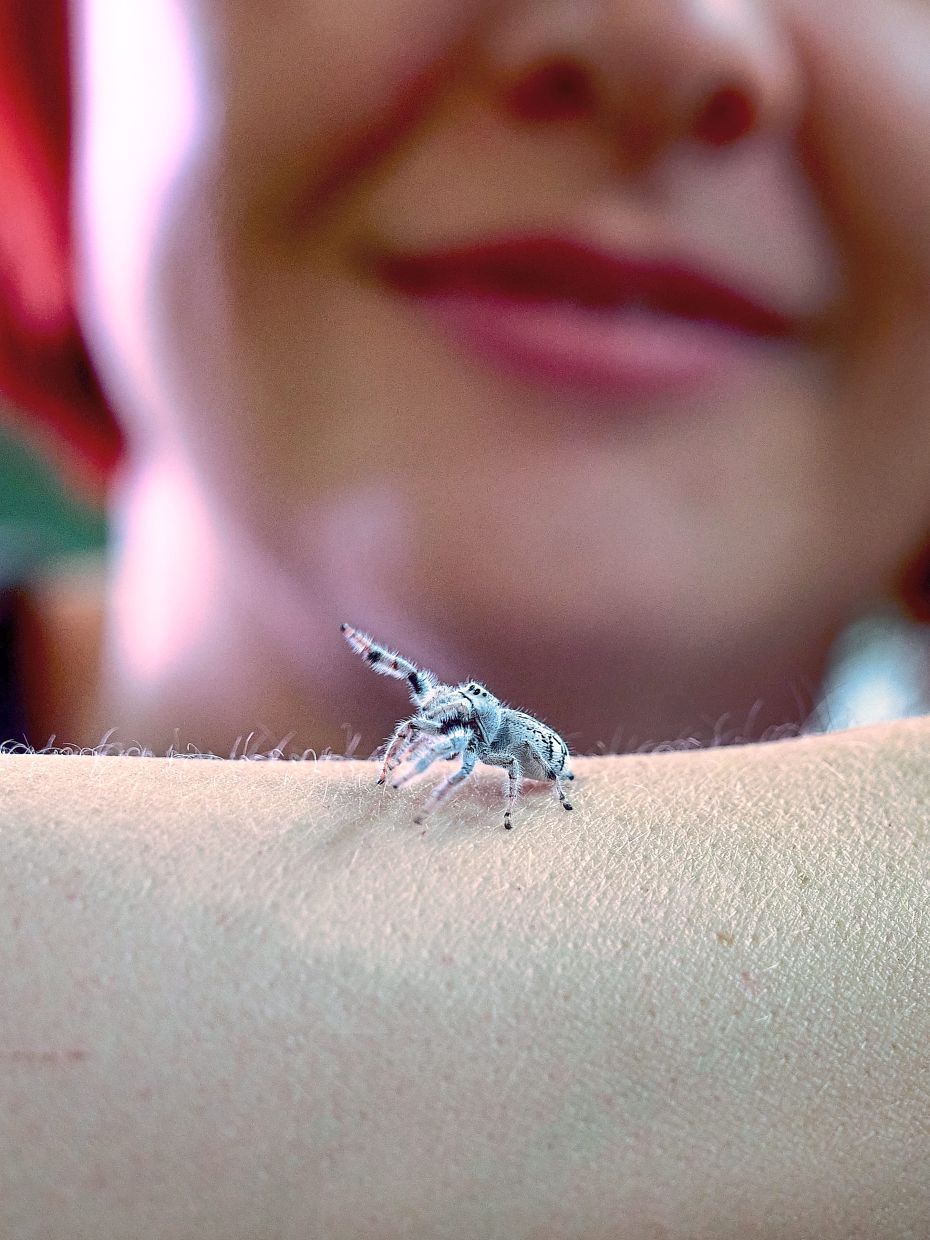
During a recent video call, Harry, who is smaller than Taylor’s thumbnail, crawled along her hand, jumping between her fingers and tapping his front legs before settling down to clean himself.
“Creating a bond with a spider, you would never think it’s possible until you do it,” said Taylor, who charges around US$60 (RM245) to US$100 (RM409) for jumping spiders, depending on the breed.
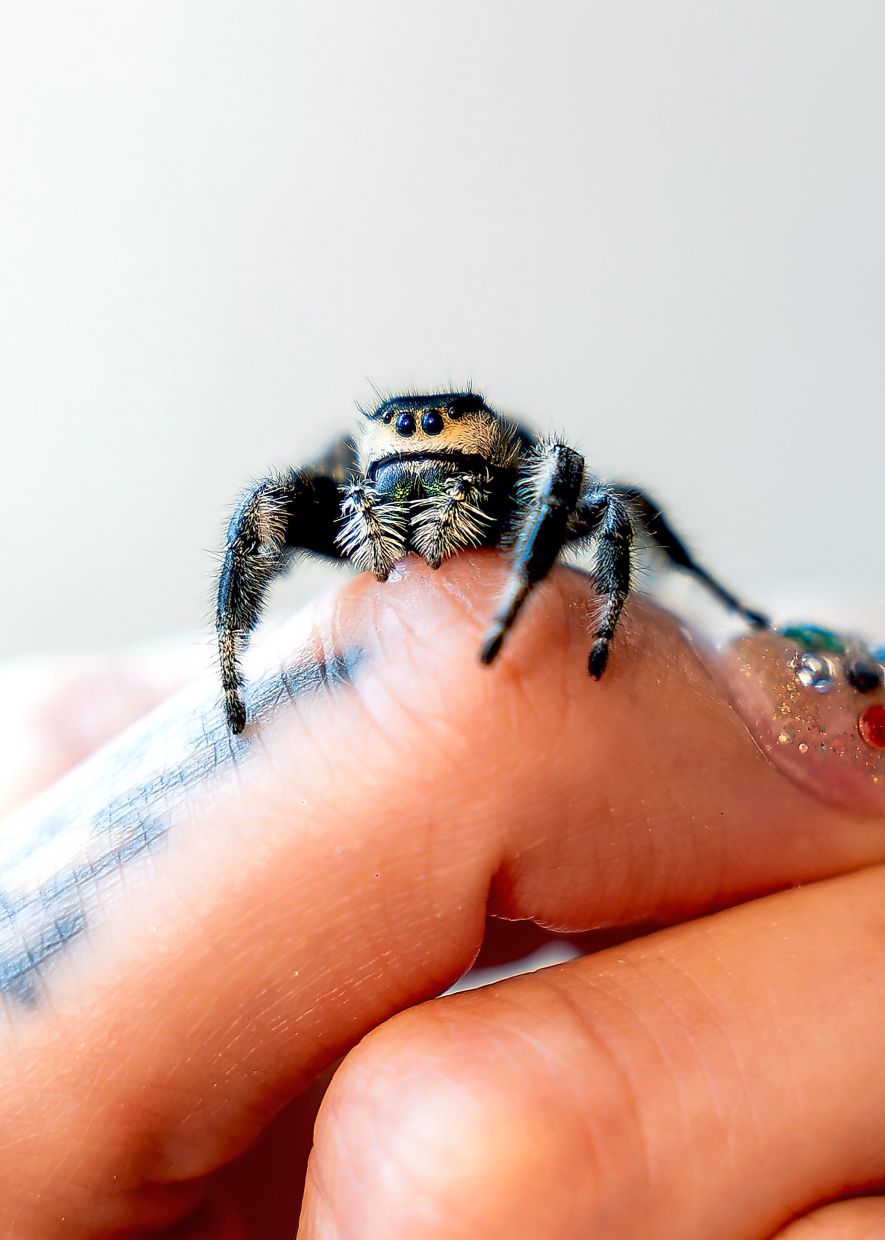
Jumping spiders – a common variety of spider that lives on every continent except Antarctica and includes at least 6,000 species – have become social media’s tiniest and unlikeliest animal celebrities.
Their popularity as pets has been fuelled by their appeal on social media, where they appear in close-up shots, perched on a human’s manicured fingernail, staring intently with eight penetrating, beady black eyes.
These arachnid social media stars have cute names such as Bambi, Ivy, Juniper, Pumpkin and Flower. They do adorable things: tilting their heads to one side quizzically, curling up in their little web hammocks, waving their front legs above their heads as if hailing a taxi, crawling around miniature bakeries and supermarkets and watching mini toy TV sets while munching on live worms.
Their fans call them spooders, spoods and web puppies.
From foe to fan
Some of these spider fanatics were once frightened of the animals they now lovingly live with. “I was terrified of them,” said Olivia Ontkean, 34, a dance teacher in Portland, Oregon, who became “fully addicted” to spiders after conquering her phobia.
She now has close to 250 adult spiders in her home, and countless baby spiders, which she sells through her business, Dances With Spoods. Another spider convert, Joleen Hernandez, 39, a stay-at-home mother of five in Oakley, California, said social media changed her perception of spiders as scary and gross, and inspired her to get her own jumping spiders.
“My friends and family thought I was crazy,” she said. Common responses were “why” and “ew,” she added.

Spiders, long maligned as creepy or terrifying, have undergone a remarkable reputational makeover. It’s partly because, their fans say, they’re just such good content.
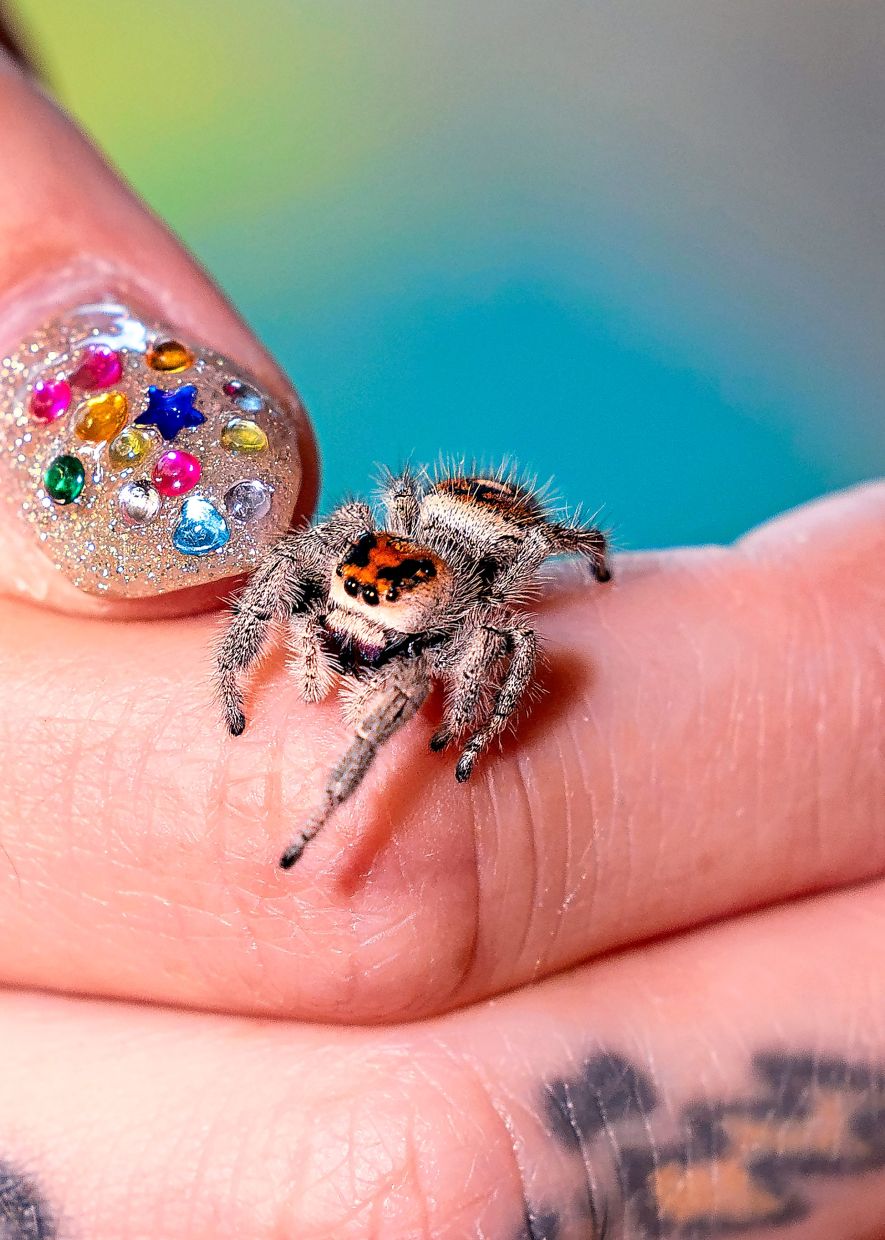
In an era when so much social media content is repetitive, trend-driven or sponsored by brands, the spooder-boomlet delivers a jolt of something different: a tiny fuzzy friend crawling across glittery gemstone nails, a spider no bigger than a coffee bean doing “uppies” (raising its front arms like a toddler asking to be picked up), then leaping onto a person’s hand.
These wholesome human-spider interactions offer viewers a chance to reconsider previously held notions about which creatures we deem worthy of love, and to discover your mind changed.
Spider aficionados say jumping spiders are the perfect arachnid ambassador: They’re small, curious and observant, and can often adapt to being handled by humans.
“People are really just discovering how clever and charming these animals are,” said Nathan Morehouse, an ecologist and associate professor at the University of Cincinnati, who studies jumping spiders. “If you as a person are interacting with them as a pet, you quickly begin to realise they’re paying attention to you very closely.”
Growing demand
Jumping spiders, he said, are solitary, and though they can bite, they rarely do unless threatened, and their venom is harmless to humans.
Animal rights advocates don’t love that people are indulging their arachnophilia by keeping pet spiders. Some argue that the never-ending quest for novelty in a saturated social media landscape shouldn’t drag innocent eight-legged invertebrates into spider vaudeville.
In an article last year, the People for the Ethical Treatment of Animals called the jumping spider craze a “cruel social media fad” and argued that spiders shouldn’t be treated as “props.”
In one sense, spider owners and those who criticise them agree: Spiders deserve more consideration.
“Once you experience a jumping spider and you realise it’s cute, it’s harmless, they start to realise all of the spiders are the same, none of them are out to get you,” said Kelly Bannister, 37, a hospice nurse who lives in Bonney Lake, Washington.
She fell in love with spiders a couple of years ago, after seeing a video of a jumping spider crawling around a tiny house. Bannister now has at least 90 of them, and she’s opening a storefront in a converted shed on her property for her spider business, Web Puppy Lodge.
As the demand for jumping spiders has grown, and insects and other invertebrates become more popular as pets, big chains have entered the arena, upsetting some in the indie spider sector.
Last year, after Petco and PetSmart began selling jumping spiders, more than 2,000 people signed a petition demanding that the chains stop selling jumping spiders.
Petco did not respond to a request for comment. A PetSmart representative said the company “maintains rigorous animal welfare, sourcing and vendor compliance standards” and follows “comprehensive standards for the care, health and well-being of pets while they are in our stores.”
Sales have been robust: PetSmart, which is also adding giant African millipedes and death-feigning beetles to its stores, has sold tens of thousands of jumping spiders since it introduced them last August.
There are, of course, downsides to keeping jumping spiders as pets. They’re hunters who require live prey, like mealworms, fruit flies and crickets. They typically live for only about one to three years. They can escape their enclosures and go missing. Or you might accidentally acquire a pregnant spider and end up with hundreds of babies.
Then again, a brood of baby spiders can be Internet gold. – ©2026 The New York Times Company