Opening a restaurant in a country where many are struggling to feed themselves and the electricity is more often off than on may seem foolhardy, to say the least.
Many shops, cafes and hotels in Cuba have closed since January, when the United States imposed an oil embargo, starving the communist-ruled island of fuel for its power plants and vehicles.
Once-vibrant Havana is a picture of misery as the standoff drags on into its eighth month.
But some chefs are clinging on, in the hope that better times lie just around the corner.
Dainel Castillo used to run a restaurant catering to the tourists that poured off cruise ships.
With foreigners having all but deserted the Caribbean island, he, like many in the tourism industry, has fallen back on the domestic market.
“It’s the Cuban people who are consuming now, who are eating, who are going out to eat,” he said.
It’s a trickle, not a tide, however, and most cannot afford to fork out 6,000 pesos (RM36.30) at the informal exchange rate, nearly the average monthly wage of US$10 (RM40) – for his signature surf-and-turf mix of seafood, chicken and pork.
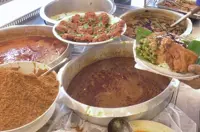
So he opened a new restaurant named Jireh (Hebrew for “The Lord Will Provide”) offering humbler fare: pork dough, a Cuban staple, for 50 pesos (30 sen).
Just putting food on the table is a herculean task.
Cubans find a way
Several hours each day are spent trying to source ingredients like cooking oil.
One bottle costs between 4,000 and 5,000 pesos (RM24 and RM28), a huge sum for most.
So he now swaps in lard.
“Cubans always find a way,” Castillo joked.
But no amount of inventiveness can circumvent daily power outages that last up to 30 hours at a stretch in the capital.
When the electricity goes, the fans stop whirring, diners’ conversation comes to an abrupt halt and food begins spoiling in the refrigerator.
It’s not just the little guy that is suffering. A 20-minute walk from Castillo’s restaurant is La Guarida, an upscale restaurant situated inside a decaying mansion that featured in the 1993 Oscar-nominated movie Strawberry And Chocolate.
In its heyday, Cuba’s most famous restaurant hosted celebrities such as Steven Spielberg, Madonna and Mick Jagger, visits memorialised in photos on the wall.
These days, it is glaringly empty.
“La Guarida is my life,” said Enrique Nunez, its 57-year-old owner. “Even if I’m the only one coming to work, I’ll come and keep it open.
So who goes to a restaurant in Cuba today?
Yosbel Leon, 44, has the difficult task of drawing customers in off the street to Jireh. He estimates that 90% of Cubans simply can’t afford to eat out.
“It’s the people who can save a little money, those who really have money. Very few ordinary Cubans,” he said.
Armanda Saez, an 18-year-old student who was munching on a pastry outside a cafe, described restaurant outings as a luxury for her family.
“We have to dip into our savings,” she said.
Rafael Gomez would like to take his partner out for dinner to celebrate her upcoming birthday.
The last time they went to a restaurant was in December, before the US blockade began.
“I’d like to take her back to the same restaurant,” said Gomez, 39, who is unemployed. “To feel happy and enjoy a nice meal.” – AFP