When dogs moved in with humans and became "man’s best friend", we discovered that we could breed them for specific characteristics and duties.
In the Tang Dynasty, the stunning Pekingese and other pretty breeds were created as "sleeve dogs" by Chinese emperors. These were gifted only to other royals and a handful of nobles as tokens of esteem.
The Japanese Chin dog was said to have been a gift originally from the Chinese royal court.These little dogs were treasured, sleeping on special silk beds and with their own personal attendants. Stepping on a paw or tail was considered a serious offence!
Prized dogs were exchanged as gifts in other ancient kingdoms too. In ancient Mesopotamia, King Ibbi-Sin of Ur sent a rare spotted dog as a gift to the Ruler of Marhashi and received gifts of valuable guard dogs by return.More ancient tablets recorded King Burna-Buriash II of Babylon sending royal hunting dogs with bejewelled collars to Pharaoh Tutankhamun.
Not every breed, though, was created for looks or status. While most pedigrees are typically bred for one particular thing – looking pretty, chasing deer, fighting lions – the German Shepherd is iconic because it was bred to be the ultimate all-rounder service dog.
Intelligent and good looking
German Shepherds are hugely intelligent, happy to learn, strong, fast, agile and adaptable. They’re also good looking dogs with a lovely black and tan coat that’s easy to brush to shiny perfection.
When we think of service or military dogs, the German Shepherd is the dog that comes to mind.
This is not a coincidence. The original German Shepherd pedigree was created by Max von Stephanitz, a Prussian aristocrat, professional soldier, and former student at the Berlin Veterinary College.
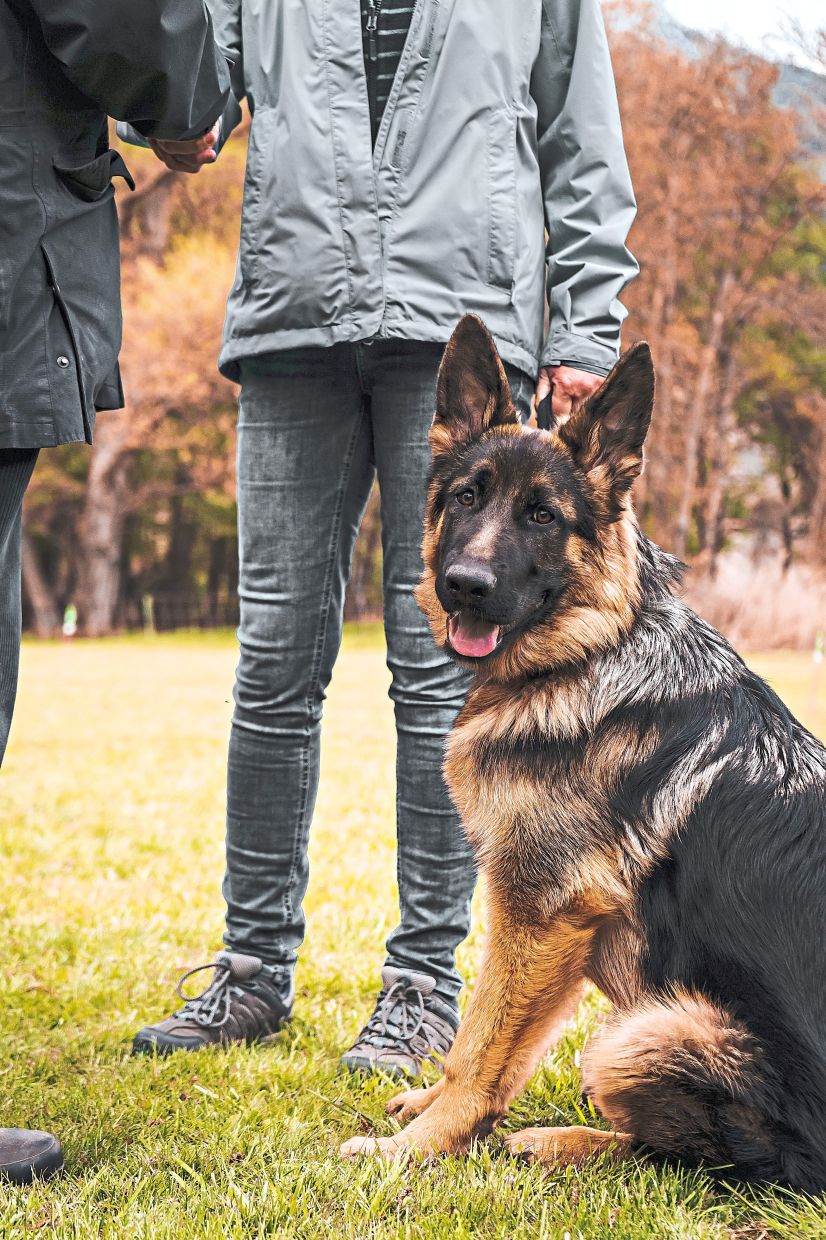
In the 1890s, German farmers and dog breeders were very keen to create the perfect working farm dog. There was even a club, the Phylax Society, that hoped to create a superior dog breed. They planned to pick the best local specimens, breed them from each other, and formalise the pedigree.
However, the Society were hotly divided as to what would make the perfect dog. Max von Stephanitz gave up his membership and went to do this alone.
He bought a beautiful, clever dog called Hektor Linksrhein, changed the dog’s name to the much posh-sounding Horand von Grafrath and on Jan 1, 1895, founded his very own Society for German Shepherd Dogs.
Using Horand as the foundation dog, von Stephanitz quickly built up a reputation for producing high-quality working pedigrees.
German Shepherds have many talents and so their fame and use very quickly moved away from farms and into general service. By the end of World War I, the dogs were hugely popular with German police, rescue services and the military.
A new name
Its very popularity in Germany became a problem after the war. Breeders and enthusiasts overseas thought that the public might be put off by a "German" dog. To make marketing easier, the UK Kennel Club quietly changed the name to Alsatian Wolf Dog. Within a short time, the dog simply became an Alsatian.
The breed got an instant boost when Hollywood produced Rin Tin Tin, a canine actor. Rin Tin Tin made 25 hugely popular films for movie studio Warner Brothers during the 1920s.
That popularity was further cemented in 1929 when Buddy the Alsatian became the first official dog for The Seeing Eye, the world's oldest existing guide dog school.
Since then, the Alsatian has firmly planted itself as an expert dog in many fields. They work as police, search-and-rescue, guide, military, herding and in detection. They can make lovely companions for people who enjoy an active dog. German Shepherds are fun loving, energetic, protective, and super clever.
As they’re big and bouncy, they need to be socialised properly, and learn to sit and stay nicely when meeting new friends and visitors.
Like many breeds, a happy German Shepherd will take your hand in its mouth and pull you along to see something. They also like to nibble a bit when they’re chatty or happy.
As they’re big, part of socialising is to help them learn when that’s okay and when they need to use "company manners".
Thankfully, their intelligence and family-minded nature means they take well to positive enforcement training.
But training is only part of the picture. The German Shepherd is a worker dog bred to run after sheep all day. They need at least an hour of running around daily. They love games like throwing the ball, playing frisbee, and they adore agility training.
That energy was on full display at Crufts 2026, held in March in Birmingham, Britain. A video of Emrys, a five-year-old Alsatian at the Hoopers Run, went viral because he raced through the agility course so quickly that the cameras had to flip to keep up with his fast tight turns.
After generations of breeding for intelligence, strength and service, there’s still simple joy in watching a good Alsatian do what it does best.