I love dogs. Huge furry labradors, little squash-nosed pugs, bouncy terriers – I like them all. For years I’ve petted my dog friends, and greeted unknown dogs as friends I just haven’t met yet.
Recently though, I’ve been stuck at home with a serious back problem. It’s kept me from standing up, walking and bending. I’m getting better but it has changed how I socialise.
The change hit me hard one Friday. I was outside, walking around a small park near the house, when I met the most adorable poodle, pug and miniature terrier quartet. They saw me, wagged their tails and bounded over.
For a split second I was absolutely terrified. If they jump up on me, my back pain might return. As I thought about it, all four dogs stopped, practically mid-bounce.
It prompted a question: could they see my fear?
We all see dogs reacting to body language and voice tones. Move slowly and speak softly, and a dog will feel comfortable to talk to you. Be stiff and yell, and the pet will not want to be close to you.
In the park though, it happened so quickly that I didn’t think I said or did anything – except maybe stiffen and close my eyes in fright.
Back in 2018, researchers at the University of Bari Aldo Moro in Italy tested 26 dogs on their ability to read human faces for emotions.
It was quite a complex experiment. They showed dogs a bowl of food next to a photo of a man or a woman showing anger, fear, happiness, sadness, surprise, disgust or just being neutral.
Through analysis of doggy heart rates, behaviour and body language, the researchers found that dogs definitely noticed a difference. The photos showing fearful faces led to faster heartbeats and the pets were slower to eat.
Poodles and terriers are super bright so the park pack may have clocked my expression and decided I was afraid, even though they didn’t know me.
But a recent study suggests that dogs may be working on a level that we don’t even begin to understand: smell.
Super sniffers
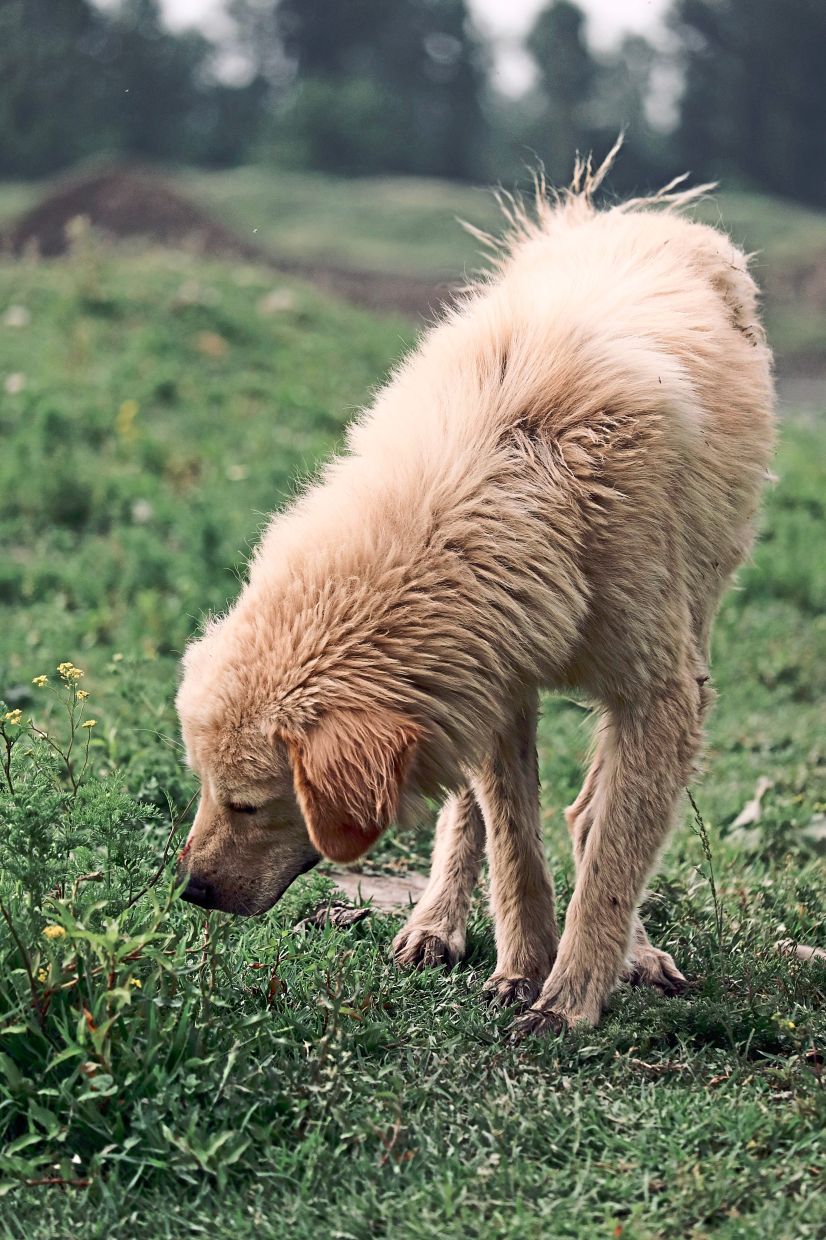
When we see our pets running around, sucking up smells excitedly, there’s a lot that we’re not aware of. First of all, we humans breathe in or out – we tend not to do both at once. (Try it!)
So-called circular breathing is a skill that is learned by highly skilled musicians who play wind instruments like the Australian didgeridoo and Cambodian sralai.
Dogs are born with this talent. Even better, dog noses split airflow into two streams. One is dedicated to smelling and the other to respiration. The two streams don’t mix.
Dogs also have a built-in scent science lab that would have fragrance and flavour manufacturers go green with envy.
We humans have about six million olfactory receptors, specialised cells in the nose that decode scents. Dogs have 300 million.
Dog brains are also optimised for scent analysis. The bit of the brain that’s dedicated to decoding and interpreting smells is about 40 times bigger in dogs than it is in humans.
Dog brains also log and analyse information coming from each nostril separately. This allows dogs to locate exactly where the scent is in space.
Finally, dogs have a vomeronasal organ, a special patch of scent sensitive cells in the nose that lies just above the roof of the mouth. This detects pheromones, chemicals released by living creatures that signal information about mood and health.
We humans have a vomeronasal organ too, but scientists aren’t sure how or even if it works.
Put it together and it’s no surprise that dogs can smell between 10,000 to 100,000 times better than us.
If scents were like sight, it’s saying we can see a car clearly at 300m, but a dog can see it just as clearly at 3,000km. If the car is hidden from view, the human cannot see it but the dog can smell it.
Thanks to their sniffing power, dogs living in the wild can find food easily, even if it’s buried or it’s far away. It also helps them avoid predators who are hiding from view. And when dogs are in a group, they can spot the female dog who is fertile, which puppy is theirs, and more.
When living with us, dogs know immediately if we have a treat hidden in a pocket. Even more interestingly, dogs can read human emotions with their eyes closed because their noses tell them how we are feeling.
Fear has a scent
Thanks to sophisticated chemical analysis, we know that emotions have distinct markers. What hasn’t been clear is whether dogs can pick these up.
Last year, a team of researchers at University of Veterinary Medicine Vienna in Austria tested to see whether dogs can actually smell fear – or if they’re just watching us and reacting.
The scientists put on a series of horror films in a cinema and collected sweat from people watching it. Then they repeated the experiment with lighthearted films.
The researchers then dressed up in masks and chewed gum so they had random facial expressions. With the collected scents, they watched how 61 pet dogs reacted.
Overall, dogs coming near the fear scents held their tails low and were a bit hesitant. But the dogs didn’t all react the same way and they certainly didn’t consistently avoid the smell.
The conclusion is that dogs can smell our fear but they don’t have a single reaction to it. This is possibly because dogs have different experiences talking to scared humans. It may also depend on the dog’s personality.
Practically speaking, a confident, caring dog may come and offer comfort whereas a nervous pet who has been shouted at may decide to back off.
Back in the park, when the pack piled on the brakes, I felt overwhelming relief.
The dogs looked at me, glanced back at their dad and when I explained I could pet but not bend or take any kind of bouncing, the dogs surrounded me, tails wagging and let me pet them.
They were gentle, as they might be with a puppy.
I still do not know whether they read my face or smelled my fear, but they certainly knew how to be gentle with a recovering dog lover. Dogs are pawsome.