Every morning, Norbiha Mastuki makes it a priority to step outside into her garden and tend to the plants.
Around her, pots and plant beds overflow with edible greens and vines creep around the wooden fences.
Her cats trail closely behind her as she moves from one plant to another, inspecting leaves for pests and harvesting what is ready.
It’s easy to imagine why this area in her backyard gives her a sense of peace in her everyday life as she humorously remarks that the space feels like part of the family.
In the middle, a bin filled with food waste collected from her kitchen sits in the shade. Once broken down, the liquid flowing out of the tap installed at the bottom of the bin is mixed with harvested rainwater before being fed to the crops.
It all started when she took a short gardening course shortly before the Covid-19 pandemic with encouragement from a friend.
“When the lockdown came into effect, I started exploring the land behind my house – which used to be filled with wild shrubs,” the 54-year-old says.
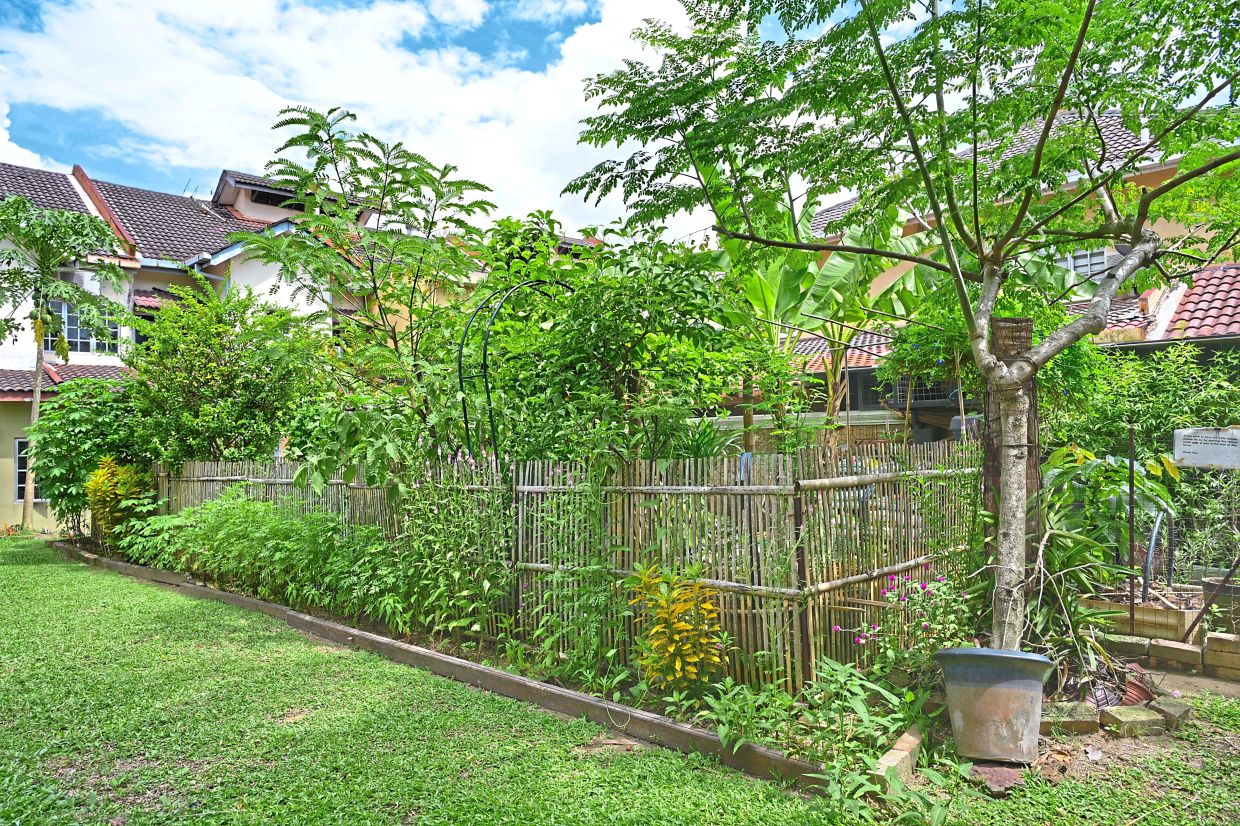
What began with a few simple crops eventually grew into a sprawling home garden.
“Living in an urban environment, we don’t really get to see how the vegetables we eat are grown,” she notes.
“Gardening on my own and being able to harvest my vegetables with my own hands has made me very happy. Being part of the entire process is therapeutic.”
More than just a hobby
Aliah Adam, 34, first turned to gardening as a practical solution. Around 11 years ago, she started growing vegetables at home to feed her pet bunnies fresh produce.
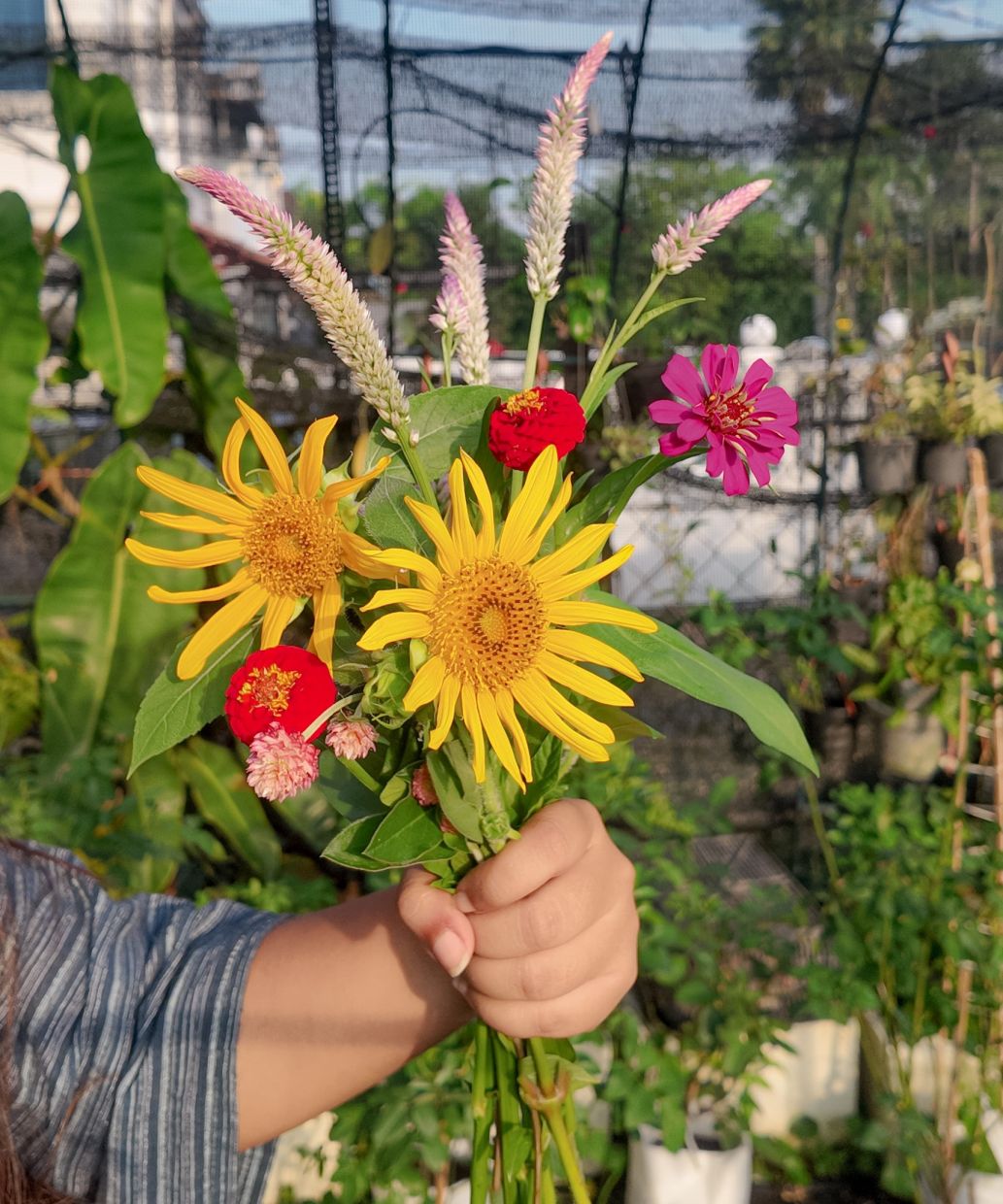
As time went by, she started exploring and growing more plants on her front porch. Today, her garden is a lush and colourful haven of flowers and vegetables like sunflower, lily, okra and daun kesum, just to name a few.
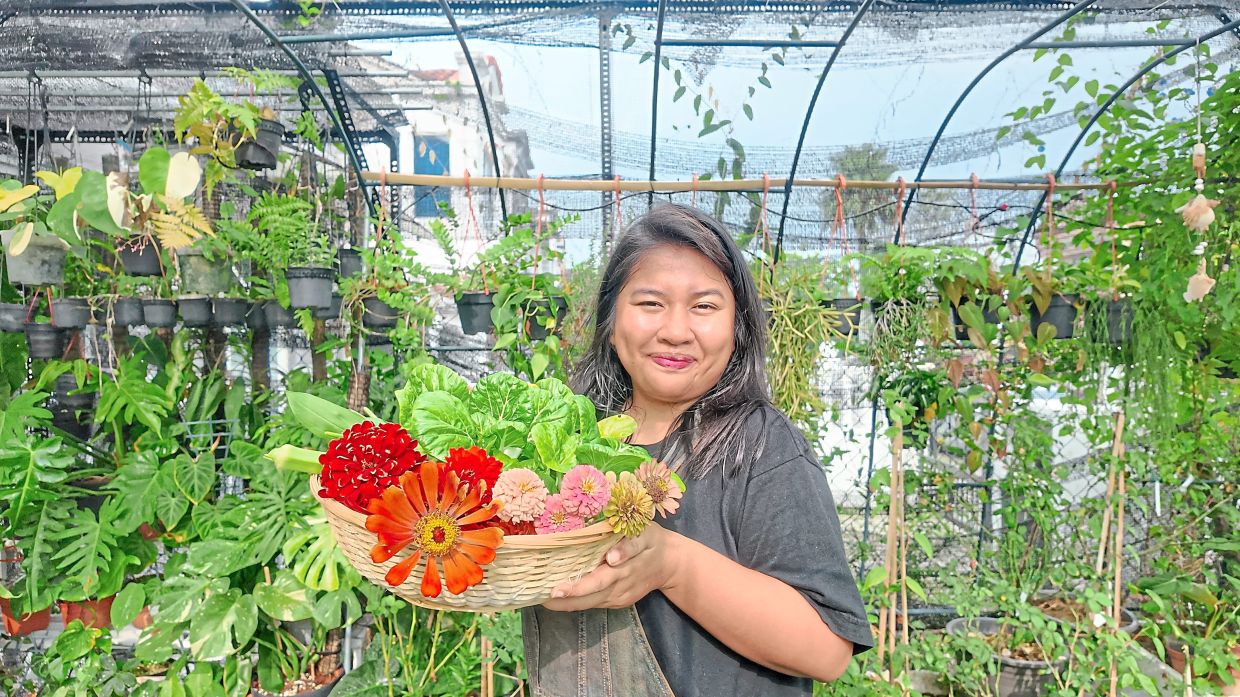
“Gardening has become my go-to whenever my mind gets too loud – it helps me slow down. It teaches me to live in the moment while also giving me something to look forward to every day,” she says.
“There’s something healing about nurturing something slowly and watching it grow over time.”
For some gardeners, the desire to grow their own food stems from memories tracing back to childhood.
Growing up in Fraser’s Hill, Pahang, Ong Joo Ann spent much of her younger years watching her mother and grandmother garden.
After moving to the city, growing edibles was not something they thought of doing at first. However, her family began to shift towards a more organic lifestyle due to her late father’s health complications.
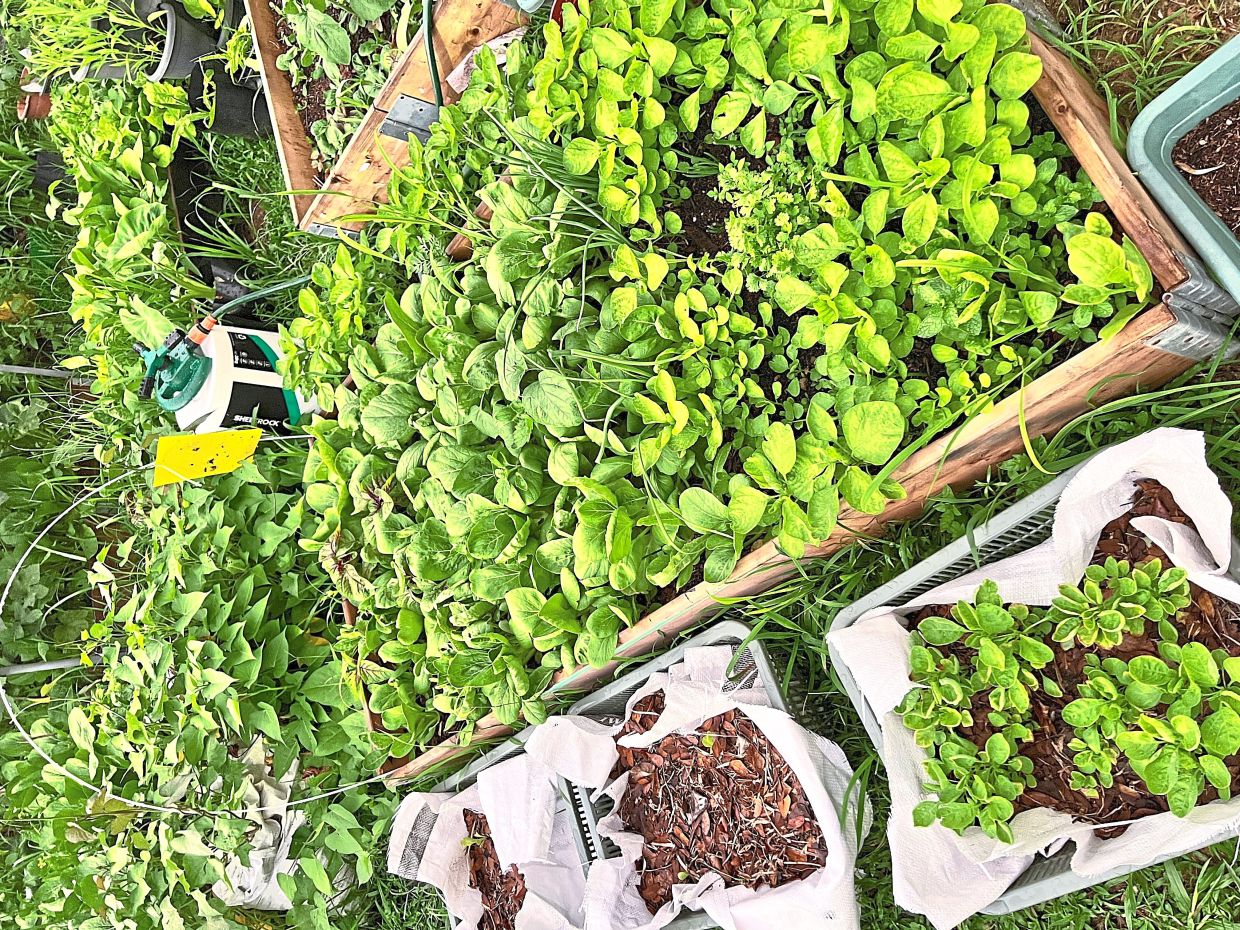
As organic produce at the time was expensive, this led to her family growing vegetables in pots around the house.
“It became a passion. I started wanting to plant more and convert our porch into an edible garden,” the 41-year-old shares.
Today, her garden grows everything from papaya, passionfruit and moringa to ginger, roselle and Brazilian spinach.
Ong reflects on her ideal garden, one where chickens and ducks are free to roam around the area which is dotted with fruit trees. She would also like a bigger space to do her composting and collect rainwater.
“I’m still happy with whatever I can do with this space now, as long as I can grow enough vegetables to share with my family, relatives and neighbours.”
A way to slow down
Observed annually on June 5, this year’s World Environment Day’s theme, “Inspired by Nature, For Climate, For Our Future”, stresses the urgency of tackling climate change and the importance of nature in the solution.
Home gardening is an example of how individuals can work with natural processes – plant growth, carbon storage, soil regeneration and biodiversity conservation – to support climate action.
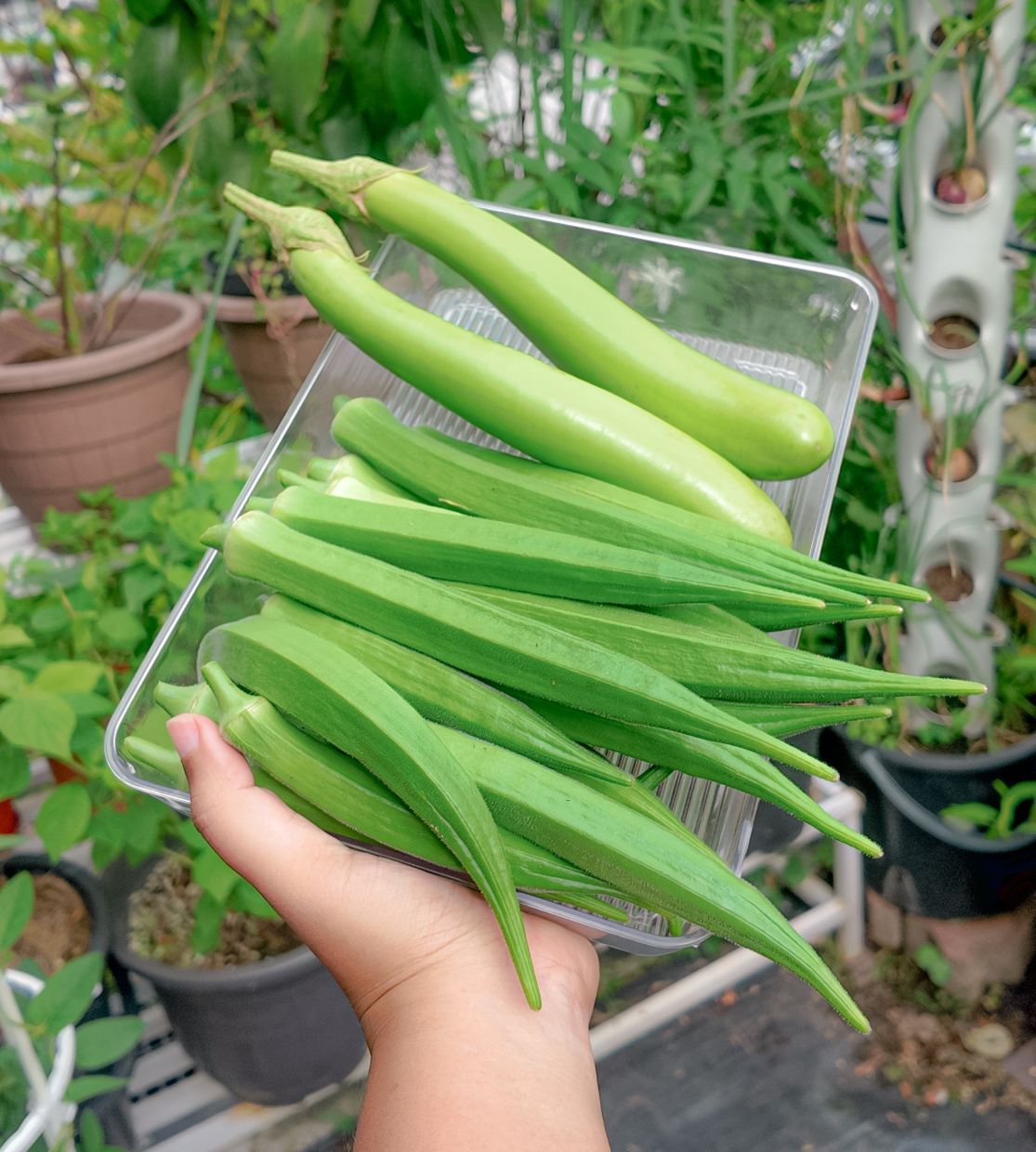
Gardening also allows people to observe and move differently and lead a slower, more intentional life.
“Watching how a tiny 3mm seed turns into a full-grown bunch of vegetables amazes me even to this day,” Ong says.
“Growing your own food and turning it into a delicious and nutritious meal on the table feels really different.”
Aliah shares the same fascination when it comes to watching her plants develop from something little.
“For me, nothing beats the feeling of seeing a seed germinate. I’ve experienced it hundreds of times, but it never fails to bring me immense joy every time I see those tiny seedlings pop up from the soil,” she shares.
These moments of growth, however small, slowly become intertwined with emotional well-being.
Ong describes herself as naturally anxious and restless, but says gardening helps greatly with slowing down both her mind and body.
“It really builds my patience and slows down my nervous system. My breathing and pace also slows down when I’m at work and I feel more at peace.”
Norbiha also refers to gardening as a form of “happy therapy”, especially during quieter moments spent tending to plants alongside her cats.
Even the act of composting, which is viewed as tedious, has become something meditative for her.
“I find that composting brings me a lot of relaxation. It’s an important part of my gardening process and it’s also great to see a reduction in the amount of waste I throw out on a daily basis,” she explains.
For Aliah, gardening has also reshaped her relationship with food. “I’ve become much more accepting of imperfect-looking vegetables with holes and blemishes because that’s nature,” Aliah says.
“At the same time, I’m also more conscious about how much labour and chemicals go into producing the perfectly polished vegetables we often see in supermarkets.”
Ong adds years of growing her own food taught her to appreciate the fragility of crops and the effort that comes with maintaining them.
She also mentions another notable difference, saying that “the flavour and texture of homegrown produce is really different” than those produced commercially.
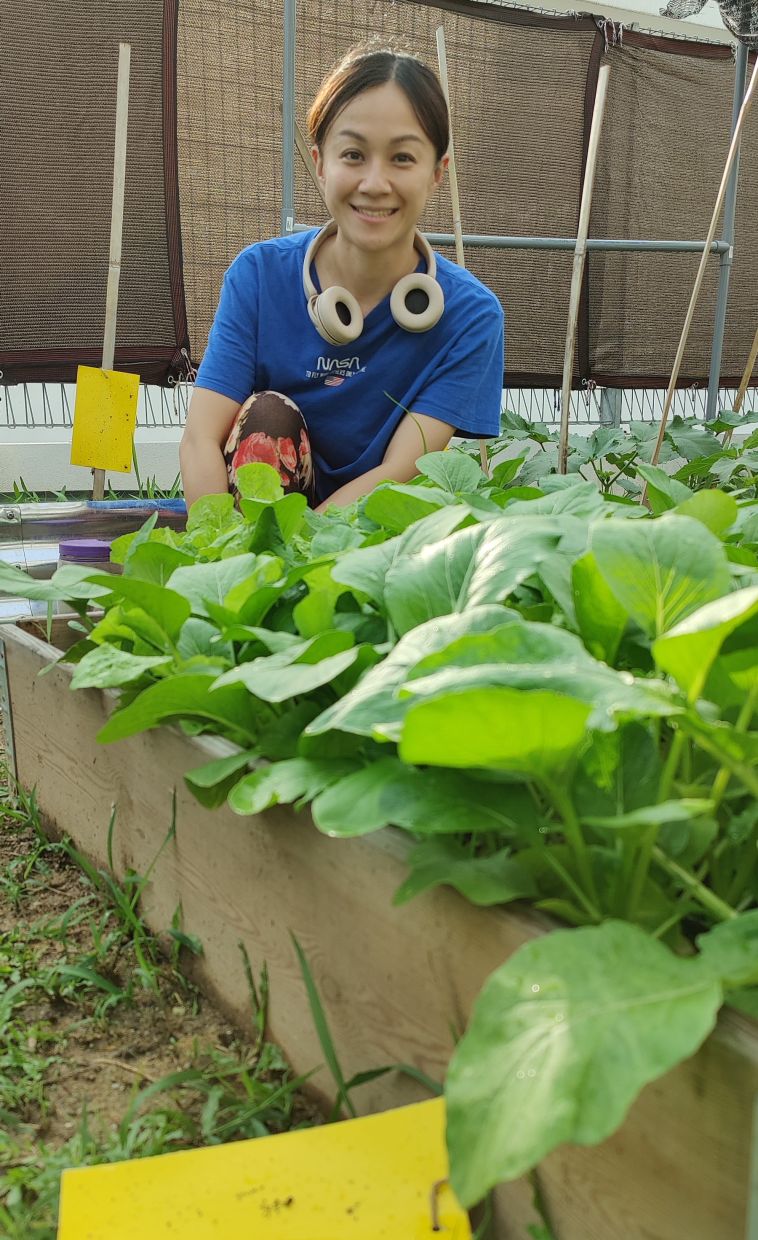
Learning curve
Behind the lush harvests and picture perfect gardens, urban gardening requires consistency, patience and a willingness to keep going.
Malaysia’s weather alone can present a constant challenge for home gardeners.
“The grass needs to be trimmed and weeding needs to be done from time to time. If you miss even a day or two of watering, your entire bed of crops might be destroyed completely,” Ong says.
Balancing work and gardening can also become difficult. Ong, who runs her own business, says there are periods where work takes priority and pests quickly invade her neglected plants.
“If you are not consistent in taking care of the garden, the plants are easily prone to attacks by bugs,” she warns.
For Norbiha, maintaining a chemical-free garden comes with having to deal with pests like snails, worms and grasshoppers.
“The main challenge with taking care of the garden are the insects and pests as they can damage the plants. Since I want to avoid using pesticides as I’d like my crops to be completely organic, that means I have to manually remove the pests and any affected leaves on my own,” she explains.
Aliah also recalls repeated failures throughout her journey, including a first sowing attempt where only two seedlings have successfully germinated.
“It was an epic fail,” she says, laughing it off. “But I think that’s part of gardening. You learn best by doing it yourself.”
Even after years of experience, Ong says that failures are still bound to happen.
“Sometimes seeds just won’t germinate, plants die off just like that, or you spend an entire afternoon transplanting all your seedlings only to wake up the next morning and see all of them gone,” she reflects.
“Gardening can feel both easy and difficult at the same time. But we reap what we sow. At the end of the day, the fulfilment that comes with growing it with our bare hands is what matters.”
Despite the setbacks, none of them describe the process as discouraging. Instead, anything deemed unsuccessful is seen as part of the process and offers a learning opportunity.
“I firmly believe that if you want to be good at something, you need to be willing to do it consistently, even if you fail at first,” says Aliah.
“But you learn from every mistake and over time, you will understand your plants and your space better.”
A form of community
Beyond personal wellness, these gardeners find the act of growing food to also help in creating stronger awareness in self- sufficiency and community.
Apart from just being a hobby, Ong believes gardening should be viewed as an integral life skill that is fading away in an urban lifestyle.
“For me, it boils down to passion and food security. Regardless of what happens, we still have the skills to feed ourselves and support our family’s well-being with nutritious food.”
That same sense of collective care can also be found within smaller neighbourhood interactions.
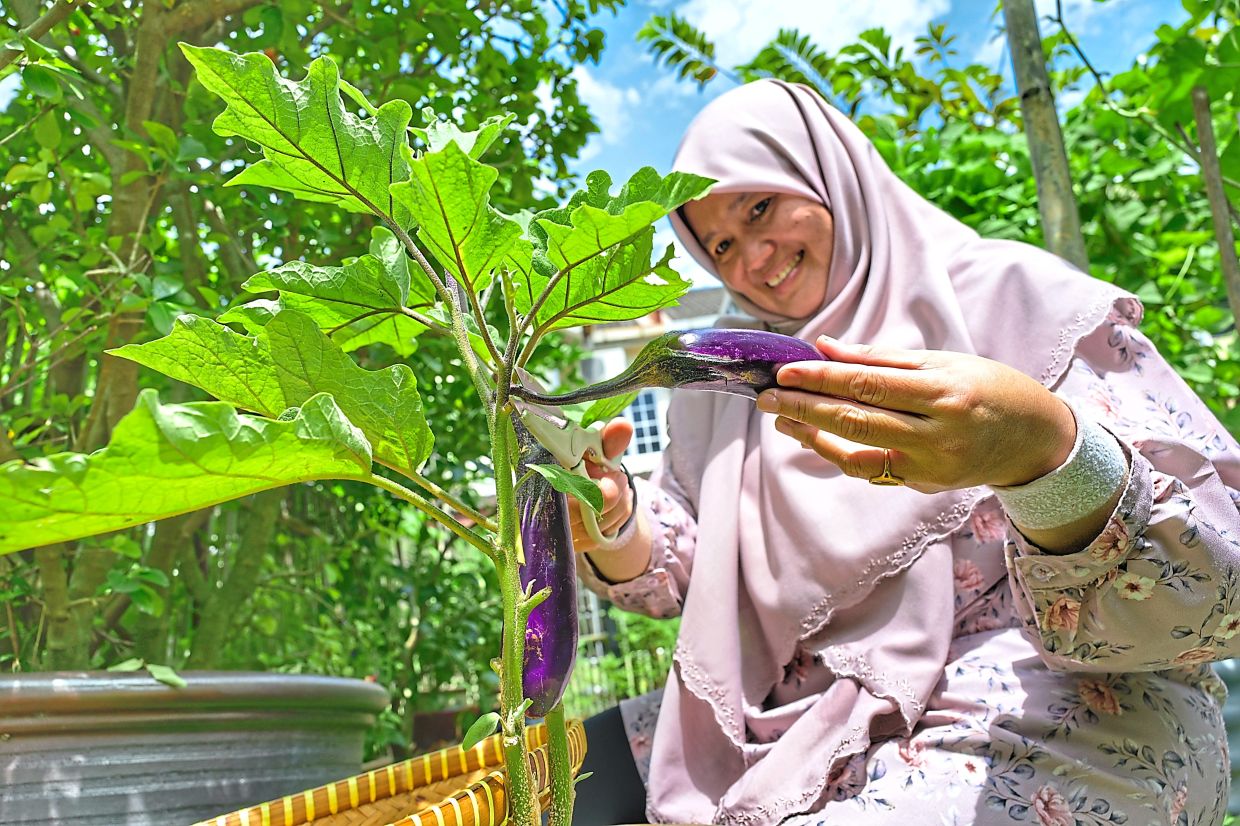
Norbiha says her neighbours often stop by with requests while complimenting how the once-overgrown land behind her house has transformed into something beautiful.
“They would ask for certain herbs or vegetables for cooking and I would happily share it with them.”
However, a big misconception surrounding urban gardening is the idea that meaningful gardens require large spaces or expensive setups.
Aliah hopes that more people understand that anyone – despite the condition of their living spaces – can build their own green space. “Even a small balcony, corridor or sunny corner can become a meaningful growing space.”
Ong agrees, adding: “You don’t need a huge plot of land to start. Even when space is limited, you can learn how to grow things vertically and make full use of your surroundings.”
Most importantly, Ong would like to remind everyone of what it truly means to be gardening.
“It’s not a matter of saving money and a trip to the supermarket, it’s about the entire process and journey. It’s also about the knowledge we can pass down to younger generations to keep this skill alive and doing what’s best for Earth.”
One pot at a time
Tucked between the constraints of high-rise living is an edible garden thriving with herbs, vegetables and even fruits.
A space commonly used for hanging laundry is now a garden that is slowly expanding with time.
“It all started in early 2019. I came across those premium Japanese melons in the supermarket for sale with exorbitant prices and thought I could grow one myself at home,” says Benjamin Bhatt, 32.
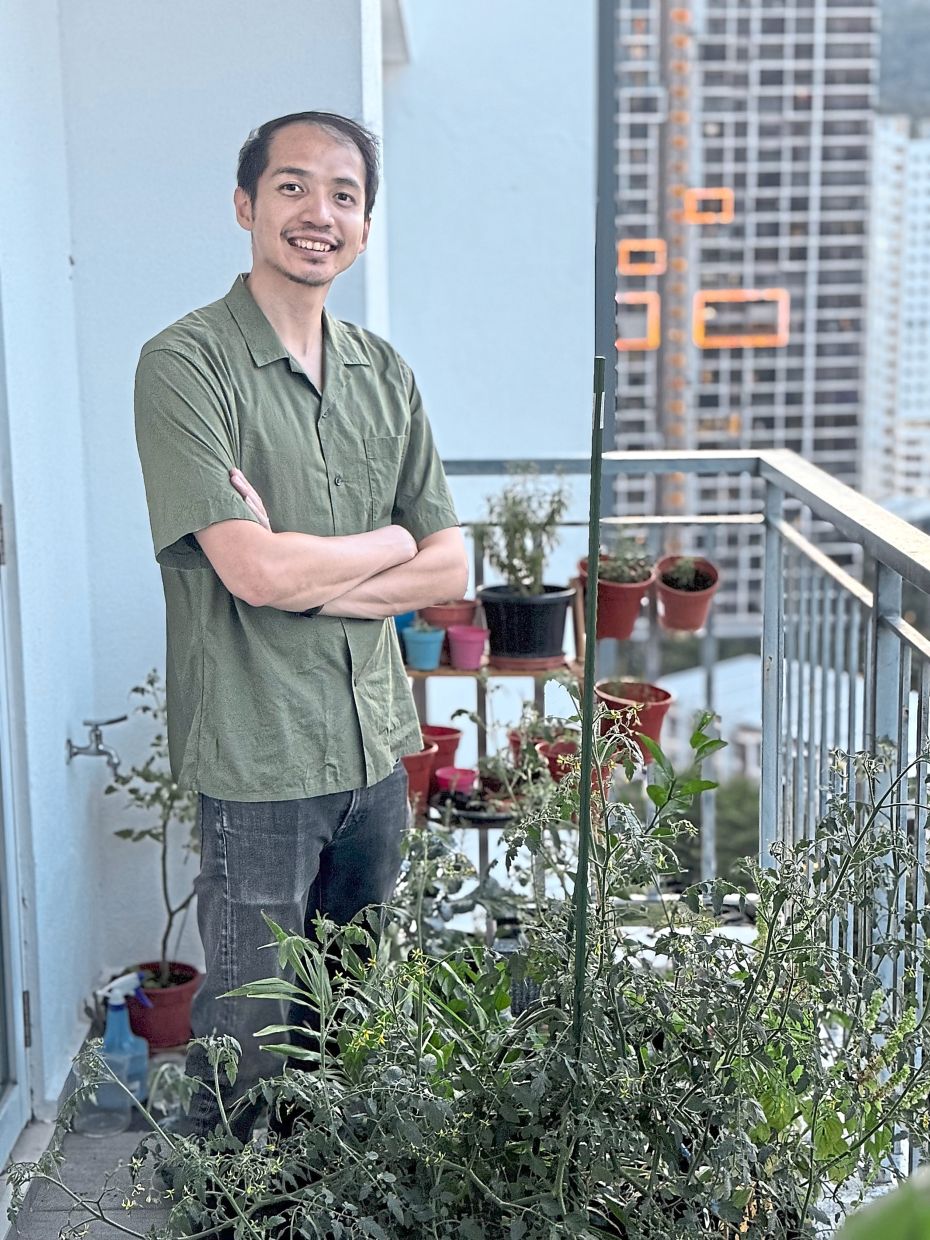
When the Covid-19 lockdown began shortly after, Bhatt finally found the time to experiment with gardening from his apartment balcony.
He now grows everything from coriander, rosemary and lettuce to cherry tomatoes, French beans and sweet potatoes – all within the limited confines of his balcony space.
The appeal of gardening lies partly in convenience. As someone who enjoys cooking, he likes having fresh ingredients readily available at home, especially herbs and vegetables that are usually sold in large bunches despite only a small amount being needed for recipes.
His journey, however, came with a steep learning curve.
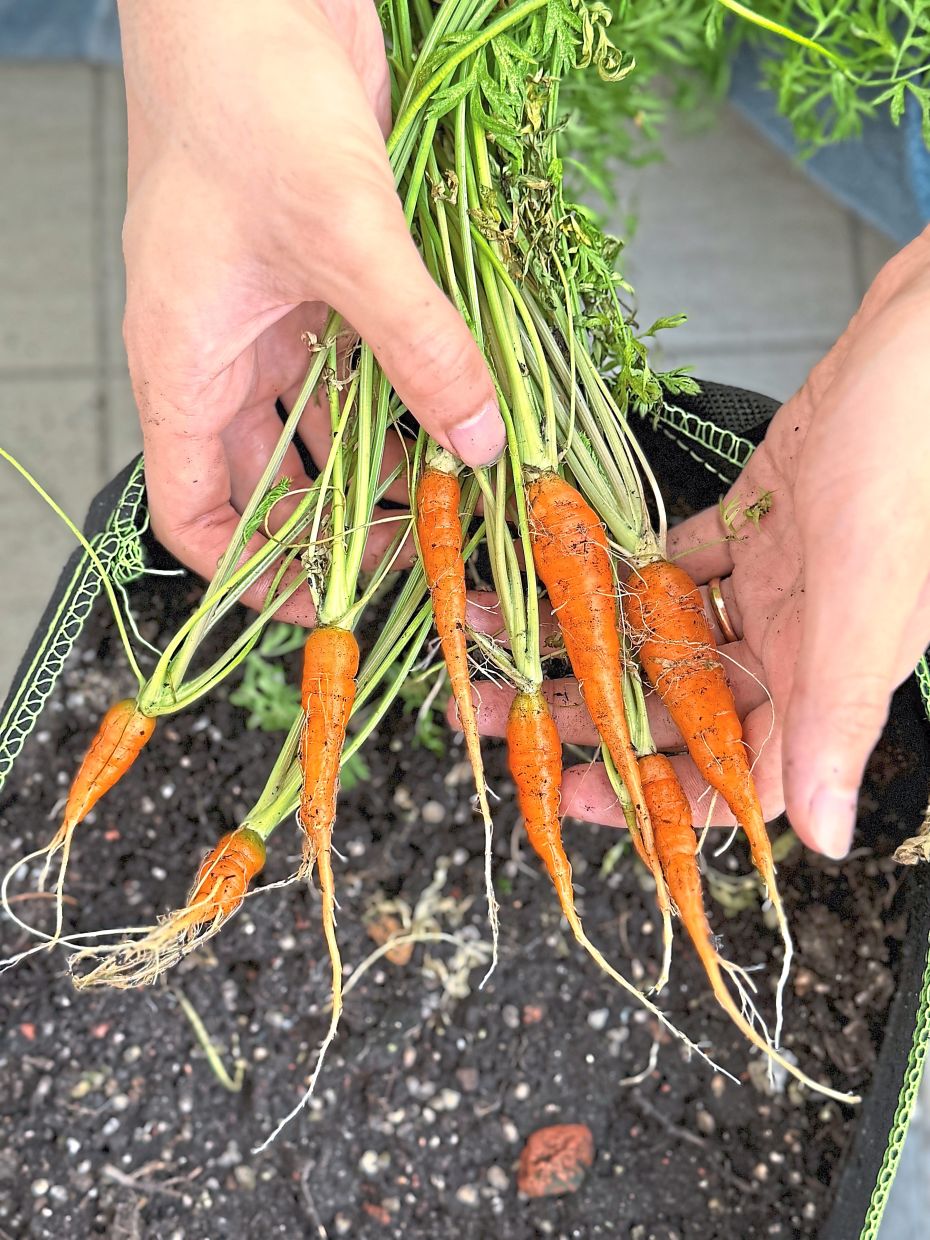
“Besides knowing that plants need water, light and soil to grow, I had no clue it wasn’t as straightforward as I thought it would be,” he says with a laugh.
Over time, he learned through trial, error and endless research on online groups filled with gardening enthusiasts.
“The hardest part of building a balcony garden is working within the constraints. The space is limited and the sunlight can be an issue, especially with the position of the balcony,” he says.
Because his balcony doubles as a drying area for clothes, Bhatt carefully selects dwarf plant species suitable for pots while planning around available space and sunlight.
Still, the rewards continue to outweigh the inconveniences, especially on his well-being.
“In this fast-moving world, where everything is instant and available year-round, gardening helps with slowing things down so you can appreciate it better.”
Among his proudest moments was successfully growing a watermelon from a single flower into a fruit weighing 1.8kg.
“I never forgot that first watermelon I grew. I felt so ecstatic at the literal fruit of my labour!”