The small boat set off from a tiny island in the western Pacific Ocean, its destination only a few hundred feet away. Its cargo was dozens of chunks of concrete that each weighed 60 pounds (27.2kg), had a textured surface and evoked a white lotus leaf.
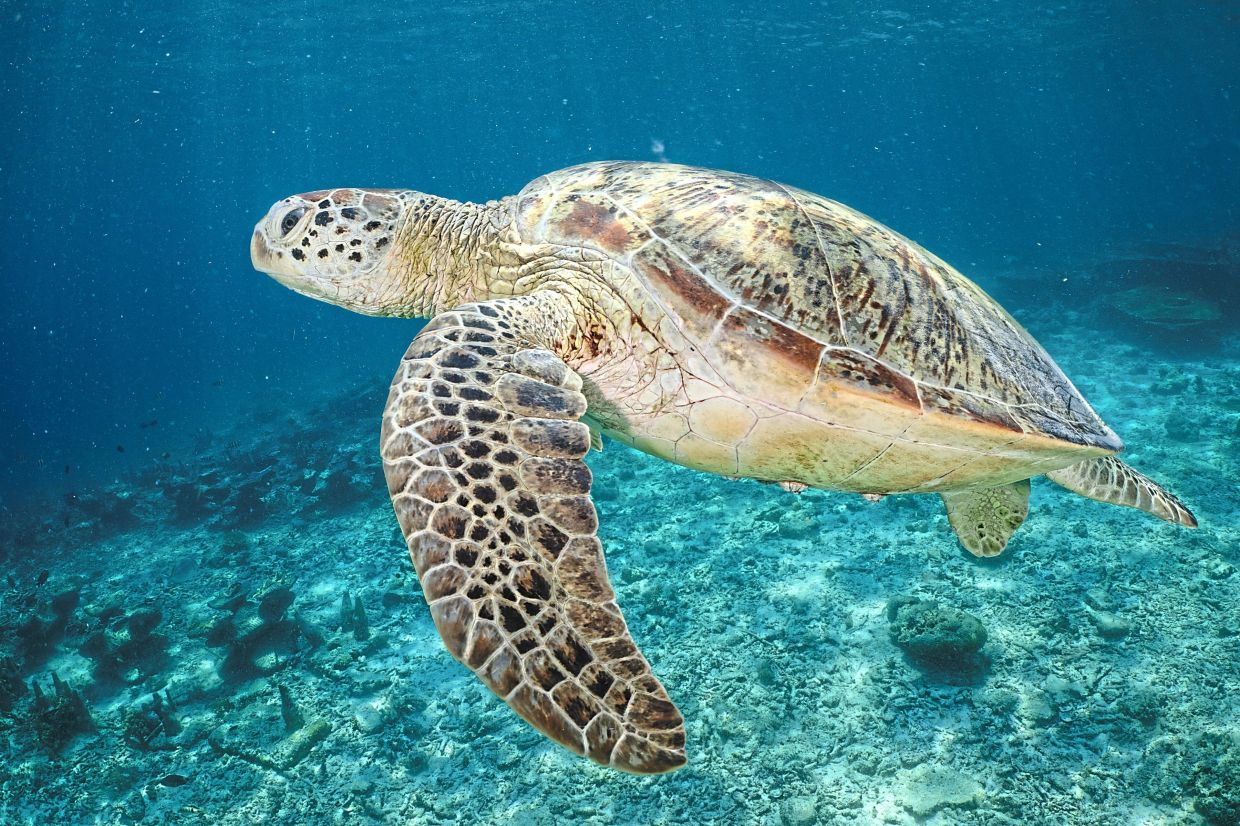
One by one, the crew tossed the pieces overboard. Then three divers descended 20 feet (6.1m) to the seabed with nuts, bolts and steel rods. As they began fastening the concrete pieces on top of one another, hundreds of curious damselfish gathered around them, and three green turtles circled nearby.
Within an hour, the structure was complete: an artificial reef standing three feet tall (0.9m) and 10 feet (3.05m) wide.
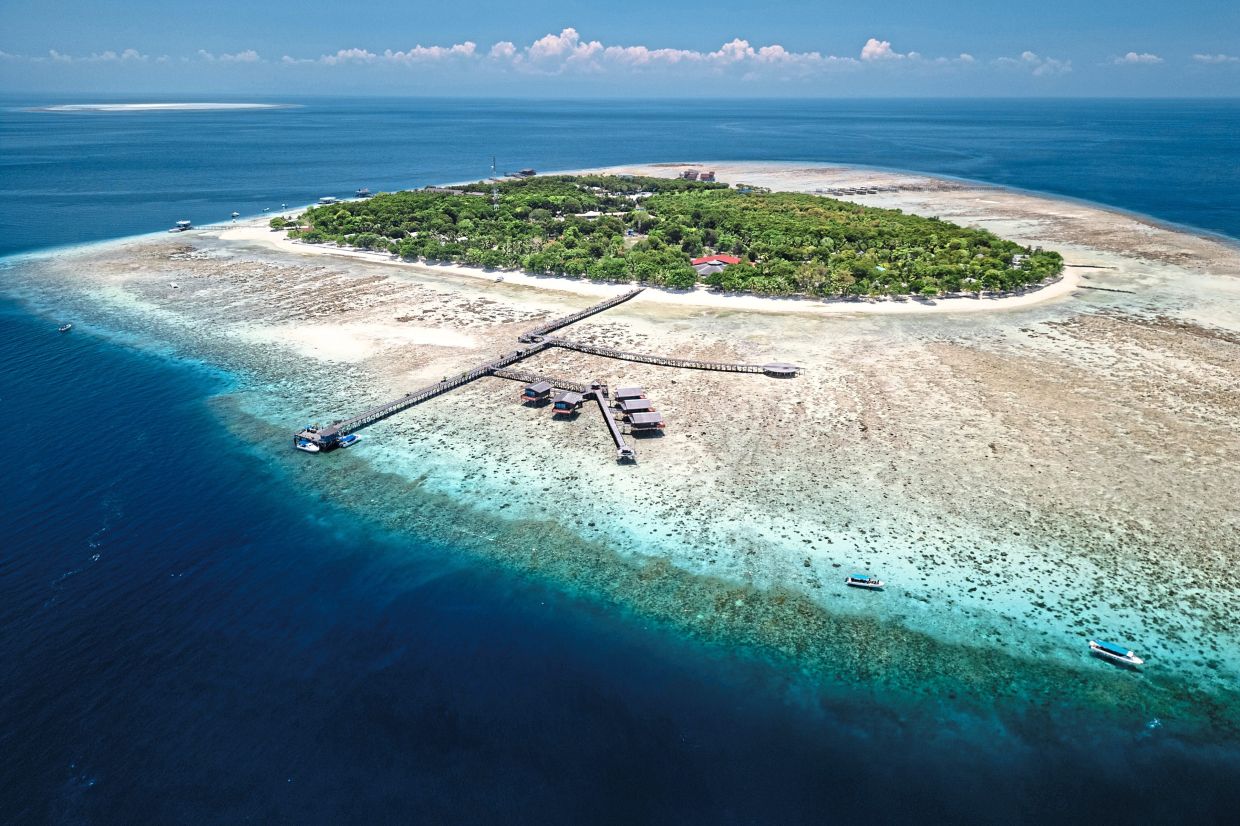
This construction, on a Thursday morning near Pom Pom Island in Malaysia, was part of an effort to rejuvenate a small section of the Coral Triangle, which covers a wide section of South-East Asia and is the most biodiverse marine region in the world.
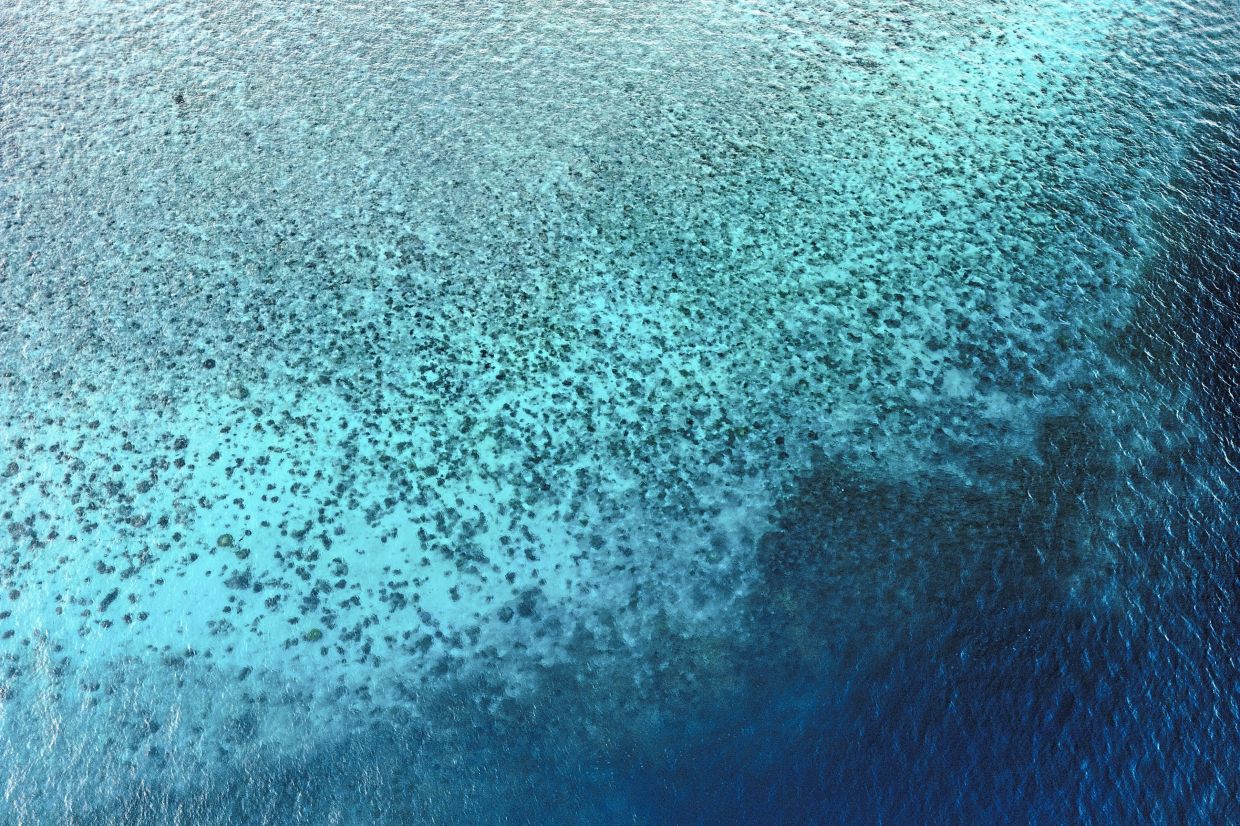
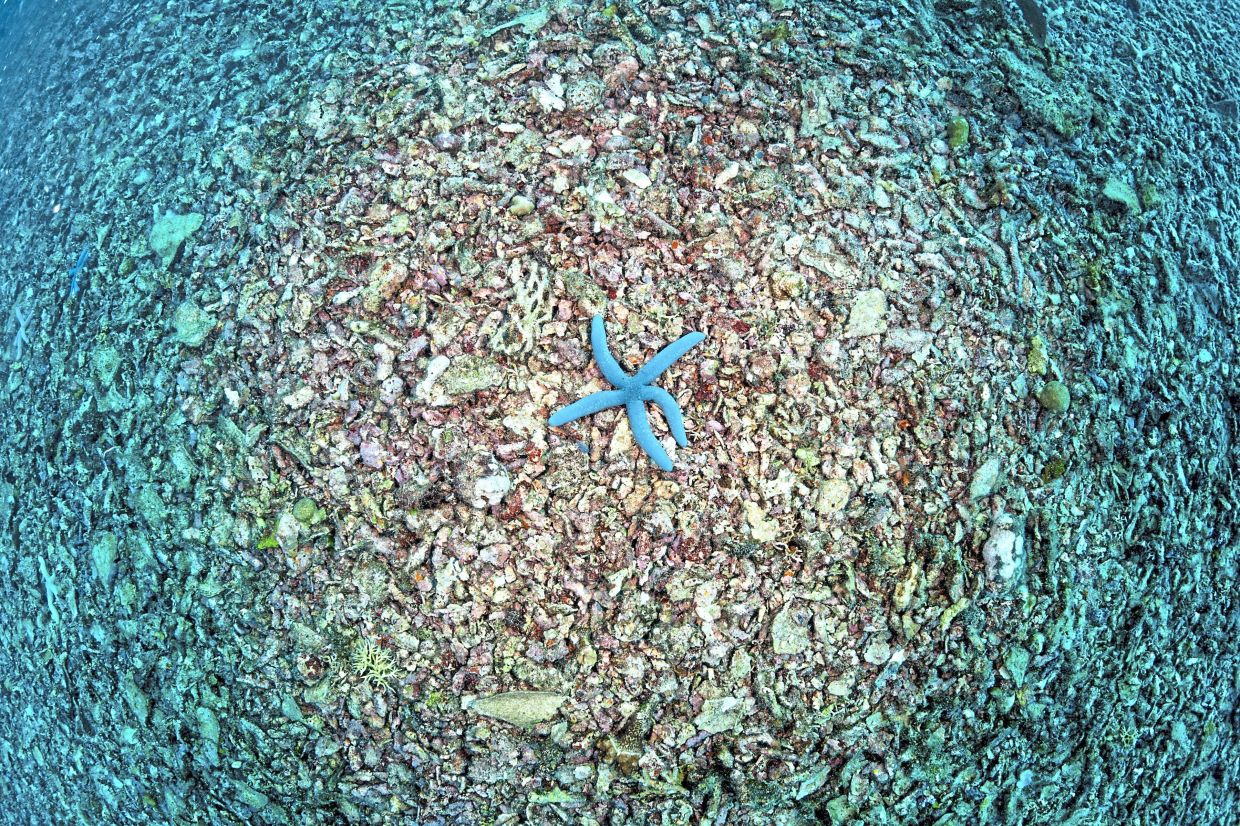
Pom Pom Island lies off the northeastern coast of Borneo, an area where fishermen have for decades used homemade dynamite to kill schools of fish.
The practice, which has long been illegal in Malaysia, is common among local anglers, who say they cannot earn enough money from the smaller catches they make using conventional methods.
But miles of coral reef have become collateral damage.
“The seabed here is like a desert, and this is one structure bringing life back,” said Robin Philippo, managing director of the Tropical Research and Conservation Center, the conservation group that installed the artificial reef.
No silver bullet
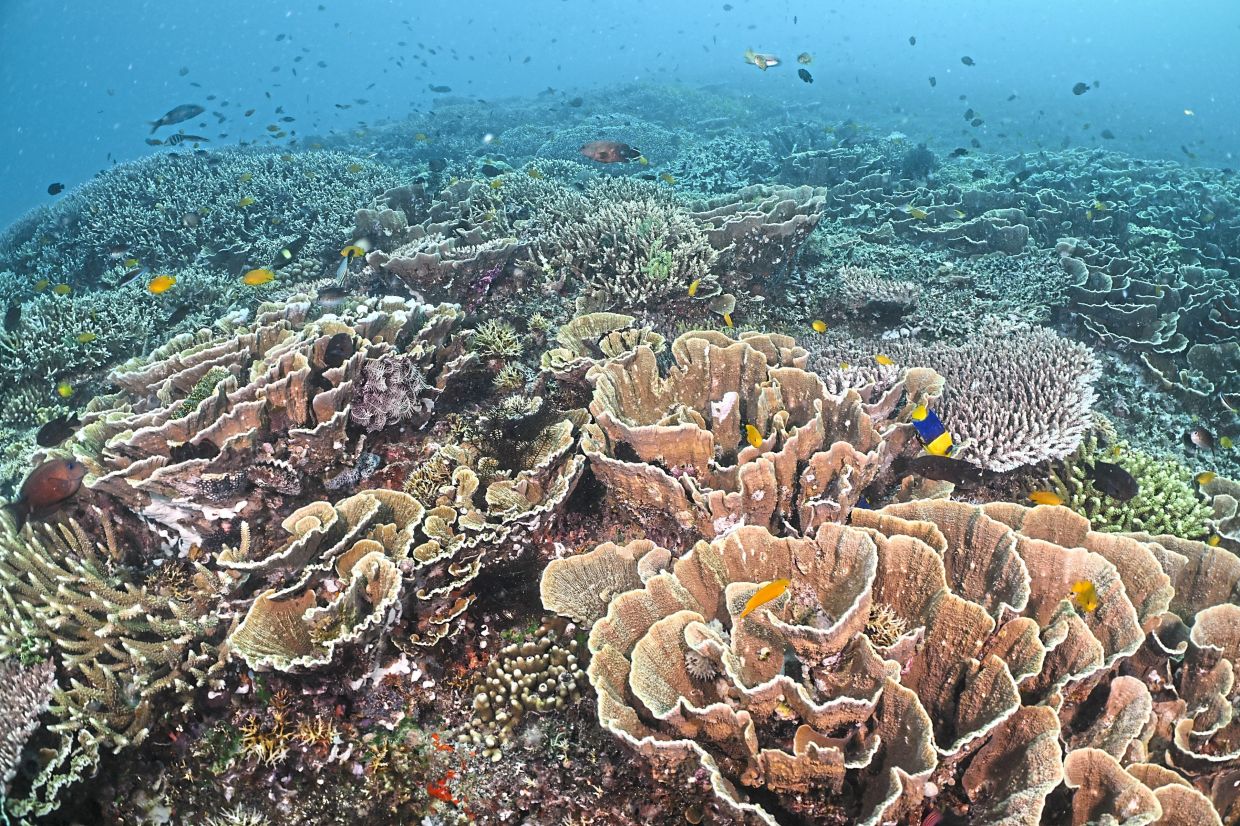
Over the past two years, the group has installed more than 60 of these structures around the island, each weighing about half a ton and costing about US$5,000 (RM20,330). The corrugated surfaces allow corals to take hold, while the gaps between the individual pieces provide shelter from predators for marine life.
“Before the structures were placed, it was just rubble on the seabed and no fishes,” said Alvin Chelliah, chief programmes officer at Reef Check Malaysia, a nonprofit. “But now we can see damselfishes, juvenile groupers, butterfly fishes are making a comeback at the artificial reef structures.”
Still, he warned, “the concrete reef is not a silver bullet.”
Concrete reefs are less likely to support marine life that typically drills into natural reef surfaces, like boring giant clams, Chelliah said.
In recent years, the country has lost about 20% of its coral cover largely because of rising ocean temperatures that have accelerated coral bleaching, according to Reef Check Malaysia.
This can have devastating consequences. For instance, the British government has warned that a collapse of the reef system in South-East Asia and the ensuing drop in caught fish could harm food security in Britain.
Near Pom Pom Island, where the main enterprise is tourism, Philippo’s group, Tracc, is planning to install another 100 reef structures.
Half of those are funded by a US$100,000 (RM406,580) grant from the Coral Research and Development Accelerator Platform, a nonprofit based in Saudi Arabia.
Tracc makes individual reef pieces using a mold made by Reef Design Lab, an Australian firm that also designs the units.
Less than 18 months after the first structure was set up in the waters around Pom Pom Island, which can be covered on foot in an hour or so, 500 young corals had settled on it, according to Tracc, where a team of five scientists is monitoring the results. Fish numbers and diversity in the vicinity had also improved significantly.
“My observations show good recruitment of a wide range of organisms, like oysters, sponges and corals, attached to the structures,” said Scott Bryan, an earth scientist from Queensland University of Technology in Australia who is an adviser for the project.
Tiny drop in the ocean
Still, other experts worry that the scale of recovery remains small and that these efforts do not replace the need to reduce carbon emissions.
“A single artificial structure is a tiny drop in the ocean,” said Terry Hughes, an eminent coral scientist who is now professor emeritus at James Cook University in Australia. “Pouring carbon-intensive concrete to save coral reefs is no substitute for reducing greenhouse gas emissions.”
Bryan said Tracc was using local sand at Pom Pom Island to cast the artificial reefs, so the project’s carbon footprint was low.
Tracc hopes to bring the structures to Tioman Island, a popular tourist destination off Peninsular Malaysia’s east coast, where reefs have been battered by monsoonal storms. The test could show whether the structures can survive rough waters and whether early signs of success can be replicated on a larger scale.
“Though it is a small area at a time,” Bryan said, “it is changing and improving.” – ©2026 The New York Times Company